
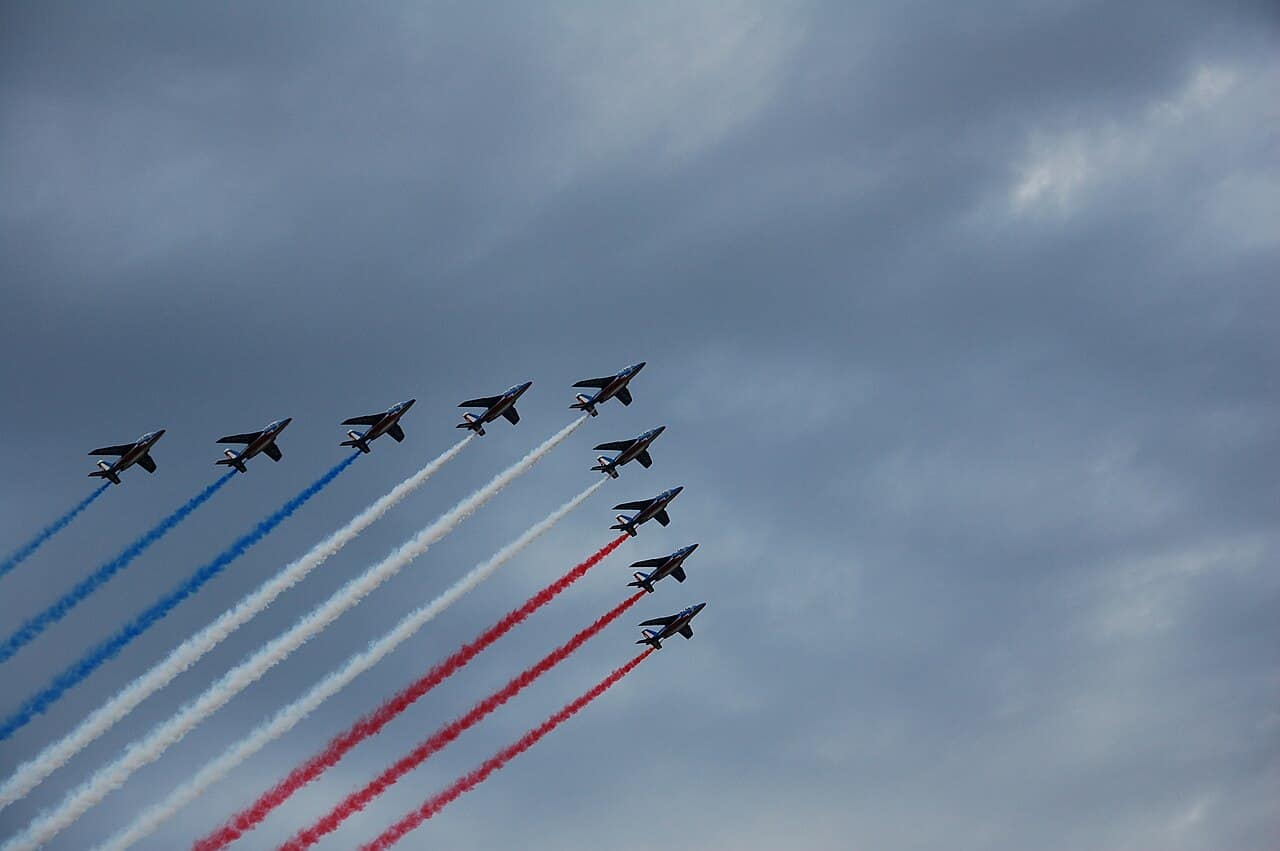
When the Patrouille de France's nine blue-and-white Alphajets sweep over the Champs-Élysées on July 14, they won't be alone. Flanking them will be two Mirage 2000Bs crewed by Franco-Ukrainian teams — the opening act of the largest Bastille Day aerial parade since 2019 and a statement of European solidarity that Paris has choreographed down to the last contrail.
This is Emmanuel Macron's final Bastille Day parade as president, and he's using it to hammer home a message he's been pushing for years: Europe must stand on its own two feet. The entire 2026 ceremony is built around the theme of l'éveil stratégique de l'Europe — "Europe's strategic awakening" — and the Ukrainian Mirages opening the show are the most visible symbol of that thesis.
98 Aircraft, Zero Americans
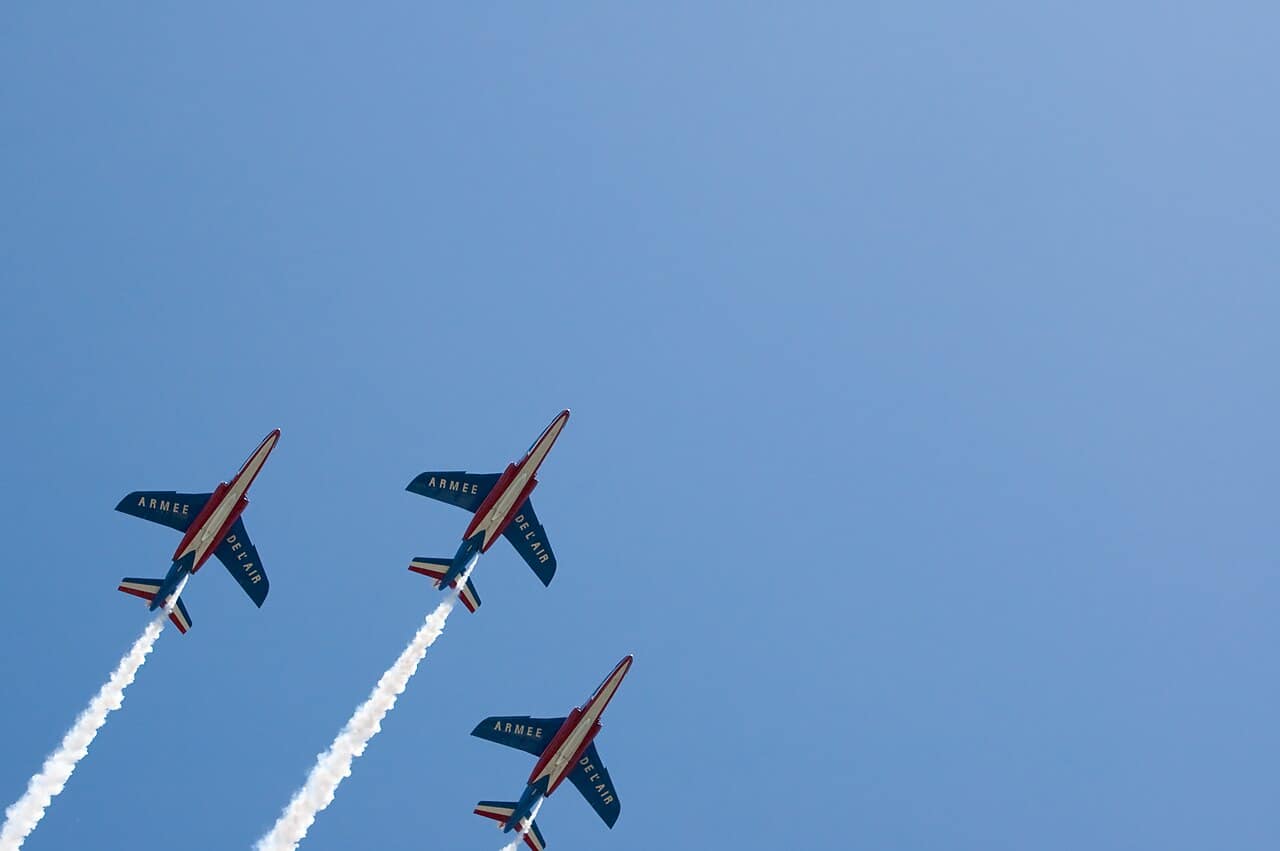
The numbers tell the story. This year's flyover puts 98 fixed-wing aircraft and 32 helicopters over Paris — a 50% increase over 2025's 65 aircraft. On the ground, 6,686 service members, 299 vehicles, and 193 horses will parade down the avenue. And every guest nation is European. Germany, Greece, Britain, and Sweden are sending fighter jets to fly alongside French Rafales. The United States, for the first time in recent memory, is absent from the lineup.
The two Ukrainian Mirage 2000Bs will fly directly behind the Patrouille de France, opening the entire fixed-wing segment. The aircraft are French-owned two-seat trainers — French instructors occupy the front cockpit, with Ukrainian student pilots in the rear. One aircraft is expected to carry a special livery in Ukraine's blue-and-yellow national colours.
From Training Base to Combat Zone
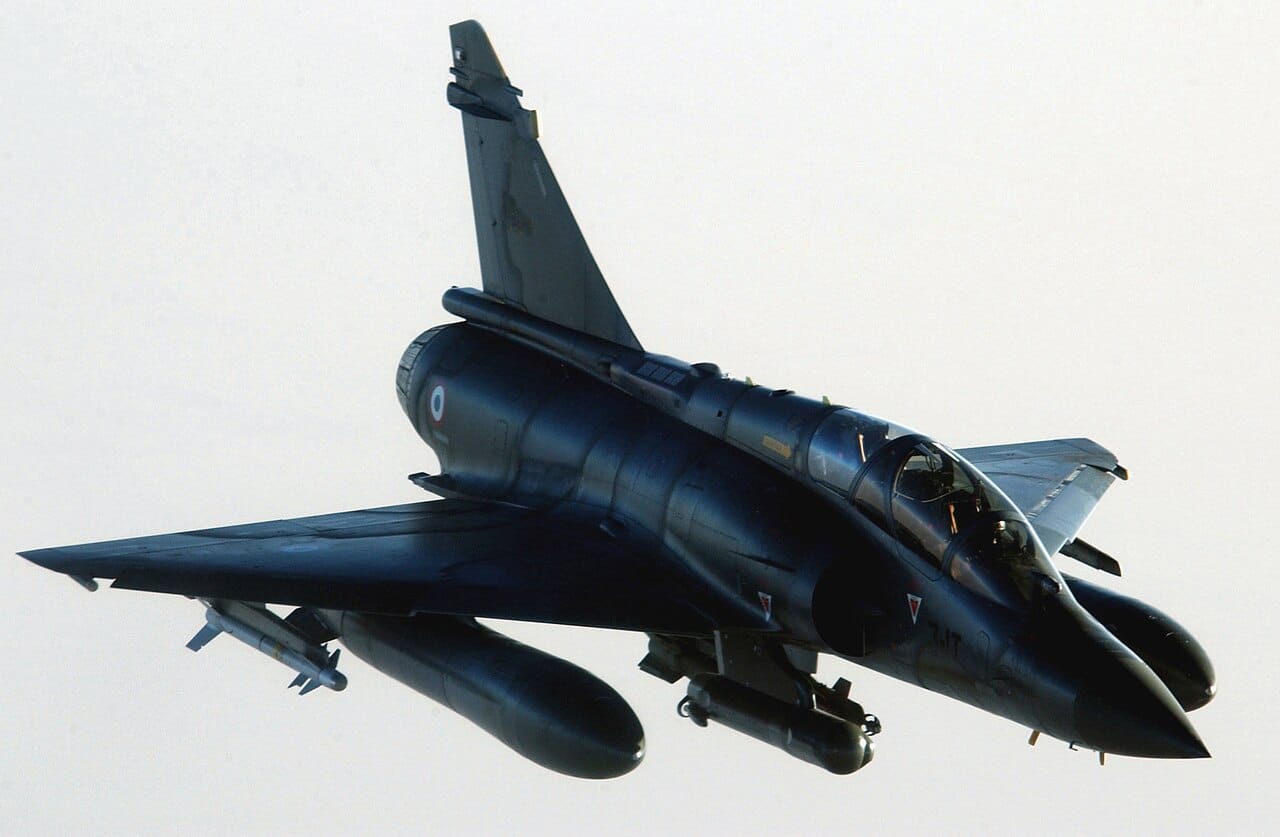
The symbolism goes deeper than a formation flyover. France delivered its first Mirage 2000-5F fighters to Ukraine in February 2025, making Paris the second Western nation — after the Netherlands and Denmark with their F-16s — to provide advanced Western combat aircraft to Kyiv. Ukrainian pilots had completed training at French bases including Nancy-Ochey and Cazaux, and the jets were operational within weeks.
Those Mirages are now actively defending Ukrainian airspace. In March 2026, footage emerged of Ukrainian Mirage 2000-5Fs releasing AASM Hammer precision bombs against Russian positions — the first public evidence of strike missions. The aircraft have also been credited with intercepting Russian cruise missiles, proving that even a relatively small fleet of 1980s-era French fighters can make a difference when properly equipped and crewed.
France reportedly delivered additional Mirages in early 2026, bringing the Ukrainian fleet to approximately six aircraft. More are expected, and training continues at French bases — which is exactly what these Bastille Day crews represent.
Nuclear Undertones
The aerial parade isn't just about solidarity. Midway through the flyover, a formation of Rafale fighters will include at least one aircraft from the Forces Aériennes Stratégiques — France's nuclear deterrent force — capable of carrying the ASMPA-R nuclear cruise missile. This formation will be flanked by German, Greek, British, and Swedish fighter jets, visually linking France's independent nuclear capability with European collective defense.
The message to Moscow is deliberate and unsubtle: Europe's defense architecture is deepening, France's nuclear umbrella extends beyond its borders, and Ukraine's fight is everyone's fight. Whether that message lands as intended — or merely inflames — depends on who's watching.
Either way, two Mirages in yellow and blue over the Champs-Élysées will make for one of the most politically charged aerial moments of the year.
0 commentaire