
Fifty years ago today — on 1 July 1976 — the Smithsonian's National Air and Space Museum opened its doors on the National Mall in Washington, D.C. It was a bicentennial gift to a nation that had just landed men on the Moon, won a Space Race, and built an aviation industry that dominated the world. Within weeks, it became the most visited museum on Earth, a record it has held for much of the half-century since.
Today, on its 50th birthday — and in time for the United States' own 250th anniversary — the museum opens five new galleries that complete a multi-year, top-to-bottom renovation. Every one of the museum's 20 exhibition spaces has been redesigned. The exterior cladding has been replaced. The mechanical systems have been overhauled. What reopens on the National Mall is, in effect, a new museum — built around the same irreplaceable collection of flying machines that has drawn more than 300 million visitors since 1976.
Five New Galleries
The five galleries opening today represent the final phase of a renovation that began in 2018. They are the Jay I. Kislak World War II in the Air gallery, which has been completely redesigned with new artifacts, interactive elements, statues of Tuskegee Airmen, original uniforms, and actual aircraft and equipment used in the war; Textron How Things Fly, an interactive science gallery explaining the physics of flight; Flight and the Arts Center, exploring the intersection of aviation, space, and artistic expression; U.S. National Science Foundation Discovering Our Universe, tracing humanity's effort to understand the cosmos; and RTX Living in the Space Age, which examines how space technology has transformed daily life on Earth, featuring a full-scale mockup of the Hubble Space Telescope used by NASA.
Two final galleries — Modern Military Aviation and At Home in Space — will open in the autumn, completing the transformation.
The Collection That Cannot Be Replicated
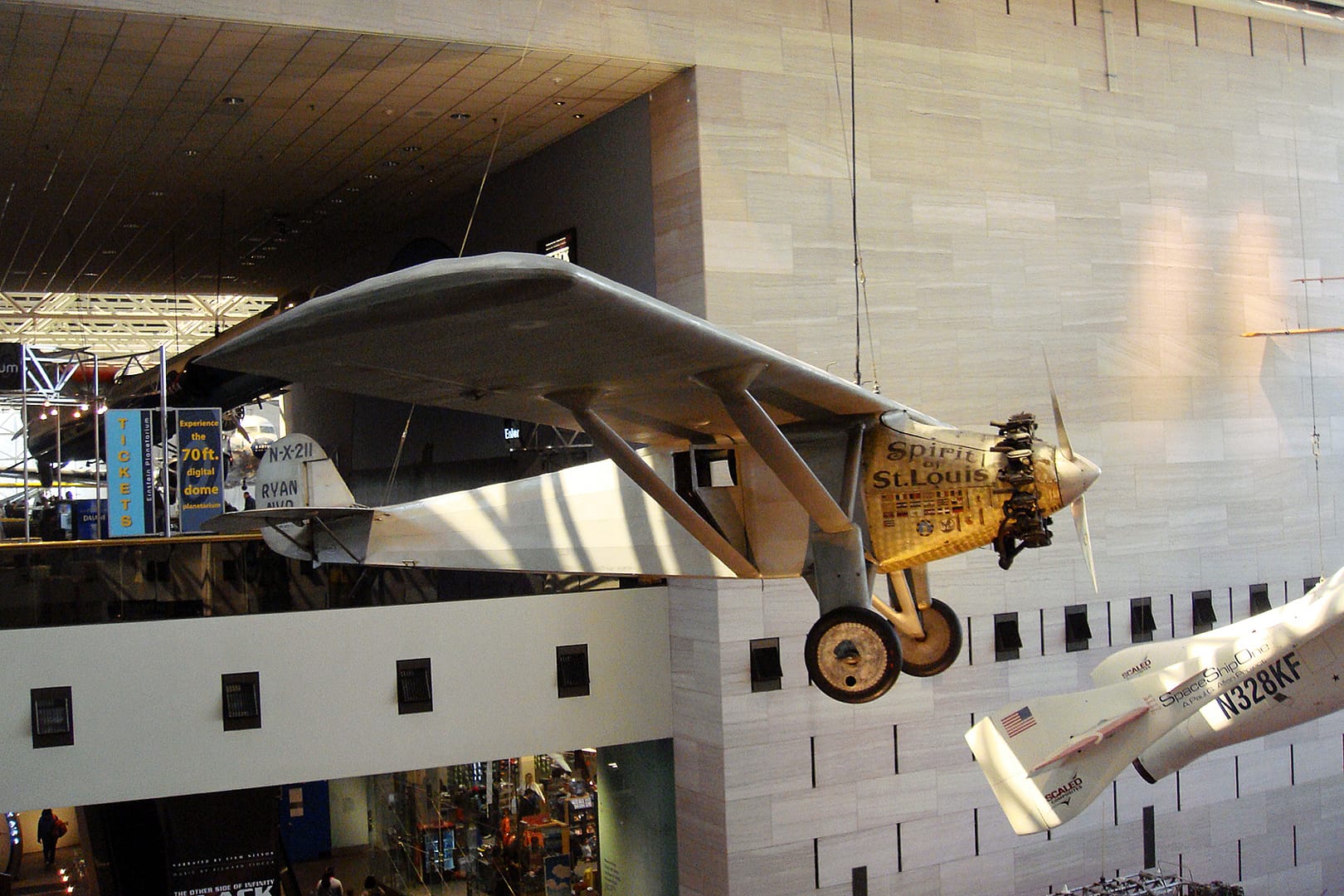
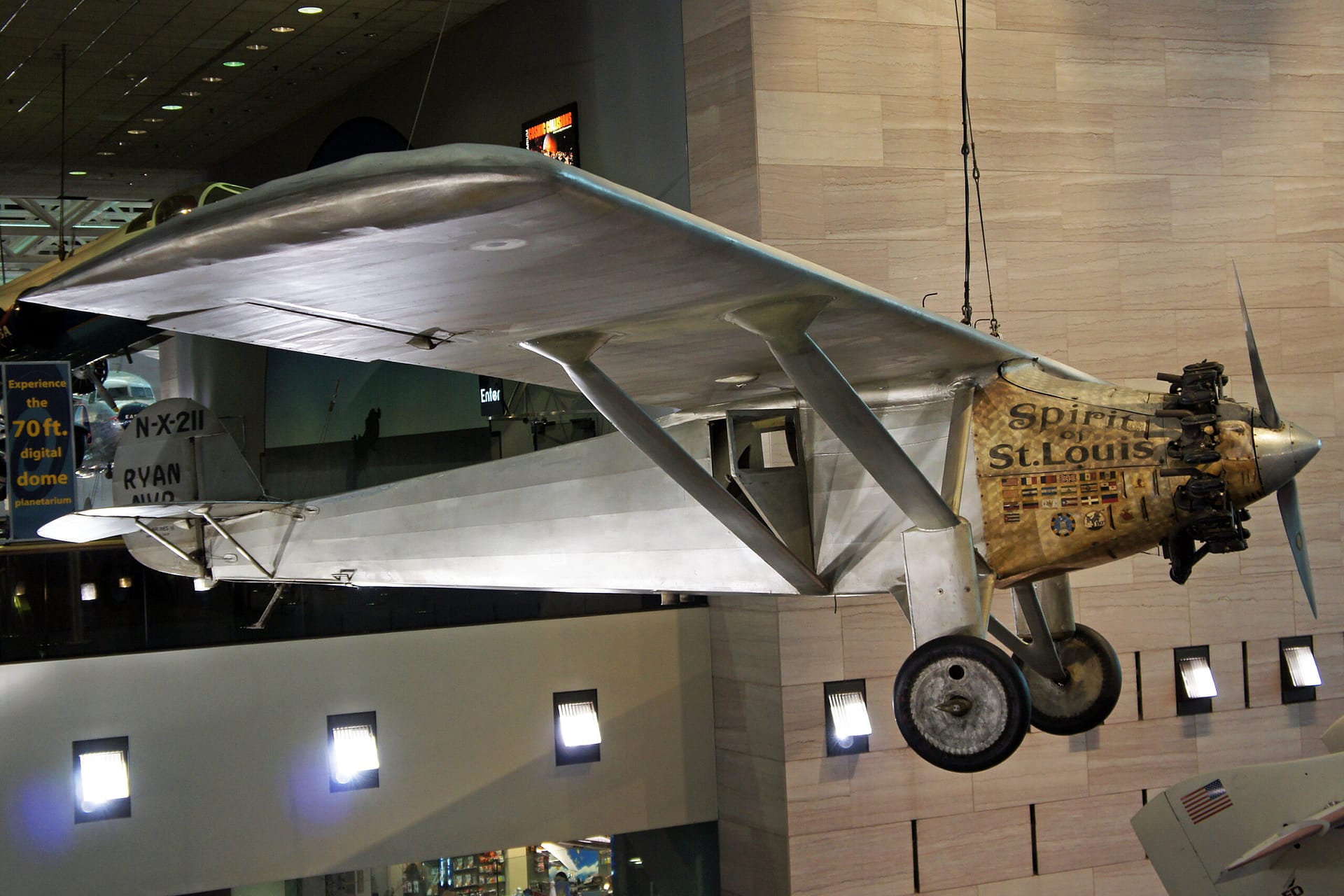
What makes the National Air and Space Museum unique is not its architecture or its interactive displays — it is the aircraft and spacecraft themselves. No other institution on Earth holds the Wright Flyer, the Spirit of St. Louis, the Apollo 11 command module Columbia, Chuck Yeager's Bell X-1 Glamorous Glennis, and the backup mirror for the Hubble Space Telescope under the same roof. These are not replicas. They are the actual machines that made history, preserved for every generation that follows.
The museum's collection extends well beyond its National Mall building. The Steven F. Udvar-Hazy Center near Dulles Airport — opened in 2003 — houses aircraft too large for the Mall, including a Lockheed SR-71 Blackbird, a Concorde, the Space Shuttle Discovery, and the Enola Gay, the Boeing B-29 that dropped the first atomic bomb on Hiroshima. Together, the two sites hold the largest collection of historic air and space artefacts in the world.
From Bicentennial to Semiquincentennial
The museum's opening in 1976 was not accidental timing. Congress authorised the building as a centrepiece of the nation's bicentennial celebrations, and the architect, Gyo Obata, designed a structure of glass and Tennessee pink marble that would sit on the Mall between the Capitol and the Washington Monument. The building was intended to be monumental but transparent — visitors could see the aircraft hanging inside before they even walked through the door.
That the museum's 50th anniversary falls precisely on the United States' 250th birthday is a coincidence that the Smithsonian has embraced fully. The five new galleries opening today are positioned as a gift to a new generation, just as the original building was a gift to the bicentennial generation. Programming throughout 2026 will include a film series, lectures, special merchandise, and a digital project called "50 for 50: 50 Artifacts from 50 States" — a countdown showcasing how every corner of the country has contributed to the history of flight and space exploration.
Why It Matters
Aviation and space museums exist in every country, but none holds the cultural weight of the National Air and Space Museum. It is the place where American schoolchildren touch a Moon rock for the first time. It is the place where the Wright Flyer and the Apollo 11 capsule sit within a hundred metres of each other, bridging sixty-six years from Kitty Hawk to the Sea of Tranquility. It is, fundamentally, the repository of humanity's most audacious achievement — the conquest of the sky and the first steps beyond it.
The museum reopens today not as a relic of 1976 but as a thoroughly modern institution, rebuilt from the inside out while keeping the artefacts that make it irreplaceable. If you have never visited, the 50th anniversary year is the time. If you have, the renovated galleries are reason enough to return. Admission, as it has been since the doors first opened on 1 July 1976, is free.



0 commentaire