
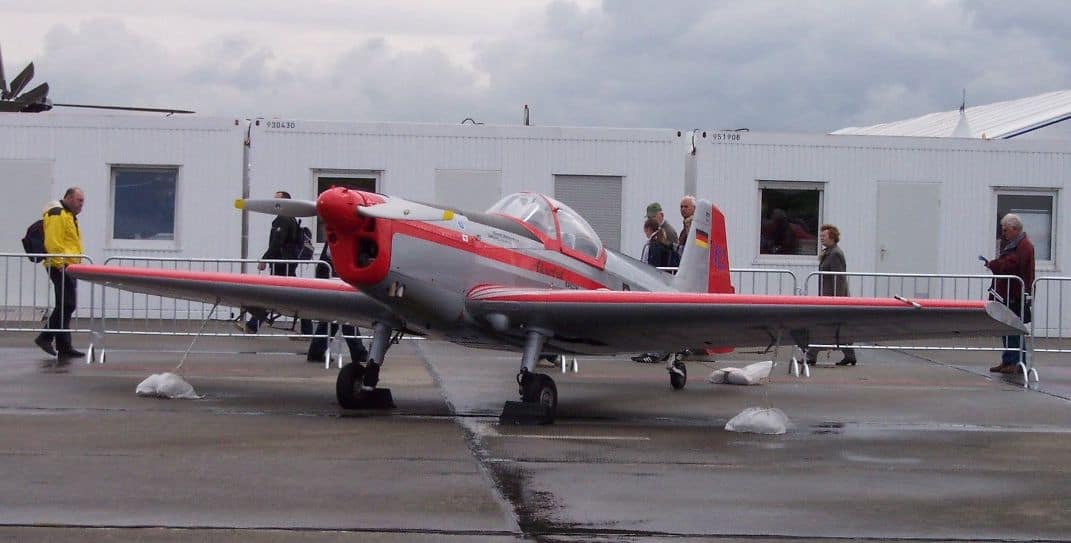
At a thousand feet over Wiltshire, pulling out of a vertical dive at five times the force of gravity, Neil Williams heard a bang and felt the airframe lurch. His left wing had begun to fold up. In the next few seconds, the British aerobatic champion did something so cool-headed, so counter-intuitive, that pilots still study it half a century later: he turned the aeroplane upside down — on purpose — to put the wing back on.
And then he landed it. Inverted, almost to the last second.
FAITS RAPIDES
| Pilote | Neil Williams — British aerobatic champion & test pilot |
| Date | 3 June 1970, Hullavington, England |
| Aéronef | Zlín Z-526A Akrobat (G-AWAR) |
| Failure | Fatigue crack in the main spar; left wing folded upward |
| The fix | Rolled inverted so airflow forced the wing back into place |
| Outcome | Landed safely, minor bruising; awarded the Queen’s Commendation |
The bang at five G
Williams was rehearsing for the World Aerobatic Championships in his Zlín, a Czech single-seater loved by competition pilots. Recovering from a vertical dive at about 1,000 feet, deep into a 5-G pull, the lower boom of his left wing spar failed. The wing hinged upward, and the aircraft snapped into a roll he could not stop with the controls.
A lesser pilot would have been finished. Williams, with 6,500 hours in his logbook, reasoned it out in the time most people take to blink. If positive G was folding the wing up, then negative G — pushing the wrong way, forcing everyone’s stomach into their throat — might fold it back down.
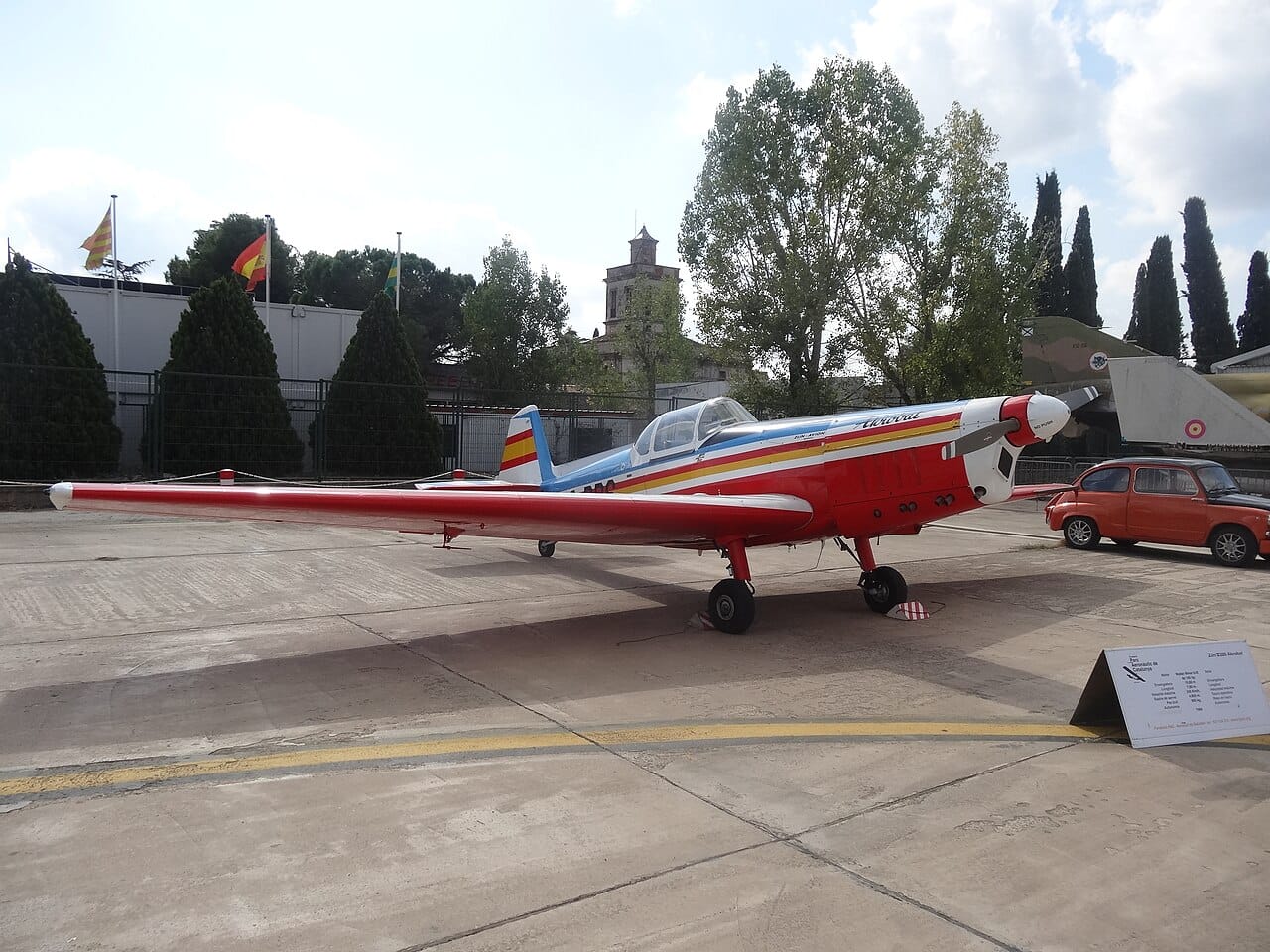
It worked. Upside down, the wing sat back where it belonged — but only while the negative G held it there. The moment he rolled upright, it would start to fold again. So Williams made an extraordinary decision: he would fly the entire circuit, approach and landing inverted, and flip right-way-up at the last possible instant.
He climbed away inverted — and the engine promptly quit. In the panic of the first seconds he had switched the fuel off, expecting to crash. He turned it back on, and with the Zlín’s inverted fuel system giving him only a few minutes of running time, set up his impossible approach.
Upright at the last second
As the runway threshold slid over his head — he was, remember, upside down — Williams began a slow inverted flare. At the instant the Zlín came level, he rolled it upright and let it drop the last few feet onto its belly, just as the left wing finally gave way for good. He climbed out with nothing worse than bruises. He had carried no parachute; he later said that if he had, he would have jumped, and the world would never have learned what he did instead.
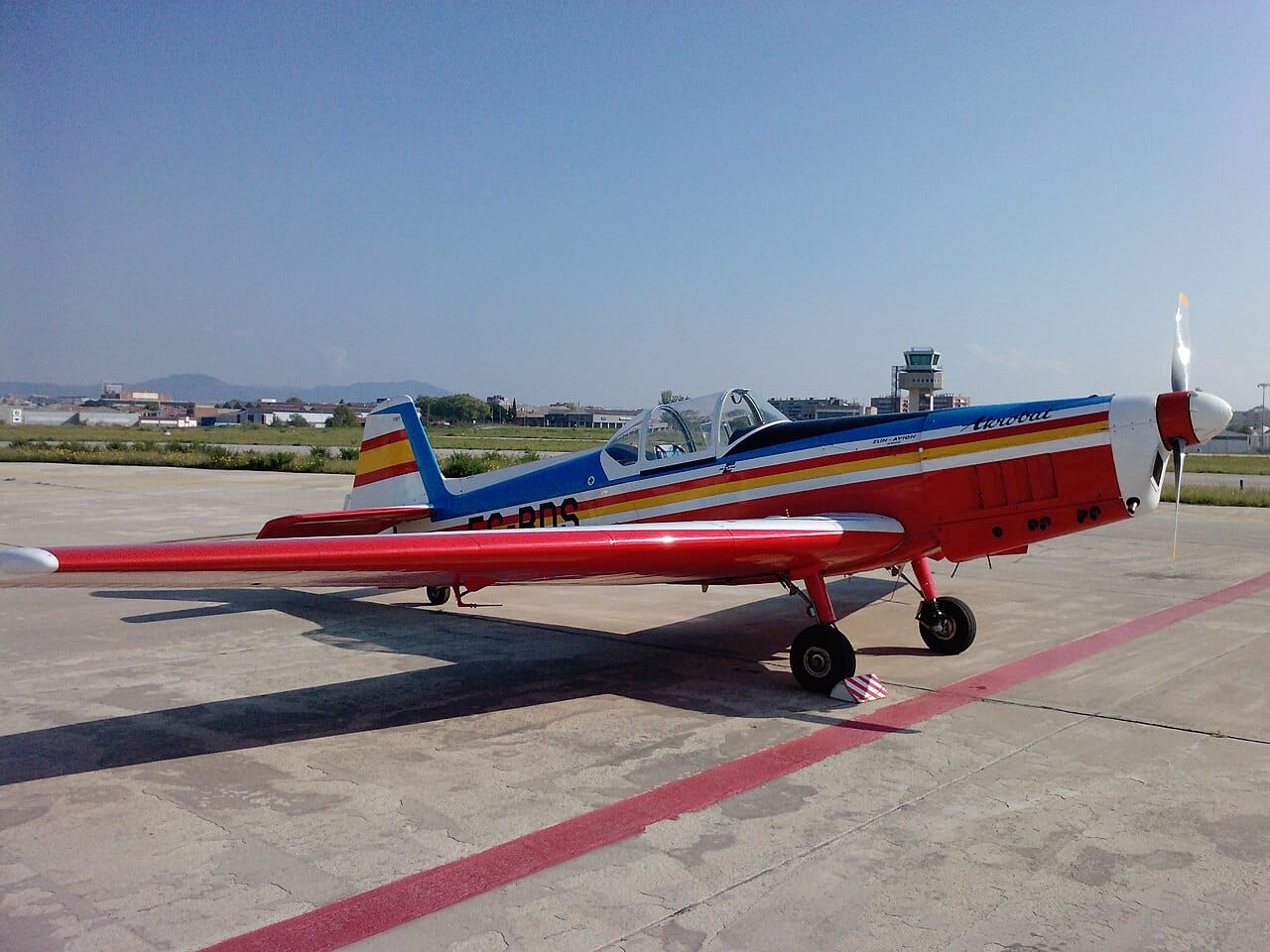
The clip below is a modern reconstruction of the sequence — there was no camera rolling that day in 1970, only a pilot, a folding wing, and a mind that refused to freeze.
Neil Williams wrote the book on aerobatics — literally; his 1975 Aerobatics is still a bible for competition pilots. He was killed in 1977 ferrying a vintage bomber through cloud into a Spanish mountain, alongside his wife Lynn. But the day the wing folded, he proved that the most powerful instrument in any cockpit is a pilot who keeps thinking.
Sources: AOPA; FLYING THINGS (Michael Riley); AAIB report; Wikipedia.
0 commentaire