
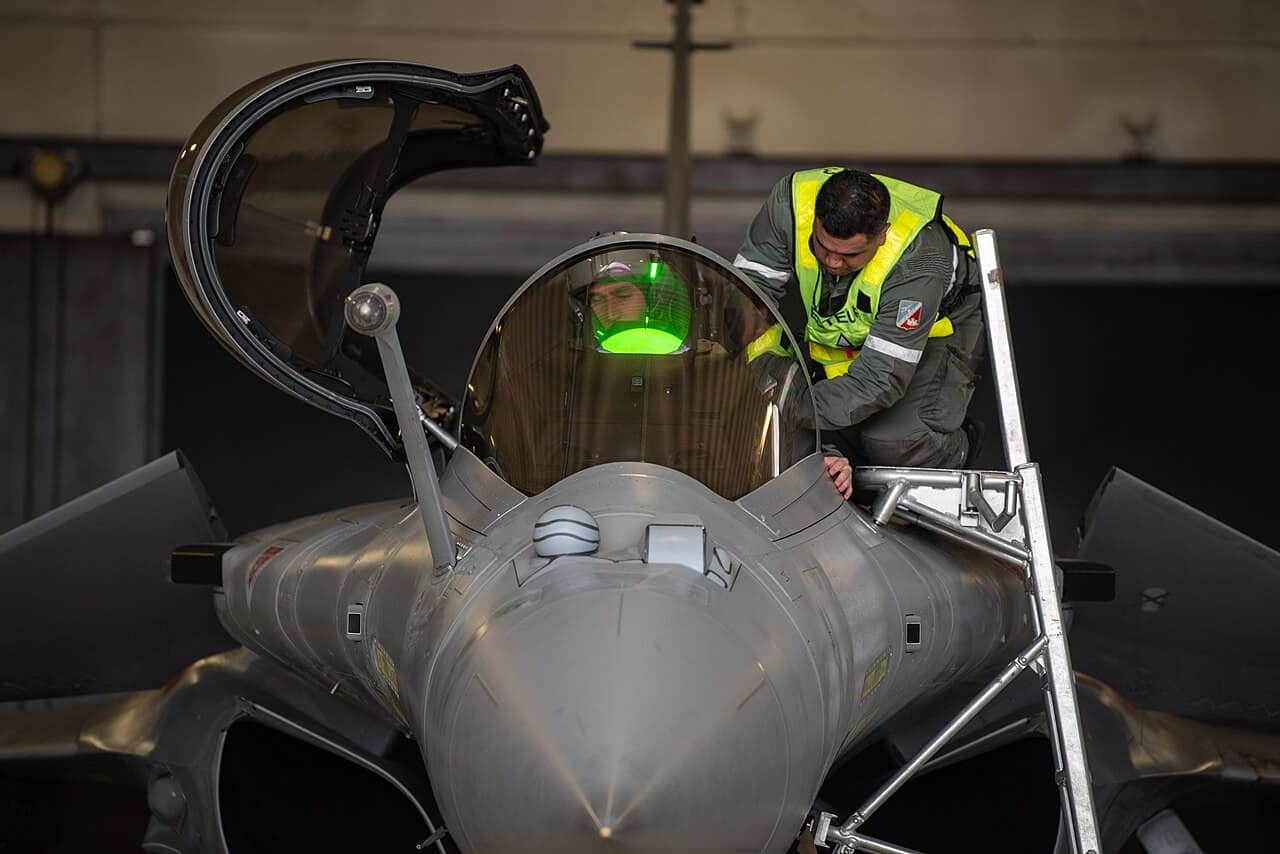
France is the only member of NATO that delivers part of its nuclear deterrent from a fighter cockpit, and the only one whose deterrent answers to nobody outside Paris.
Last week two French Rafales flew alongside German Eurofighters in the first joint activity of a new bilateral arrangement, and Berlin announced that German forces would take part in a French nuclear exercise before the end of the year. That is a genuine departure from sixty years of French practice, and it is worth understanding what exactly is being opened up, because the answer is narrower and more interesting than the headlines suggest.
Informations clés
The force: Forces Aeriennes Strategiques, constituted 1964
Aéronef: around forty twin-seat Rafale B, based at Saint-Dizier, roughly 200 km east of Paris
Weapon: ASMPA-R, the renovated air-launched supersonic nuclear cruise missile
Predecessor aircraft: Mirage IV, then Mirage 2000N, withdrawn September 2018
First ASMPA-R live firing: during the French nuclear exercise Operation Durandal, May 2024
Other leg: submarine-launched ballistic missiles, which carry the larger share of the deterrent
Release authority: the President of the Republic, alone
The question that started it
French nuclear doctrine begins with a question Charles de Gaulle put to John F. Kennedy in 1961: would the United States really trade New York for Paris?
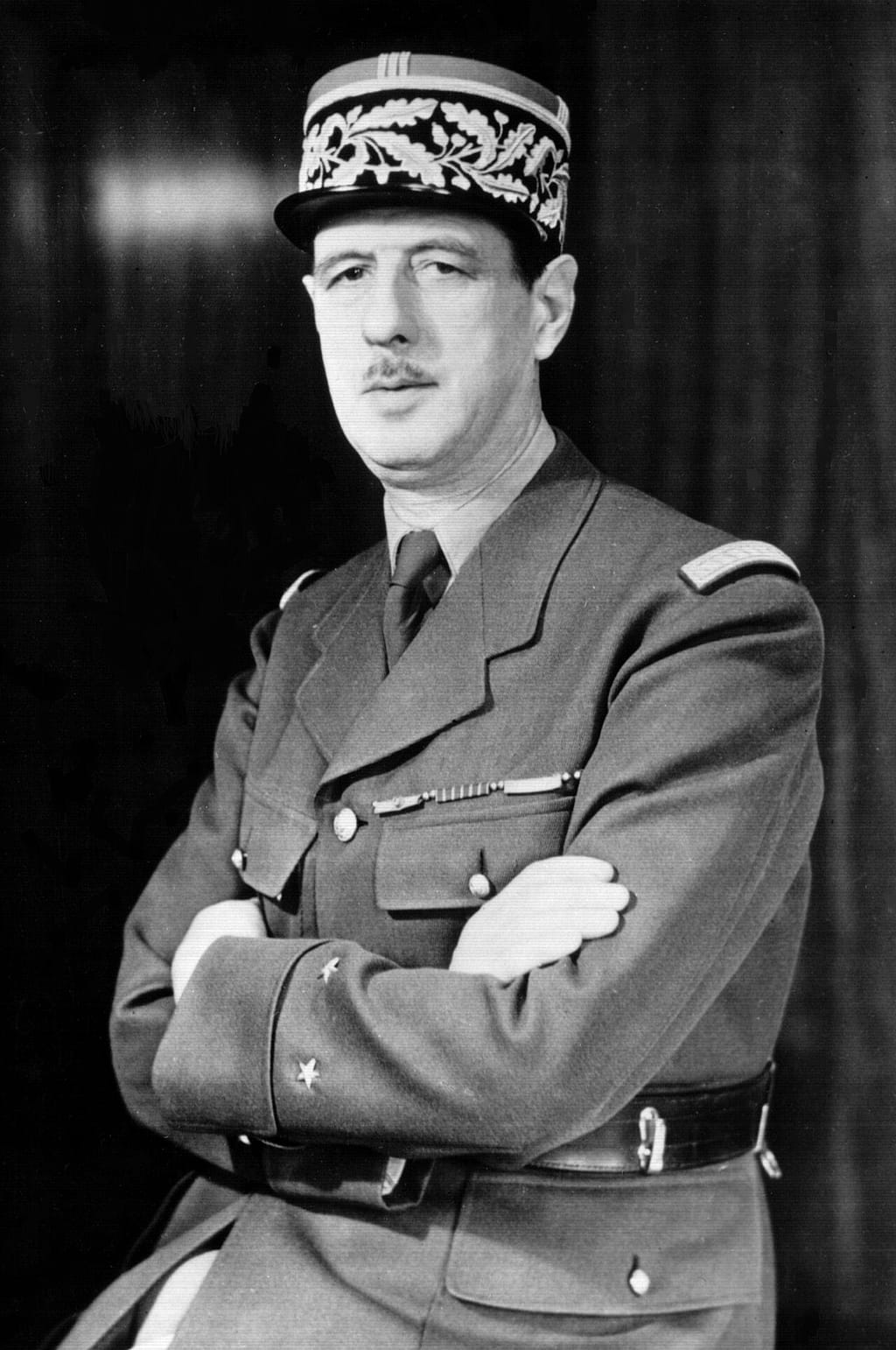
It was not rudeness. It was a serious observation about extended deterrence. An American president promising to defend Europe is promising to accept the destruction of American cities on behalf of foreign ones, and de Gaulle concluded that no French government could sensibly build its survival on that promise being kept under maximum pressure.
So France built its own, outside NATO's integrated command structure, answering to the French president and nobody else. Sixty years later that architecture is unchanged, and the current debate about European deterrence is a debate about how much of it France is willing to share.
Deterrence of the strong by the weak
France never tried to match Soviet or American arsenals, and its doctrine does not require it to. The French formulation is dissuasion du faible au fort, deterrence of the strong by the weak.
The logic is proportional rather than symmetrical. France does not need to threaten the destruction of a superpower. It needs to hold enough at risk that no rational aggressor could consider the gain worth the price. The traditional French phrase is that the arsenal must be able to tear off the arm of an attacker. Not defeat him. Cost him more than France is worth taking.
This is why a comparatively small force is doctrinally sufficient, and why French planners have never been drawn into the numerical arms racing that shaped American and Soviet thinking.
Why the aircraft has two seats
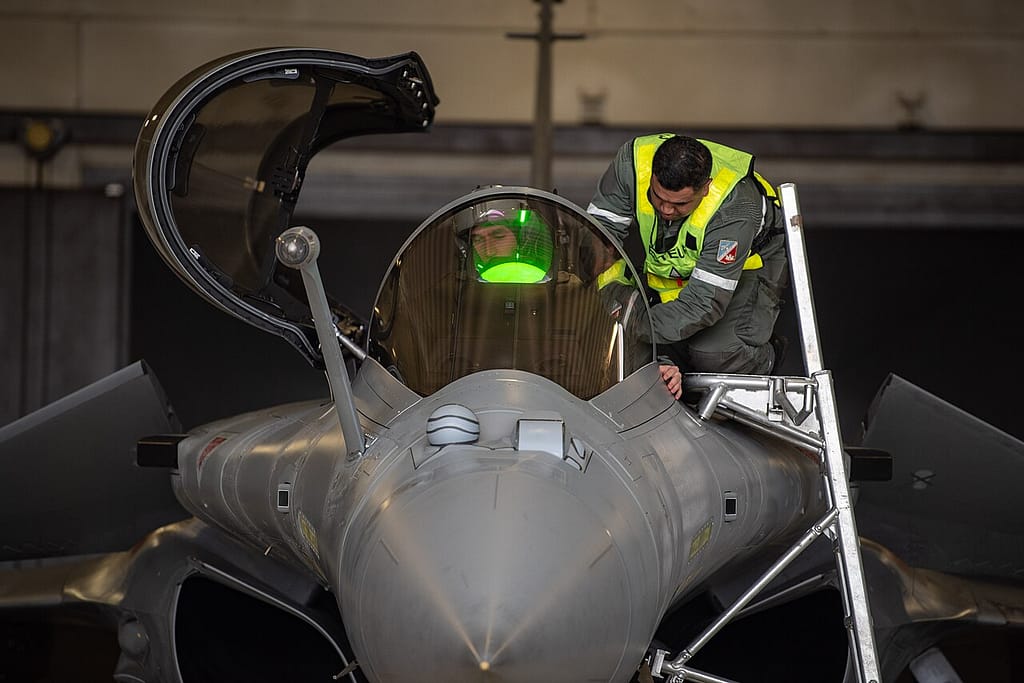
The Forces Aeriennes Strategiques fly the Rafale B, the twin-seat variant, from Saint-Dizier. The second seat is not a training arrangement. The airborne nuclear mission is flown with a weapons systems officer, because the navigation, authentication and weapon-release sequence is not something you ask one person to manage while also flying a low-level penetration profile.
The lineage runs Mirage IV, then Mirage 2000N, then Rafale B. The Mirage 2000N was withdrawn in September 2018, at which point the two remaining squadrons regrouped at Saint-Dizier and the Rafale became the sole airborne delivery platform.
The weapon is the ASMPA-R, a renovated version of the air-sol moyenne portee missile. It is supersonic, it is launched at stand-off range rather than dropped over the target, and it was first fired in a live test during Operation Durandal in May 2024. The renovation extended range and fitted a new warhead.
The ultimate warning
Here is the concept that makes the airborne leg strategically distinct, and it is the reason France keeps it despite having submarines.
A ballistic missile submarine is invisible. That is its strength and, in one specific scenario, its weakness: an adversary cannot see you preparing to use it, so it cannot function as a visible signal short of actual use.
Aircraft can. French doctrine includes what is described as the ultimate warning: in a crisis, the President can order strategic aircraft to launch, not to strike, but to be seen launching. The aircraft appear on radar. The adversary observes, unmistakably, that France has moved to the last step before nuclear use.
It is a message delivered in the only language guaranteed to be understood, and it is reversible right up until it is not. That capacity for a visible, recallable signal is what the aeroplanes provide and the submarines cannot.
What is actually being shared
Now the important qualification, because this is where reporting tends to go wrong.
Germany is not receiving French weapons. It is not gaining a consultation right over their use. There is no dual-key mechanism of the sort that governs American weapons stored in Europe. What has been agreed is a Nuclear Steering Group co-chaired by the President and the Chancellor, German conventional participation in a French nuclear exercise, joint visits to strategic sites, and the sharing of procedure and practice.
President Macron's own description of the cooperation was a list of processes, not capabilities: explaining aspects of how France operates, sharing closely held practices, offering joint exercises, and building trust between teams and experts.
Decision authority has not moved an inch. It remains with one person in the Elysee, exactly as de Gaulle designed it. What is being offered is familiarity, and in deterrence familiarity has real value: allies who have exercised alongside a force understand what its signals mean, and an adversary watching that cooperation has to factor in a wider set of possible responses.
Why now
The timing is not mysterious. European governments have spent three years reassessing how much they can assume about American security guarantees, which is the same question de Gaulle asked in 1961 and which France answered by building its own arsenal.
The difference is that in 1961 the French answer was purely national. In 2026 it is being cautiously extended outward, on terms that concede nothing about who decides.
Whether that becomes a genuine European deterrent or remains an elaborate exercise in confidence-building is not something this year will settle. But the question is live for the first time since de Gaulle asked it.
Sources: Elysee, French Ministry of the Armed Forces, The Aviationist, Air and Space Forces Magazine, Key Aero, France 24, Al Jazeera.

0 commentaire