
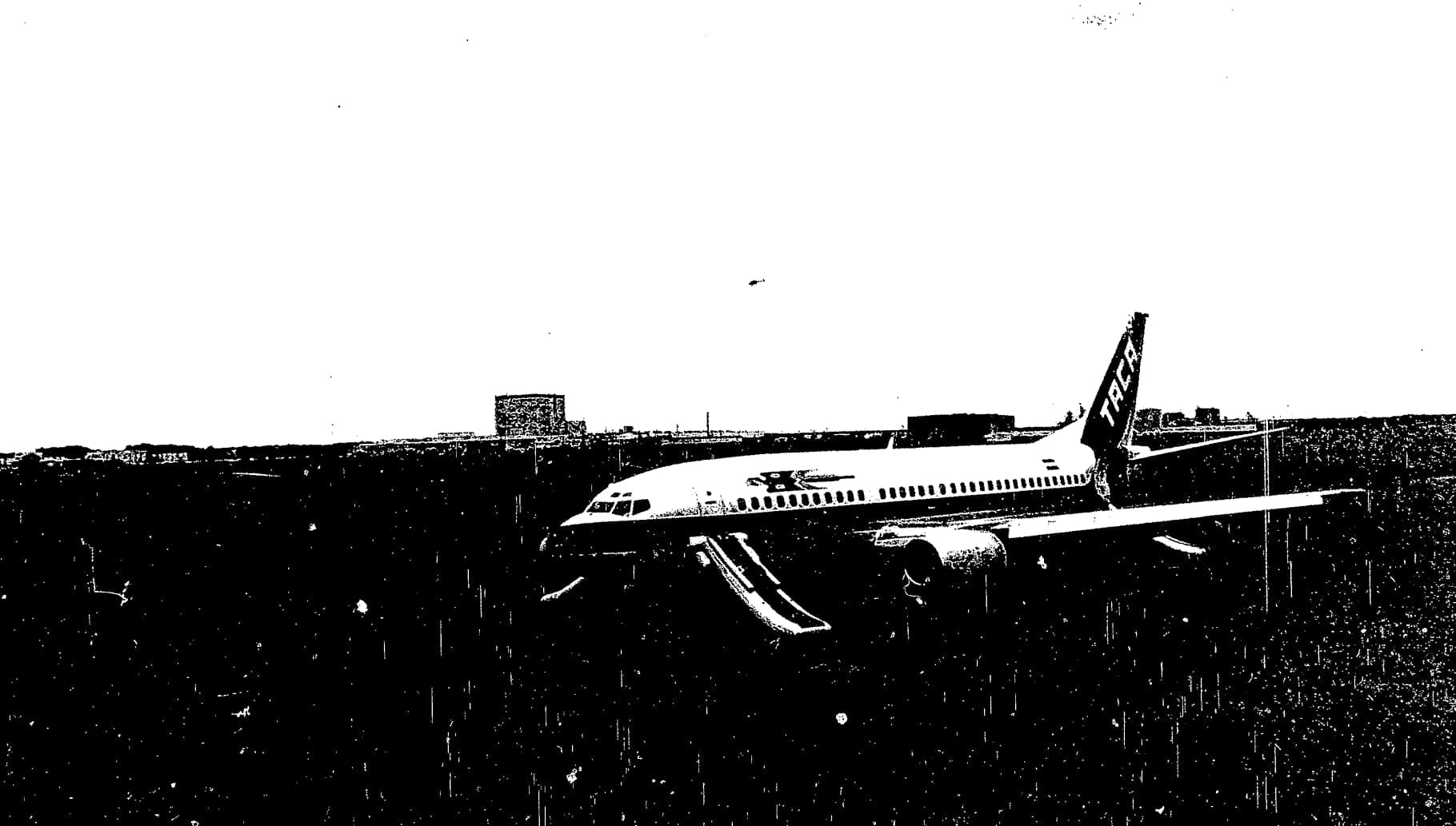
On the afternoon of 24 May 1988, a nearly new Boeing 737-300 was threading between thunderstorm cells on approach to New Orleans. In the left seat sat Captain Carlos Dárdano — twenty-nine years old, and flying with one eye, the other lost to gunfire in his war-torn homeland.
Then the unthinkable happened twice at once. Torrential rain and hail drowned the fire in both engines as they idled for the descent. The thrust died, the cockpit went dark, and a jetliner full of people became a sixty-tonne glider over the swamps east of the city.
No runway was in reach. What followed was one of aviation’s most improbable saves — and a coda stranger than the emergency itself.
Informations clés
| Date | 24 May 1988 |
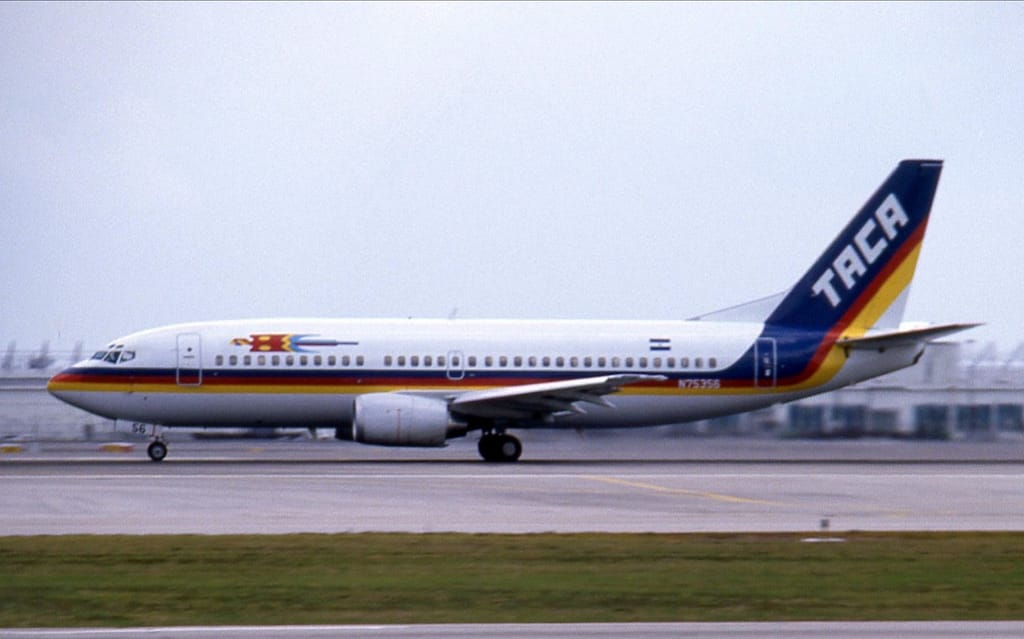
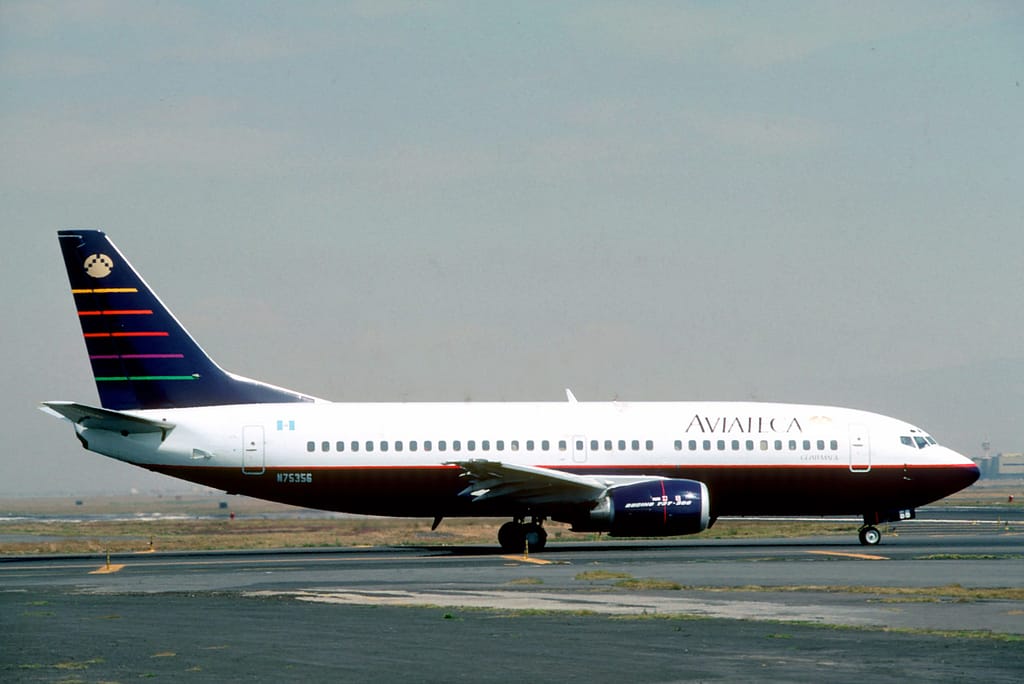
| Aéronef | Boeing 737-300 (N75356), only months old |
| Opérateur | TACA International, inbound to New Orleans |
| Ce qui s'est passé | Both CFM56 engines flamed out in heavy rain and hail at ~16,500 ft |
| Capitaine | Carlos Dárdano, 29 — who flew with one eye |
| Landing | A dead-stick touchdown on a grass levee by NASA’s Michoud facility |
| Victimes | None — all 45 aboard walked away |
| Coda | New engines were fitted and the 737 was flown off the levee |
Into a Wall of Rain and Hail
Descending toward New Orleans, the crew saw storms on the radar and picked what looked like a gap between two intense cells. They switched on continuous ignition and engine anti-ice as a precaution. But radar can hide the very worst weather — heavy rain can absorb the signal and read as a deceptively clear shadow.
The gap was not a gap. The 737 punched into rain and hail far beyond anything its engines had truly been tested against.
Both Engines Flame Out
At about 16,500 feet, with the throttles at idle, both CFM56 engines flamed out. The crew started the auxiliary power unit to restore electrics and hydraulics, then tried to relight the engines. They lit — but would not spool up past idle, and pushing the throttles only spiked the temperatures toward a fire. To avoid that, the pilots shut both engines down and committed to a glide.
The extraordinary glide and levee landing of Flight 110.
A Levee Instead of the Water
Dárdano first lined up to ditch in a canal, stretching the glide while the first officer ran the checklist. Then the crew spotted a grass levee running beside the waterway and chose it instead. Using a sideslip to bleed off height and speed, Dárdano threaded the powerless jet onto the narrow earthen bank — on the grounds of NASA’s Michoud Assembly Facility.
Everyone Walks Away
The touchdown was clean. The 737 rolled to a stop with only minor hail damage, the slides deployed, and all forty-five people aboard climbed out with nothing worse than a few bumps. A pilot sent to overfly the spot where the radar target had vanished found the airliner improbably parked, intact, on the levee.
A documentary segment on the double flameout.
They Flew It Off the Levee
The first plan was to barge the jet out with its wings removed. Instead, Boeing changed the engines where it sat, fuelled it lightly, and flew the 737 off a road built atop an old wartime runway. The aircraft returned to airline service and flew for decades more.
The near-disaster also rewrote the rulebook: investigators found the engines had met the water standard of the day, but that standard did not reflect a real thunderstorm. New designs and, in time, an entirely new rain-and-hail certification standard followed.
Footage of the 737 taking off from the old Michoud runway.
Sources: Wikipedia (TACA Flight 110); FAA Lessons Learned / NTSB (FTW88IA109); Peter Garrison, Air & Space (2006).

0 commentaire