
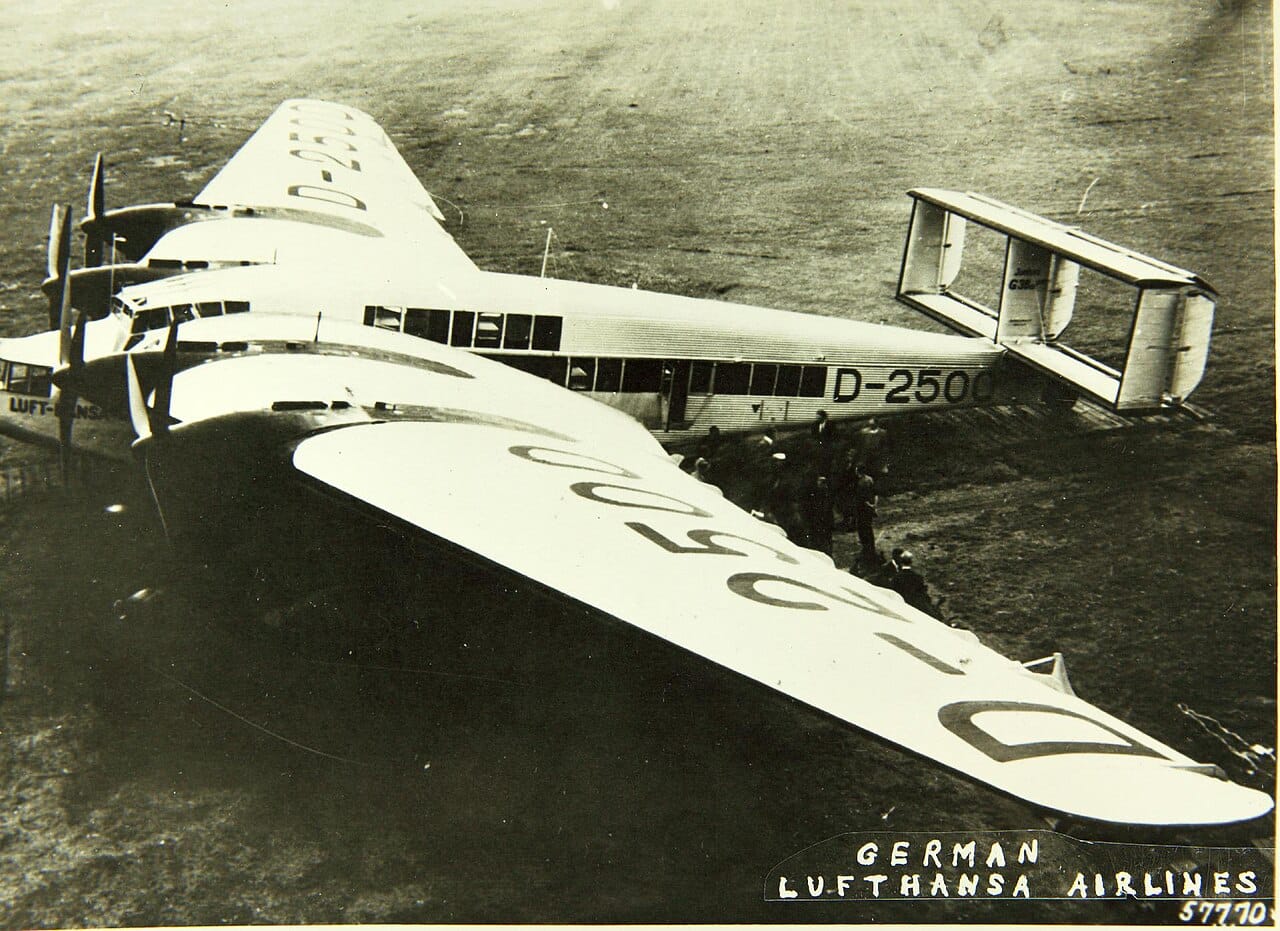
Imagine buying an airline ticket and being shown not to a seat in the fuselage, but into the wing itself — a little cabin built into the leading edge, with a big curved window giving you the pilot’s own view of the world rushing toward you. That was the everyday reality aboard the Junkers G.38, a German giant of 1929 that treated flying not as an ordeal to be survived but as an experience to be savoured.
When it lifted off from Dessau in November 1929, the G.38 was the largest landplane on Earth, beaten in sheer size only by the monstrous Dornier Do X flying boat. And nobody had ever built a passenger aircraft quite like it.
Informations clés
- Aéronef: Junkers G.38
- Premier vol : 6 November 1929, from Dessau
- Claim to fame: largest landplane in the world (after the Do X flying boat)
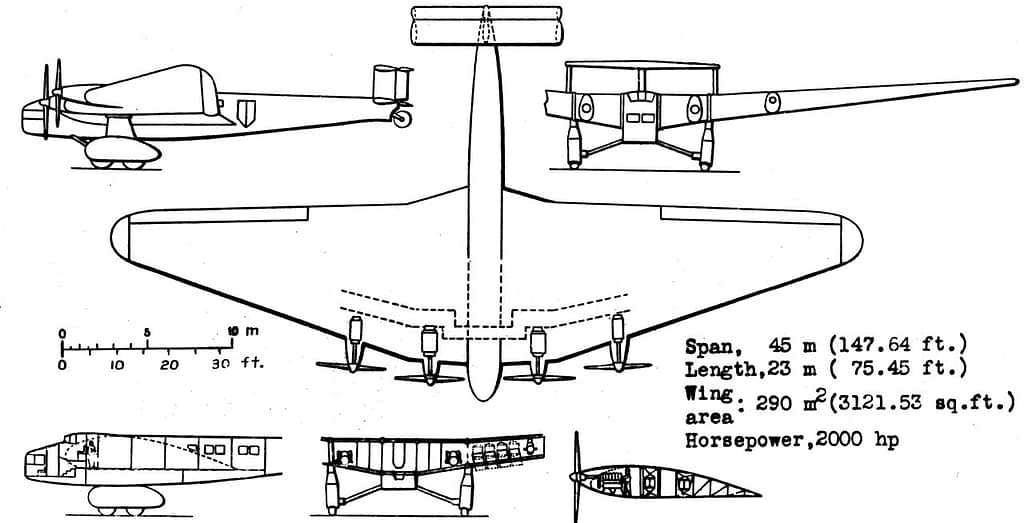
- Envergure: 44 m — wider than many modern narrow-body jets
- Tour de magie : passengers sat inside the wings, with forward-facing windows
- Construit: just two; a six-strong bomber version, the Ki-20, followed in Japan
- Destin: one damaged in 1936, the other destroyed by the RAF at Athens in 1941
A dream sketched in 1910
The idea was older than the aircraft. Hugo Junkers had long believed that an aeroplane should not dangle its passengers beneath a thin wing, but carry everything — people, engines, structure — inside a deep, load-bearing wing. He had sketched the concept as early as 1910; it simply took two decades for engines, materials and money to catch up.
By the late 1920s, with German aviation shaking off the restrictions of the Versailles Treaty, Junkers finally got his chance. The result felt part aircraft, part flying salon.
A flying palace
The G.38 was an all-metal colossus — 23 metres long, with a 44-metre wingspan wider than many of today’s narrow-body jets. Its wings were nearly two metres thick at the root, thick enough to hold passenger compartments and small “engine rooms” where a mechanic could reach and service the motors in flight. From the wing cabins, and from two seats right in the nose, large windows offered a forward view usually reserved for the crew.
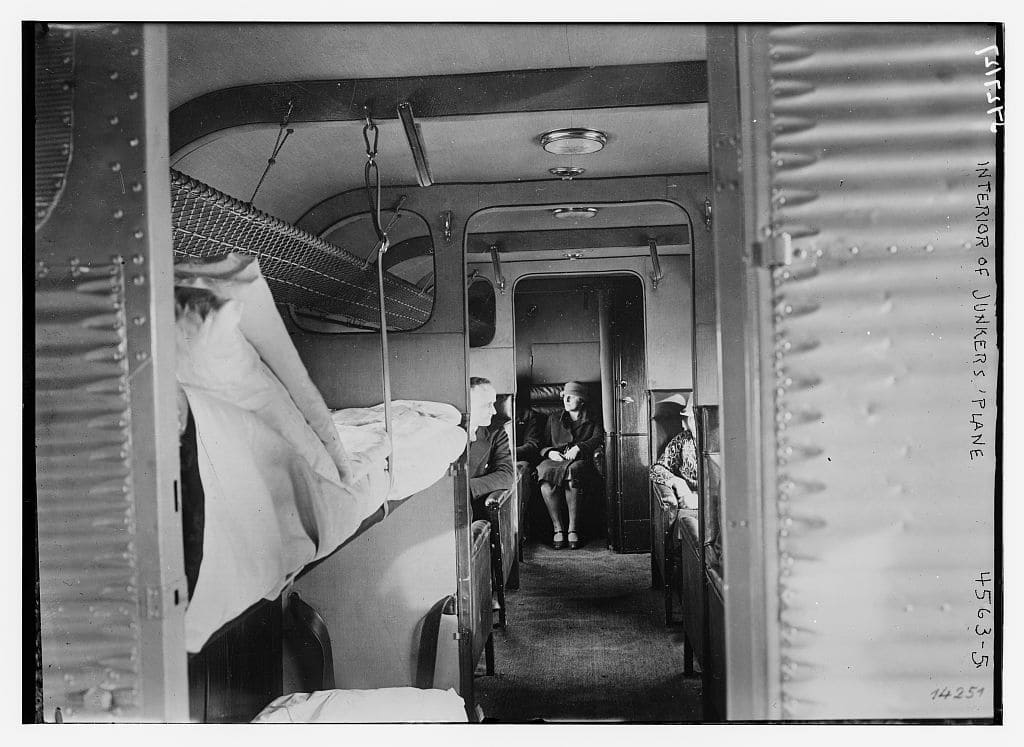
Originally the aircraft carried just 17 passengers in near-airship luxury — wide upholstered seats, a promenade area, a smoking room, a proper washroom. The four engines were buried in the wings, with only driveshafts running out to the propellers, cutting drag and noise. A second, larger machine added a second deck and room for 34.
Too grand for its moment
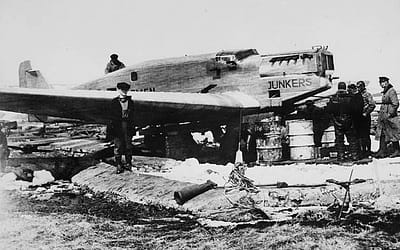
Deutsche Luft Hansa flew the two G.38s across Europe in the early 1930s, from Berlin to London, Vienna and Amsterdam, and the type set records for speed, endurance and payload. Technically it was a triumph. Commercially, its timing could hardly have been worse.
The Great Depression gutted air travel just as the G.38 arrived, and airlines fled toward small, cheap, efficient aircraft like the Junkers Ju 52, which would be built in their thousands. A flying palace needing big crews and heavy maintenance was exactly the wrong aeroplane for a lean decade.
Two aircraft, both gone
Only two G.38s were ever built. The first was damaged beyond repair in a 1936 accident at Dessau and scrapped. The second was seized by the Nazi regime in 1939, pressed into service as a military transport, and destroyed on the ground by British bombers at Athens in 1941. Japan built six bomber derivatives, the Mitsubishi Ki-20, but they never saw combat.
No G.38 was ever built again — not because it failed, but because the world moved on faster than the aeroplane could. For a few short years, though, a lucky few got to fly Europe seated inside a wing, watching the horizon through their own private windscreen.
Sources: Wikipedia; Vintage Aviation News; Airways Magazine; Oleg Antonov State Aviation Museum; NACA Aircraft Circular No. 116.
0 commentaire