
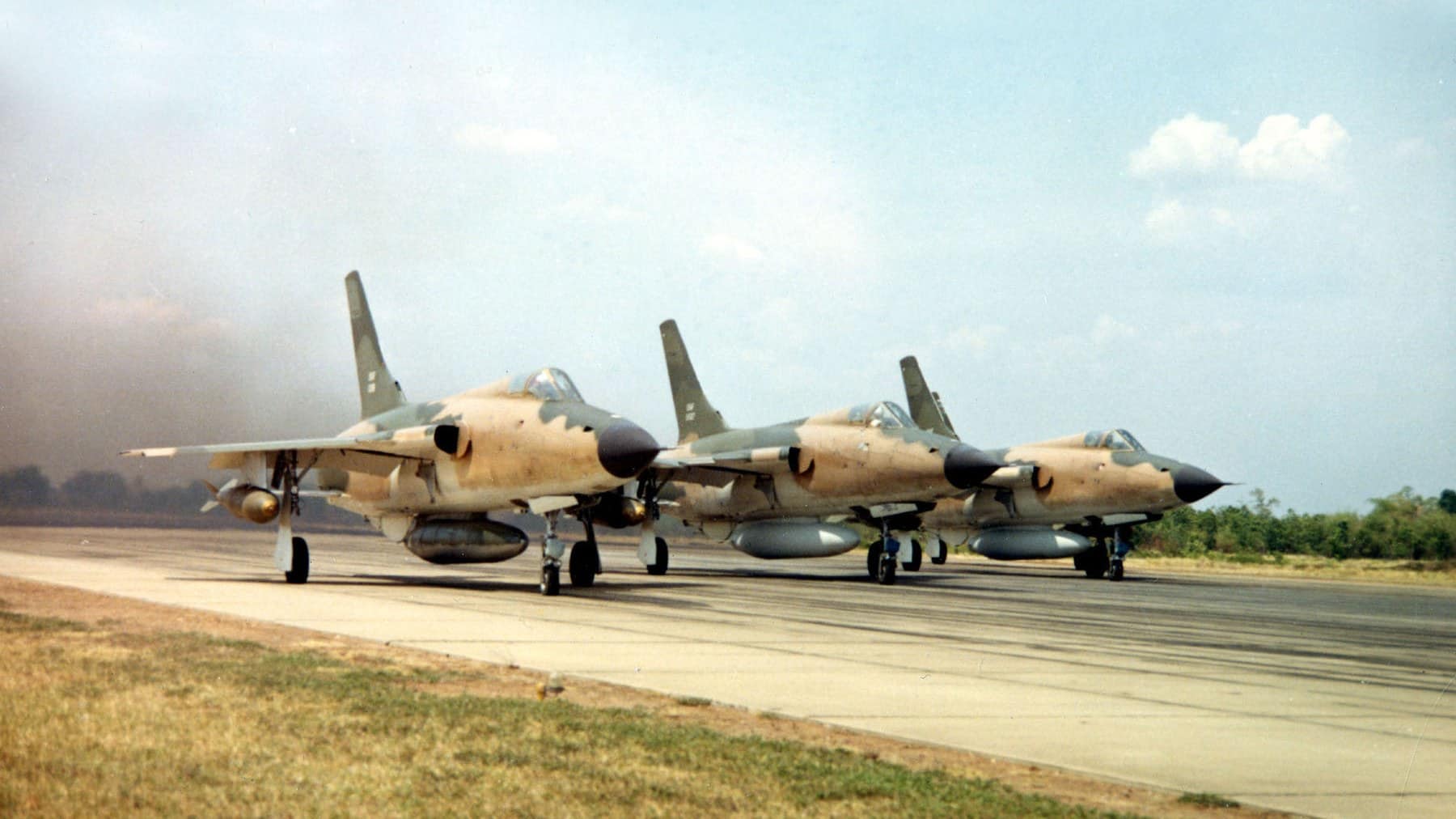
Au nord-ouest de Hanoï s'étend une longue chaîne de montagnes appelée la chaîne de Tam Dao. Les hommes qui ont piloté la République F-105 Les Thunderchief, engagés contre le Nord-Vietnam, ne l'ont jamais appelé ainsi. Ils l'ont nommé d'après leur avion — et en référence au sort tragique de tant d'autres à ses côtés. Ils l'ont appelé Thud Ridge.
La crête était un panneau indicateur signalant l'espace aérien le plus lourdement défendu de la planète. Les pilotes d'attaque venant de Thaïlande utilisaient son mur karstique pour se dissimuler aux radars lors de l'approche, franchissaient le sommet et atterrissaient dans une vallée truffée de canons antiaériens, de missiles SA-2 et de bases de MiG. Puis ils recommençaient le lendemain. Et le surlendemain. Une tournée consistait en 100 missions au-dessus du Nord – si l'on survivait jusque-là.
Le F-105 a effectué la grande majorité des missions de frappe de l'US Air Force lors de l'opération Rolling Thunder, et son coût est sans précédent pour un avion de chasse américain, avant comme après lui. Près de la moitié des F-105 jamais construits ont été perdus en Asie du Sud-Est. Voici l'histoire des pilotes de ces appareils, ceux qui ont transporté les bombes jusqu'au cœur des villes.
Informations clés : F-105 Thunderchief au-dessus du Nord-Vietnam
| Aéronef | Republic F-105 Thunderchief — Chasseur-bombardier Mach 2, 833 exemplaires construits (1955–1964) |
| Conçu pour | Frappe nucléaire de faible intensité ; recours aux bombardements conventionnels au-dessus du Vietnam |
| Campagne | Opération Rolling Thunder, mars 1965 – novembre 1968 |
| Bases | Bases aériennes royales thaïlandaises de Korat et Takhli, Thaïlande |
| Sorties | Plus de 20 000 morts pendant la guerre du Vietnam |
| Pertes | Environ 380 à 395 pertes en Asie du Sud-Est (les chiffres varient) ; environ 330 victimes d’actions ennemies, la plupart à cause de la DCA. |
| Combat aérien | Crédité de 27,5 victoires contre des MiG, contre 17 défaites face à des MiG. |
| Tournée | 100 missions au-dessus du Nord-Vietnam |
| Le nom | “ Crête de Thud ” = les montagnes Tam Dao au nord-ouest de Hanoï |
Le mauvais jet, piloté magnifiquement
Le F-105 n'a jamais été conçu pour de telles missions. Republic l'a imaginé dans les années 1950 comme un avion de combat nucléaire rapide : un pilote, un moteur gigantesque, une soute à bombes interne dimensionnée pour une ogive nucléaire tactique, et la capacité de raser le sol à une vitesse proche de celle du son jusqu'au moment de larguer l'arme et de rentrer à sa base. C'était l'un des plus grands chasseurs monomoteurs jamais construits — si imposant et si lourd que les pilotes plaisantaient en disant que le « Thud » pouvait distancer n'importe quel appareil en ligne droite et se faire distancer en virage par n'importe quel avion, même par une piste d'atterrissage.
Le Vietnam lui confia une tâche différente : transporter jusqu'à environ 6 400 kg (14 000 lb) de bombes conventionnelles — une charge plus lourde que celle transportée par un B-17 de la Seconde Guerre mondiale — contre des ponts, des gares de triage et des dépôts, semaine après semaine, contre des défenses qui s'épaississaient à chaque raid.
L'avion s'est avéré fiable, rapide au sol et réputé pour sa robustesse. En revanche, il n'a pas permis de mener à bien la mission. Le constat était sans appel : l'issue était tragique.
Aller au centre-ville
Les cibles prioritaires se situaient dans le secteur 6, la zone autour d'Hanoi et d'Haiphong que les pilotes appelaient “ le centre-ville ”. Une journée de frappe commençait avant l'aube en Thaïlande, passait par un point de ravitaillement en vol au-dessus du Laos, et concentrait les forces vers la crête. Le camouflage du terrain permettait de gagner quelques minutes d'ombre radar ; ensuite, le bruit sourd des tirs appartenait aux canons.
Les défenses du Nord-Vietnam étaient un système complexe à plusieurs niveaux : des milliers de pièces d’artillerie antiaérienne de 37 mm et plus, des missiles sol-air SA-2 qui forçaient les Américains à se réfugier sous le feu de la DCA, et MiG-17 et MiG-21 S'élevant des aérodromes, les pilotes d'attaque pouvaient apercevoir le dessous de leurs ailes. L'immense majorité des pertes de F-105 étaient dues à des tirs antiaériens classiques et sans gloire.
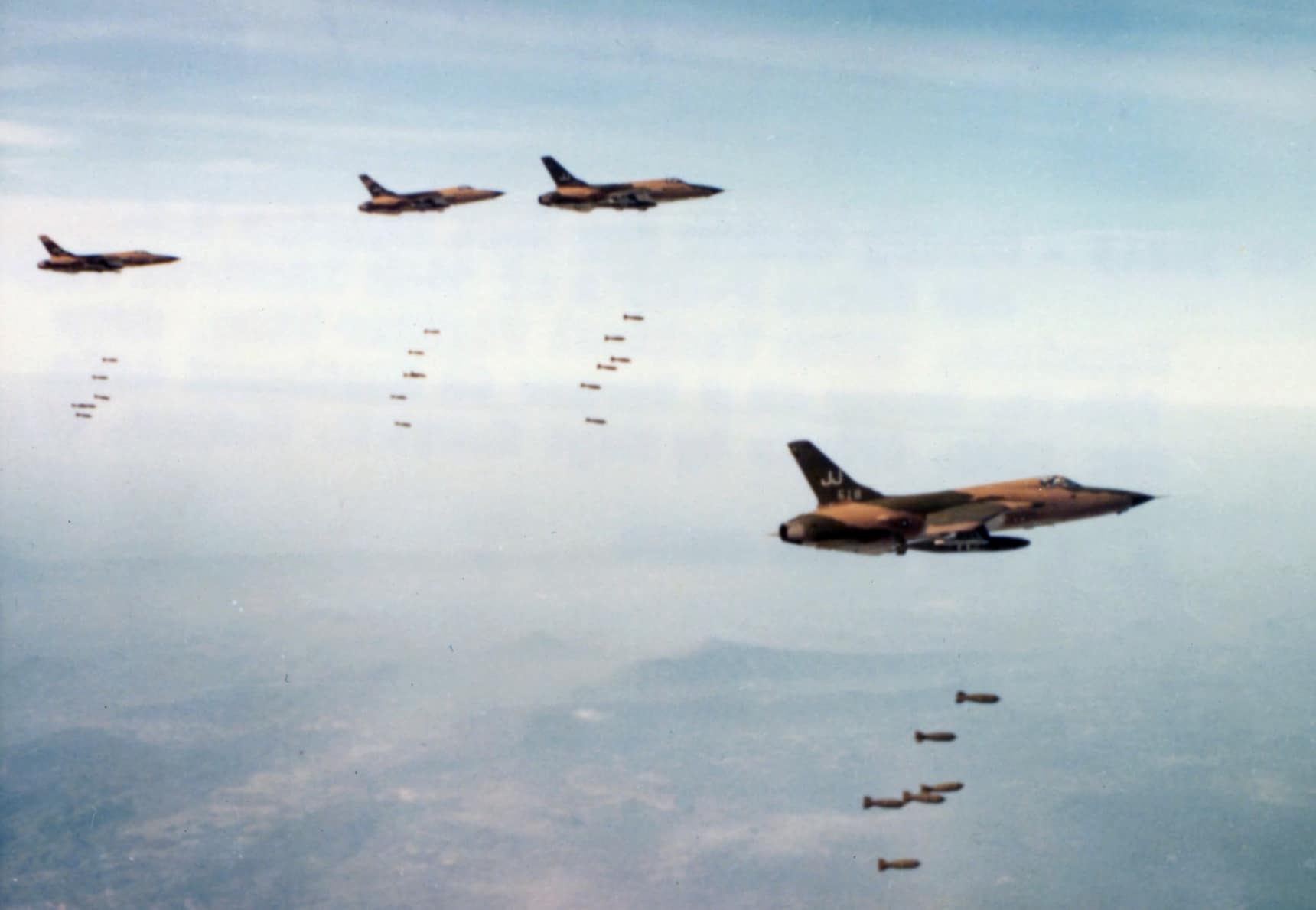
Même la géographie était hostile. Hanoï se situait à quelque 1 100 km des bases thaïlandaises où se déroulaient les missions, et un Thud endommagé au combat devait entreprendre un long et pénible voyage de retour à travers le Laos. Les pilotes atteignaient les 100 missions ou non : durant les périodes les plus difficiles de l’opération Rolling Thunder, les chances de terminer une mission sans encombre étaient extrêmement faibles.
Et ils ont continué. Selon les propres estimations de l'US Air Force, le F-105 est responsable d'environ trois quarts des frappes aériennes menées contre le Nord lors de l'exercice Rolling Thunder.
Des règles écrites à 12 000 kilomètres de distance
Ce qui exaspérait les pilotes de Thud, ce n'était pas l'ennemi, mais le règlement. Le président Johnson et le secrétaire à la Défense McNamara, terrifiés à l'idée d'entraîner la Chine ou l'Union soviétique dans le conflit, avaient confié le choix des cibles à Washington et avaient encadré la campagne par des règles d'engagement aussi complexes qu'un document juridique. Le colonel Jack Broughton, commandant en second de la 355e escadre de chasse tactique de Takhli, décrivait ce document avec la précision d'un pilote de chasse.
Ces règles ont engendré des situations qui auraient pu prêter à rire si elles n'avaient pas été mortelles. Pendant une grande partie de la campagne, la base de MiG de Phuc Yen, pourtant bien visible à côté de la crête, était interdite d'accès. Broughton en a été témoin, mission après mission, depuis le cockpit.
Les MiG qu'il ne parvenait pas à atteindre au sol décollaient quelques minutes plus tard, coupant les lignes arrière de son groupe de frappe. Les pilotes de Thud ripostèrent vaillamment : les F-105 furent crédités de 27,5 MiG abattus, principalement des MiG-17 touchés par le canon interne de 20 mm, contre 17 Thud perdus face aux MiG. Mais chaque combat aérien détournait l'attention de la mission principale, et chaque bombe larguée pour combattre représentait une mission gâchée.
L'arithmétique de la survie
Les chiffres sont éloquents, quelle que soit la version des faits. Sur les 833 Thunderchief construits, les pertes officielles en Asie du Sud-Est s'élèvent à environ 380 à 395 appareils, selon les critères de comptabilisation – soit près de la moitié des F-105 jamais produits. Environ 330 ont été abattus par l'ennemi, la grande majorité par la DCA, le reste étant détruit par les missiles sol-air et les MiG.
Cet appareil est souvent décrit comme le seul avion américain retiré du combat en raison d'un taux de pertes insoutenable — en 1968-1969, l'armée de l'air était tout simplement à court de Thuds. La production avait cessé en 1964 ; aucun remplaçant n'a été prévu. F-4 Le Phantom a pris le relais dans le rôle de frappe, tandis que les F-105F et G Wild Weasels biplaces ont continué à traquer les radars SAM jusqu'à la fin de la guerre.
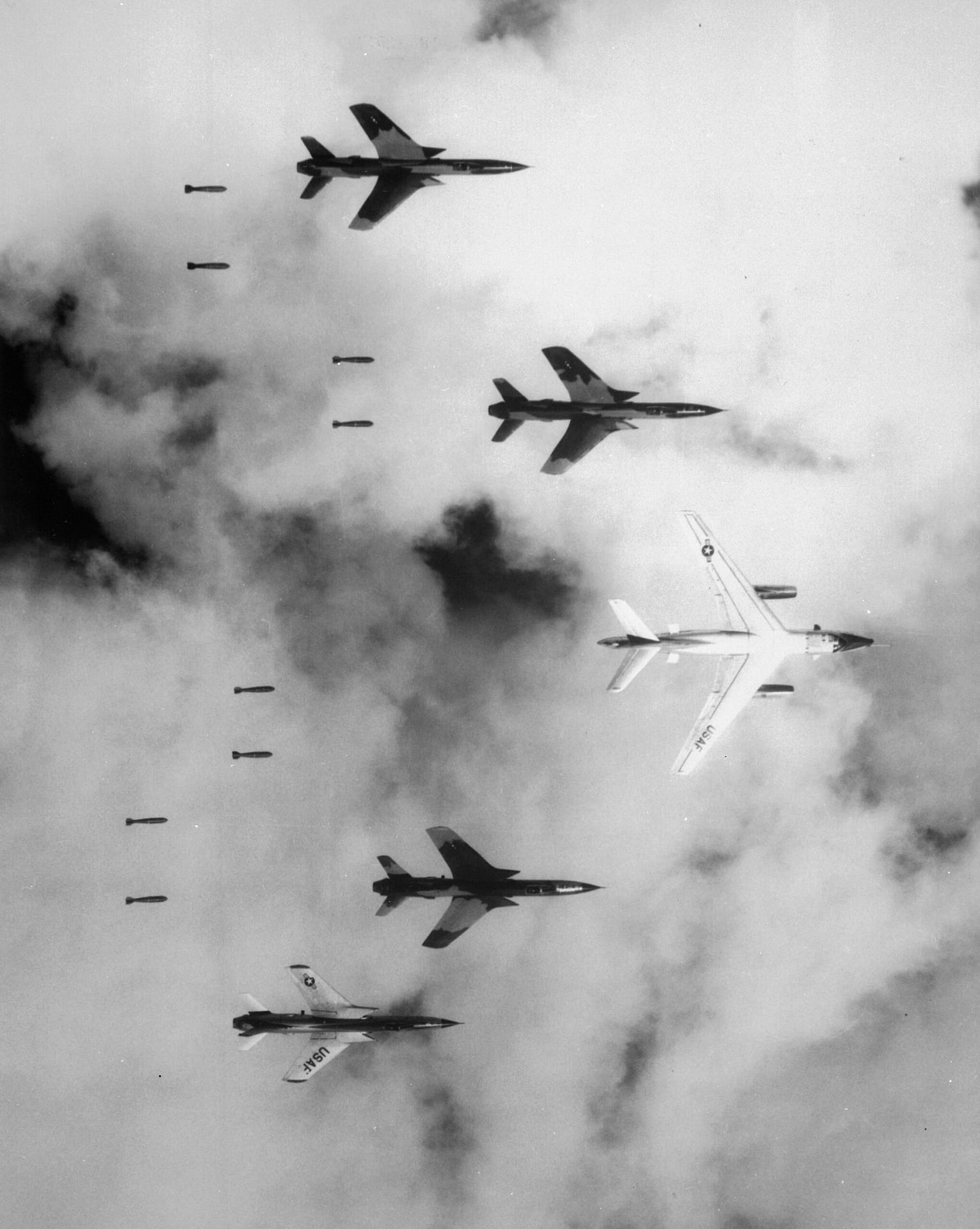
Les chiffres, cependant, ne rendent pas compte de ce que cette campagne a exigé de chaque être humain. Le même pilote, suivant le même itinéraire, passant devant les mêmes canons qui avaient tué ses camarades la veille – une centaine de fois. Deux aviateurs de F-105 ont reçu la Médaille d'honneur, tous deux membres de l'escadrille Wild Weasel ; l'héroïsme des pilotes d'attaque s'est plutôt manifesté par de petits actes anonymes, un passage à travers la DCA après l'autre.
Leurs confrères chasseurs de missiles SAM ont leur propre histoire — nous l'avons racontée dans notre article sur le Belettes sauvages. Ce message s'adresse aux hommes qui se trouvaient à l'origine de ces modèles D chargés de bombes.
L'homme qui l'a écrit
Les pilotes d'attaque trouvèrent leur voix en Broughton. Ancien élève de West Point et vétéran de la guerre de Corée, il effectuait lui-même les missions les plus difficiles, emportait un petit magnétophone dans son cockpit et retranscrivait les échanges radio au mot près. Crête de Thud, Publié en 1969, alors que la guerre faisait encore rage, cet ouvrage n'a jamais cessé d'être réédité. John McCain l'a qualifié de meilleur récit au jour le jour des combats aériens au Vietnam, et il a par la suite figuré sur la liste de lecture professionnelle du chef d'état-major de l'armée de l'air.
La carrière de Broughton s'acheva comme son livre l'avait prédit. En 1967, il détruisit les pellicules des caméras embarquées pour protéger deux de ses pilotes accusés d'avoir mitraillé un cargo soviétique, fut traduit en cour martiale et sa condamnation fut annulée – trop tard pour sauver ses pilotes. Ces derniers n'oublièrent jamais son choix. L'artiste de guerre Maxine McCaffrey, qui séjourna sur les bases de Thud, a recueilli leurs témoignages à son sujet.
L'opération Rolling Thunder s'est achevée en novembre 1968 sans parvenir à percer les lignes ennemies à Hanoï, et le débat sur les raisons de cet échec – gradualisme, règles d'engagement, cibles choisies lors de déjeuners informels à Washington – n'a jamais vraiment cessé. Les pilotes de ces missions ont rendu leur verdict plus tôt et de manière plus économique, en désignant une chaîne de montagnes.
Les derniers Thuds ont quitté le combat dans le cadre de l'opération Wild Weasel et ont été retirés de la réserve de l'armée de l'air en 1984. La crête est toujours là, bien sûr. Le nom aussi. Sur les cartes aéronautiques, c'est la chaîne de Tam Dao ; dans tous les bars d'escadrille qui se respectent, ce sera à jamais la crête des Thuds.
Sources : Wikipédia, Air & Space Forces Magazine (John T. Correll), Musée national de l’US Air Force, The Aviation Geek Club
Questions connexes
Qu'était-ce que le F-105 Thunderchief ?
Le Republic F-105 Thunderchief était un imposant chasseur-bombardier américain Mach 2, dont 833 exemplaires furent construits entre 1955 et 1964. Conçu pour les frappes nucléaires à basse altitude, il fut finalement affecté aux bombardements conventionnels au-dessus du Nord-Vietnam, où il effectua la majeure partie des missions de frappe de l'US Air Force durant l'opération Rolling Thunder. Les pilotes le surnommèrent " Thud "."
Qu'était-ce que Thud Ridge ?
« Thud Ridge » était le surnom donné par les pilotes américains à la chaîne de montagnes Tam Dao, au nord-ouest d'Hanoï, pendant la guerre du Vietnam. Les équipages de F-105 Thunderchief utilisaient son haut mur karstique pour masquer leur approche aux radars avant de plonger dans un espace aérien lourdement défendu. Ce nom combinait le surnom de l'appareil et les pertes subies lors de ses passages à proximité.
Pourquoi le F-105 était-il surnommé le « Thud » ?
" Thud " était le surnom affectueux donné au Republic F-105 Thunderchief, censé évoquer le bruit du gros avion s'écrasant au sol. Malgré cet humour macabre, les équipages respectaient la vitesse et la robustesse de l'appareil. Le « Thud » effectua la majorité des missions d'attaque de l'opération Rolling Thunder et combattit les défenses qui donnèrent naissance au… Belette sauvage mission.
Combien de F-105 ont été perdus au Vietnam ?
Environ 380 à 395 F-105 furent perdus en Asie du Sud-Est, les chiffres variant selon les sources ; environ 330 furent abattus par l'ennemi, principalement par la DCA. Le Thunderchief effectua plus de 20 000 sorties durant la guerre. Ses lourdes pertes au-dessus des défenses d'Hanoï témoignent de l'intensité de la campagne aérienne, qui permit également des exploits tels que… Opération Bolo.
Le F-105 a-t-il abattu des avions ennemis ?
Oui. Bien qu'étant un bombardier, le F-105 Thunderchief a été crédité de 27,5 victoires contre des MiG, contre 17 Thunderchief abattus par ces mêmes MiG en combat aérien. La plupart de ces victoires ont été obtenues grâce à son canon interne, alors qu'il était lourdement chargé de bombes. Ces affrontements au-dessus du Nord-Vietnam se sont déroulés en parallèle de célèbres actions de chasse, telles que… Le piège des MiG au-dessus d'Hanoï.
À quoi le F-105 a-t-il été conçu à l'origine ?
Le F-105 Thunderchief a été conçu à l'origine dans les années 1950 comme un avion nucléaire de chasse à basse altitude : un jet monoplace doté d'un unique moteur énorme et d'une soute à bombes interne dimensionnée pour une arme nucléaire. Il n'a jamais été destiné au rôle de bombardement conventionnel qui l'a rendu célèbre au-dessus du Vietnam, un sort qu'il a partagé avec d'autres appareils de la série Century comme le Sabre ultra YF-107.
0 commentaire