
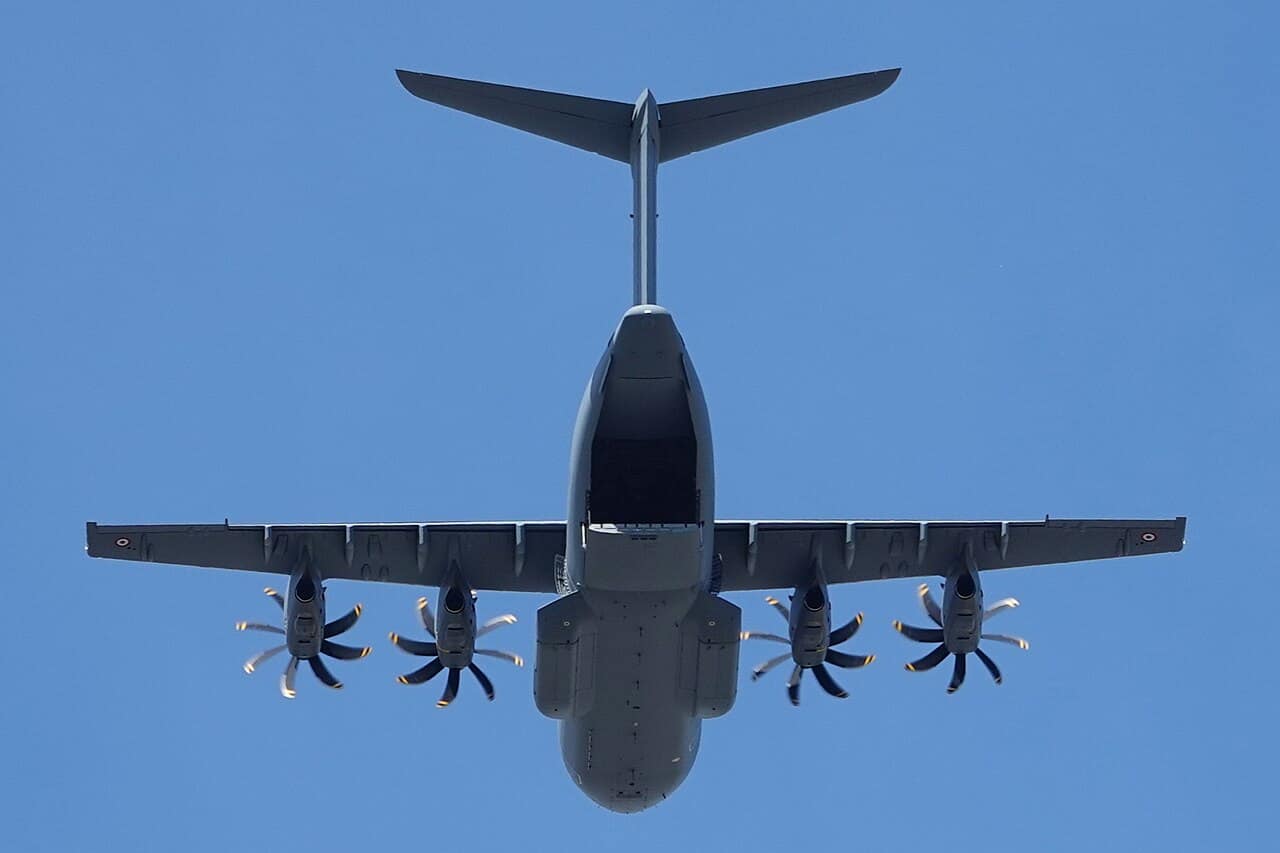
It begins, as these things often do, not with a missile but with a laptop. Somewhere in the cavernous cargo hold of a French A400M Atlas — a hold built to swallow a helicopter or a 37-tonne armoured vehicle — an operator will soon sit at a console, watching sensor feeds scroll past, directing drones and fighters and ground troops scattered across a battlefield far below. The aircraft that hauls the cargo will have quietly become the brain that runs the fight.
That is the promise behind a contract France signed in mid-June 2026. Airbus Defence and Space, working through the European procurement agency OCCAR on behalf of the French defence procurement body DGA, will develop a new suite of capabilities for the A400M known as the Parallel Mission System. The goal is deceptively simple to state and remarkably ambitious to build: take Europe’s workhorse military transport and teach it to spy, to command, and to orchestrate collaborative combat.
It is the clearest sign yet of how Europe sees the future of air power — not as a fleet of ever-more-exquisite fighters, but as a network, with the humble cargo hauler reborn as one of its central nodes.
Quick Facts
- What: France launches development of new ISR, command-and-control and collaborative-combat capabilities for the A400M
- Contract: Signed by Airbus Defence and Space with OCCAR, on behalf of France’s DGA, announced 16 June 2026 at Eurosatory
- Programme name: Parallel Mission System (PMS) — a roll-on/roll-off kit
- Scope: France plans six PMS kits and aims to modify around 20 A400M aircraft
- Timeline: First aircraft fitted in 2027; flight testing in 2028
- Aircraft: Airbus A400M Atlas — four Europrop TP400-D6 turboprops, the most powerful turboprop in the West
From cargo hauler to flying command post
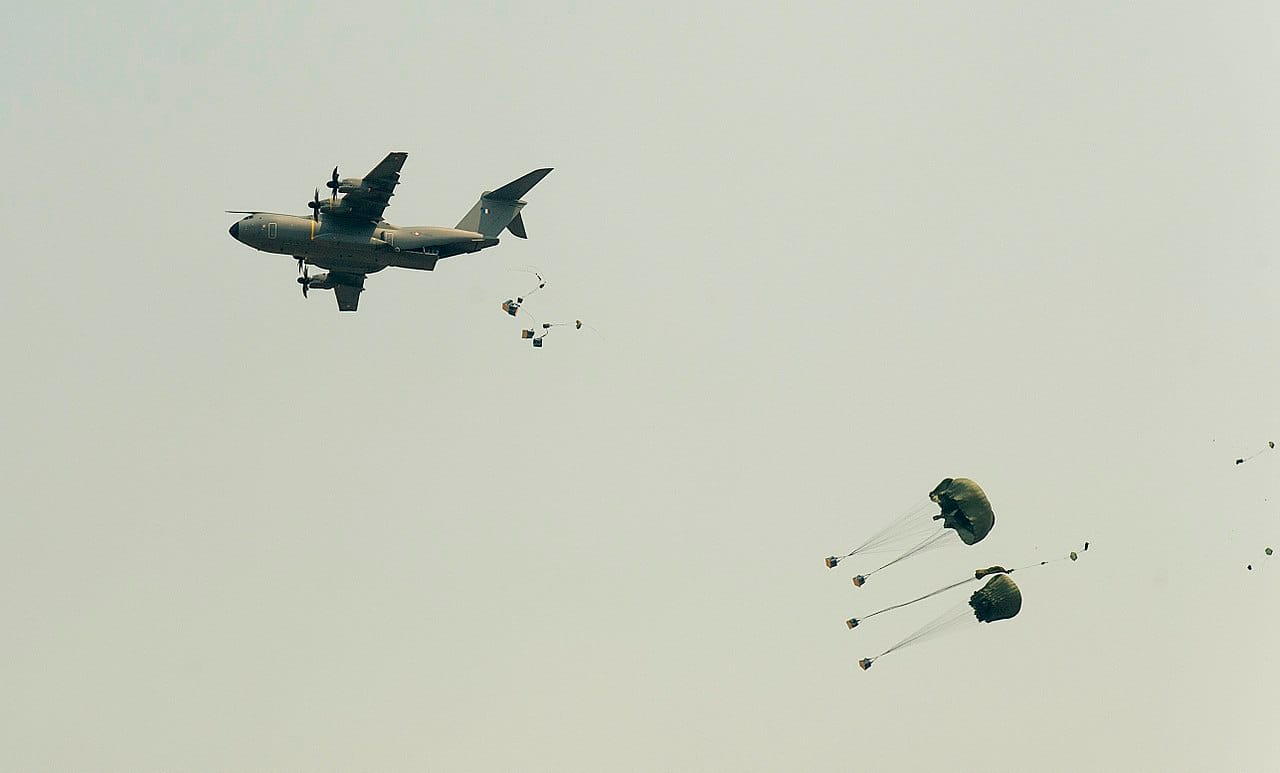
The A400M was designed to move things — troops, vehicles, pallets, paratroopers — over long distances and into rough, unprepared strips. It is very good at that. But a transport spends most of its life as a flying truck, and a truck does not, by itself, win a battle. What the Parallel Mission System does is bolt a second identity onto the airframe.
According to the Airbus announcement, the PMS centres on a new mission system installed on board, with tactical situational-awareness consoles placed in the cargo hold to monitor sensors and coordinate missions. An optronic — electro-optical and infrared — sensor will be integrated onto the aircraft, giving it eyes. The kit is modular: France plans to buy six complete PMS sets and modify around twenty aircraft, with each kit interchangeable between airframes as the mission demands.
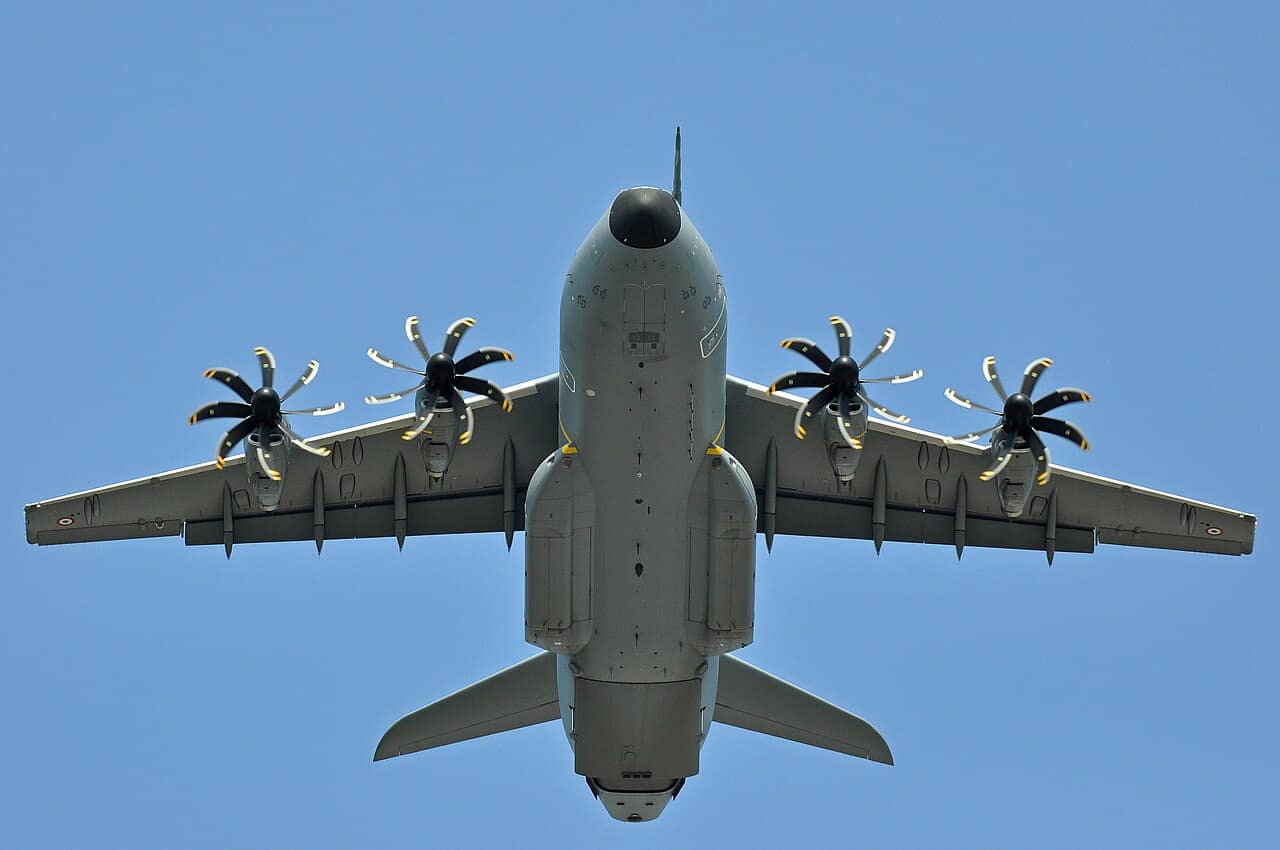
That roll-on, roll-off philosophy matters. Rather than permanently rebuilding a handful of dedicated spy planes — expensive, scarce, and vulnerable to a single hangar fire — France can convert ordinary transports as needed and convert them back. A jet that flew an airdrop on Monday could fly an intelligence mission on Wednesday.
The drone mothership in the hold
Where the programme turns genuinely futuristic is in what Airbus describes as the management of drones and missiles launched from the aircraft’s cargo hold. The same vast bay that once carried a forklift could, in time, become a launch bay for uncrewed systems — the A400M cast as a mothership, dispatching drones ahead of itself and recovering data from them in flight.
Ultimately, the company says, the crew will be able to coordinate missions involving ground troops, helicopters — notably the Tiger attack helicopter and the Caracal H225M — and fighter jets, all in a collaborative-combat mode. That phrase, collaborative combat, is the defining idea of this decade in Western air forces: platforms sharing a single real-time picture and acting as one networked whole rather than a collection of individual aircraft.
It is worth being precise about where this stands. This is a development and upgrade contract, not an aircraft already flying combat missions as a command node. The capability is being built, not delivered. The first French A400M is due to receive the equipment in 2027, with flight testing in 2028 and operational service later in the decade.
Why a transport, and why now
There is an elegant logic to choosing the A400M for this role. It already has the volume, the power, the range and the rough-field toughness. Four Europrop TP400-D6 turboprops — the most powerful turboprop engines built in the West to enter service — give it both the endurance to loiter and the muscle to carry whatever payload the mission planners dream up. An aircraft that can orbit for hours, far from a runway, is exactly the kind of platform a command-and-control node wants to be.
The strategic backdrop is European too. As the continent rearms and leans into sovereign defence-industrial programmes, squeezing more missions out of an aircraft France already operates is both cheaper and more politically palatable than buying a fleet of bespoke American ISR jets. The A400M becomes a multiplier: one airframe, many jobs.
Airbus has signalled this is only the beginning. The company says it is already studying long-range jamming, a mother-ship function for in-flight release of drones and missiles, a payload increase to 40 tonnes, and even aerial firefighting. The Atlas, in other words, is being reimagined less as a single aircraft than as a flexible platform — a flying chassis onto which capability after capability can be bolted.
Call it the Swiss Army knife theory of air power. The flashiest blade is rarely the one you reach for most. France is betting that the most useful aircraft of the coming decade may not be the sleekest fighter on the ramp, but the broad-shouldered transport quietly running the whole show from the back of its hold.
Airbus on preparing “the A400M of tomorrow” — the multi-mission thinking behind France’s new upgrade.
Sources: Airbus Defence and Space press release (16 June 2026); FlightGlobal; Janes; Shephard Media; Europrop / Rolls-Royce TP400-D6 specifications.
Related Questions
What is the A400M Parallel Mission System?
The Parallel Mission System (PMS) is a roll-on/roll-off mission kit that Airbus Defence and Space is developing for France’s A400M. It adds intelligence, surveillance and reconnaissance sensors, tactical situational-awareness consoles in the cargo hold, and an optronic sensor, turning the transport into an airborne command-and-control node without permanently rebuilding the aircraft.
Who signed the A400M ISR contract and when?
Airbus Defence and Space signed the contract with OCCAR, the Organisation for Joint Armament Cooperation, acting on behalf of France’s Directorate General of Armaments (DGA). The deal was announced on 16 June 2026 at the Eurosatory defence exhibition in Paris.
What engines power the Airbus A400M Atlas?
The A400M Atlas is powered by four Europrop TP400-D6 turboprop engines, each rated at around 11,000 shaft horsepower. The TP400-D6 is the most powerful turboprop engine in the West to enter operational service, driving eight-bladed scimitar-shaped propellers.
Will the A400M control drones and fighters?
Yes. The upgraded mission system is designed to manage drones and missiles launched from the cargo hold and, ultimately, to let the crew coordinate missions involving ground troops, helicopters such as the Tiger and Caracal H225M, and fighter jets in a collaborative-combat mode — real-time information sharing across a single network.
When will the new A400M capabilities enter service?
Following the development phase, the new equipment is due to be installed on the first French A400M in 2027 and flight-tested in 2028. France plans to acquire six interchangeable PMS kits and modify around 20 aircraft of its Air and Space Force fleet.
What other A400M upgrades is Airbus studying?
Airbus Defence and Space says it is already exploring further A400M capabilities, including long-range jamming, a mother-ship function for in-flight release of drones and missiles, an increase in payload capacity to 40 tonnes, and aerial firefighting.
0 Comments