
Quick Facts
| Nationality | French 🇫🇷 |
| Aerial Victories | 54 |
| Aircraft Flown | Nieuport 12/16/23, SPAD VII/XIII |
| Wars | World War I |
| Born / Died | 24 Dec 1894 – 11 Sep 1917 (age 22) |
| Unit | Escadrille N3 "Les Cigognes" |

France had many heroes in the Great War, but only one whose name schoolchildren were taught to memorize. Georges Guynemer — pale, chronically ill, too weak to pass a military medical exam — became the soul of French aviation and a national symbol of defiance. He fought as if he had nothing to lose. Because, in a sense, he didn't.
The Sickly Boy Who Wouldn't Be Stopped
Born in 1894 in Paris, Georges Marie Ludovic Jules Guynemer was the son of a military family but a physical disappointment by the standards of the era. He was thin, pale, prone to illness, and was rejected from military service multiple times at the outbreak of WWI. But Guynemer was not a boy who accepted the word "no." He applied to the Aviation Militaire as a student mechanic in 1914 and eventually badgered his way into a pilot seat.
Once airborne, the transformation was total. The frail student became ferocious. His first aerial victory came in July 1915, and he never really slowed down. He flew with furious intensity, pursuing enemies far past the point of safety, refusing to break off engagements that any sensible pilot would have abandoned. He was shot down seven times and wounded twice. Each time, he returned to the cockpit.
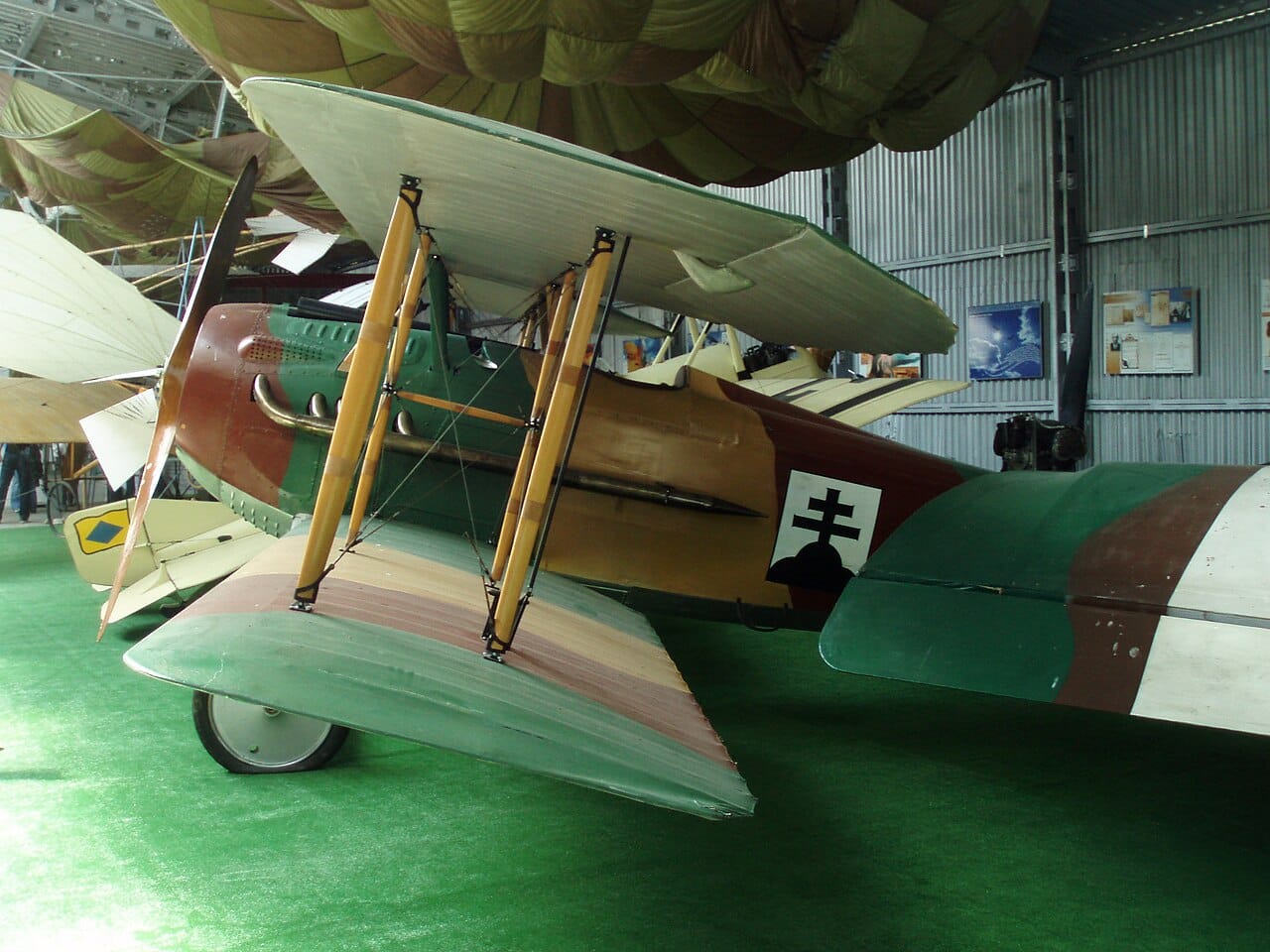
Vieux Charles and the Storks
Guynemer flew with Escadrille N3 — the famous "Storks" squadron (Les Cigognes), France's elite fighter unit whose stork emblem remains iconic in French aviation to this day. He named his aircraft Vieux Charles ("Old Charles") — a name that became legendary. Each version of Vieux Charles was painted with the stork emblem and seemed to embody Guynemer's own stubborn refusal to die.
He was an innovator too. Working directly with engineers at SPAD, he helped develop a two-cannon armament system for the SPAD XII — a massive moteur-canon that fired through the propeller hub. He flew combat missions the same afternoon he tested the new weapon. Guynemer didn't wait for things to be perfected; he tested them under fire.
54 Victories, Then Silence
By September 1917, Guynemer had 54 confirmed aerial victories — the second-highest Allied total of the war. He was awarded the Légion d'honneur, the Médaille Militaire, and virtually every French and Allied decoration that existed. He was 22 years old, burned out, in fragile health, and his superiors were urging him to stop flying. He refused.
On September 11, 1917, Guynemer took off from Poelkapelle, Belgium, and simply vanished. His aircraft was apparently shot down by Leutnant Kurt Wissemann, but no French witness saw it happen, and his body was never recovered. The entire French nation mourned. Schools held memorial services. Children were told that Guynemer had flown so high he could not come back down.
The Myth That Outlived the Man
That last detail — the explanation given to children — captures Guynemer's place in French culture perfectly. He was not merely a pilot; he was a myth in flight. His image appeared on war bonds, in newspapers, in school textbooks for generations after his death. The French Air Force's most prestigious fighter squadron still bears the stork emblem he made famous.
For a boy who couldn't pass a medical exam, he left a remarkably large shadow across the sky.
“The sky is the most beautiful battlefield in the world.”
— Georges Guynemer, Les Cigognes pilotWatch: Georges Guynemer Documentary
Related Questions
Who was Georges Guynemer?
Georges Guynemer was a French fighter ace of the First World War and one of France's greatest national heroes, credited with 54 aerial victories. Frail and repeatedly rejected on medical grounds, he became a symbol of French defiance before disappearing in combat in 1917, aged just 22.
How many victories did Georges Guynemer have?
Georges Guynemer was credited with 54 confirmed aerial victories, among the highest of any French ace of World War I, behind René Fonck. He flew with the elite Escadrille N3, part of the famous "Les Cigognes" (The Storks) group.
What happened to Georges Guynemer?
Guynemer disappeared on September 11, 1917, during a patrol over Belgium, aged 22. His aircraft and body were never recovered, fuelling a legend that he had "flown so high he could not come back down." His loss was a national trauma in wartime France.
What aircraft did Georges Guynemer fly?
Guynemer flew a succession of French fighters, including the Nieuport 12, 16 and 23 and the SPAD VII and SPAD XIII. He famously named his aircraft "Vieux Charles." The same rugged SPAD fighters were flown by fellow French ace René Fonck.
Why was Georges Guynemer a national hero?
Despite frail health that nearly kept him out of the military, Guynemer fought with relentless courage, and the French public embraced his story. Schoolchildren were taught to admire him, and his apparent fearlessness made him the soul of French aviation — much as Britain revered aces like Edward Mannock.
What does Les Cigognes mean?
"Les Cigognes" means "The Storks" — the nickname of a group of elite French fighter squadrons in World War I, marked by a stork emblem. Georges Guynemer flew with Escadrille N3, one of its most famous units, alongside other celebrated French aces of the war.



0 Comments