
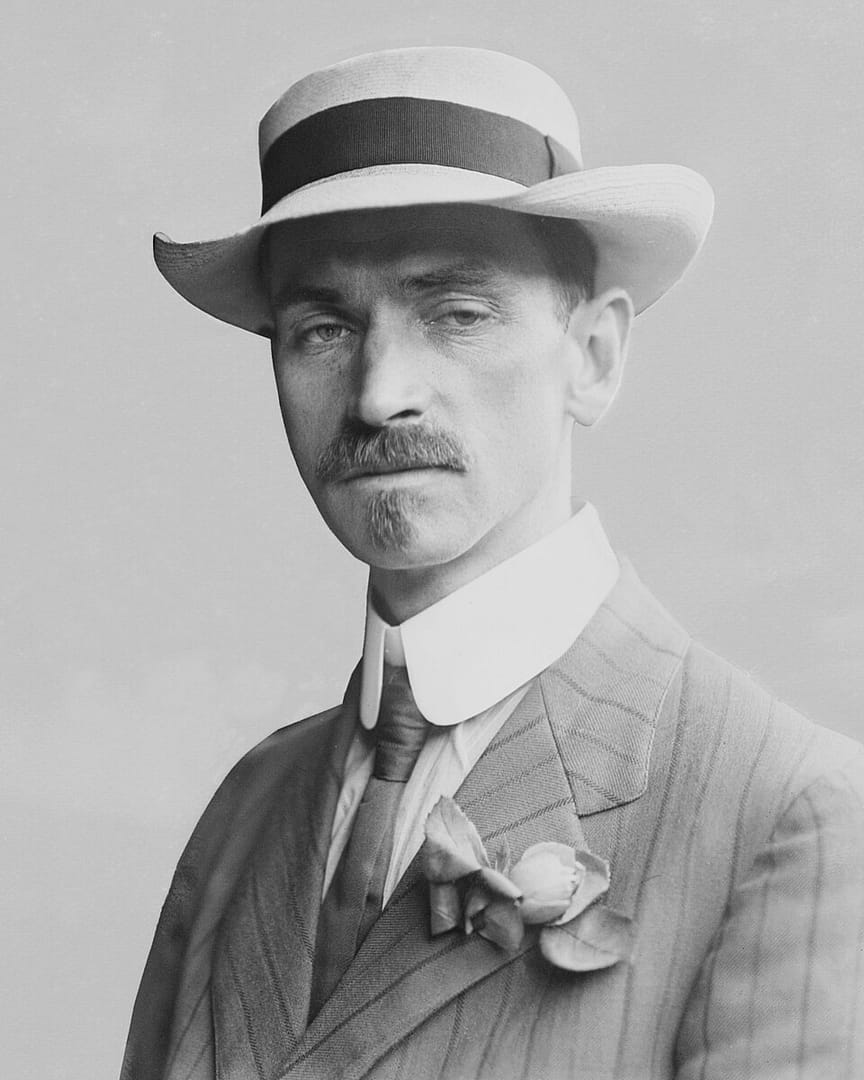
Before Glenn Curtiss had ever sat in an aeroplane, he was already the fastest man in the world. On 23 January 1907, he rode a V8-engined motorcycle of his own construction at 136.3 mph across a measured mile in Ormond Beach, Florida. It was the fastest a human being had ever moved under their own power. Motorcycles led him to engines. Engines led him to the Wright Brothers' circle. And then, inevitably, to aeroplanes.
Quick Facts
| Nationality | American 🇺🇸 |
| Achievement | Won first Gordon Bennett Trophy (1909); invented the seaplane; made first official US public flight |
| Gordon Bennett | 28 Aug 1909 — Reims, France, about 47 mph average speed |
| Seaplane | First practical seaplane, 26 January 1911 |
| Born / Died | 21 May 1878 – 23 Jul 1930 (age 52) |
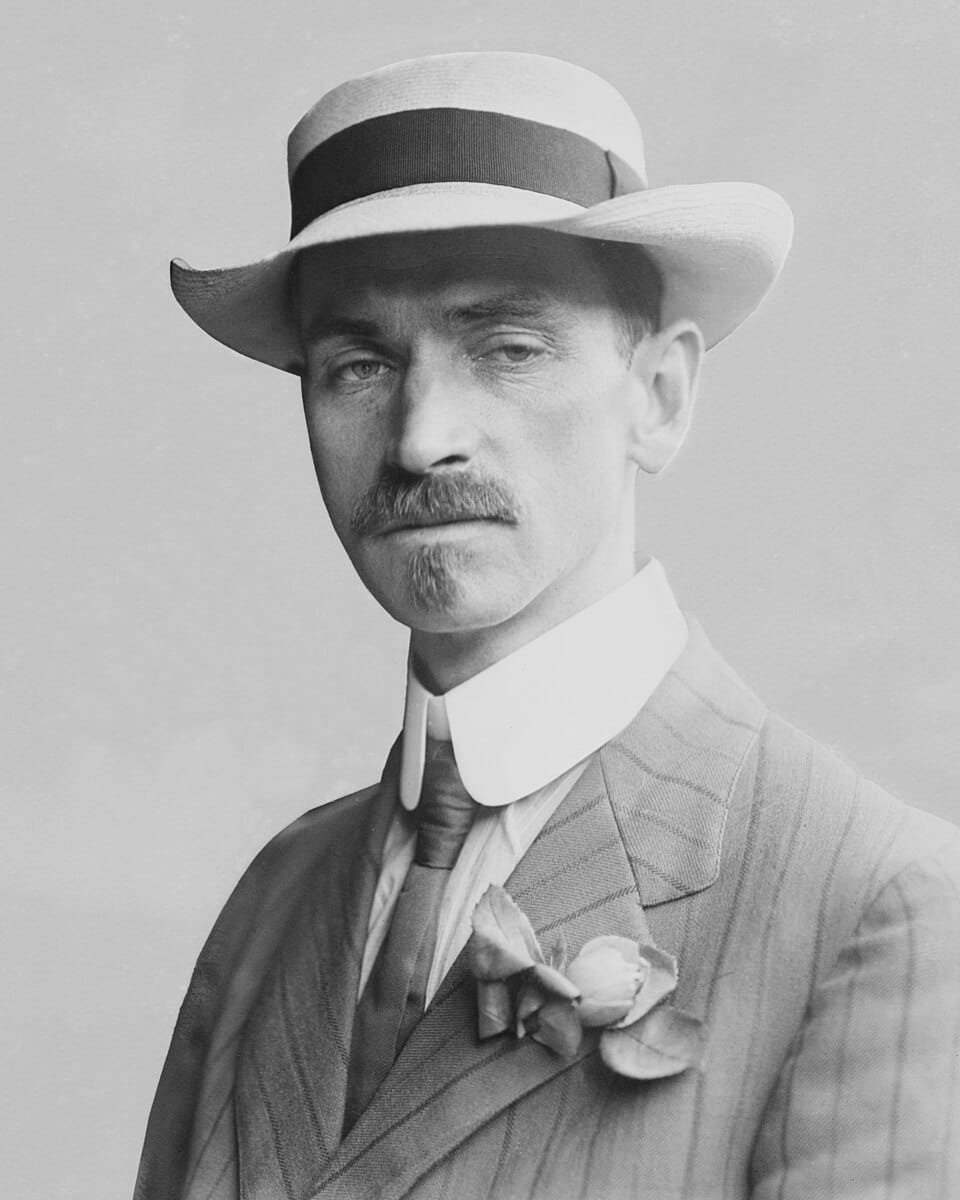
On 4 July 1908, at Hammondsport, New York, Curtiss flew his June Bug biplane more than a kilometre in a straight line — becoming the first official public flight in the United States, as certified by the Aero Club of America. The Wright Brothers had flown before him, but their early flights were private and unverified by sporting authorities. Curtiss collected the Scientific American Trophy that the Wrights had expected to win. It was the beginning of a bitter rivalry that would last for decades and fill American courtrooms.
In August 1909, at the Grande Semaine de l'Aviation at Reims — the world's first great air meet — Curtiss won the Gordon Bennett Trophy for speed, averaging about 47 mph over the course. He beat the best European pilots and established America as a serious aviation nation. That same year, he developed ailerons — hinged control surfaces on the wingtips — as an alternative to the Wrights' wing-warping system. The Wrights sued him for patent infringement. The litigation lasted eleven years.
From Water to War
Curtiss's greatest innovation came not in the air but on the water. On 26 January 1911, he took off from and landed on San Diego Bay in an aircraft fitted with floats — the world's first practical seaplane. He then demonstrated the aircraft to the US Navy, landing alongside the USS Pennsylvania and being hoisted aboard. The Navy immediately understood what it had just seen: an aircraft that could operate from warships, from harbours, from any body of water. Naval aviation was born.
When America entered World War I, Curtiss aircraft — particularly the famous JN-4 "Jenny" trainer — equipped the US military's aviation corps. Nearly 7,000 Jennies were built. They trained the pilots who flew in Europe. After the war, they became the aircraft of the barnstorming era — Charles Lindbergh barnstormed in one. Curtiss died in 1930, aged 52, having transformed aviation from a curiosity into an industry. His legacy is everywhere: every seaplane, every naval aircraft, and every aircraft with ailerons owes something to the motorcycle racer from Hammondsport.
Related Questions
Who was Glenn Curtiss?
Glenn Curtiss was an American aviation pioneer who invented the practical seaplane and made the first official public flight in the United States. Before flying, he set a motorcycle speed record, and he later became one of the Wright brothers' fiercest rivals.
Who invented the seaplane?
Glenn Curtiss built the first practical seaplane, which he flew on 26 January 1911. His work on aircraft that could take off from and land on water made him a foundational figure in the development of naval aviation.
Was Glenn Curtiss the fastest man in the world?
Yes. On 23 January 1907, before he had ever flown an aeroplane, Curtiss rode a V8-engined motorcycle of his own construction at 136.3 mph over a measured mile at Ormond Beach, Florida, the fastest any human had then moved under their own power.
Why did Glenn Curtiss infuriate the Wright brothers?
Curtiss became the Wright brothers' great rival, and his aircraft designs drew him into a bitter, years-long patent war with them over the control of flight. His success competing against their patents made him a constant thorn in their side.
What was the June Bug?
The June Bug was one of Glenn Curtiss's biplanes. On 4 July 1908 at Hammondsport, New York, he flew it more than a kilometre in a straight line, making the first officially certified public flight in the United States.
What did Glenn Curtiss win at Reims in 1909?
On 28 August 1909, Curtiss won the first Gordon Bennett Trophy air race at Reims, France, with an average speed of about 47 mph, establishing himself as one of the world's leading aviators of the era.
0 Comments