
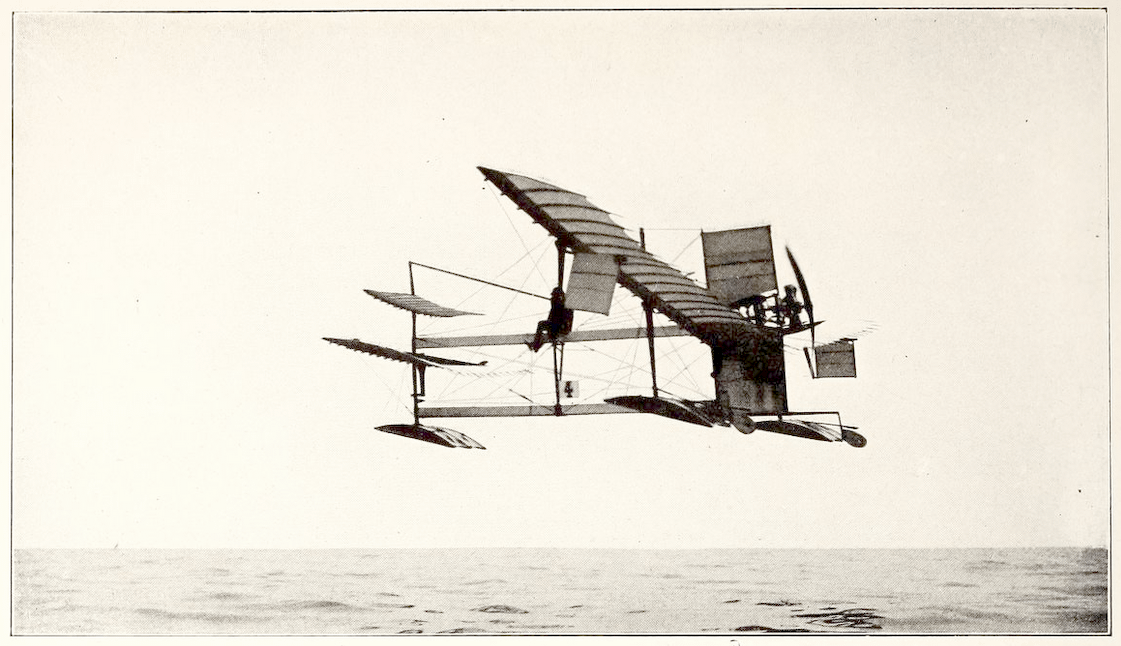
It is the morning of 28 March 1910, and a thin mist still clings to the Étang de Berre, the great salt lagoon west of Marseille. A 27-year-old engineer named Henri Fabre sits astride a slender wooden beam, perched above three flat floats that bob gently on the water. Behind him a Gnome rotary engine spits castor oil and blue smoke as its seven cylinders spin into a blur. He has never flown an aircraft in his life. He opens the throttle, the propeller bites the air, and the contraption begins to skim across the lagoon.
Then the floats lift clear of the surface. For perhaps a quarter of a minute the machine hangs a few metres above the water, travelling some 450 to 500 metres before settling back down in a curtain of spray. The handful of witnesses on the shore have just watched something no one on Earth had ever seen: an aircraft taking off from water under its own power, flying, and landing on water again.
It is the birth of the seaplane. And it was achieved not by a famous aviator, but by a self-funded Marseille shipbuilder’s son who taught himself the physics of flight from first principles.
Quick Facts
- Pilot & designer: Henri Fabre (1882–1984), engineer from Marseille
- Aircraft: the Fabre Hydravion, nicknamed Le Canard (“The Duck”)
- Date: 28 March 1910
- Place: Étang de Berre, near Martigues, west of Marseille, France
- Engine: Gnome Omega 7-cylinder rotary, ~50 hp, pusher propeller
- First hop: roughly 450–500 m; longest of four flights that day ~600 m
- Significance: first powered seaplane to take off from water under its own power
- Legacy: Fabre’s float patents were bought by Voisin and studied by Glenn Curtiss
A Duck That Learned to Fly
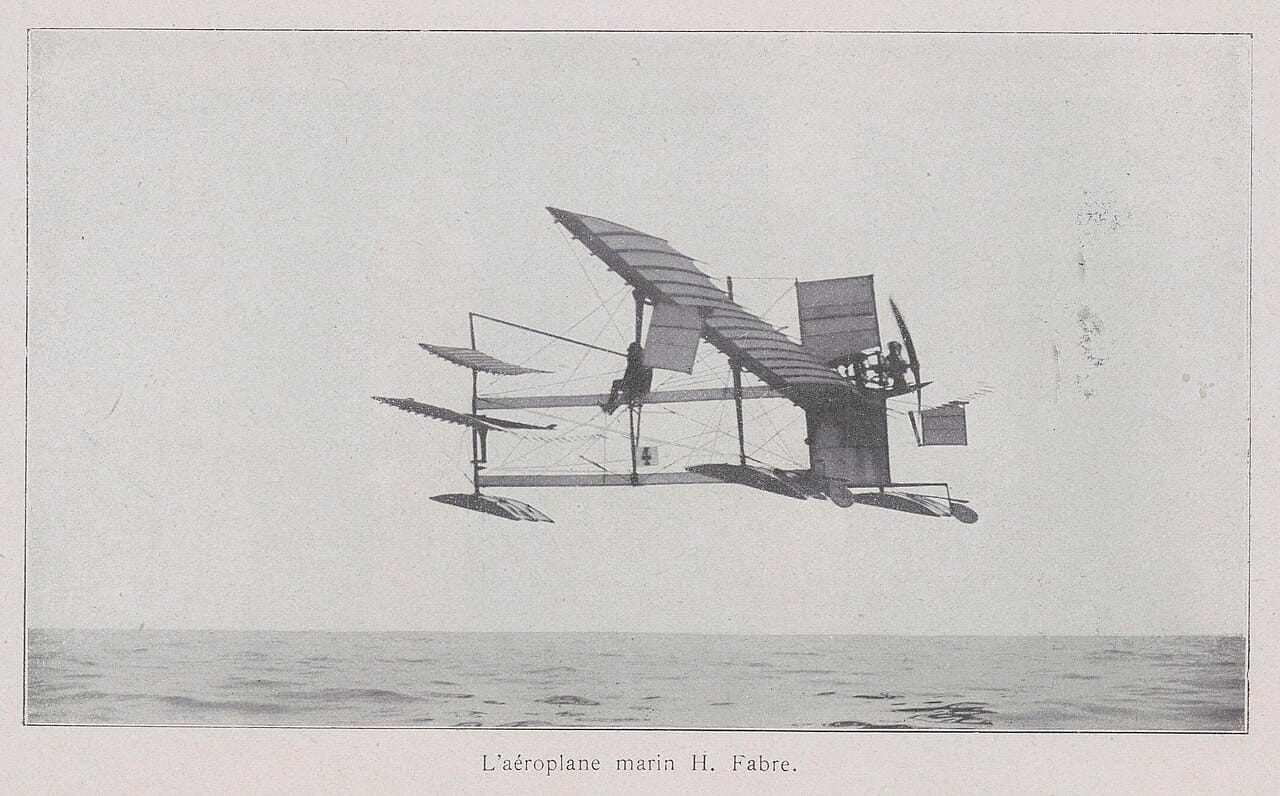
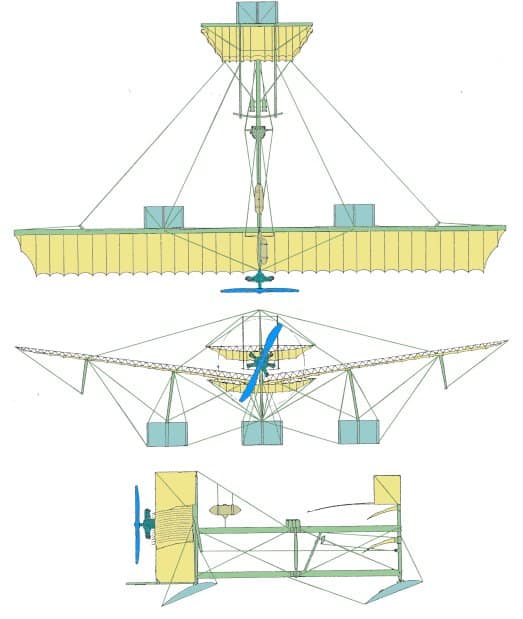
The aircraft Fabre built looks, to modern eyes, barely like an aeroplane at all. It was a spindly lattice of varnished wood, more fish skeleton than flying machine. Yet every line of it was deliberate. Fabre called it nothing in particular; the French press of the day labelled it an aéroplane marin, a “sea aeroplane.” History remembers it as Le Canard — the Duck — for the small foreplane, or canard surface, that sat ahead of the main wing.
It was a monoplane some 14 metres across and 8.5 metres long, weighing only about 380 kilograms empty. The pilot did not sit in a cockpit; he straddled the upper of two long box-girder beams that formed the fuselage. Power came from a 50-horsepower Gnome Omega rotary engine driving a wooden pusher propeller. And underneath, three broad flat floats — Fabre’s own patented design — did the work that wheels did on land.
A short film retracing Henri Fabre’s first successful seaplane flight on the Étang de Berre.
The Man Who Had Never Flown
What makes the story remarkable is who Fabre was — and who he was not. He was not a daredevil or a circus aviator. Born in 1882 into a prosperous Marseille family of shipowners, educated by the Jesuits, he was a methodical engineer who approached flight as a problem to be solved on paper before it was attempted in the air.
For four years he worked, largely at his own expense, alongside two assistants: Marius Burdin, a former mechanic to the aviation pioneer Captain Ferdinand Ferber, and Léon Sebille, a naval architect from Marseille who understood how hulls behave on water. Together they refined the float and the lightweight beam structure that Fabre patented — the genuine innovation at the heart of the machine.
When the morning of 28 March arrived, Fabre had logged exactly zero flights as a pilot. He simply pointed the machine down the lagoon, opened the throttle, and held on. That a complete novice could lift a self-designed aircraft off the water on his first serious attempt says as much about the soundness of the engineering as it does about the man’s nerve.
Four Flights in a Single Morning
The first hop covered somewhere between 450 and 500 metres — sources differ slightly on the exact figure — at a height of just a few metres. It was enough. Fabre flew three more times that same day, the longest of the four reaching roughly 600 metres. Within a week he had strung the hops together into a continuous flight of around 5.6 kilometres.
For context, this was barely six years after the Wright brothers’ first powered flight at Kitty Hawk, and only eight months after Louis Blériot had stunned the world by flying across the English Channel. Land aeroplanes were still fragile, dangerous novelties. Yet Fabre had now opened an entirely new frontier: the water. Any sheltered stretch of sea, lake or river could become a runway.
The Floats That Outlived the Aircraft
The Hydravion itself did not last long. Flown by Jean Bécue at the Monaco motorboat meeting, it was wrecked beyond repair on 12 April 1911. No more were built, and Fabre never flew as a pilot again. But the idea — and especially the floats — spread fast.
The brothers Gabriel and Charles Voisin, eager to build a seaplane of their own, simply bought several of Fabre’s floats and bolted them to their Voisin Canard. Across the Atlantic, the American pioneer Glenn Curtiss — who would soon become the dominant name in seaplanes and naval aviation — took close interest in the Frenchman’s work. Fabre went on to build floats for other constructors, including Caudron, whose Hydroaéroplane Caudron-Fabre carried his name.
In that sense, the seaplane and the flying boat — the great Catalinas, Sunderlands and Clipper airliners that would dominate the oceans for the next forty years — all trace their family tree back to a misty morning on a Provençal lagoon and a duck-shaped machine flown by a man who had never flown.
A Survivor in a Museum
Henri Fabre stopped working in aviation after the First World War and returned to engineering. He lived to the age of 101, dying in 1984 as one of the last surviving pioneers of human flight — still, by his own account, sailing his boat single-handed in Marseille harbour into his eighties.
The wrecked Canard was collected in 1922, restored, and survives today in the Musée de l’air et de l’espace at Le Bourget, just outside Paris. A flying replica stands near the site of that first flight, at Marseille Provence Airport. The prototype of its little Gnome Omega engine, meanwhile, sits in the collection of the Smithsonian National Air and Space Museum in Washington.
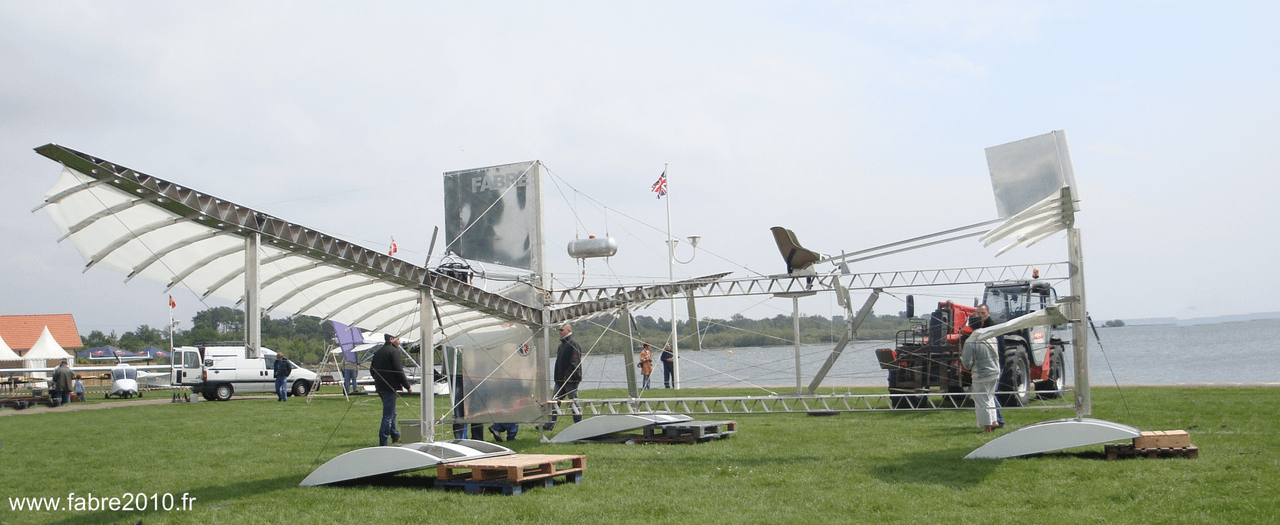
Three machines now exist where there was once one: the battered 1910 original, a faithful museum replica, and a pine-built flyer. It is a fitting epilogue for an aircraft whose whole point was that it never needed a runway at all.
From One Lagoon to Every Ocean
Fabre’s single morning of flying set off a revolution that ran for decades. Within five years, seaplanes and flying boats were patrolling coastlines and hunting submarines; within twenty, they were crossing oceans with paying passengers. The documentary below traces that lineage — from fragile float-equipped pioneers to the great flying boats of the interwar years.
“Flying Boats: The Incredible Development of Sea Planes” — the story of the aircraft Fabre’s floats made possible.
A self-taught engineer, a duck-shaped machine of wood and wire, and a quiet lagoon near Marseille. It was not the most powerful flight in history, nor the longest. But on 28 March 1910, for the first time, a flying machine rose from the water and returned to it — and aviation gained an entire new element to conquer.
Sources: Fédération Aéronautique Internationale (fai.org); This Day in Aviation; Wikipedia (Henri Fabre; Fabre Hydravion); Smithsonian National Air and Space Museum.
Related Questions
Who was Henri Fabre?
Henri Fabre (1882–1984) was a French engineer from Marseille who designed and flew the first successful seaplane. On 28 March 1910 he took off from the Étang de Berre lagoon near Marseille in his Hydravion, becoming the first person to fly an aircraft off water under its own power — despite never having flown before.
What was Le Canard?
Le Canard (“The Duck”) was the nickname of the Fabre Hydravion, the first successful seaplane. It was a fragile canard-configuration monoplane built of varnished wooden beams, powered by a 50-horsepower Gnome rotary engine and supported on the water by three of Fabre’s own patented floats.
When and where did the first seaplane fly?
The first powered seaplane flight took place on 28 March 1910 on the Étang de Berre, a salt lagoon near Martigues, west of Marseille in southern France. Henri Fabre flew his Hydravion four times that day, the longest hop reaching roughly 600 metres.
How far did the Fabre Hydravion fly on its first flight?
The first flight covered roughly 450 to 500 metres at a height of a few metres above the water. Fabre flew three more times the same day, the longest about 600 metres, and within a week had flown a continuous distance of around 5.6 kilometres.
Had Henri Fabre flown before his first seaplane flight?
No. Henri Fabre had no prior flying experience when he piloted his Hydravion off the water on 28 March 1910. He was an engineer who had spent four years designing and building the aircraft, and simply taught himself to fly it on the day.
What engine powered the Fabre Hydravion?
The Fabre Hydravion was powered by a Gnome Omega seven-cylinder rotary engine producing about 50 horsepower, driving a two-bladed wooden propeller in a pusher configuration. The prototype of this engine type is held by the Smithsonian National Air and Space Museum.
How did Henri Fabre influence other aviation pioneers?
Fabre’s patented floats were the key innovation. Gabriel and Charles Voisin bought several and fitted them to their Voisin Canard, Glenn Curtiss studied his work, and Fabre later built floats for other constructors such as Caudron — helping launch the whole seaplane and flying-boat era.
Does the original Fabre Hydravion still exist?
Yes. The original aircraft was wrecked at Monaco in 1911, but it was recovered in 1922, restored, and is displayed at the Musée de l’air et de l’espace at Le Bourget near Paris. A flying replica also stands near the site of the first flight at Marseille Provence Airport.
0 Comments