

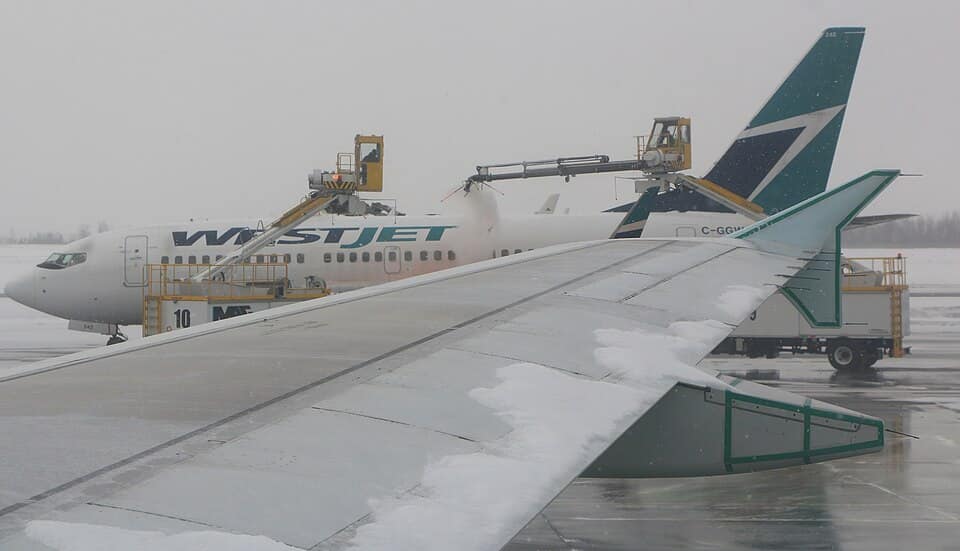
Ice is one of aviation’s oldest and most persistent enemies. Even a thin layer of frost on a wing can reduce lift by 30 percent and increase drag dramatically — turning a perfectly airworthy machine into something dangerously close to a brick. Every winter, airports around the world spray thousands of gallons of de-icing fluid before departure, but that only solves the problem on the ground.
What happens at 25,000 feet, inside clouds full of supercooled water droplets, where ice can form in minutes? That is where anti-icing systems earn their keep. Modern aircraft use three fundamentally different approaches to fight ice in flight, and understanding them reveals just how seriously the aviation industry takes this invisible threat.
From rubber boots that crack ice off the leading edge to engine bleed air that keeps surfaces warm, these systems operate continuously and often without the passengers ever knowing. Here is how they work — and what happens when they do not.
Quick Facts
- Ice can form on aircraft surfaces at temperatures between 0°C and -20°C in visible moisture
- Just 0.4 mm of ice on a wing can reduce lift by up to 25-30%
- Three main anti-icing methods: pneumatic boots, bleed air, and electrothermal
- The Boeing 787 was the first large commercial jet to use fully electric anti-icing
- Supercooled Large Droplets (SLD) remain one of aviation’s most dangerous icing threats
When Systems Fail: The Supercooled Large Droplet Threat
All three anti-icing methods were originally designed for standard icing conditions — small supercooled water droplets that freeze on contact with the aircraft’s leading edges. But nature has a more dangerous trick: Supercooled Large Droplets (SLD).
SLD are water droplets that remain liquid below freezing, sometimes down to -40°C, because they have not encountered a nucleation site. When they hit an aircraft, they flow further aft along the surface before freezing, often beyond the protected area of de-icing boots or bleed air zones. This creates runback ice on unprotected surfaces, which standard anti-icing systems were never designed to handle.
The crash of American Eagle Flight 4184 in 1994 — an ATR 72 that entered an uncontrolled roll after encountering SLD — led to major regulatory changes. Today, new aircraft must demonstrate they can handle SLD conditions, and improved detection systems warn pilots to exit such conditions immediately.

The Future of Ice Protection
Research continues on several fronts. Icephobic coatings — surface treatments that prevent ice from bonding — could reduce the energy needed for anti-icing systems. Hybrid systems combining electrothermal heating with mechanical ice removal are being tested for efficiency gains. And improved icing detection sensors, including those that can identify SLD conditions in real time, are being integrated into next-generation aircraft.

Ice will always be a threat to flight. But the engineering response — from simple rubber boots to sophisticated electric heating systems managed by computers — shows how aviation continuously adapts to nature’s challenges. Every winter flight that lands safely is a quiet testament to systems most passengers will never see or think about.
Sources
- FAA Advisory Circular AC 91-74B: Pilot Guide — Flight in Icing Conditions
- NASA Glenn Research Center: Aircraft Icing Research
- NTSB Report on American Eagle Flight 4184 (1994)
- Boeing 787 Systems Description — Ice Protection


 English
0 Comments