
Quick Facts
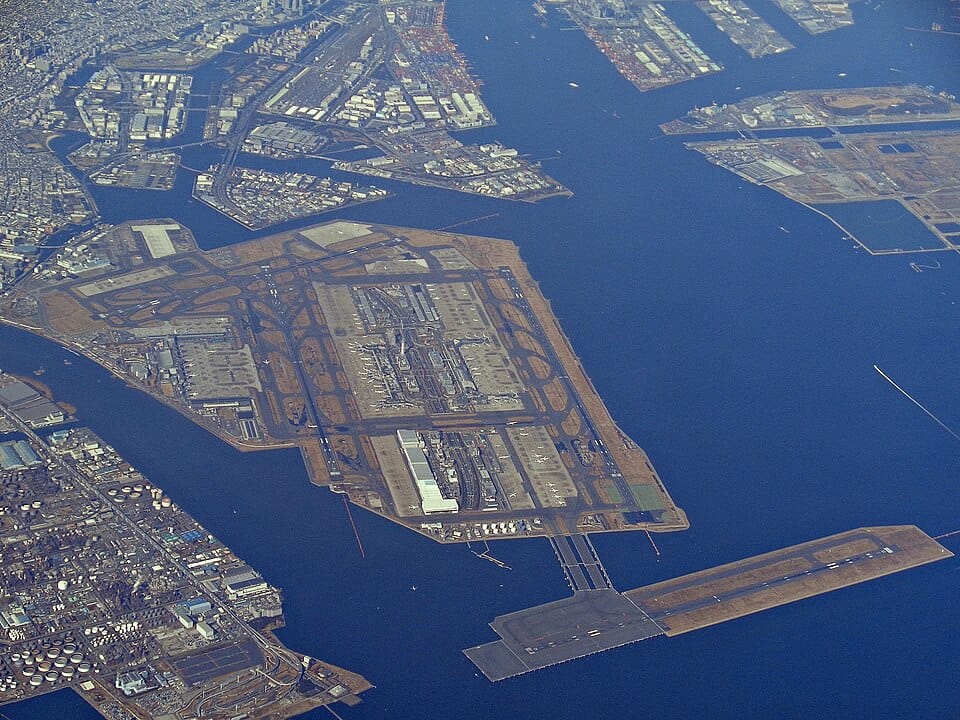
- Where: Tokyo Haneda Airport (HND)
- Operator: Japan Airlines / JAL Ground Service
- Partner: GMO AI & Robotics Corporation
- Robot: Unitree Robotics humanoid (~130 cm / 4’3″ tall)
- Sensors: 3D LiDAR, depth cameras
- Trial duration: 2 years (started May 2026)
- First of its kind: First humanoid robot deployment at any airport globally
Why Humanoid?
The obvious question: why use a humanoid robot when wheeled or tracked machines are simpler? JAL’s answer is elegant. The space beneath and around aircraft is designed for human bodies. Cargo holds have openings sized for people to crawl through. Baggage containers are loaded from positions that assume human reach and posture. A wheeled robot would require redesigning aircraft, containers, and ground equipment. A humanoid robot simply fits into the existing system. Being human-shaped also means the robots can be introduced without modifying airport infrastructure. They walk on the same surfaces, fit through the same doors, and interact with the same equipment as human workers. The transition cost is minimal — you’re replacing the worker, not rebuilding the workplace.The Technology
The Unitree robots stand approximately 130 centimetres tall and are equipped with 3D LiDAR, depth cameras, and force sensors that allow them to navigate the chaotic ramp environment — a world of moving vehicles, jet blast, limited visibility, and strict time pressure. They can identify bags by shape and RFID tag, lift them to specified positions, and place them in cargo containers with the precision needed to meet weight-and-balance requirements. Current capabilities are limited to supervised operation — a human overseer monitors multiple robots and can intervene when the machine encounters a situation outside its training. But JAL has stated that full autonomous operation is the end goal, with the two-year trial designed to progressively reduce human oversight as the system proves itself.Japan’s Labour Equation
Japan’s working-age population has been shrinking for two decades. By 2040, the country will have 11 million fewer workers than today. The aviation sector is particularly hard-hit because ramp work is physically demanding, outdoors in extreme weather, and operates on shift schedules that young Japanese workers increasingly reject. JAL isn’t alone in feeling the pressure. All Nippon Airways and ground handling companies across Japan have warned of service reductions if staffing levels continue to decline. Robots aren’t replacing workers who want these jobs — they’re filling positions that no one will take.What Comes Next
If the Haneda trial succeeds, JAL plans to expand robot deployment to additional tasks: cabin cleaning between flights, operating ground support vehicles, and potentially assisting with aircraft pushback and towing. The vision is a ramp where robots handle the physically repetitive work while humans manage exceptions, safety oversight, and complex decision-making. Other airlines are watching closely. Lufthansa, Singapore Airlines, and Emirates have all invested in automation research for ground operations. But Japan — with its unique combination of technological capability, cultural acceptance of robots, and demographic necessity — is where the airport of the future starts becoming the airport of the present.Sources: CNBC, Japan Airlines press release, eTurboNews, Engadget, The Daily Beast


 English
0 Comments