
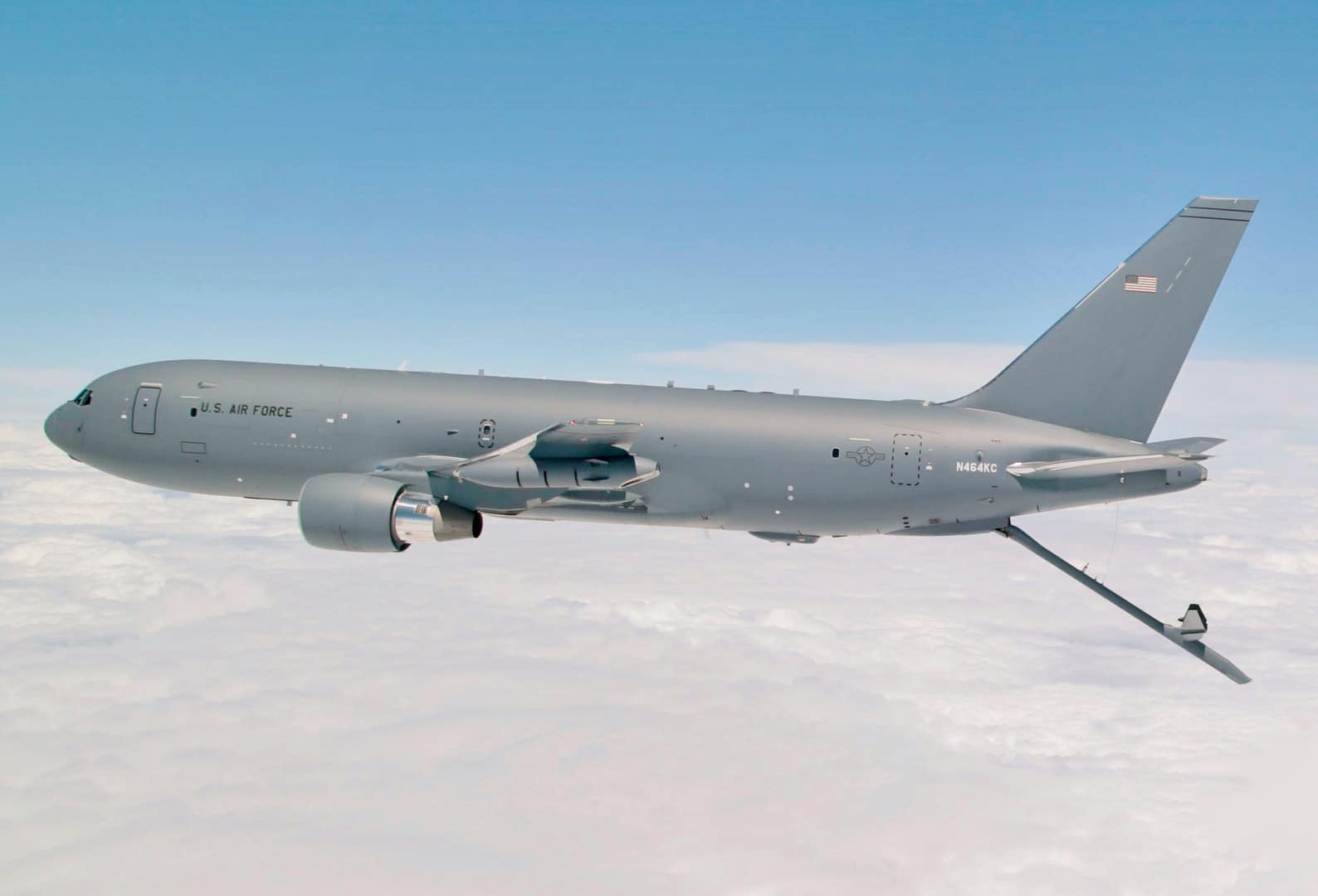
The Israeli Air Force has a new tanker — and a new name on its tail. The first KC-46A “Gideon” arrived at Nevatim Air Base on 27 May, the first of six Boeing tankers Israel has ordered at the height of the F-35I fleet expansion. After years of patching together its ageing Re’em fleet of 707-based tankers, the IAF finally has a modern boom-equipped refueller.
And the timing — three months after Israeli F-35Is conducted some of the longest-range strikes in IAF history against Iran — is not a coincidence.
Quick Facts
Aircraft: Boeing KC-46A Pegasus — designated “Gideon” in IAF service
Arrival: Nevatim AB, 27 May 2026 — first of six ordered
Replaces: Boeing 707-based KC-707 Re’em tankers (in service since 1970s)
Capability: Boom + drogue refuelling, full F-35 compatibility
Named for: Gideon, biblical Israelite judge and military leader
A Tanker the IAF Has Been Waiting On for a Decade
The deal for the first four KC-46As was signed in 2022 — two more have been added since — but the path to delivery has been long. Boeing’s KC-46 programme has been dogged by problems — the Remote Vision System 2.0 upgrade has slipped repeatedly, with fleet-wide rollout not expected before 2027 — and the IAF spent years operating around the limitations of its 50-year-old Re’em fleet.
Those old 707s were good. They served through the long-range strike on Tunisia in 1985 and dozens of long-range training sorties since. They boom-refuelled the F-35I throughout the Iran war — but they cannot match the modern fleet’s data links, defensive electronic warfare suite, or fuel offload capacity.
The Gideon fixes all of that in one airframe.
Why This Matters Now
The Iran war that began on 28 February gave the IAF its first opportunity to fly strike packages at the full range of its F-35I fleet — which has been quietly extended through a $34 million Elbit contract approved earlier this month. Long-range strikes need fuel. Lots of it. The Gideon expands the offload capability the IAF can put in the air on any given night.
It also changes the calculus of Israel’s quietly expanding forward-basing footprint. Reports surfaced earlier this month of an unidentified Israeli air-operations facility deep inside Iraq’s Najaf desert — the kind of forward base that becomes radically more useful when paired with modern tankers operating boom-and-drogue.
Five More Coming
The remaining five Gideons are scheduled to follow in the coming years. Combined with the additional F-35Is the IAF has on order and the external fuel tanks recently contracted to Elbit’s Cyclone subsidiary, the picture is consistent: Israel is building an air arm that can strike anywhere it needs to, without American refuelling support, indefinitely.
For an air force that just demonstrated 1,500-kilometre strike radius against Iran, that capability is no longer theoretical.
Sources: The Aviationist, Israeli Ministry of Defense statement, Defense News.


 English
0 Comments