
In November 1983, a 31-year-old Quebec pilot landed a light aircraft by himself at a small airfield in Georgia. It was loaded with marijuana, flown up from Jamaica. Police were waiting.
He was sentenced to five years and served sixteen months. He walked out on 20 March 1985 with a criminal record, no airline, and no realistic prospect of ever flying passengers again.
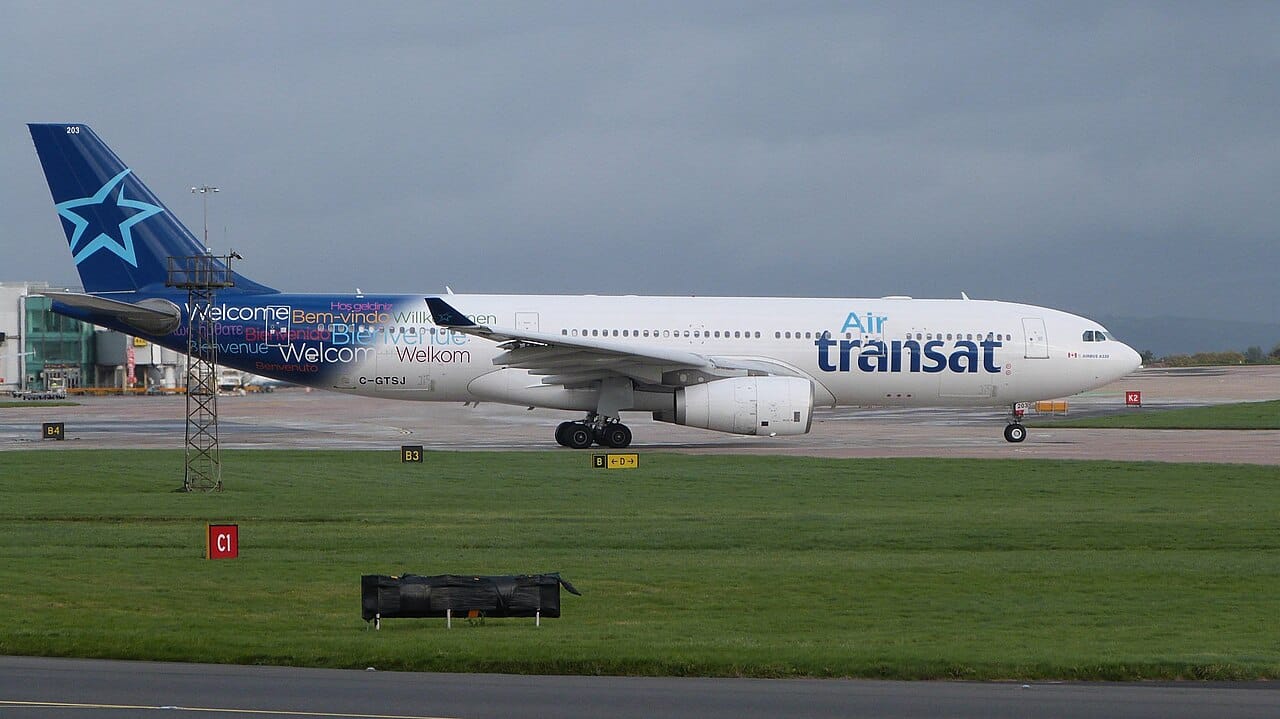
Eighteen years later the same man was at the controls of an Airbus A330 over the middle of the Atlantic when both engines stopped, with 306 people behind him.
Informazioni rapide
| Pilota | Robert Piché, born 5 November 1952, Gaspé Peninsula, Quebec |
| Training | Learned to fly as a teenager; diploma in aircraft piloting, Cégep de Chicoutimi, 1973 |
| Conviction | Arrested 1983 in Georgia, USA, flying marijuana from Jamaica |
| Sentence | Five years; served 16 months from November 1983, released 20 March 1985 |
| Hired | Air Transat, 1995, aged 43 — five years before his pardon |
| Pardon | Granted in 2000 |
| Il volo | Air Transat 236, 24 August 2001, Toronto to Lisbon, Airbus A330-243 C-GITS |
| A bordo | 306 — 293 passengers and 13 crew. All survived |
| La scivolata | About 65 nautical miles (120 km) without engines — still the longest by an airliner |
A Bush Pilot Without a Job
Piché grew up on the Gaspé Peninsula and was flying before most people his age could drive. He took his piloting diploma at Cégep de Chicoutimi in 1973 and went to work for regional carriers, the ordinary apprenticeship of a Canadian commercial pilot: small aircraft, short strips, weather nobody enjoys.
Then Quebecair laid him off, and a young man with a licence and no income took work that used the licence.
It is worth being clear about what happened next, because it is the part later admirers tend to soften. He was not an unwitting courier. He flew smuggling runs, was caught with an aircraft full of cannabis, was convicted, and went to prison in a foreign country. He has never disputed any of it.
The Decade of Getting Back
What followed was ten years of unglamorous rebuilding. A conviction of that kind does not simply expire; it sits on every application form and in every background check, and aviation is an industry with long institutional memory and a low tolerance for risk.
In 1995, Air Transat hired him. He was 43.
This is where the story as it circulates online usually gets the sequence wrong. Piché was non pardoned first. The pardon came in 2000. Air Transat took him on in 1995 knowing exactly what was on his record — five years before the Canadian state formally closed the matter, and six years before anyone had a reason to be glad about it.
He moved up quickly: co-pilot, then captain on the Lockheed L-1011 TriStar, then onto the Airbus A330 in the spring of 2000.
Sixteen Months Later, Measured in Minutes
On the night of 24 August 2001, four hours out of Toronto, a fuel imbalance appeared on the flight deck of Air Transat 236.
The cause was on the ground, not in the air: during a recent engine change, a hydraulic component that was not compatible with the installation had been fitted, leaving too little clearance between a hydraulic pipe and a fuel pipe. Engine vibration did the rest. The pipes touched, the fuel line cracked, and the aircraft began pumping its fuel into the Atlantic.
Both engines eventually flamed out. What Piché and First Officer Dirk DeJager had left was a 200-tonne glider, a functioning ram air turbine, and the island of Terceira somewhere ahead in the dark.
The full reconstruction of the flight, the fuel leak and the approach into Lajes.
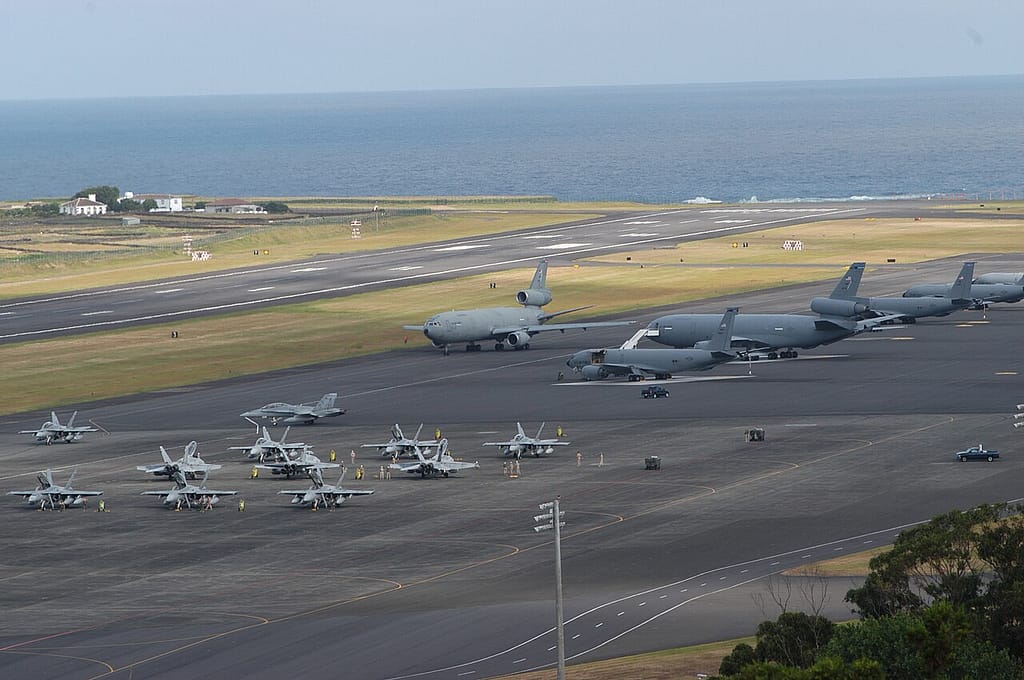
They glided roughly 65 nautical miles — about 120 kilometres — and put the A330 down at Lajes Air Base. Eight tyres burst on touchdown. There were injuries during the evacuation, none of them fatal. All 306 people aboard walked away, and a quarter of a century later it remains the longest glide ever flown by an airliner.
Then the Papers Found the File
He was a hero for about a fortnight.
On 10 September 2001, the New York Times ran a piece under a headline that tells you everything about what had happened in between.
Journalists had located the Georgia conviction. In Canada the disclosure prompted a genuine public argument about whether it was anyone’s business, and the media took considerable criticism for running it.
The investigation, when it reported, was also not a clean vindication. The primary cause was unambiguously the maintenance error. But the final report assigned the crew partial responsibility as well: the cockpit voice recorder showed the checklist for the fuel imbalance was not properly worked through, and fuel was transferred towards the leaking engine — which accelerated the loss rather than containing it.
Both things are true simultaneously. The crew contributed to the emergency, and then flew the aeroplane out of it in a way that experienced pilots still describe with respect — not attempting a ditching, not panicking, and getting a powerless widebody onto the only runway available.
Asked afterwards about being called a hero, Piché gave an answer that has aged better than any of the headlines.
What He Did With It
In 2002 the Air Line Pilots Association gave him its Superior Airmanship Award. Quebec took him to its heart and largely kept him there; he became a sought-after speaker, and his life was filmed in 2010 as Piché: entre ciel et terre.
The flight told through the radio calls, from the first fuel warning to the landing.
He also did something less comfortable and more useful. Piché has spoken openly about his own struggles with alcohol, and set up the Fondation Robert Piché to fund programmes helping people with drug and alcohol addiction. A man whose worst decisions were public property decided to spend the attention on people making similar ones.
He flew his last commercial service on 1 October 2017, TS605 from Rome to Montreal. Eleven days later he took an A330 up one final time on a sightseeing flight over Quebec City — a fundraiser for the foundation.
A shorter account of the glide and the landing at Lajes.
The Point of the Story
The version that goes round social media is tidier than the truth. It usually has the pardon arriving before the job, and it leaves out the report’s findings about the crew. Neither omission is necessary, because the real story is better.
An airline looked at a 43-year-old with a smuggling conviction and a decade of clawing his way back, and decided the flying was what mattered. Six years later that decision was worth 306 lives — and the man himself has spent the time since declining to be turned into a parable.
He was right, of course. He was not a hero in the way the headlines wanted. He was a very experienced pilot, including thousands of hours in gliders and bush aircraft, who had spent his life learning what an aeroplane does when nothing is pushing it forward — and who, on one night in August, needed all of it.
Sources: Final investigative report, Portuguese aviation authority (GPIAA); Transportation Safety Board material; The New York Times, 10 September 2001; The Globe and Mail; Vanity Fair; Air Line Pilots Association; The Canadian Encyclopedia; CBC News.


0 Commenti