
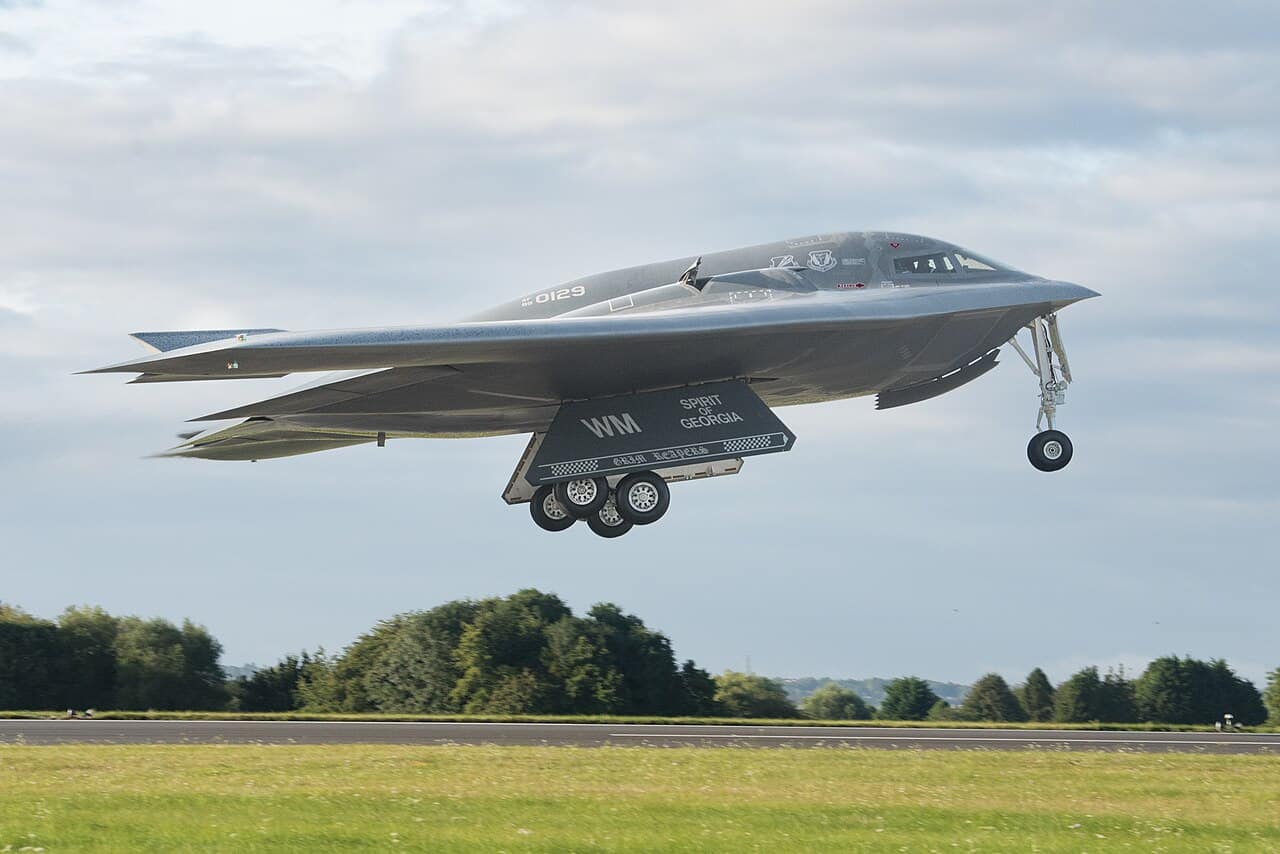
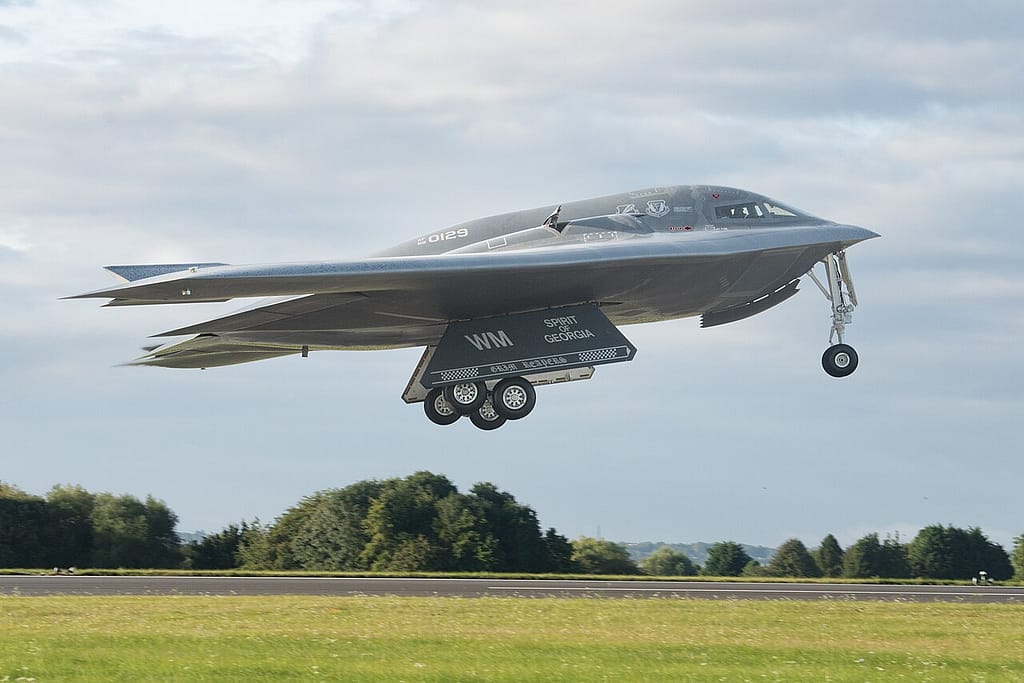
In December 2025, a man in a minivan with Massachusetts plates parked near the fence line at Whiteman Air Force Base in Missouri and pointed a camera at the Spirito B-2 stealth bombers on the ramp. He had been warned off once already. He came back. This month he was jailed for six months — and yet his clumsy, low-tech effort is one of the least sophisticated entries in a story that runs across decades, continents and every method of theft yet invented.
For a generation, Western prosecutors, spies and security officials have described a sustained, state-directed effort by China to acquire the West’s most advanced aerospace and defence technology — by hacking networks, by planting or recruiting insiders, by sending trained intelligence officers, and, occasionally, by simply buying a building with a good view. The sheer volume is hard to fathom. The FBI has said it runs thousands of China-related counter-intelligence investigations at once.
Here is what the public record actually shows — case by case.
Informazioni rapide
Stealth bomber: B-2 engineer Noshir Gowadia jailed 32 years for selling exhaust know-how to China
Stealth fighter: F-35 data allegedly taken in the 2007–09 “Byzantine Hades” cyber intrusion
Boeing: Dongfan Chung (Shuttle, C-17) and Su Bin (C-17, F-22, F-35) both convicted
Motori: a Jiangsu-MSS campaign targeted GE Aviation and Safran; officer Xu Yanjun got 20 years
Scala: the FBI has cited 2,000+ open China cases and a new one “every 12 hours”
Beijing’s position: denies state-sponsored economic espionage
Stealing Stealth
The crown jewel of Western air power is low observability — stealth — and it has been a target for decades. The most damaging insider case belongs to Noshir Gowadia, an engineer who had helped design the propulsion and exhaust system of the B-2 bomber at Northrop. After leaving, he sold his expertise abroad, helping China work on a stealthy cruise-missile exhaust and pocketing around $110,000. In 2011 he was convicted on 14 counts and sentenced to 32 years in prison.
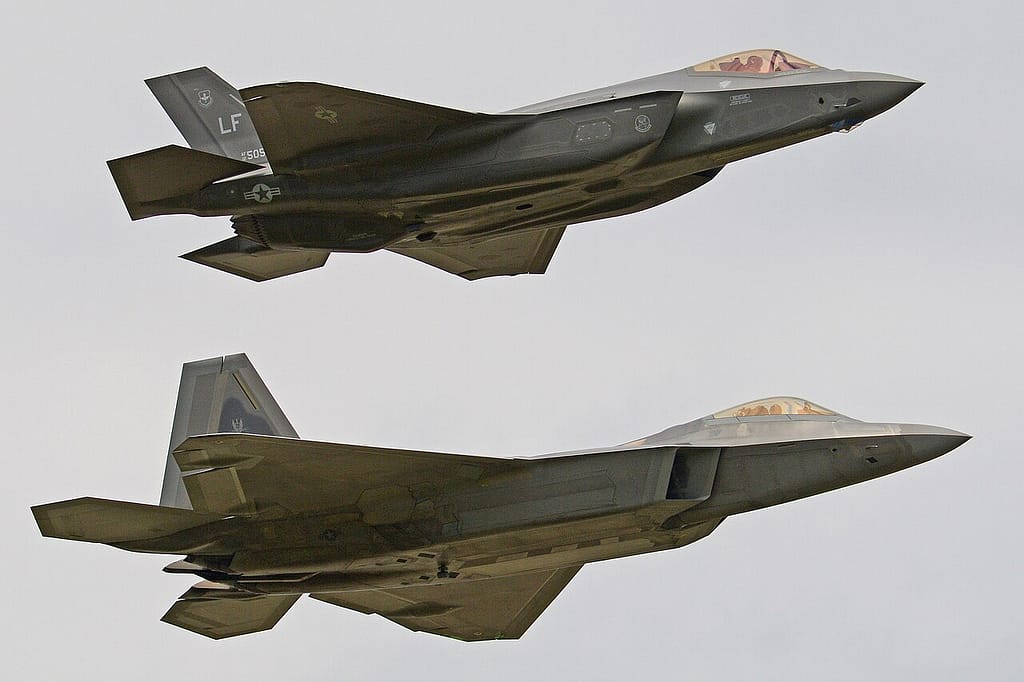
Fighters were pursued by other means. According to US officials and analysts, a Chinese cyber operation codenamed Byzantine Hades penetrated F-35 contractors around 2007–09 and exfiltrated design data. When China later unveiled its J-20 and the FC-31/J-35, observers noted how much the jets echoed the F-22 and F-35. Correlation is not proof, and Chinese engineering has advanced enormously on its own — but the resemblance, so soon after the intrusions, is why the allegation endures.
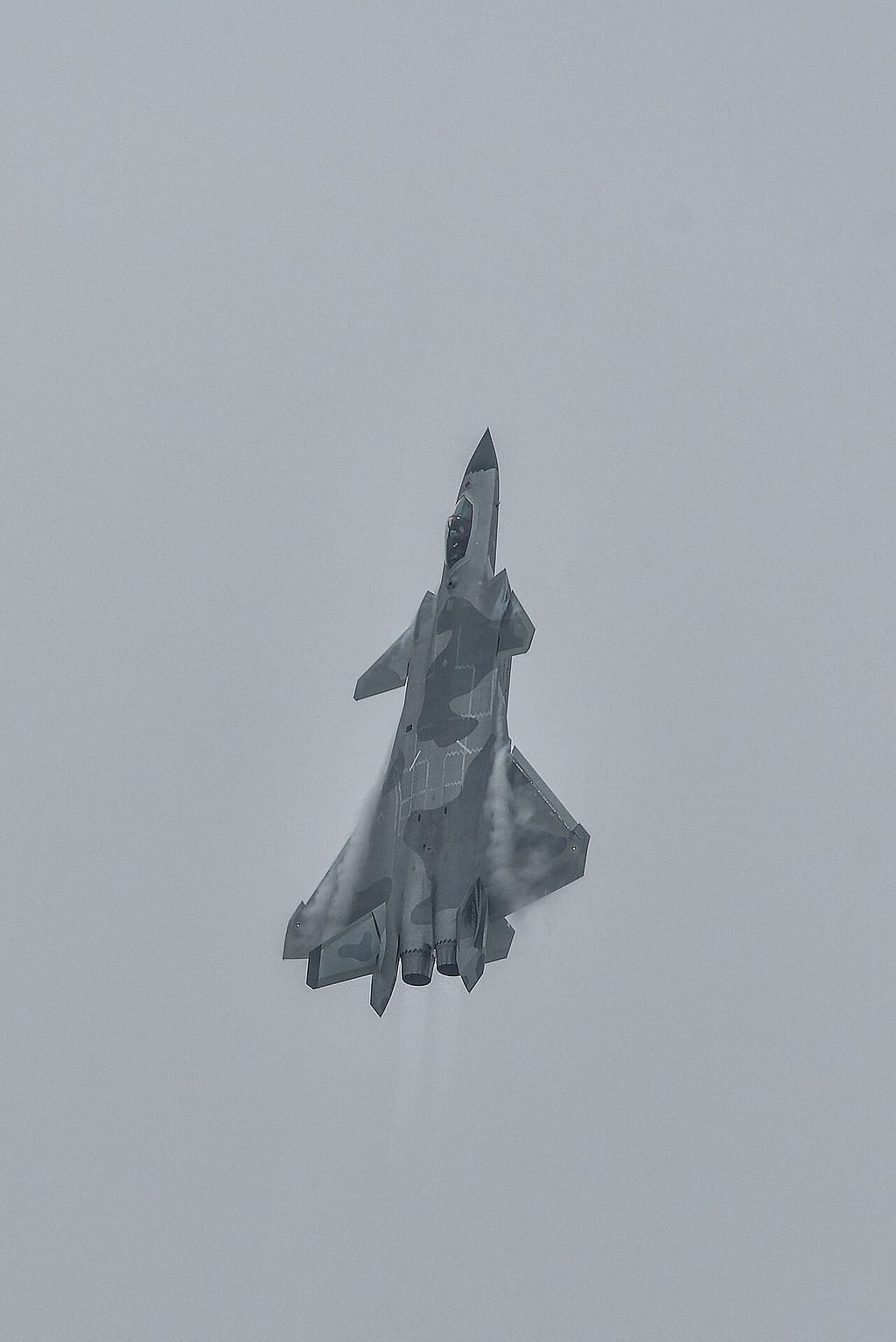
The long-running debate over how much of China’s first stealth fighter was original.
Inside the Factories
Some of the most valuable material simply walked out of American plants. Dongfan “Greg” Chung, a Chinese-born engineer at Rockwell and then Boeing, hoarded roughly 300,000 pages of documents on the Space Shuttle, the Delta IV rocket and the C-17 transport, intending them for China. In 2009 he became the subject of the first US economic-espionage trial conviction, and was sentenced to 15 years.
Boeing was hit again from the outside. Su Bin, a China-based aviation-industry businessman, admitted helping military hackers break into the company’s networks to steal data on the C-17 and the F-22 and F-35 fighters; in 2016 he was sentenced to nearly four years. The same jets, over and over, from different directions at once.
The Engine Campaign
Nowhere is the pattern clearer than in jet engines — the one thing China has struggled for decades to build itself. Between roughly 2013 and 2018, the Jiangsu bureau of China’s Ministry of State Security ran a co-ordinated campaign, blending cyber intrusion with recruited insiders, to steal the turbofan technology behind the engine chosen for China’s C919 airliner — a design from CFM International, the GE Aviation and Safran joint venture.
It produced a remarkable roster of prosecutions: MSS officer Xu Yanjun, lured to Belgium and extradited — the first Chinese intelligence officer ever tried in the US — and sentenced to 20 years; a GE insider; a malware developer; and Ji Chaoqun, a Chinese national who enlisted in the US Army Reserve while helping the MSS assess engineers as recruitment targets, later jailed for eight years.
Eyes on the Fence — and in the Sky
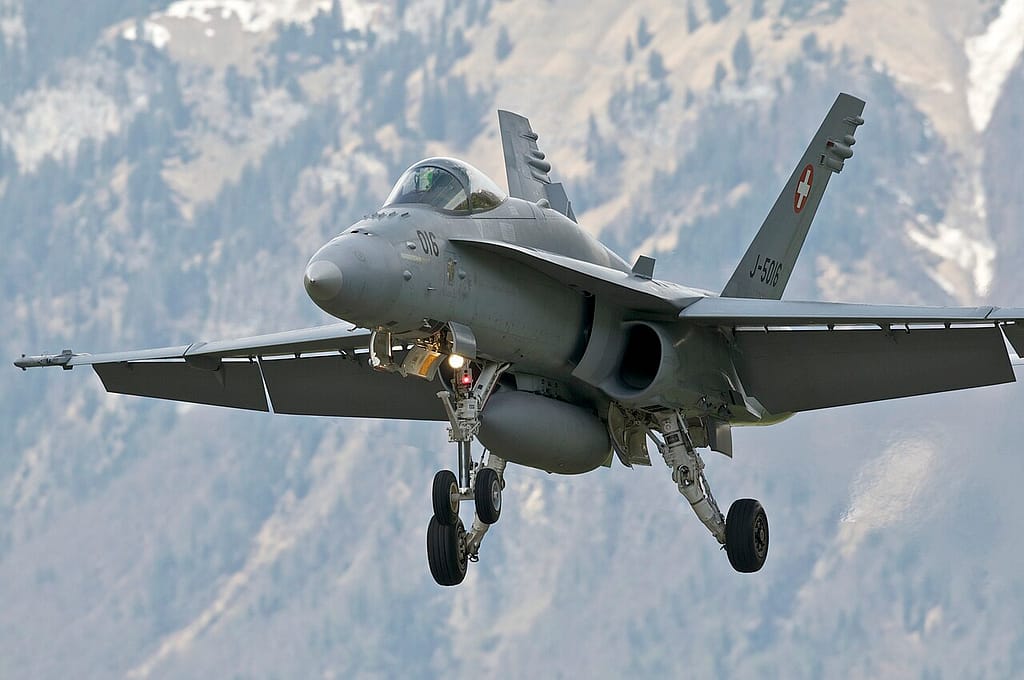
Not every method is exotic. Sometimes it is a camera and a car, which brings us back to Qilin Wu at Whiteman, the case we covered when he was sentenced this month: 18 images and videos of the base on his phone, plus admissions that he had photographed military sites in Florida and Virginia. Sometimes it is real estate. In Switzerland, a Chinese family bought the Rössli Hotel in 2018, on the very edge of Meiringen air base — future home of Swiss F-35s — with a clear view of the runways. After the United States raised concerns, the family left; but they were convicted only of immigration and licensing offences, and officially no evidence of espionage was ever found. A security worry and a proven spy are not the same thing.
And sometimes the collection platform is the size of three buses. In February 2023 a Chinese high-altitude balloon drifted across the continental United States before an F-22 downed it with a single heat-seeking missile off the coast of South Carolina. Beijing called it a stray weather balloon; Washington called it surveillance. Either way, it was the most public reminder yet that the contest plays out overhead as well as inside networks.
Beijing’s Answer
China rejects the charge sheet wholesale. Its officials routinely call individual cases fabrications and dismiss US allegations as inventions, and Beijing consistently denies running state-sponsored economic espionage. When Xu Yanjun was detained, a foreign-ministry spokesman waved the accusation away.
Two things are true at once. A long line of Western courts has convicted named individuals of trying to steal aerospace and defence technology for China; that pattern is real, documented and unusually well-evidenced. At the same time, not every fence-line photographer is a spy, not every property purchase is a listening post, and China’s own engineers have built genuinely world-class aircraft that owe plenty to domestic talent. The espionage is proven in some cases and only suspected in others — and separating the two is exactly the job of the counter-intelligence officers who keep finding the next minivan by the fence.
A broader look at the scale of China’s state-run technology-collection effort against the West.
The West will keep building exquisite, wildly expensive machines. And someone, somewhere, will keep trying to photograph, hack, recruit or buy their way to the blueprints. The story that began with a minivan at Whiteman is nowhere near its end.
Sources: U.S. Department of Justice; U.S. federal court records; FBI; The Wall Street Journal; AeroTime; CBS News; CNN; Air & Space Forces Magazine; U.S. intelligence officials and defence analysts as cited. China denies state-sponsored economic espionage.



0 Commenti