
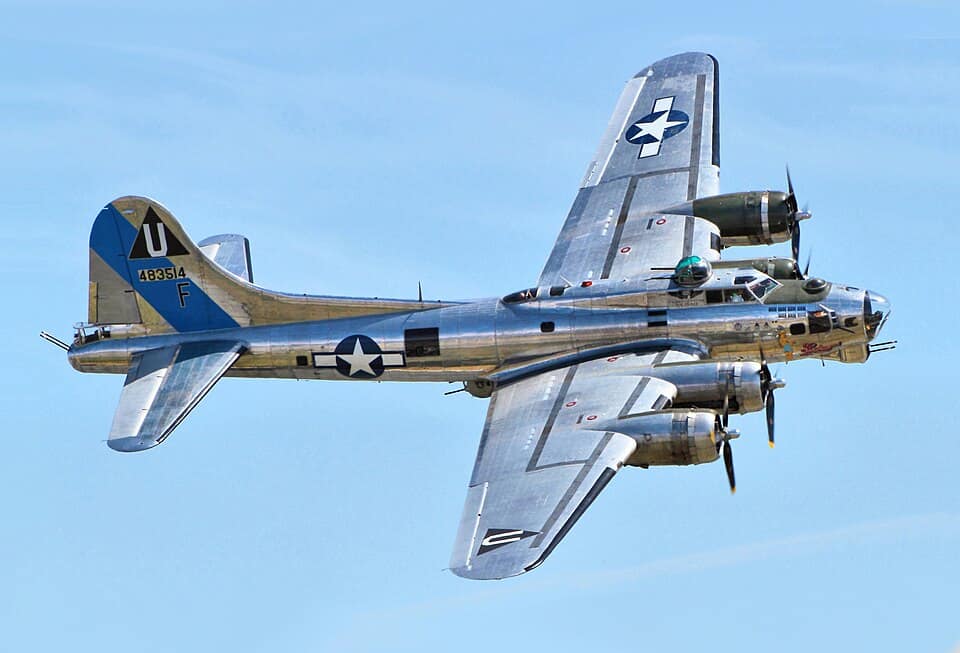
On August 17, 1943, the United States Eighth Air Force launched what would become one of the most devastating bombing missions in the history of aerial warfare. The target was Germany's ball bearing industry — a chokepoint that Allied planners believed could cripple the Nazi war machine. What followed was a day of extraordinary courage and catastrophic losses that forced a fundamental rethinking of American strategic bombing doctrine.
The Double Strike
The plan was ambitious even by the standards of a command that specialized in ambitious plans. Two task forces of B-17 Flying Fortresses would launch simultaneously from bases across England. The first, led by Colonel Curtis LeMay's 4th Bombardment Wing, would strike the Messerschmitt aircraft factory complex at Regensburg. The second, the 1st Bombardment Wing, would hit the ball bearing factories at Schweinfurt. The theory was that both forces launching together would divide the Luftwaffe's response.
In practice, fog over England disrupted the timing from the start. LeMay's Regensburg force got airborne first, crossing the Channel and heading into Germany. But the 1st Wing's departure was delayed by hours, which meant the Luftwaffe fighters that had attacked the Regensburg force could land, refuel, rearm, and be waiting when the Schweinfurt bombers arrived.
Into the Gauntlet
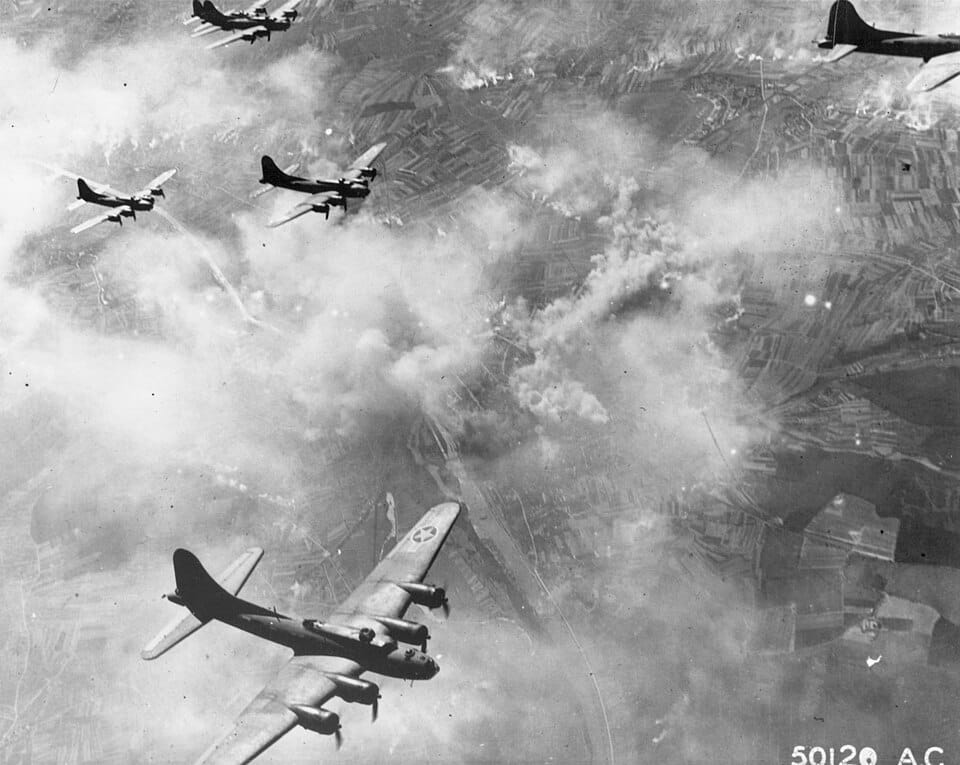
The 230 B-17s of the Schweinfurt force crossed into German airspace and immediately ran into a wall of fighters. The Luftwaffe threw everything it had at the bomber stream — Bf 109s, Fw 190s, twin-engine Bf 110s and Me 410s launching rockets from beyond machine gun range. The German fighters attacked in waves, pressing head-on passes that closed at a combined speed of over 500 miles per hour.
The B-17 was famously tough. Its four Wright R-1820 Cyclone engines, self-sealing fuel tanks, and up to thirteen .50 caliber machine guns made it the most resilient bomber in the Allied inventory. But resilience has limits. Without long-range fighter escort — the P-51 Mustang would not arrive in numbers until early 1944 — the bombers were on their own for the deep penetration into Germany.
Crew after crew watched as neighboring aircraft were hit, caught fire, shed wings, or simply exploded. Parachutes dotted the sky as men abandoned their stricken Fortresses. Others went down with no chutes visible at all.
The Toll
The numbers tell the story with brutal clarity. Of the 376 B-17s dispatched on both missions that day, 60 were shot down — a loss rate of nearly 16 percent. The Schweinfurt force alone lost 36 aircraft out of 230, with many more returning so badly damaged they never flew again. Over 600 American airmen were killed, wounded, or taken prisoner in a single day.
Informazioni rapide
- Date,August 17, 1943
- Mission,Combined strike on Schweinfurt (ball bearings) and Regensburg (Messerschmitt factory)
- Aircraft,376 B-17 Flying Fortresses
- Lost,60 B-17s shot down (16% loss rate)
- Casualties,600+ aircrew killed, wounded, or captured
- German fighters engaged,Approximately 300
- Significance,Forced suspension of unescorted deep-penetration raids
The Regensburg force, meanwhile, did not return to England. LeMay's plan called for them to continue south across the Alps and land in North Africa — a one-way trip that saved them from flying back through the same fighter gauntlet. Even so, 24 of the Regensburg bombers were lost.
The Second Schweinfurt Raid
Despite the staggering losses, the Eighth Air Force returned to Schweinfurt on October 14, 1943 — a day that would earn the grim title "Black Thursday." This second raid was even more costly: 77 of 291 B-17s were lost or written off, a loss rate exceeding 26 percent. An additional 121 bombers returned damaged. The Eighth Air Force lost more airmen in a single afternoon than RAF Fighter Command lost during the entire Battle of Britain.
The second Schweinfurt disaster forced a crisis in Allied bombing strategy. Unescorted deep-penetration raids into Germany were suspended. The Eighth Air Force would not return to Schweinfurt until February 1944, this time with hundreds of P-51 Mustang escorts that could accompany the bombers all the way to the target and back.
What the Raids Achieved
The Schweinfurt raids did damage the German ball bearing industry — but less permanently than Allied planners had hoped. Albert Speer, Hitler's armaments minister, later said the attacks on Schweinfurt gave him more concern than any other Allied bombing campaign. But the Germans proved more resourceful than expected. They dispersed production, increased imports from Sweden and Switzerland, and found ways to reduce ball bearing consumption in many applications.
The raids' most lasting impact was not on German industry but on Allied strategy. The losses forced the development and deployment of long-range escort fighters, which in turn led to the systematic destruction of the Luftwaffe in early 1944 — the real precondition for D-Day and the eventual Allied victory in Europe.
For the crews who flew into that gauntlet over Schweinfurt, strategic calculations were an abstraction. What mattered was the man in the next aircraft, the fighters coming in at twelve o'clock level, and the question of whether today was the day your luck ran out. For 600 American airmen on August 17, 1943, it was.
Domande correlate
What was the Schweinfurt-Regensburg mission?
It was a combined US Eighth Air Force bombing raid on 17 August 1943. Two B-17 task forces struck simultaneously: one hit the Messerschmitt factory at Regensburg, the other the ball bearing factories at Schweinfurt. It became one of the most costly missions in the history of aerial warfare.
Why did the Eighth Air Force target Schweinfurt?
Schweinfurt was the heart of Germany's ball bearing industry, a manufacturing chokepoint Allied planners believed could cripple the entire Nazi war machine if destroyed, since ball bearings were essential to nearly all military machinery.
How many bombers were lost on the Schweinfurt-Regensburg raid?
Of the 376 B-17s dispatched on both missions, 60 were shot down, a loss rate of nearly 16 percent. The Schweinfurt force alone lost 36 of 230 aircraft, with many returning too damaged to fly again. Over 600 American airmen were killed, wounded, or captured.
Why were the B-17s so vulnerable over Schweinfurt?
Long-range fighter escort was not yet available; the P-51 Mustang would not arrive in numbers until early 1944, so the bombers flew the deep penetration into Germany alone. Fog also delayed the Schweinfurt force, letting Luftwaffe fighters refuel and rearm to attack them.
How did fog affect the Schweinfurt mission?
Fog over England disrupted the timing. LeMay's Regensburg force launched first, but the Schweinfurt force was delayed by hours. This allowed German fighters that had hit the Regensburg force to land, refuel, rearm, and be waiting when the Schweinfurt bombers arrived.
What was the combat box bomber formation?
The combat box was a tight formation designed to maximize the defensive firepower of the bombers' combined .50 caliber machine guns. Over Schweinfurt, even this concentrated defensive fire was not enough against the massed Luftwaffe fighter attacks.
Who led the Regensburg force?
Colonel Curtis LeMay led the 4th Bombardment Wing against the Messerschmitt aircraft factory complex at Regensburg, while the 1st Bombardment Wing struck the ball bearing factories at Schweinfurt.
0 Commenti