
A single photograph, and the internet decided China had built a mirror.
Over the weekend of Aug. 19, 2026, fresh images of a PLA Navy J-35 carrier fighter in flight rocketed around military-watcher circles. Instead of the usual matte grey, the jet's skin caught the light like polished chrome — a shimmering, silvery finish that fans promptly nicknamed the “galaxy warship.” The obvious question followed within minutes: has Beijing given its newest stealth fighter an exotic new low-observable coating?
The likeliest answer, according to the people who study these jets for a living, is more boring than the hype — but the reason the question is even plausible is genuinely interesting.
Informazioni rapide
- Aeromobili: Shenyang J-35 (carrier-based, twin-engine, 5th generation)
- What sparked it: In-flight photos, Aug 19, 2026, showing a silvery, mirror-like skin
- Leading theory: Shooting angle and sunlight on the existing coat, not a repaint
- Precedent: US F-22A and F-35C have flown with mirror-like skins
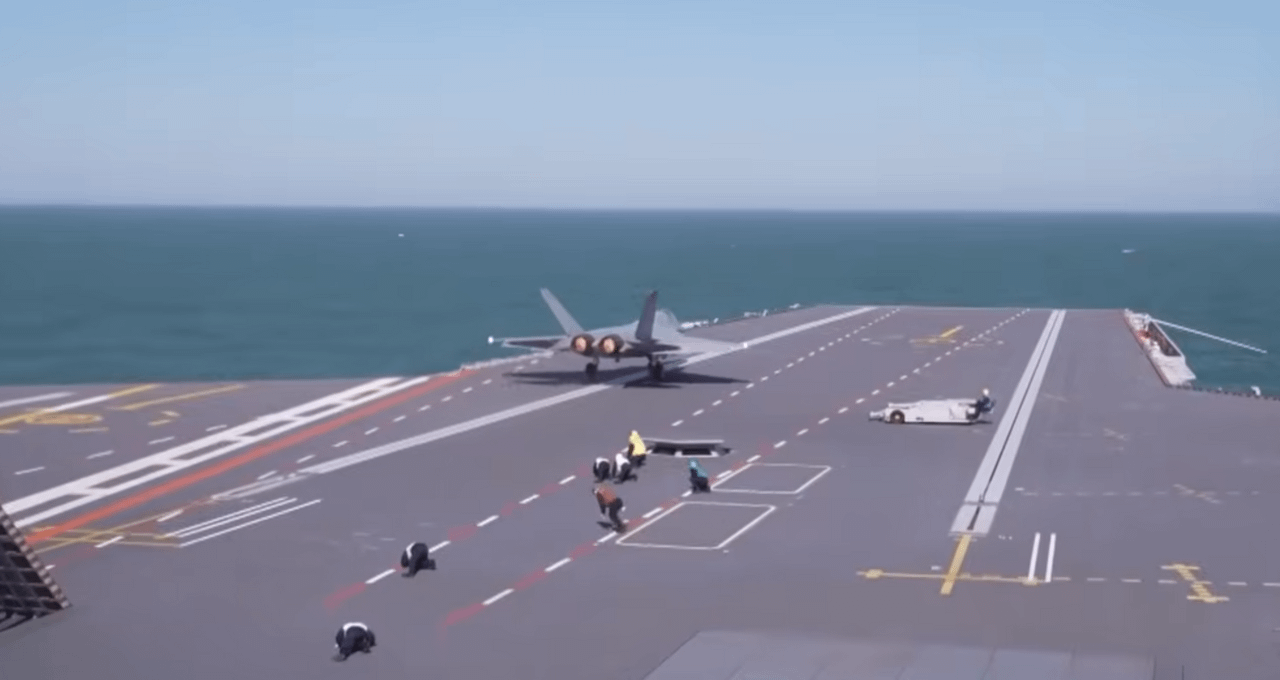
- Operatore: PLA Navy; first Fujian catapult launch and recovery in 2025
Why a shiny jet is not automatically a stealth story
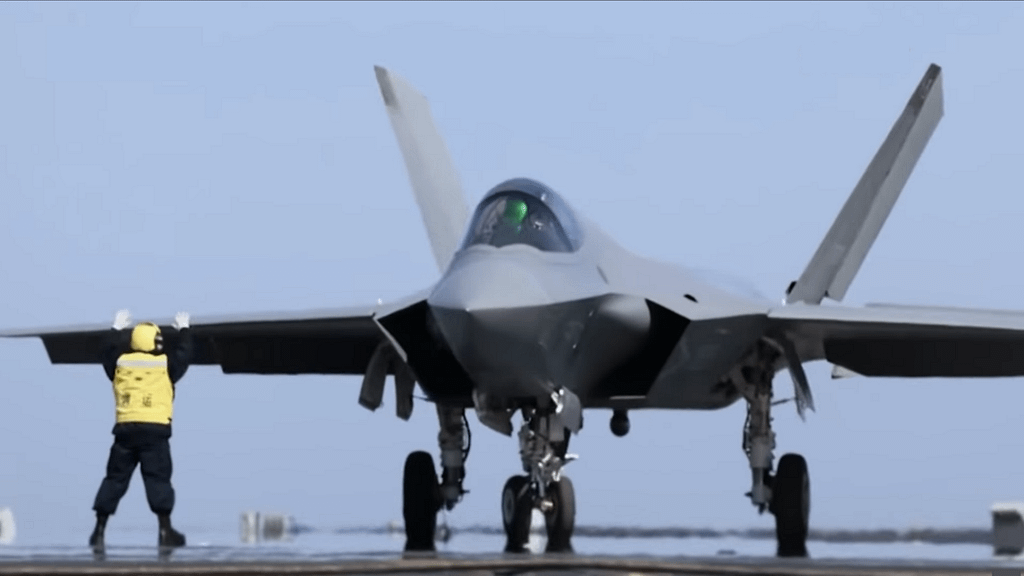
Chinese fifth-generation fighters have worn several finishes. Early J-20 demonstrators wore a blackish coat that earned the nickname “mysterious black fighter.” Production J-20s moved to a dark matte grey that looks like flat paint up close but can throw a near-mirror glint once airborne — which is exactly why that jet, too, was once called a “galaxy warship.” The J-35A paint shown at the 2024 Zhuhai air show looked close to the J-20 finish. In other words, a silvery J-35 in the right light and attitude is the expected behaviour of the coat it already wears.
But the West really has flown mirror jets
Here is where it gets fun. The idea is not crazy, because the United States has done it. In November 2021, an F-22A Raptor was photographed over Nevada wearing a highly reflective silver treatment in place of its grey coat, with only a few areas like antennas and an exhaust left uncovered. The U.S. Navy has since shown F-35Cs with a mirror-like skin as well. Those experiments are widely read as attempts to manage a jet signature not just against radar, but against the growing threat of infrared search-and-track sensors and lasers.
The sea is the real enemy of a shiny coat
Carrier life is brutal on coatings. Heat, humidity and salt eat away at low-observable finishes, and U.S. F-35Cs deployed with the USS Abraham Lincoln in the Arabian Sea have shown visible ageing and discoloration — a constant maintenance burden. A Chinese naval J-35 would face the same maritime punishment, which is a real reason for industry to keep improving the materials, even if this particular photo is not proof of it.
There is also a timing argument. On the upgrade rhythm of the J-10 and J-20 families, the J-35 probably will not reach a clear mid-life refresh — new radar, avionics and possibly a new coat — until sometime after 2030. That makes a coating trial right now look early.
The honest verdict, then: a twin-engine J-35 flashing silver in one flight photo is almost certainly light and angle, not a secret new skin. But the fact that serious people cannot rule it out tells you where fifth-generation stealth is heading — toward jets that have to hide from far more than radar. And the next genuinely repainted Chinese fighter will be worth a much closer look.
Sources: Dimsum Daily; The War Zone; The Aviationist; 19FortyFive.
J-35 carrier operations aboard the Chinese carrier Fujian.

0 Commenti