
The United States Air Force is about to pour $4.2 billion into its three main operating bases in the United Kingdom — the single largest American basing investment in Britain in decades. A presentation by the Air Force Installation and Mission Support Center, obtained by The Guardian, lays out sweeping upgrades to RAF Lakenheath, RAF Mildenhall, and RAF Fairford that will reshape America's military footprint on British soil for a generation.
The spending surge comes as U.S. forces in the UK are more operationally active than at any point since the Cold War. Lakenheath's fighters have deployed repeatedly to the Middle East for Operation Epic Fury, Fairford's bombers have flown daily combat sorties to Iran, and Mildenhall's special operations aircraft remain on permanent standby for contingencies across three continents.
RAF Lakenheath: $1.6 Billion and the Return of Nuclear Weapons

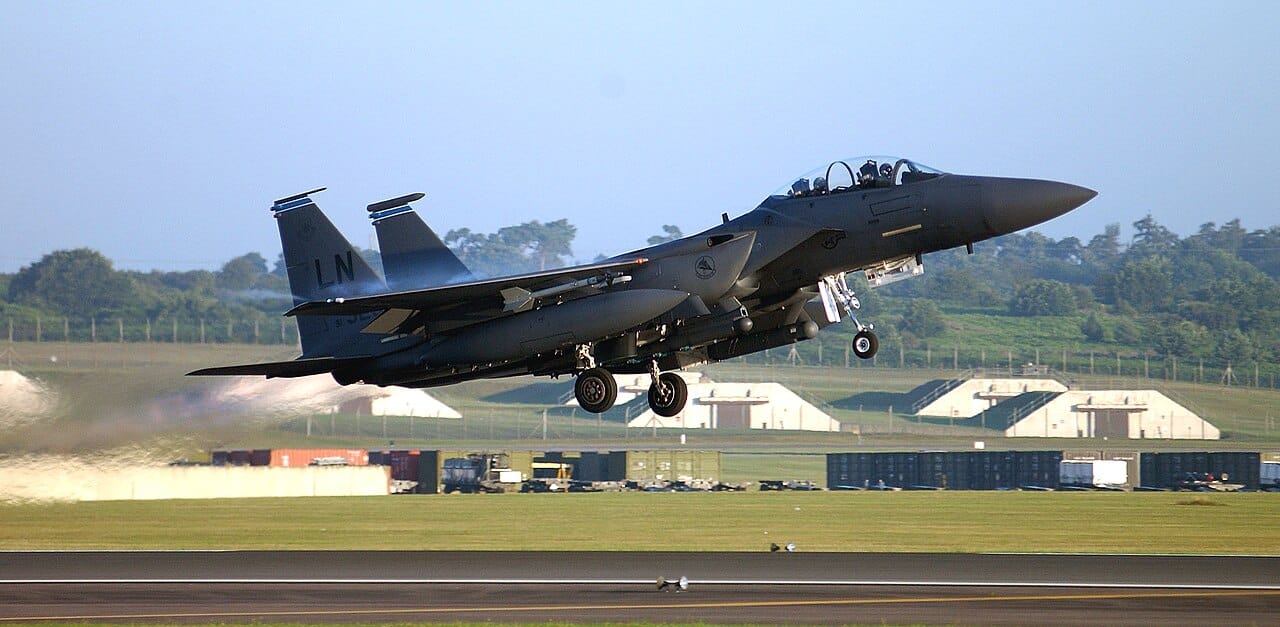
The lion's share — $1.6 billion — goes to RAF Lakenheath in Suffolk, home of the 48th Fighter Wing and one of the most combat-experienced fighter units in the Air Force. The base currently operates two squadrons of F-15E Strike Eagles and two squadrons of F-35A Lightning IIs.
Much of the Lakenheath funding is earmarked for upgraded weapons storage, accommodation, and security facilities. But the most sensitive line item is almost certainly the nuclear infrastructure. It is now widely accepted — confirmed by cargo aircraft tracking from the Nuclear Weapons Center — that B61 nuclear gravity bombs have returned to Lakenheath after an 18-year absence. The Federation of American Scientists has documented $253 million in construction projects specifically supporting the nuclear mission, including a $104 million hardened Primary Command Post and a $149 million Defender Operations Compound.
The nuclear return makes Lakenheath the only U.S. nuclear weapons storage site in the UK — and one of only a handful in all of Europe. For context, the B61 was last stored at the base from the 1950s until 2008, when Washington quietly withdrew the weapons. Their return underscores just how dramatically the European security landscape has shifted.
Lakenheath's fighters have paid a price for their operational tempo. During Operation Epic Fury, the base deployed over half its active F-15Es and F-35As to the Middle East. Several Strike Eagles were lost, including three shot down in a friendly fire incident involving Kuwaiti air defenses on March 1-2, and a fourth downed over Iran on April 3 — both crews were recovered in separate rescue operations.
RAF Mildenhall: $1.1 Billion for Special Operations
Just a few miles from Lakenheath, RAF Mildenhall is set to receive $1.1 billion. The base was famously slated for closure in the last decade — a decision later reversed — and has spent years catching up on deferred maintenance from the period when it was assumed to be on the verge of mothballing.
Mildenhall is home to the 352nd Special Operations Wing, which operates MC-130J Commando II transport aircraft and CV-22B Osprey tiltrotors. These units are permanently on call for contingency operations across Europe, Africa, and the Middle East, and are typically among the first to deploy in any crisis requiring special operations expertise. In 2024 the wing added the C-146A Wolfhound for discreet liaison and transport missions within Europe.
The $1.1 billion upgrade is focused on consolidating the 352nd SOW's currently dispersed operations. According to The Guardian, the plans will "enable these special forces to house their aircraft in one place." At present, the MC-130J and CV-22 fleets operate from hardstands on opposite sides of Mildenhall's runway — an arrangement that has complicated operations for years. New hangarage and consolidated apron space would transform the base into a purpose-built special operations hub.
RAF Fairford: $500 Million and the B-21 Question
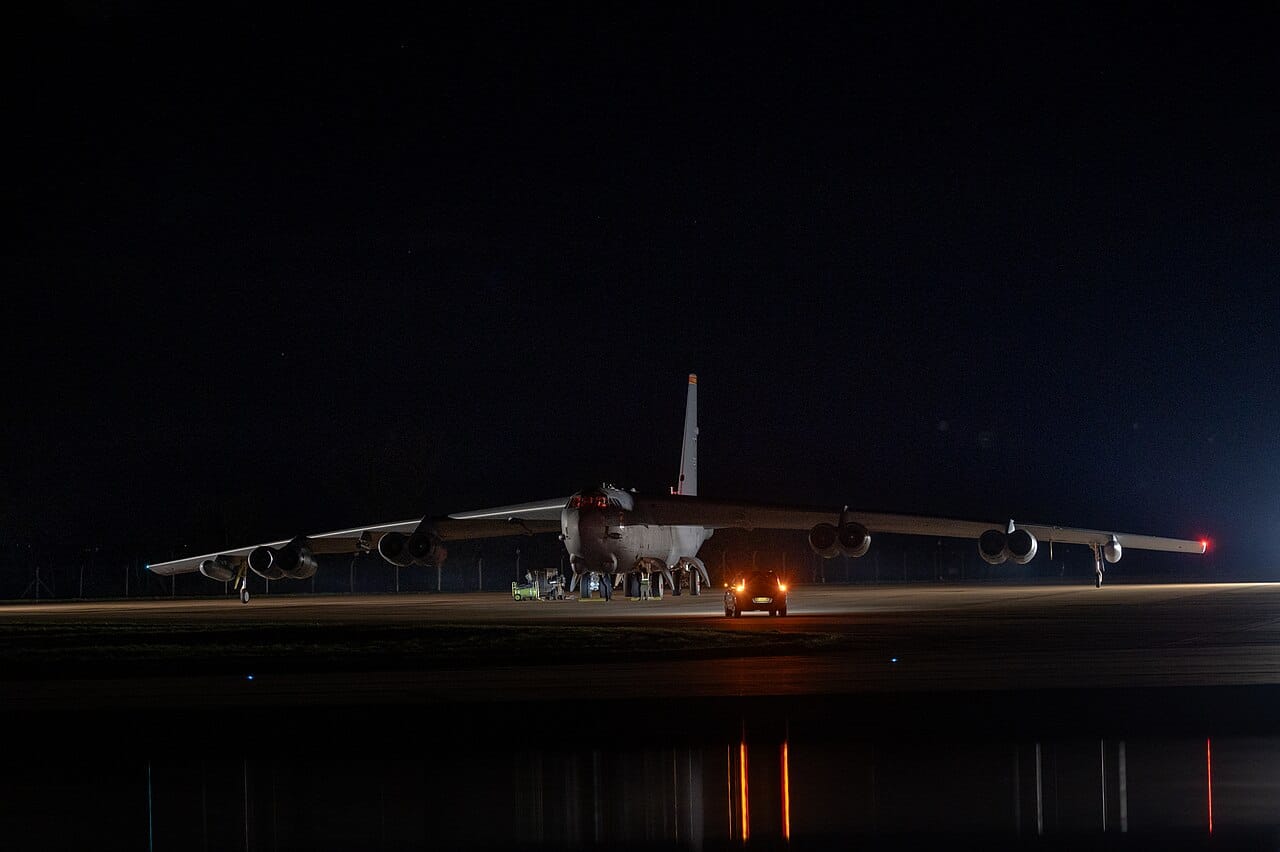
RAF Fairford in Gloucestershire rounds out the trio with $500 million in planned upgrades. The base was placed in care-and-maintenance status in 2010 but has grown steadily more active since 2014, hosting near-annual rotations of B-52s, B-1Bs, and B-2 Spirits. In 2019 it became home to a permanent U-2 Dragon Lady detachment.
During Operation Epic Fury, Fairford hosted a force of up to 18 bombers — 12 B-1B Lancers and six B-52 Stratofortresses — that flew daily sorties to Iran. Even during the current ceasefire, the bomber force continues to fly training missions from the base at a similar tempo, with little sign of standing down.
The $500 million upgrade almost certainly includes preparations for the B-21 Raider, which is due to arrive at Ellsworth AFB next year. Fairford is one of only three locations worldwide with climate-controlled hangars for stealth bombers — essential for preserving the B-2's radar-absorbent coatings — and will almost certainly be among the first overseas bases to see the next-generation bomber. The upgrades may also improve support for long-term bomber deployments and potentially accommodate unmanned intelligence platforms like the RQ-4 Global Hawk.
A Cold War-Scale Commitment
Taken together, the $4.2 billion investment represents a Cold War-scale commitment to American air power in Britain. The spending also extends beyond the three flying stations: RAF Menwith Hill, the secretive signals intelligence facility in Yorkshire, is set to receive $163 million for its role supporting U.S. and British intelligence operations under the Five Eyes alliance.
The investment arrives at a moment when the U.S.-UK defense relationship is arguably more operationally important than at any point since World War II. British bases have served as launchpads for combat operations in the Middle East, forward stations for NATO deterrence patrols, and hubs for intelligence-gathering operations that span the globe. With $4.2 billion now on the table, Washington is betting that this relationship — and these runways — will remain central to American power projection for decades to come.
Domande correlate
How much is the US spending on its air bases in the UK?
The US Air Force is investing $4.2 billion in its three main operating bases in the United Kingdom — RAF Lakenheath, RAF Mildenhall and RAF Fairford. It is the single largest American basing investment in Britain in decades, reflecting the fact that US forces in the UK are more operationally active than at any point since the Cold War.
What aircraft are based at RAF Lakenheath?
RAF Lakenheath in Suffolk is home to the 48th Fighter Wing, one of the most combat-experienced fighter units in the US Air Force. It operates two squadrons of F-15E Strike Eagles and two squadrons of F-35A Lightning IIs. Lakenheath receives the largest share of the funding, about $1.6 billion.
Are US nuclear weapons stored in the United Kingdom?
Yes. B61 nuclear gravity bombs have returned to RAF Lakenheath after an 18-year absence, making it the only US nuclear weapons storage site in the UK and one of only a handful in Europe. The Federation of American Scientists has documented $253 million in construction supporting the nuclear mission, including a $104 million hardened command facility.
What is the B61 nuclear bomb?
The B61 is a US nuclear gravity bomb designed to be carried by aircraft. It was stored at RAF Lakenheath from the 1950s until 2008, when Washington quietly withdrew the weapons. Its documented return underscores how dramatically the European security landscape has shifted.
What is the 352nd Special Operations Wing?
The 352nd Special Operations Wing is based at RAF Mildenhall and operates MC-130J Commando II transports and CV-22B Osprey tiltrotors, with the C-146A Wolfhound added in 2024. The units are permanently on call for contingencies across Europe, Africa and the Middle East. Mildenhall is receiving $1.1 billion to consolidate its dispersed special-operations facilities.
What is RAF Fairford used for?
RAF Fairford in Gloucestershire is a US bomber base whose aircraft flew daily combat sorties to Iran during the 2026 conflict. It is set to receive around $500 million in upgrades, partly tied to questions about hosting the B-21 Raider stealth bomber. Fairford is one of the three UK bases at the centre of the $4.2 billion investment.

0 Commenti