
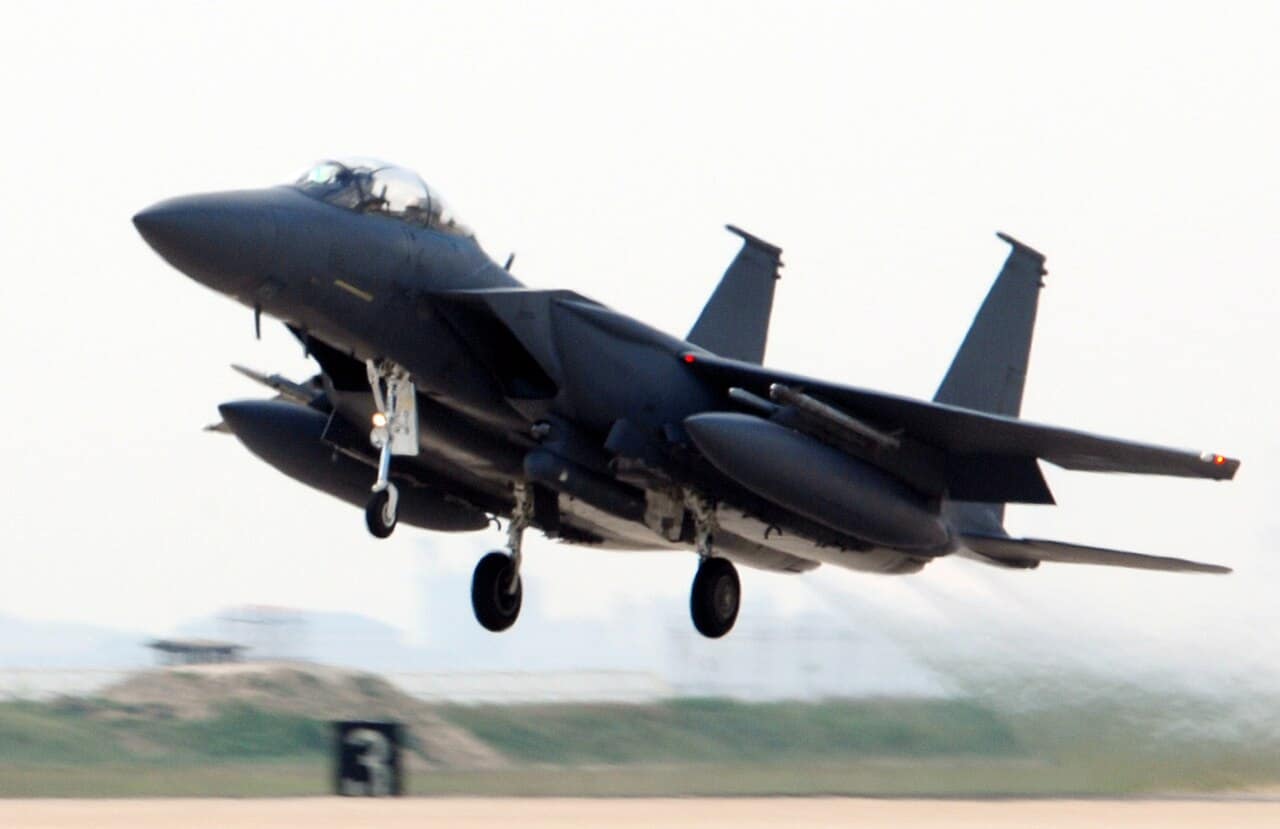
South Korea just made its most battle-tested fighter a great deal harder to shoot down — and it did so not with a shiny new jet, but with a box of very clever electronics bolted deep inside the ones it already flies.
On 13 July 2026, BAE Systems confirmed a contract from Boeing to fit 59 Republic of Korea Air Force F-15K Slam Eagles with the AN/ALQ-250 Eagle Passive/Active Warning Survivability System — EPAWSS for short. It is the same electronic-warfare suite the U.S. Air Force is installing on its brand-new F-15EX Eagle IIs, and the heart of a roughly $3.1 billion effort to keep Seoul’s heavyweight strike fighters relevant into the 2040s.
If that sounds unglamorous, consider what it actually buys: the difference between a pilot who sees the missile coming and one who doesn’t.
Informazioni rapide
| Aeromobili | 59 ROKAF F-15K Slam Eagles |
| New EW suite | BAE Systems AN/ALQ-250 EPAWSS |
| Prime integrator | Boeing |
| Program value | ~$3.1 billion, running through 2037 |
| First upgraded jets | Expected late 2028 |
| Also added | AN/APG-82(v)1 AESA radar, ADCP II mission computers, AN/AAR-57 missile-warning |
What EPAWSS Actually Does
Modern air defences don’t win by being invisible; they win by drowning a pilot in radar signals until he can’t tell the real threat from the noise. EPAWSS is BAE’s answer to exactly that problem. It gives the aircraft 360-degree threat detection, sorts hostile emitters from the clutter, and — crucially — can respond on its own, cueing jammers and dispensing chaff and flares without waiting for the pilot to react.
That automation is the point. In a dense electromagnetic environment, seconds matter and human workload is already brutal. Letting the suite manage its own countermeasures frees the crew to fly the mission and fight the jet, rather than babysit the defensive systems.
Seoul isn’t gambling on unproven kit, either. EPAWSS has already cleared testing and entered full-rate production, and it is being retrofitted onto the U.S. Air Force’s existing F-15E Strike Eagles as well as the new F-15EX. South Korea is buying a known quantity, not a science project.
More Than a New Jammer
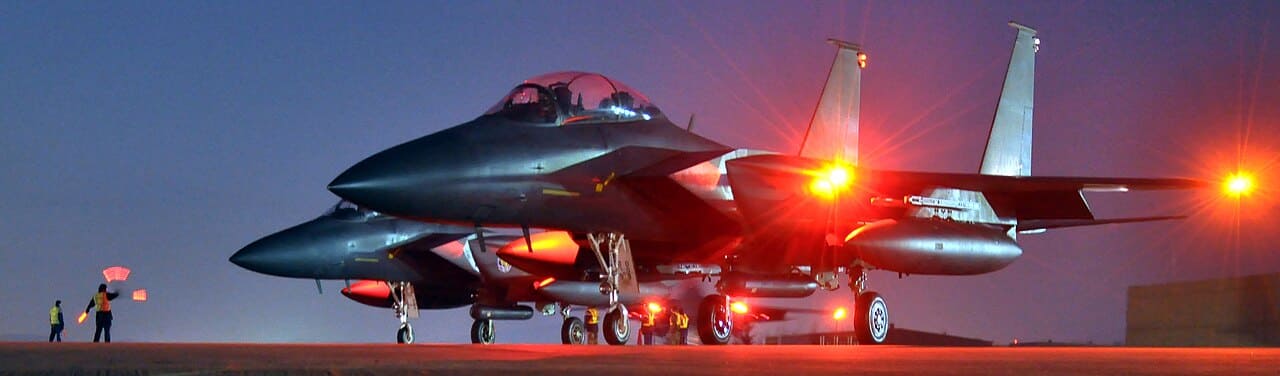
EPAWSS grabs the headlines, but it is one piece of a much broader mid-life overhaul that turns the F-15K into what the ROKAF calls the F-15K+. The package also includes 70 AN/APG-82(v)1 active electronically scanned array radars, 96 Advanced Display Core Processor II mission computers, and 70 AN/AAR-57 Common Missile Warning Systems — a near-total refresh of the jet’s sensors and brains.
Put together, that is a Slam Eagle that sees farther, thinks faster, and survives longer, carrying the same enormous weapons load that made it South Korea’s premier deep-strike platform in the first place. The first modernised aircraft are expected around late 2028, with the wider program stretching to 2037.
Why Seoul Is Doing This Now
South Korea sits under one of the densest concentrations of air-defence and missile systems on earth. Keeping a large, long-range strike fighter credible against that threat means constantly upgrading the one thing you can’t see from the ground: its electronic edge. Buying the same suite as its closest ally also keeps the ROKAF and USAF fleets in lockstep, which matters when they may one day have to fight side by side.
It is a quietly significant move — proof that in modern air combat, the most important upgrade a fighter can get is often the one you’ll never see in a flypast.
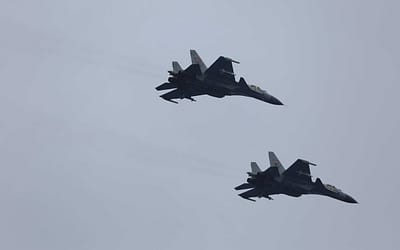
ROKAF F-15K Slam Eagles thundering off the runway at Kunsan Air Base — the fleet now slated for a sensor-and-survivability overhaul.
Sources: BAE Systems; Boeing; The Defense Post; Zona Militar; FlightGlobal; Defence Industry Europe.
0 Commenti