
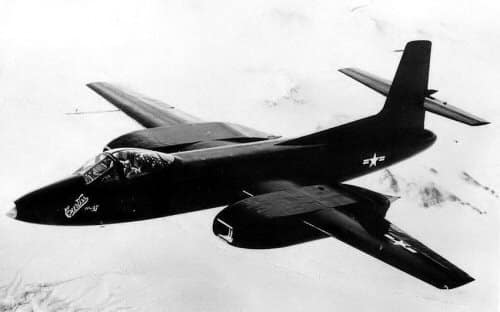
Curtiss was once one of the giants of American aviation. It built the fighters that fought the First World War, the racing seaplanes that set world records in the 1920s, and the P-40 Warhawks whose shark-mouthed noses became a symbol of the Second World War. And then, in October 1948, it stopped building aircraft forever. The machine that broke the company was the Curtiss XF-87 Blackhawk.
It was big, it was heavy, it was underpowered — and losing one contract was enough to end forty years of history.
Informazioni rapide
- Maker: Curtiss-Wright Corporation
- Primo volo: 5 March 1948, at Muroc Dry Lake
- Ruolo: all-weather / night fighter-interceptor prototype
- Motori: four Westinghouse J34 turbojets, paired in two underwing pods
- Equipaggio: 2 (pilot and radar operator, side by side)
- Costruito: one flown (a second airframe was scrapped unfinished)
- Beaten by: the Northrop F-89 Scorpion; contract cancelled 10 October 1948
- Significance: the last aircraft Curtiss ever designed and built
A giant in decline
By the late 1940s, the once-mighty Curtiss was running on fumes. Project after project had failed, and the company, as one historian put it, seemed to have run out of fresh ideas. The XF-87 was its big bet on the future: a large, four-jet, all-weather night fighter to replace the wartime P-61 Black Widow and guard America’s skies in the new jet age.
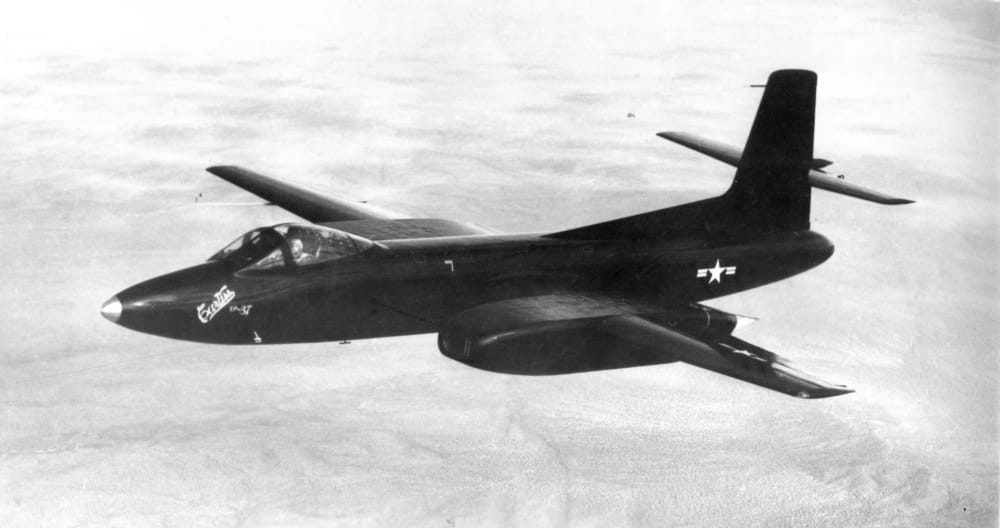
On paper it was imposing — a two-seat interceptor as heavy as a B-17 bomber. In the air it was a disappointment. Its four Westinghouse J34 engines simply could not haul its bulk fast enough; it fell well short of its promised top speed and buffeted at high speed. It flew for the first time in March 1948, and by then its fate was already being decided elsewhere.
The contract that killed a company
The U.S. Air Force initially ordered the type — then thought better of it. The rival Northrop F-89 Scorpion looked more promising, and in October 1948 the Air Force cancelled the Blackhawk. For a healthy manufacturer that would have been a setback. For Curtiss-Wright, teetering after years of decline, it was fatal.
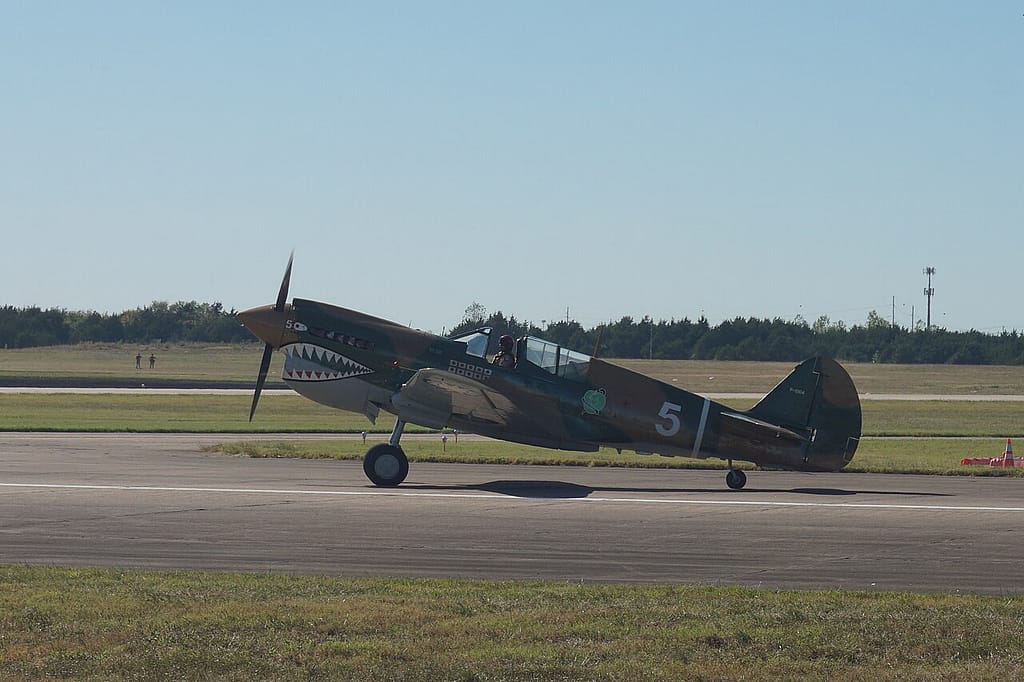
The company shut down its aeroplane division and sold its assets to North American Aviation, ending roughly four decades of aircraft design that stretched back to the earliest days of flight. Both XF-87 prototypes were scrapped. The final irony came soon after: the old Curtiss plant in Columbus, Ohio, reopened under its new owner to build the sleek, successful F-86 Sabre — exactly the kind of winner Curtiss itself could no longer produce.
The Blackhawk is barely remembered today. But it marks a genuine ending: the last time the name Curtiss, one of the oldest in aviation, ever appeared on a new aircraft.
Sources: Wikipedia; Joe Baugher, "USAF Fighters"; contemporary press reports.
Post correlati
0 Commenti