
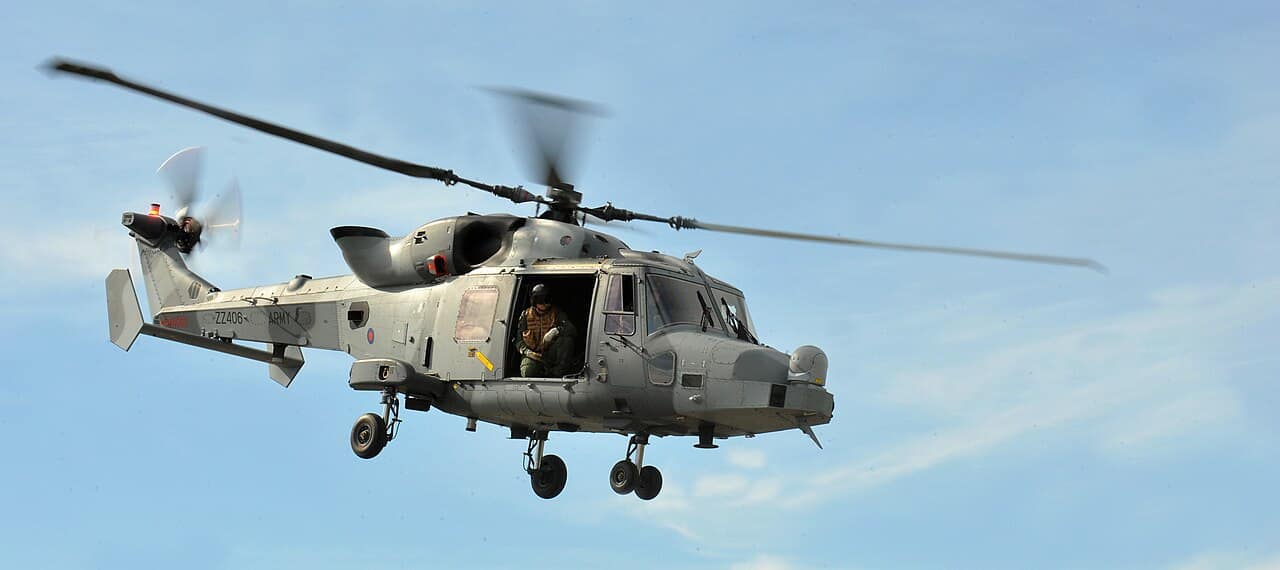
Britain has decided that its Army no longer needs a dedicated scout helicopter. Under the Defence Investment Plan published on 30 June 2026, all 34 of the British Army’s Leonardo Wildcat AH1 reconnaissance helicopters will begin leaving service from 2027, their battlefield-reconnaissance role handed to autonomous drones.
Weeks later, at the Farnborough International Airshow, the company that builds them stepped up to make a very different argument: that the Wildcat — and its larger sibling, the AW101 Merlin — still have years of useful life ahead. It was, in effect, a manufacturer pushing back against the quiet retirement of one of its own products.
Informazioni rapide
- Aircraft retiring: 34 British Army Wildcat AH1
- Withdrawal begins: 2027
- Sostituito da: autonomous/uncrewed systems
- Uncrewed funding: >£5 billion over four years (DIP)
- Staying: Royal Navy Wildcat HMA2 and the AW101 Merlin fleet
- Merlin sustainment: £1.6 billion committed by the DIP
The end of the Army’s crewed scout
The Defence Investment Plan is blunt about direction. The Army Air Corps will lose its dedicated combat-reconnaissance helicopter, with more than £5 billion earmarked for uncrewed systems over the next four years to take over the scouting mission. Leonardo says the drawdown of the AH1 is due to commence from next year, though it is still waiting to hear exactly how the process will be completed — and what will happen to the retired airframes. The Royal Marines’ AH1s are expected to follow.
For a helicopter that only entered British service in the last decade, it is an abrupt exit. Leonardo’s counter-argument is that abrupt does not mean finished.
The firm suggests the “incredibly capable” AH1s could find second lives with other operators, or be converted into uncrewed helicopters — folding them into, rather than out of, the drone future the DIP is chasing.
The naval Wildcat stays
Crucially, the retirement does not touch the Royal Navy’s Wildcat HMA2. Despite speculation that the DIP might sweep the maritime variant away too, Leonardo expects the HMA2 to serve well into the next decade. The plan does float replacing it with uncrewed alternatives eventually, but sets no timeline — a long-term ambition, not current planning.
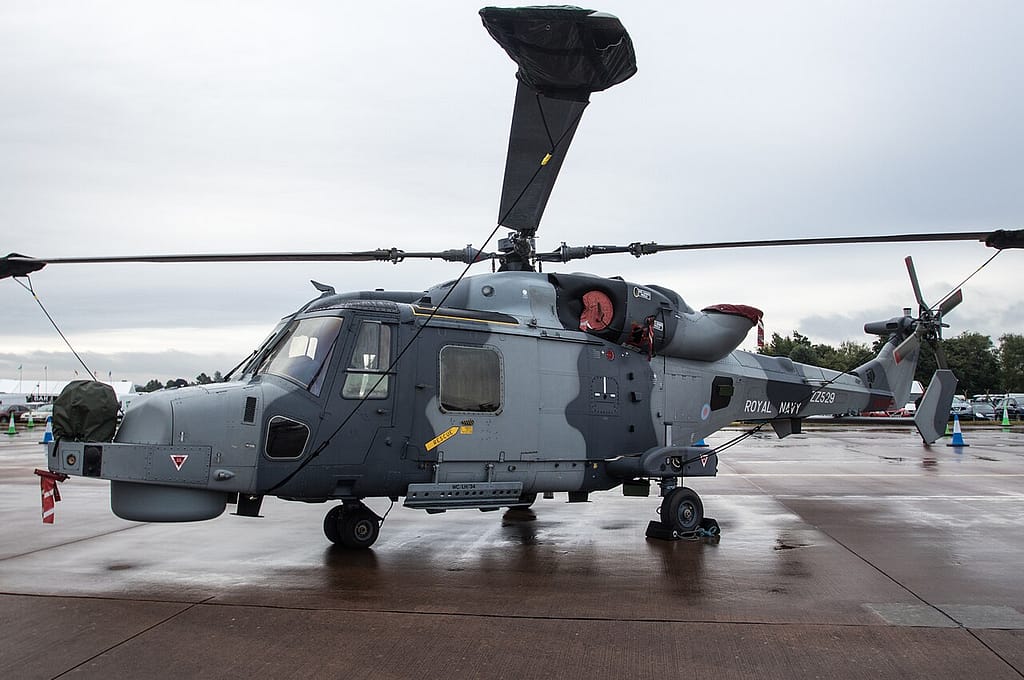
Armed with lightweight Martlet and heavier Sea Venom missiles, the HMA2 has matured into a potent ship-borne weapon — exactly the kind of capability the Navy is in no hurry to give up.
On board the Royal Navy’s multi-role Wildcat helicopter.
Betting on the Merlin
If the Wildcat story is about survival, the Merlin story is about growth. The AW101 has been in production since the 1990s, and Leonardo is banking on it well into the future. An upgraded Merlin for Canada — locally the CH-149 Cormorant — made its first flight at the firm’s Yeovil airfield in June, and Norway is expected to decide within a year on a new anti-submarine helicopter for which Leonardo believes the Merlin is the natural fit, dovetailing with Norway’s future Type 26 frigates.
At home, the picture is more about maintenance than expansion. Nigel Colman, managing director of Leonardo Helicopters UK and himself a former RAF Merlin pilot, acknowledged obsolescence issues across the UK fleet that a life-extension programme will address. The DIP put real money behind that promise, committing £1.6 billion to sustain the Merlin HM2 and HC4/HC4A into the future.
Supporting a large in-service fleet is a responsibility Leonardo has publicly embraced before.
The wider message from Farnborough was that the future of rotary aviation is neither purely crewed nor purely uncrewed, but a blend of the two — leaving room for new programmes such as the Proteus uncrewed demonstrator alongside enduring types like the Wildcat, Merlin and even the long-out-of-production Lynx, which Leonardo still upgrades for export users.
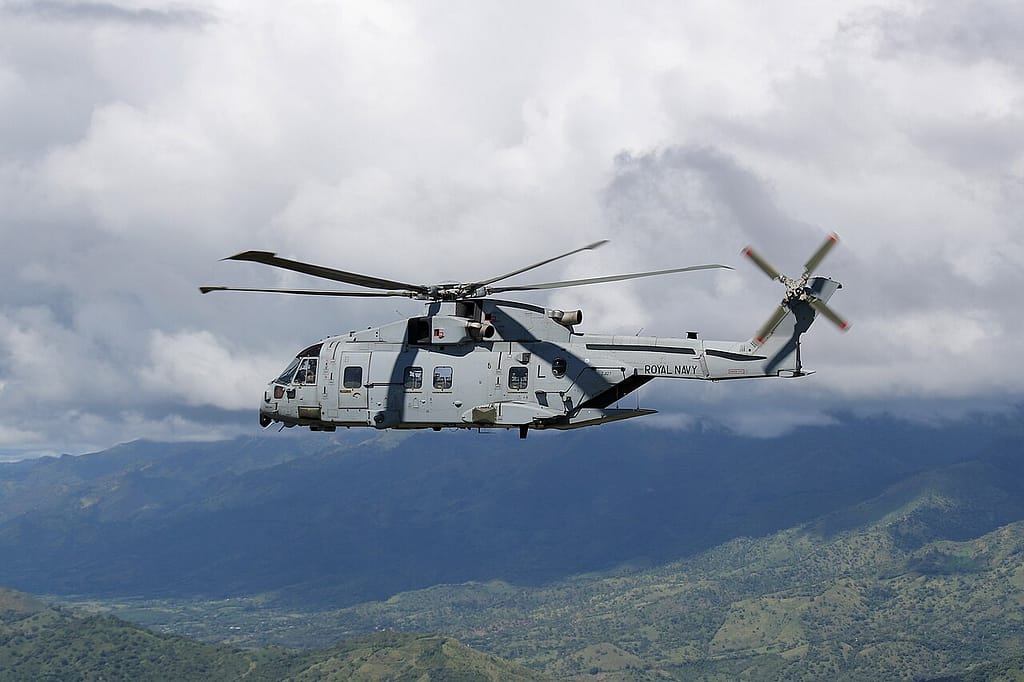
The Royal Navy takes delivery of a Merlin, the type Leonardo is betting on for the future.
Yeovil holds the line
Underpinning all of this is Yeovil, the Somerset home of British helicopter manufacturing. After an anxious wait for the New Medium Helicopter (AW149) contract, Leonardo now sounds confident that UK and export orders will keep the plant busy for years — as a factory and as a centre of excellence for autonomous flight. One door it firmly closed: Yeovil will not be bidding to build jet trainers for the RAF. Its future, Leonardo made clear, is rotary.
The Army may be walking away from the crewed scout. Its maker is betting the rest of the family flies on.
Army Air Corps Wildcat AH1s — the type the British Army will begin retiring from 2027.
Sources: UK Defence Investment Plan (30 June 2026); The Aviationist; FlightGlobal; Air Data News; Heliops.

0 Commenti