
At 08:47 on the morning of 27 December 1991, a nearly new SAS MD-81 lifted off from a frozen Stockholm-Arlanda. It had sat out the night in near-freezing air with cold fuel chilling its wings, and a layer of clear ice — invisible, glass-smooth — had built up on the wing roots. Nobody found it.
Seconds after the wheels left the runway, that ice shattered and vanished into both tail-mounted engines. The fan blades bent, the compressors stalled, and the engines began to surge. Worse, a thrust system the crew had never been told existed kept shoving the power back up every time they tried to save them.
Barely a minute into the flight, the crew had an airliner full of people and no engines. They put it down in a field near Gottröra. And every one of the 129 people aboard walked away — the Miracle at Gottröra.
Informazioni rapide
| Data | 27 December 1991 |
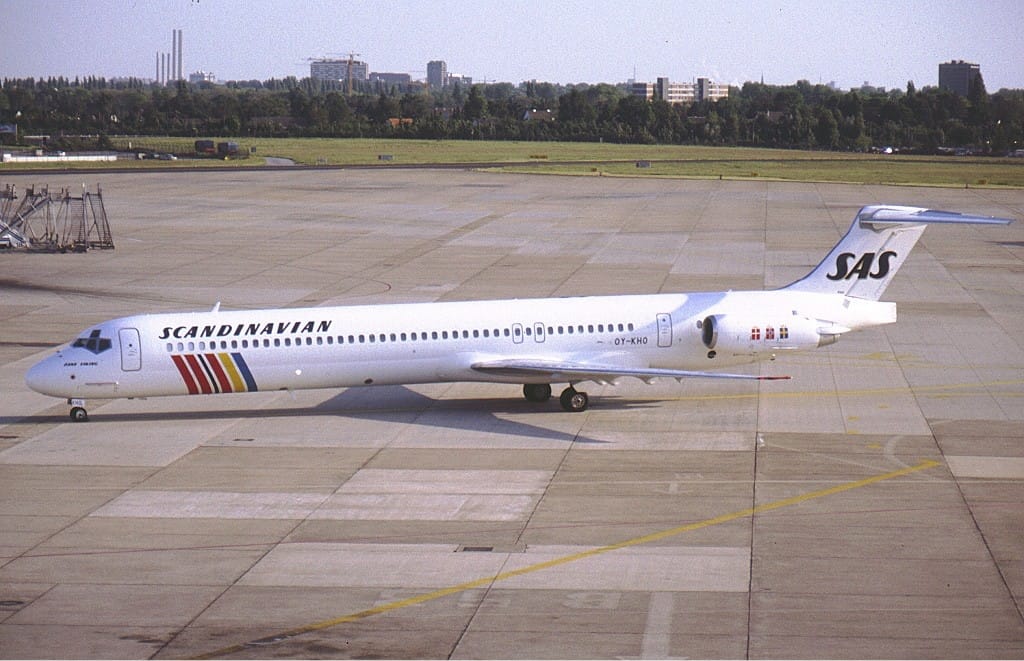
| Aeromobili | McDonnell Douglas MD-81 (OY-KHO) |
| Operatore | Scandinavian Airlines (SAS) |
| Causa | Clear ice on the wings broke off at liftoff and was sucked into both tail-mounted engines |
| Complication | A little-known automatic thrust system pushed the engines back into surge |
| Fallimento | Both engines destroyed themselves within about 80 seconds of takeoff |
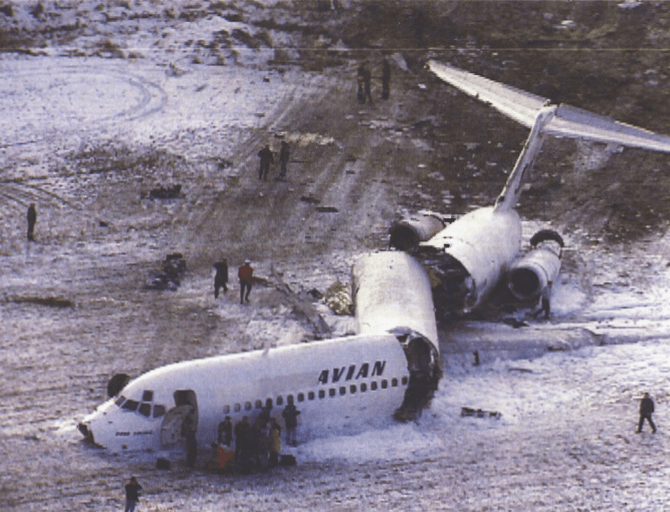
| Landing | A forced landing in a field near Gottröra; the fuselage broke into three |
| Risultato | All 129 aboard survived |
An Icy Morning and Invisible Ice
The aircraft had flown in the evening before and parked overnight in near-freezing conditions, cold fuel in its wing tanks chilling the surface until clear ice formed on the upper wing roots. The crew de-iced — but nobody performed the hands-on physical check of the upper wing, the only reliable way to catch clear ice.
Both Engines Surge After Liftoff
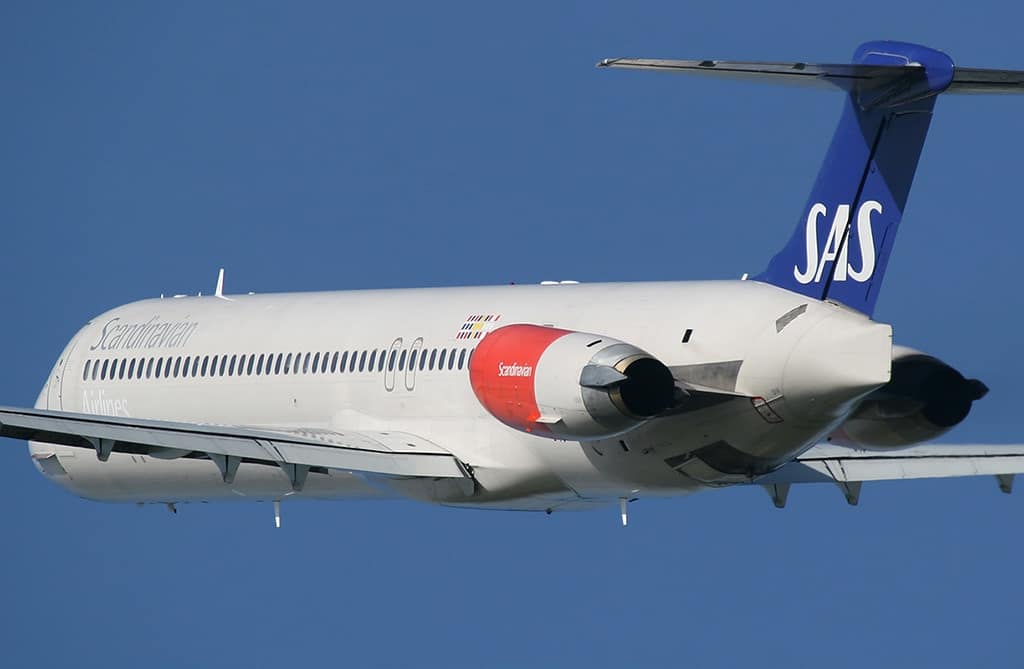
As the MD-81 rotated, the ice broke free and was ingested by both engines, deforming the fan blades. About twenty-five seconds into the flight the crew felt one engine surging and eased the throttle back — but the undisclosed automatic thrust system read the asymmetry and pushed the power straight back up, sustaining the surges. At roughly 76 and 78 seconds, both engines failed completely.
The Mayday reconstruction of Flight 751.
The Off-Duty Captain in Seat 2C
Per Holmberg, an off-duty SAS captain riding as a passenger, recognised the trouble early, hurried to the cockpit and went to work — taking the emergency checklist, starting the auxiliary power unit, and calling out to keep the flying pilot focused. Captain Stefan Rasmussen answered the double failure by pitching the nose down, then levelling to stretch the glide as far as he could without stalling.
A Field, Some Trees, and Three Pieces
Breaking out of the cloud at under a thousand feet, the crew committed to a field near a farm at Gottröra. On the way down the aircraft clipped trees and lost a large section of one wing, hit the ground tail-first, sheared off its gear, and slid to a halt as the fuselage broke into three. The cabin crew had drilled the passengers into the brace position — widely credited with the survivable outcome.
The double engine failure, seconds after takeoff.
Everyone Walks Away
Twenty-five people were hurt, two seriously. None died. The investigators found the root cause was inadequate procedures for removing clear ice, made worse by a crew never trained to stop engine surging and a hidden thrust system that fought them. The crash reshaped clear-ice inspection across the industry — and turned a wintry field north of Stockholm into a byword for survival.
The full story of the Miracle at Gottröra.
Sources: Wikipedia (Scandinavian Airlines System Flight 751); Swedish Accident Investigation Board report C 1993:57; FAA Lessons Learned.

0 Commenti