
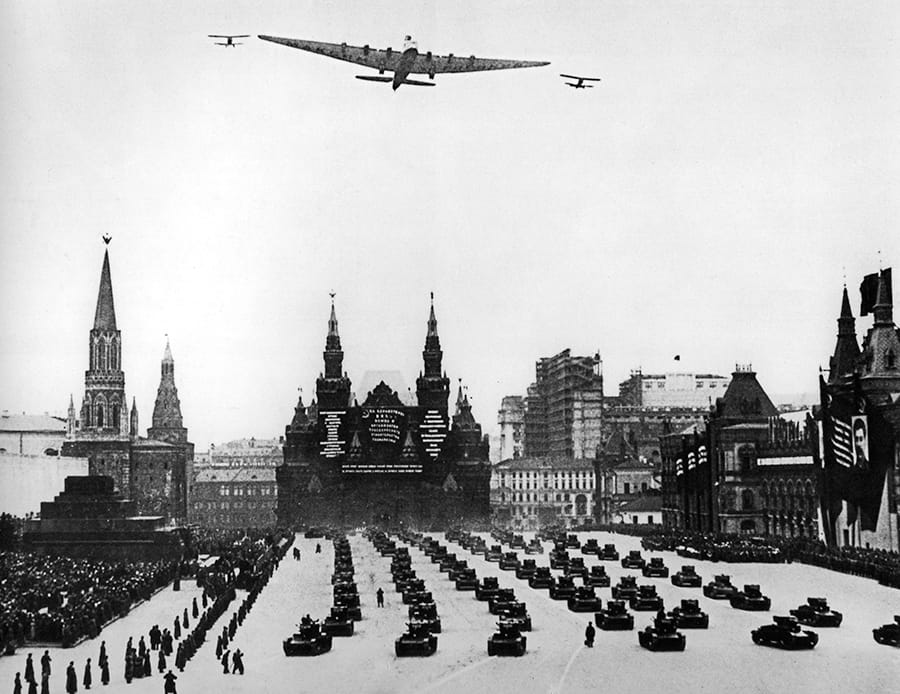
On 17 May 1935, the man who would later write The Little Prince climbed aboard the largest aircraft on Earth. Antoine de Saint-Exupéry, in Moscow reporting for a French newspaper, was the only foreigner allowed onto the Tupolev ANT-20 “Maxim Gorky” — a flying colossus with eight engines and a wingspan close to a modern jumbo jet. He marvelled at it, and flew away safely.
Twenty-four hours later the Maxim Gorky was a field of burning wreckage in a Moscow suburb, brought down not by enemy or storm but by a single show-off in a tiny fighter.
Informazioni rapide
- Aeromobili: Tupolev ANT-20 “Maxim Gorky”
- Claim to fame: the largest aircraft in the world in the mid-1930s
- Misurare: eight engines, ~63 m wingspan — close to a Boeing 747
- Ruolo: flagship of a Soviet flying propaganda squadron
- Primo volo: 19 May 1934; designed by Andrei Tupolev
- Incidente: 18 May 1935, after a fighter’s stunt loop struck it over Moscow
- Dead: around 45, including aircraft workers and their families
A flying monument to Soviet power
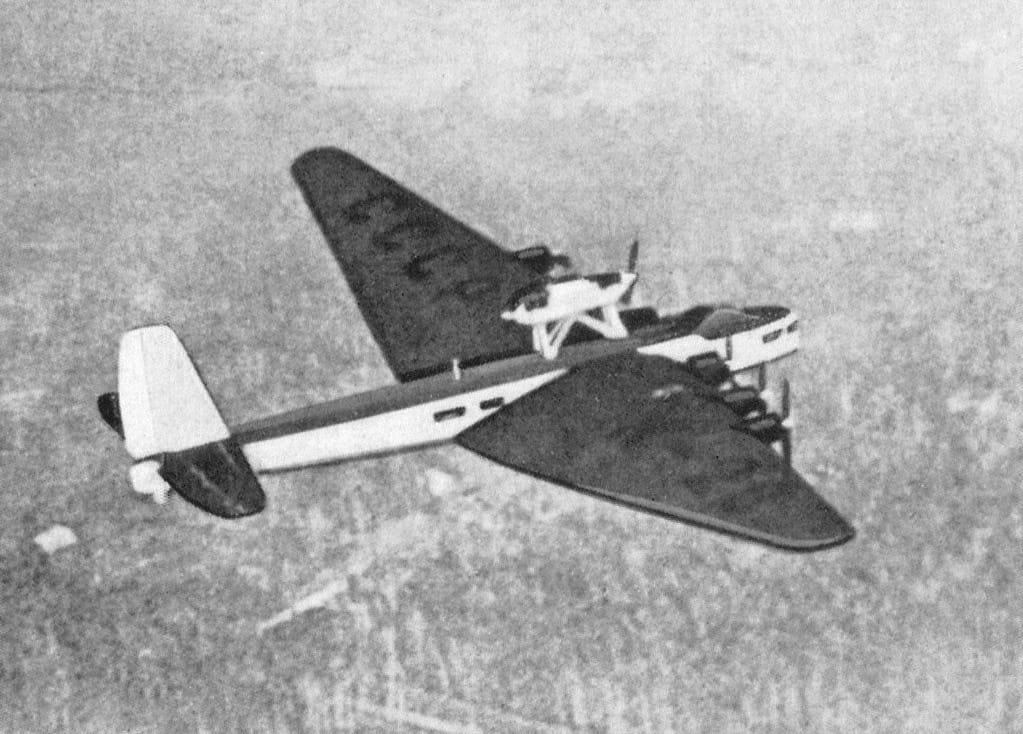
The ANT-20 was built to impress. Designed by Andrei Tupolev and named for the writer Maxim Gorky, it was the flagship of a dedicated propaganda squadron that toured the Soviet Union selling the achievements of communism. Eight engines — six along the wing’s leading edge and two more stacked in a nacelle above the fuselage — hauled a machine so vast that passengers could walk inside the wings.
Inside it carried a printing press, a photographic laboratory, a film projector and a powerful radio and loudspeaker system nicknamed the “Voice from the Sky,” which could blare music and slogans down onto the crowds below. It was less an aircraft than a piece of the state given wings.
Saint-Exupéry’s last look
Saint-Exupéry’s flight was a demonstration for a privileged few, and he wrote about it with a pilot’s eye — the ease with which the 42-tonne monster left the ground, the strange domesticity of its lounges. His article ran in Paris-Soir on 20 May. By the time readers saw it, the aircraft he described no longer existed.
The hooligan’s third loop
On 18 May 1935 the Maxim Gorky took off again over Moscow, this time escorted by two small aircraft whose only job was to fly alongside and make the giant look even bigger from the ground. One of the escort pilots, Nikolai Blagin in a nimble Polikarpov I-5 biplane, decided to improve the show by looping the loop around the huge machine.
He got away with it twice. On the third loop he ran out of speed at the top, fell, and smashed into the Maxim Gorky’s wing. The giant broke apart and tumbled down, striking a dacha settlement below barely fifteen seconds later. Everyone aboard the Maxim Gorky died, along with Blagin — around 45 people in all, among them aircraft workers and their children who had been given the flight as a reward.
Rebuilt, then lost again
In the grim spirit of the time, the disaster became a fundraising drive: money was collected to build a fleet of new giants. In the end only one true successor emerged, the ANT-20bis, which flew in the late 1930s and carried passengers for Aeroflot. It too came to a bad end, crashing in December 1942 after a passenger who had been allowed into the cockpit accidentally moved a control, killing everyone on board.
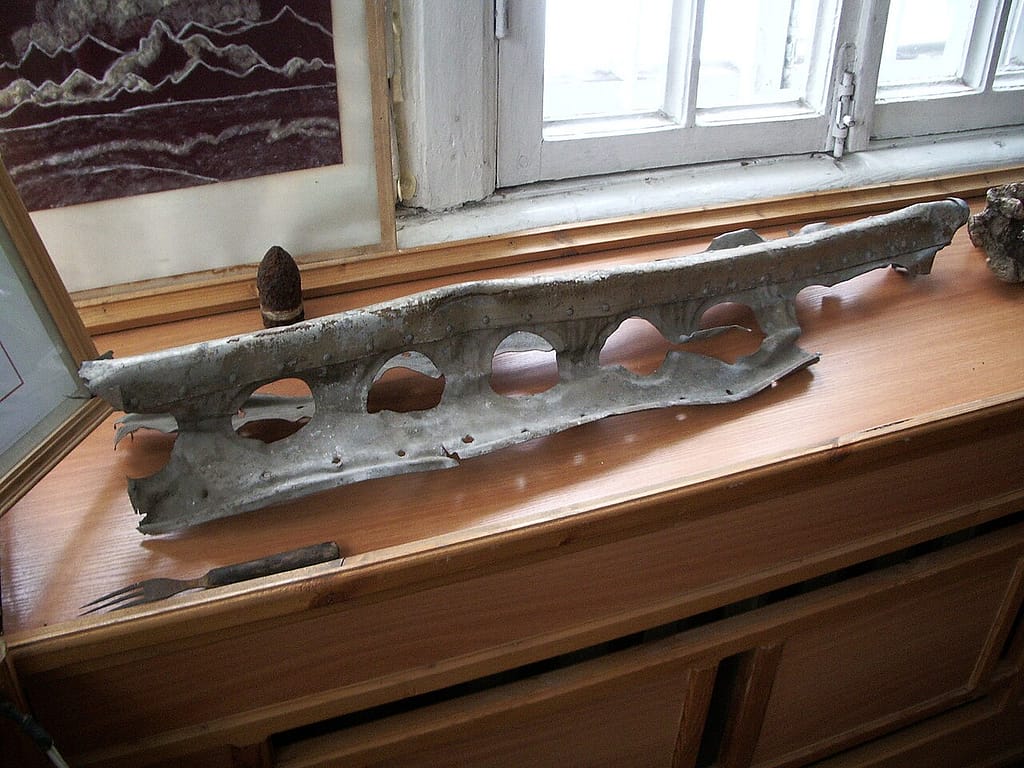
Today the biggest aircraft of its age survives only as a twisted piece of metal in a neighbourhood museum and on a couple of Soviet postage stamps — a monument brought down not by war, but by one man who could not resist showing off.
Sources: Wikipedia; Russia Beyond; Vintage Aviation News; Antoine de Saint-Exupéry, “The Tragic End of the Maxime-Gorki” (Paris-Soir, 1935); This Day in Aviation.
0 Commenti