
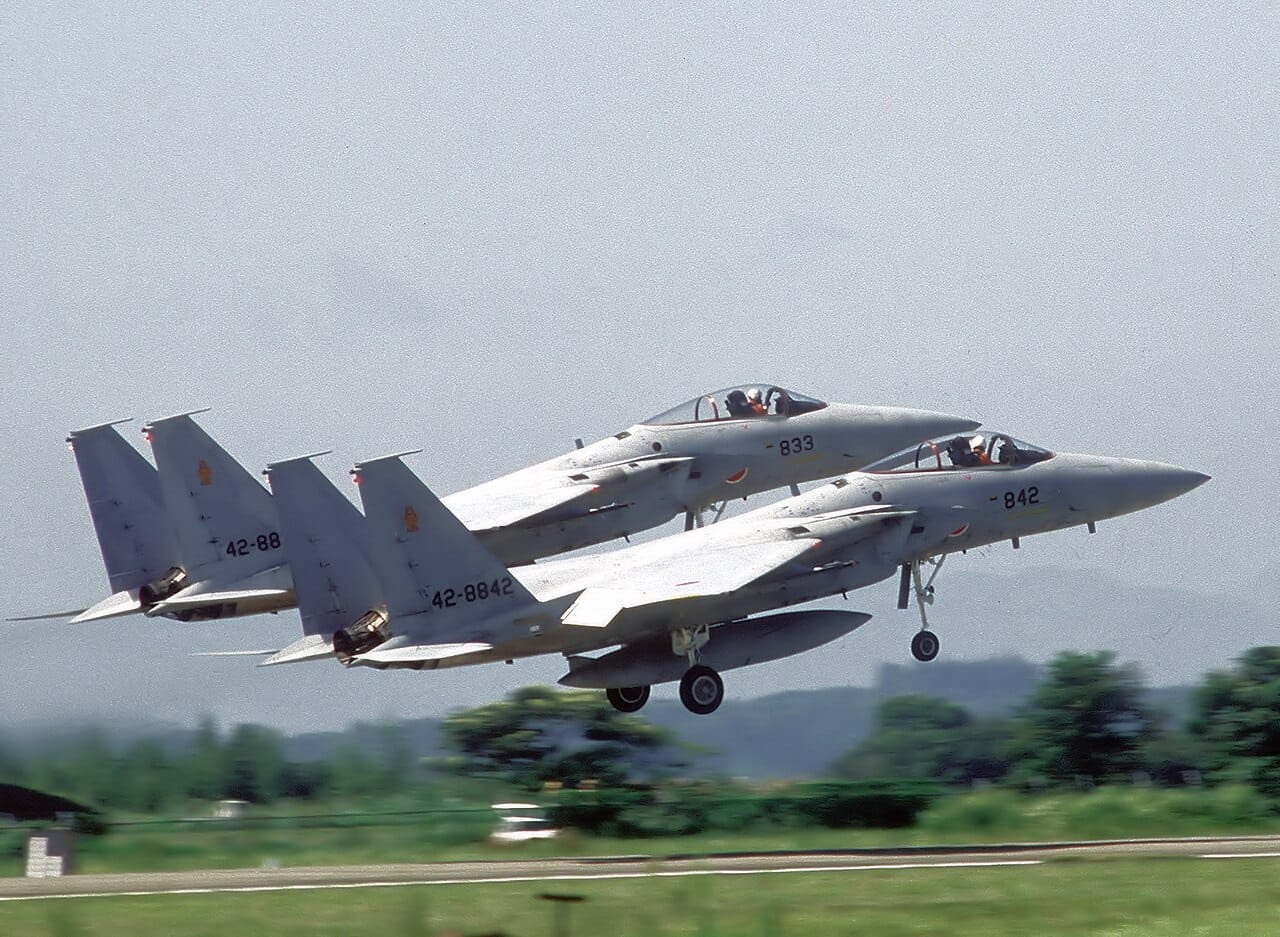
On 29 July 2026, Japan launched fighter jets over the East China Sea after picking up a suspected airspace violation. Then the Ministry of Defense did what it usually does with these events: said almost nothing.
No aircraft type was named. No confirmation of whether Japanese airspace was actually crossed. Just an acknowledgement that the JASDF’s Western Air Defense Force and other units had been scrambled on an emergency basis. If that sounds thin, that is the story — because in this corner of the world, it happens constantly.
Quick Facts: Japan’s air-defense scrambles
- Event: Emergency scramble over the East China Sea, reported 29 July 2026
- Responder: JASDF Western Air Defense Force and other units
- Detail released: Minimal — no aircraft identified, no confirmed breach
- Q1 FY2026 (Apr–Jun): 181 scrambles — 139 vs Chinese aircraft/UAVs, 42 vs Russian
- Alert fighters: F-15J, F-2 and, increasingly, F-35A
A scramble, and not much else
Japan sits under one of the busiest slices of contested airspace on Earth. Its air-defense identification zone brushes up against the Chinese coast, the disputed Senkaku Islands and the approaches used by Chinese and Russian long-range aircraft. When an unknown track behaves unpredictably, alert fighters — typically the F-15J, the F-2, and increasingly the F-35A — are airborne within minutes.
The tight-lipped statement is standard practice. Tokyo rarely characterises an intercept until it has confirmed exactly what it was dealing with, precisely because the tempo is so high and the risk of miscalling one is real.
News coverage of the JASDF scramble over the East China Sea.
Why the silence is routine
The numbers explain the shrug. In the first quarter of Japan’s 2026 fiscal year alone (April to June), the JASDF scrambled 181 times — 139 of those against Chinese aircraft and drones, and 42 against Russian aircraft. That is roughly two emergency launches every single day.
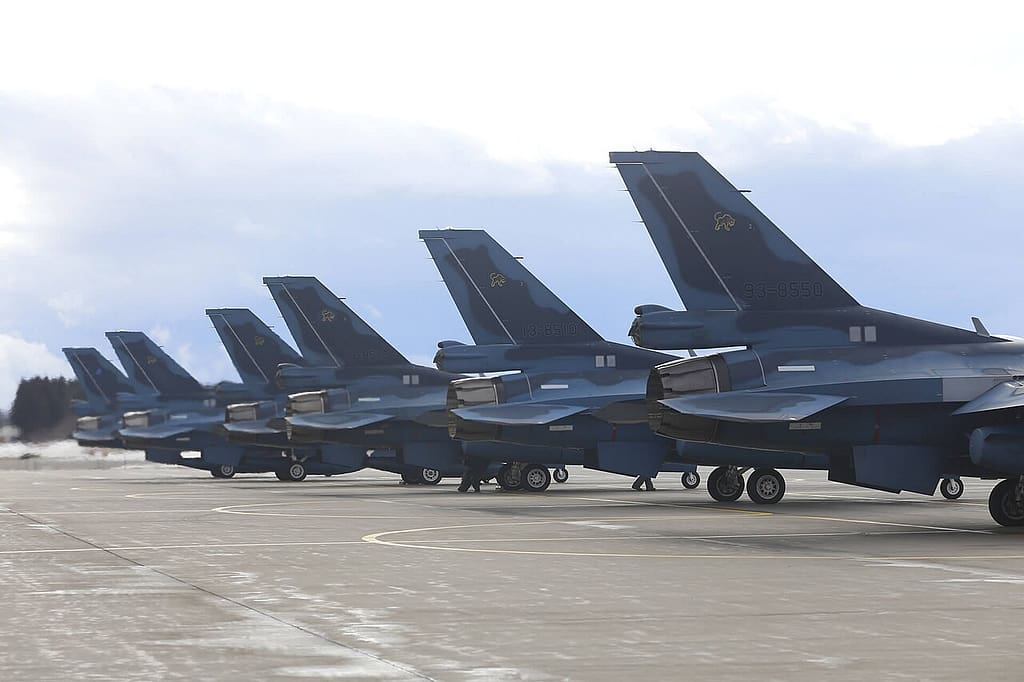
Japanese defense officials have been increasingly blunt about the trend, particularly as Chinese and Russian forces operate together more often around the archipelago.
What it signals
One unremarkable scramble is not a crisis. But it is a data point in a line that keeps climbing, and it is why Japan is pouring money into more F-35s, longer-range missiles and hardened bases across its southwest islands. The quiet one-line statement on 29 July is, in its own way, the most telling part: this is now simply the background noise of guarding Japanese skies.
Sources: Japan Ministry of Defense / Joint Staff; USNI News; UNITED24 Media (29 July 2026).
Related Posts


0 Comments