
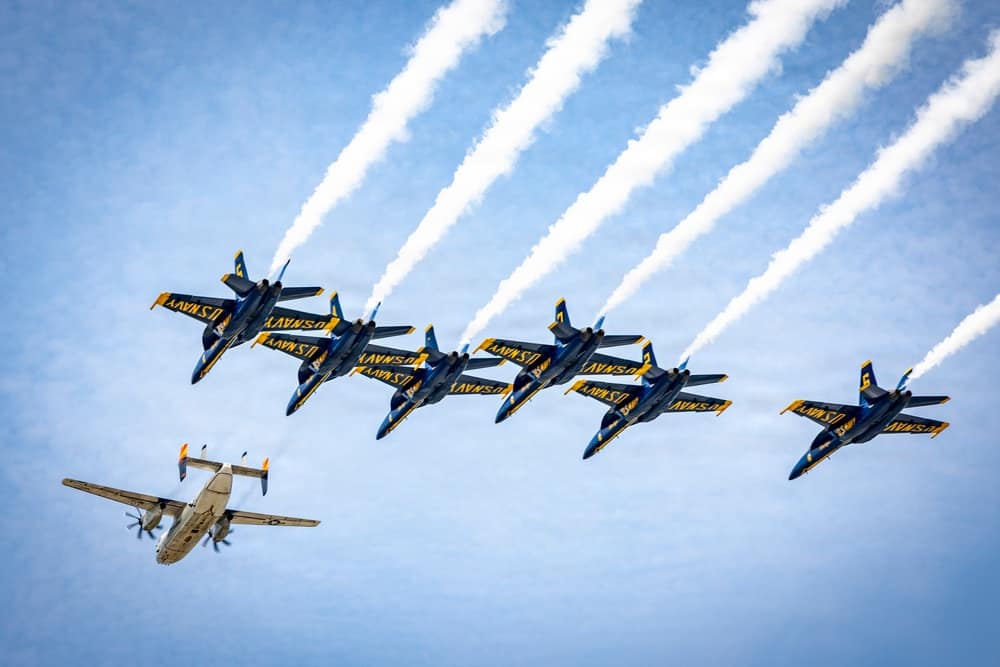
For sixty years, the sight of a C-2A Greyhound turning onto final told a carrier crew everything they needed to know: the mail was here, the spare part was here, the Sailor going home was here. On 28 July 2026, that homely twin-turboprop made the sound one last time — and about 6,000 people drove to Pensacola to hear it.
The Navy’s very last Greyhound, flown by the “Rawhides” of Fleet Logistics Support Squadron (VRC) 40, touched down at NAS Pensacola’s Sherman Field after a formation flypast with the Blue Angels. Then it taxied in, got hosed down by the fire trucks, and was handed over to the National Naval Aviation Museum. Six decades. Done.
Quick Facts: Grumman C-2A Greyhound
- Role: Carrier Onboard Delivery (COD)
- First flight: 1964 | In service: 1966–2026
- Origin: Grumman — derived from the E-2 Hawkeye
- Crew: 4 | Engines: 2 × Allison T56 turboprops
- Career tally: 250,000+ carrier landings; 100+ million lb of cargo
- Last flight: 28 July 2026, NAS Pensacola — replaced by the CMV-22B Osprey
The last of the tailhook truckers
The C-2A was never glamorous. It had no radar, no missiles, no swing wing — just a widened fuselage, a rear ramp, and a stubborn willingness to slam onto a pitching deck with the mail. Grumman built it in the 1960s off the bones of the E-2 Hawkeye: same wings, same engines, minus the giant radar dome. It first flew in 1964 and entered service in 1966, and it simply never stopped working.
Over its career the Greyhound racked up more than 250,000 carrier landings and hauled over 100 million pounds of cargo. For most of a sailor’s time at sea, the C-2 was the umbilical cord to home.
The commanding officer who flew the last mission put the sentiment better than any press release could.
A wetting-down and a logbook
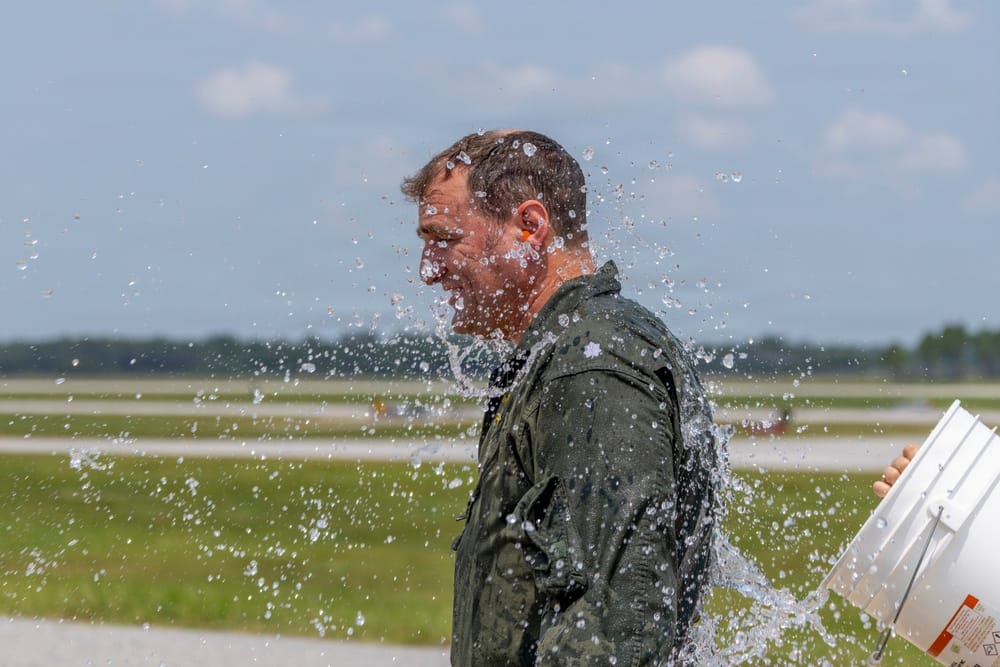
Ingram, a 27-year Navy commander who began his flying career at Pensacola, got the traditional soaking — from the base fire crews and from his own family, buckets and all. He then handed the aircraft’s logbooks to the museum and addressed a crowd stacked with C-2 veterans from every era.
The retirement closes more than one chapter. As the museum’s deputy director noted, it also ends a tradition that reaches back to before the Second World War.
What replaces it
The COD mission now belongs to the CMV-22B Osprey, the Navy’s tiltrotor variant, which trades the Greyhound’s deck-slamming approach for a vertical landing and a longer reach. It is faster to the ship and needs no catapult or arresting wire. What it cannot do is be a Greyhound — and for the generation of sailors who cheered every time one trapped aboard, that is the whole point.
The last airframe will be rehabilitated and go on display at Pensacola in 2027. Fitting, really: the plane that spent sixty years bringing people home has finally come home itself.
Sources: U.S. Navy / DVIDS (Naval Air Station Pensacola release, 28–29 July 2026); The Aviationist; Navy Times.
Related Posts
0 Comments