
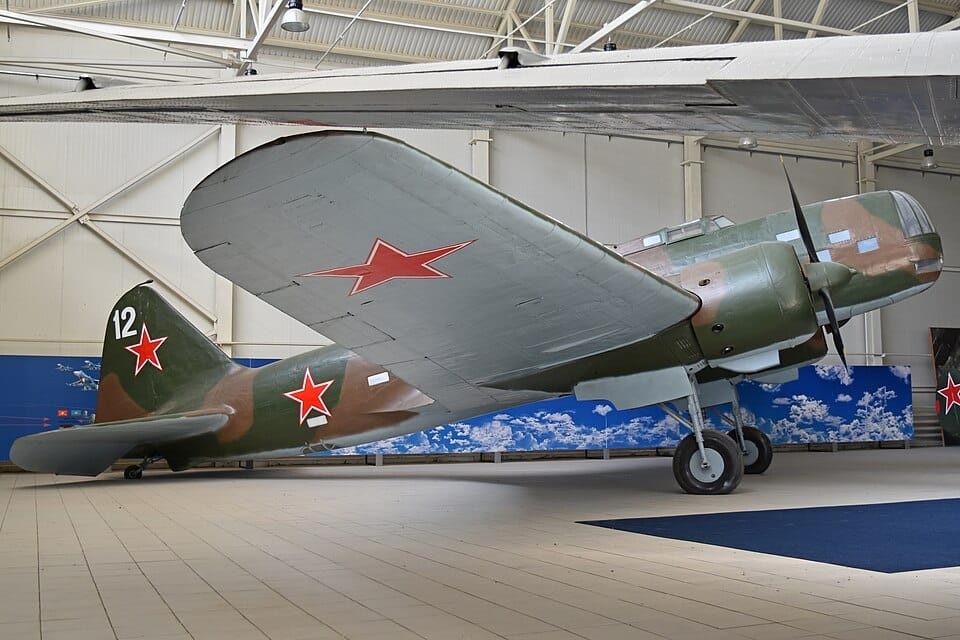
On the morning of 6 January 1940, the temperature over southeastern Finland sat at minus thirty-two degrees Celsius. A flight of seven Soviet Ilyushin DB-3 bombers crossed the frontier on a routine raid against Finnish railway lines. They flew without fighter escort. They had no reason to fear interception. The Finnish Air Force, after all, was a tiny force of obsolete biplanes and a handful of imported Dutch fighters, and the Soviets had spent the past five weeks bombing Finnish cities almost at will.
The Finns had a Fokker D.XXI on patrol. It was flown by a quietly serious twenty-seven-year-old lieutenant named Jorma Sarvanto.
What happened in the next four minutes is the single most remarkable air-to-air engagement of the entire Winter War, and one of the most extraordinary individual feats of any pilot in any war.
Quick Facts
Date: 6 January 1940
Pilot: Lt. Jorma Sarvanto, Lentolaivue 24, Finnish Air Force
Aircraft: Fokker D.XXI (FR-97), four 7.92mm machine guns
Soviet aircraft: Ilyushin DB-3 long-range bomber, 7 aircraft
Engagement: Single intercept, no fighter escort
Result: Six DB-3s shot down by Sarvanto in four minutes
Ammunition: All but exhausted by the end of the engagement
A small air force in a desperate war
The Soviet Union had invaded Finland on 30 November 1939, expecting a short campaign. By Christmas, the Red Army was bogged down in the snow and the Finnish Air Force, despite being outnumbered roughly twenty to one, was holding its own. The Finns flew a fighter mix that any decent country today would refuse to send into combat — Bristol Bulldogs, Gloster Gladiators, a few captured Polikarpov I-152s — and one genuinely useful aircraft, the Dutch-built Fokker D.XXI.
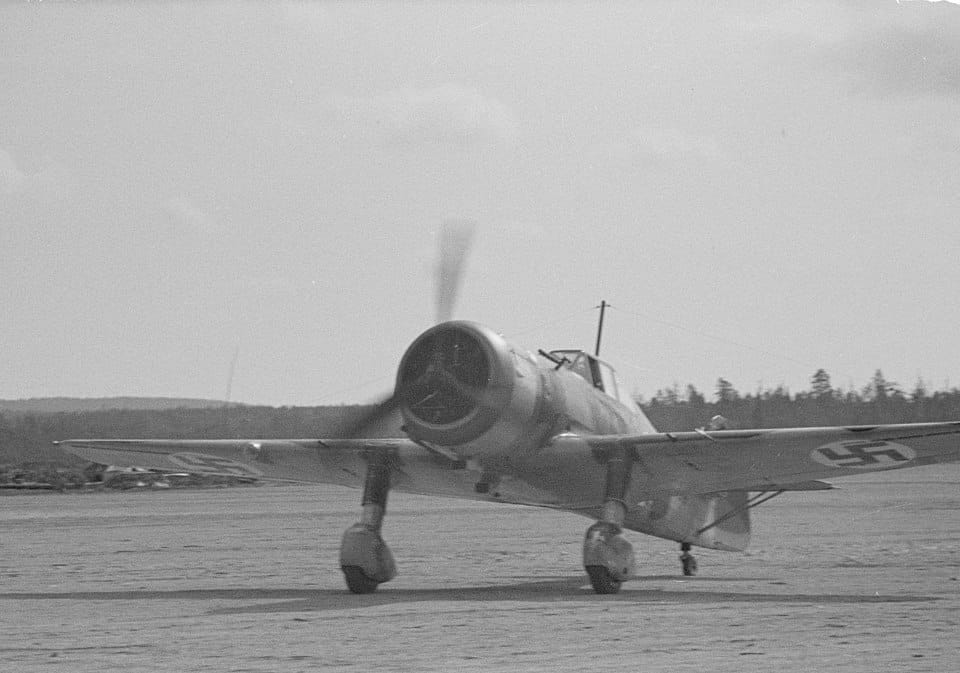
The D.XXI was not, by 1940 standards, a great fighter. It was slow at 460 km/h. Its wings were braced. It had a fixed undercarriage. It was made of fabric and steel tubing, with four 7.92mm machine guns and a Bristol Mercury radial engine. What made it work in Finland’s hands was that it was reliable in extreme cold, easy to maintain at -30, and flown by extraordinarily good pilots.
The intercept
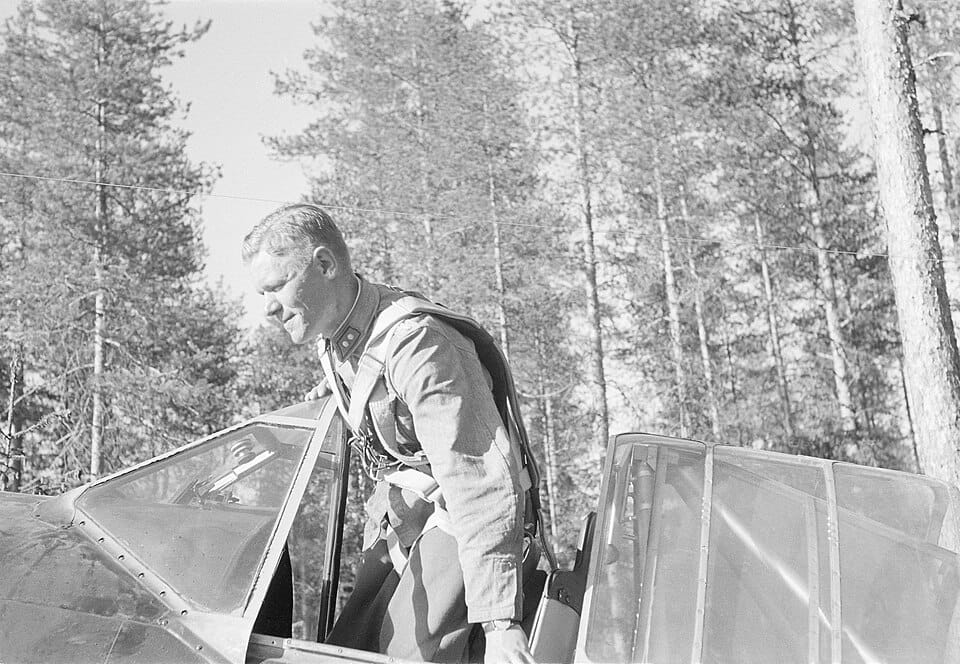
Sarvanto was on a routine combat air patrol when ground control vectored him onto the seven-bomber formation. He climbed to 4,000 metres and approached from above and behind. The Soviet formation was tight, with the bombers in a stepped-down arrangement — gunners covering each other’s fields of fire. The textbook attack was to dive in from one side, fire a quick burst, and break away.
Sarvanto, after a moment, decided to do something different. He had ammunition for perhaps thirty seconds of total firing time. He had seven bombers. The maths did not work for textbook attacks. He had to make every burst count.
He came in fast from above, lined up on the rear bomber of the formation, fired a single short burst of perhaps two seconds, and watched the DB-3 erupt into flame. He pulled up, rolled, came back down, and put a burst into the next bomber. It also caught fire. He moved up the formation, methodically, working from rear to front. By the third bomber, the Soviet formation had broken up. He picked off the stragglers individually.
In roughly four minutes, Sarvanto had shot down six DB-3 bombers. The seventh, badly damaged, fled — and was caught over the Gulf of Finland and shot down by fellow pilot Per-Erik Sovelius. Sarvanto’s Fokker had been hit several times by the Soviet rear gunners. None of the rounds had hit anything critical. He flew home with his ammunition all but exhausted.
The aftermath
The Soviet Air Force did not believe the Finnish report at first. Six DB-3s shot down in four minutes by a single fighter was, on its face, impossible. When the wreckage was eventually counted by both sides, the Finnish claim was confirmed in detail. Each bomber had its own crash site — all within some thirty kilometres of each other — and matching damage patterns.
Sarvanto became a national hero and an international celebrity almost overnight — the world press hailed the feat as a record. He continued to fly throughout the Winter War and into the subsequent Continuation War. He finished the Winter War as its top-scoring ace with 13 victories, and ended his combat career with 17 — an outstanding total but not the highest in the Finnish Air Force — that distinction would go to Ilmari Juutilainen, with 94. What set Sarvanto apart was the four minutes on 6 January 1940.
A small country, a long memory
Sarvanto stayed in the air force after the wars, commanding the flying school at Kauhava and serving as Finland’s military attaché in London, before retiring as a lieutenant colonel in 1960 and moving into banking. He died in 1963, aged 51. His Fokker D.XXI, FR-97, did not survive the war. Most of the D.XXI fleet was scrapped or lost. A handful of preserved examples sit in Finnish museums today, looking smaller and more fragile than they have any right to be, given what their pilots accomplished.
The Finns, who tend to be quiet about their own military history, still teach Sarvanto’s intercept in their air-force schools. The lesson is not really about aerodynamics or tactics. It is about what one well-trained pilot in a properly maintained but obsolete aircraft can do when the alternative is the country he loves being bombed for another night.
Six bombers. Four minutes. A hundred rounds left.
Sources: SA-kuva (Finnish Defence Forces wartime archive), Lentolaivue 24 squadron records, Finnish Air Force Museum.


 English
0 Comments