
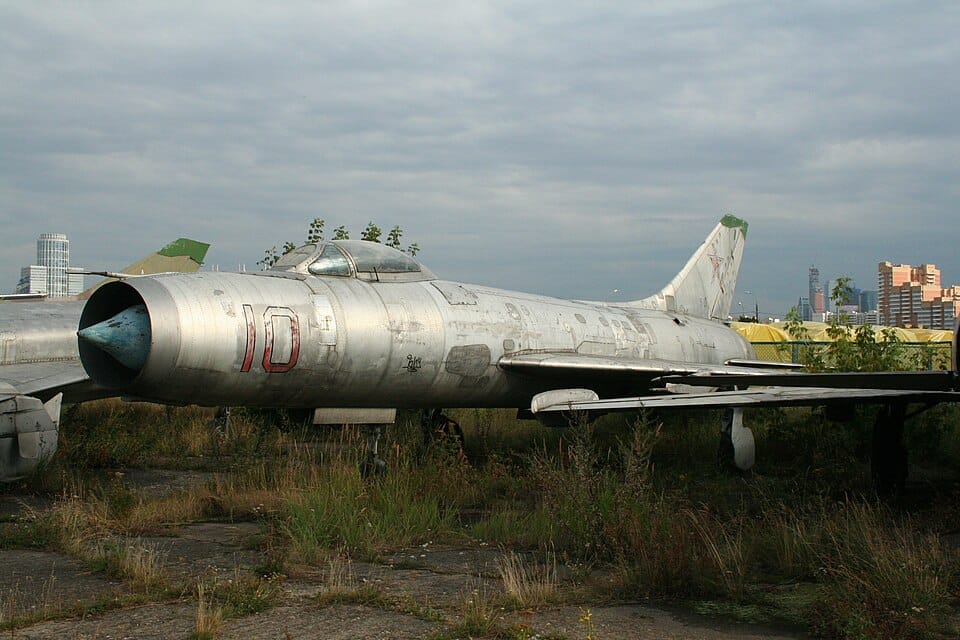
On the morning of 1 May 1960, a young Soviet fighter pilot got an order so improbable he made the duty officer repeat it. He was to take off again. He was to climb as fast as he possibly could. He was not to wait for a missile lock. He was to ram an American spy plane.
The pilot was Captain Igor Mentyukov. The aircraft he had to fly was a Sukhoi Su-9 — a brand-new supersonic interceptor that the Soviet Union had not yet officially put into service. He had no missiles. He had no cannon. He was not even wearing a pressure suit. He was ordered to climb to twenty thousand metres in a fighter no Soviet pilot had ever pushed that high, in shirtsleeves, without weapons, and ram a U-2 piloted by Francis Gary Powers.
One of the great untold stories of the Cold War turns on what he did next.
Quick Facts
Date: 1 May 1960
Location: Skies above Sverdlovsk (now Yekaterinburg), USSR
Soviet aircraft: Sukhoi Su-9 (NATO: Fishpot)
American aircraft: Lockheed U-2C, Article 360, flown by Francis Gary Powers
Su-9 service ceiling: approx. 16,800 m (55,000 ft) — the ram order demanded a zoom climb far beyond it
U-2 cruising altitude: 21,000 m (70,000 ft)
A panicked Soviet morning
Powers had taken off from Peshawar, Pakistan, before dawn. His route ran straight across the Soviet Union — over Tyuratam, where the Soviets launched their satellites; over Plesetsk; and on toward a planned exit at Bodø in Norway. Up there, at seventy thousand feet, he was effectively invulnerable. Soviet fighters could not climb that high. Soviet missiles could not reliably reach that high.
The Soviet air-defence system, however, knew Powers was up there. They had tracked U-2 flights for years and never been able to do anything about them. This time was supposed to be different. A new SAM system — the S-75 Dvina, which the West would soon learn to call the SA-2 Guideline — was finally being deployed in numbers. May Day, the Soviet Union’s most public holiday, was the worst possible day to have an American spy plane overhead. Marshal Sergei Biryuzov, head of Soviet air defence, gave the order to take Powers down by any means.
An S-75 battery near Sverdlovsk fired three missiles. The first hit. But Soviet command did not know that yet. They had also ordered the Su-9 ramming attempt, and the order to the Su-9 was not rescinded.
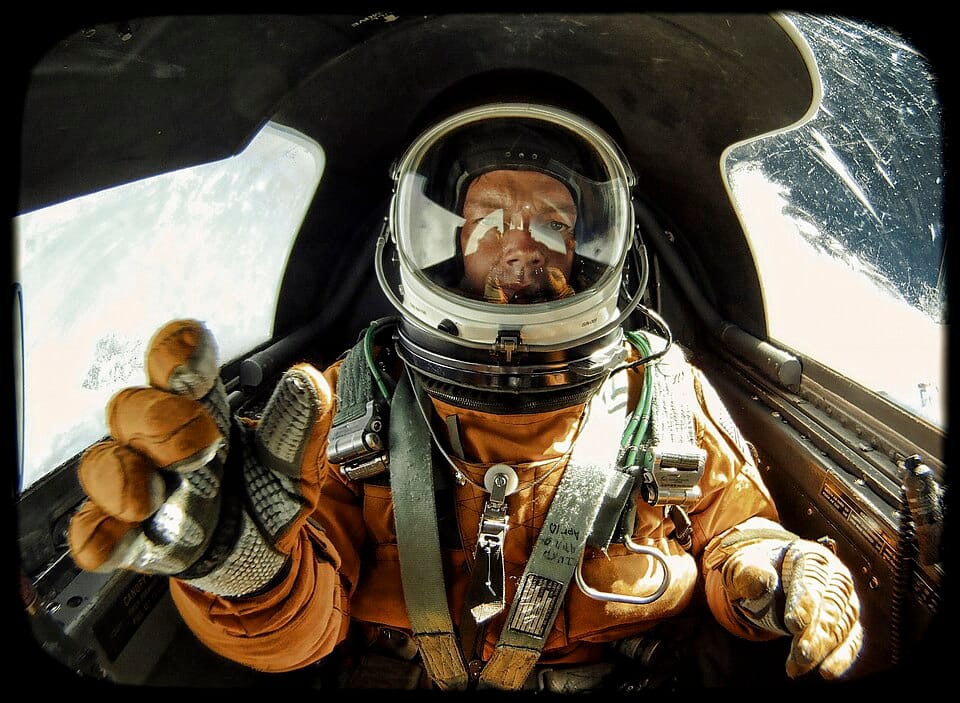
Captain Mentyukov’s impossible orders
Mentyukov had been ferrying a brand-new Su-9 from the factory to its operational unit. He was not in flight gear. He was not even on alert duty. He landed at a Sverdlovsk airfield to refuel and was met on the tarmac by an air-defence colonel who told him, in plain language, that he was now to take off again, climb to 20,000 metres, and ram the U-2.
The Su-9, in 1960, was new enough that no one had yet flown it that high. There was no published combat ceiling. The aircraft had no oxygen mask compatible with shirtsleeve flight at altitude. Without a pressure suit, twenty thousand metres meant near-instant unconsciousness.
Mentyukov pointed all of this out, in language that was probably more colourful than the official record indicates. The colonel told him the order came from Marshal Biryuzov personally. Mentyukov took off.
His engine pushed the Su-9 to about 19,500 metres. The U-2 was just out of reach. Mentyukov could see it — a tiny, slow speck against the stratosphere — and he pushed the throttle to the firewall. He could not close the gap. He passed below the U-2 by perhaps five hundred metres without ever getting close enough to ram. His own aircraft was running out of fuel and oxygen. He had to dive away and recover.
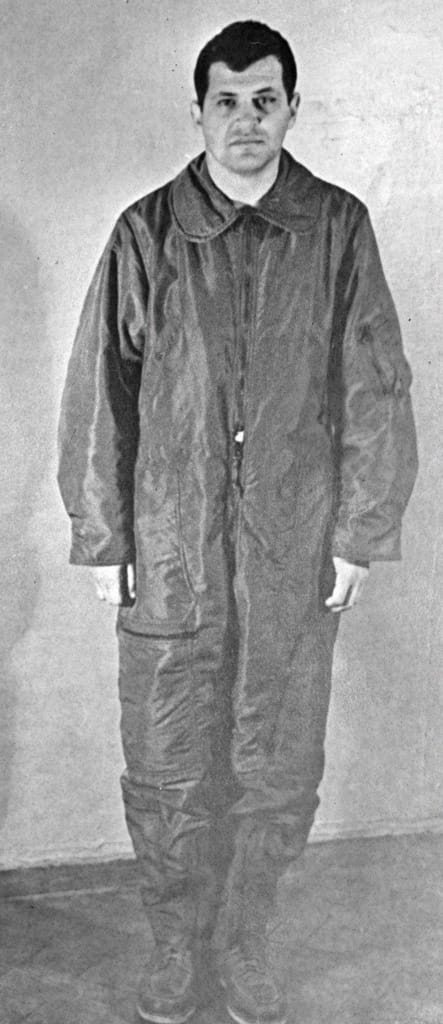
The S-75 finds its mark
While Mentyukov was descending, the S-75 missiles fired earlier finally caught up with Powers. One detonated close enough to disable the U-2. Powers ejected, parachuted to the ground, and was captured. The Soviet Union had, on its biggest national holiday, shot down an American spy plane and captured the pilot alive.
The political fallout was enormous. The summit between Khrushchev and Eisenhower planned for two weeks later collapsed. The CIA’s overflight programme over the Soviet Union ended that day, never to resume. Powers spent twenty-one months in a Soviet prison before being exchanged for Rudolf Abel on the Glienicke Bridge in Berlin.
And in the chaos of the morning, the Soviet Air Defence Forces also shot down one of their own aircraft — a MiG-19 piloted by Senior Lieutenant Sergei Safronov, who was killed when his fighter was hit by a friendly S-75 missile — in the confusion, with commanders unaware that the U-2 was already down, the batteries kept firing at anything their radars picked up.
The pilot who came home
Mentyukov landed safely at Sverdlovsk, climbed out of his Su-9, and reported what had happened. He was congratulated for the attempt. Decades later, Mentyukov himself would claim that it was his Su-9’s wake — the turbulence behind a supersonic interceptor — that destabilised the U-2 and brought it down. Historians have never substantiated that claim: the S-75 did the job. It is worth saying plainly that much of what we know about the ram order comes from Mentyukov’s own account, told publicly only in the 1990s, and parts of it remain disputed and impossible to verify.
What Mentyukov had done, against impossible odds in an aircraft that had no business being that high, was take off knowing he might not come back, and try anyway. He retired as a colonel many years later. He never flew above 20,000 metres again. Few pilots ever have.
The Soviet Union built thousands of Su-9s. Most of them spent the next two decades on alert duty, waiting for U-2s that, after May Day 1960, never came back.
Sources: The Aviation Geek Club, Sukhoi Design Bureau archives, U.S. Central Intelligence Agency declassified records, Khrushchev Remembers (memoir).


 English
0 Comments