
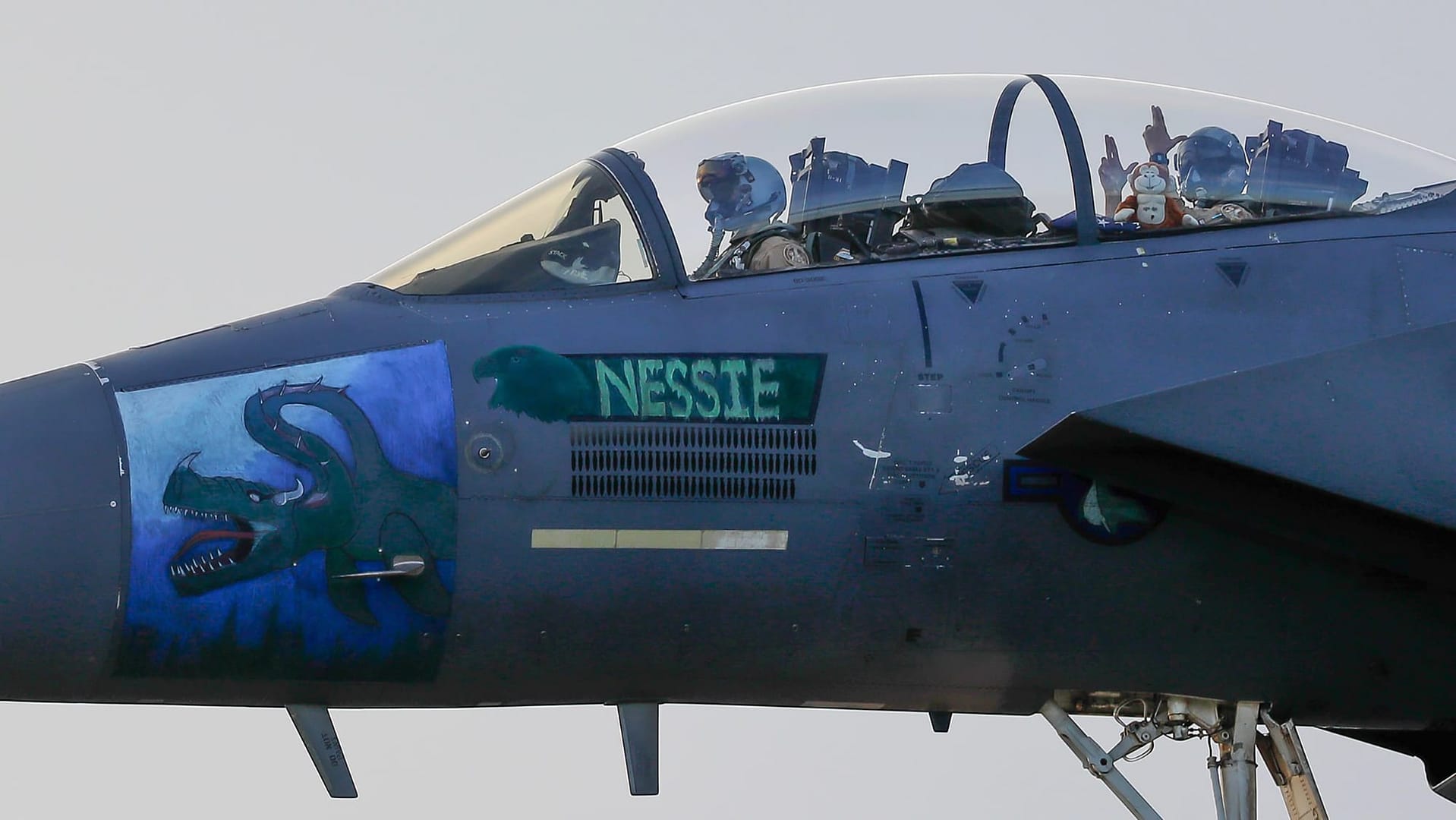
The first eight came in before sunset on 1 July, dropping onto RAF Lakenheath’s runway one after another. The last three arrived in the dark, their names unreadable. Eleven F-15E Strike Eagles of the 48th Fighter Wing, home from the Iran air war — and every one of them came back changed. Painted on their noses: Nessie. Kraken. Yeti. Chupacabra. Cthulhu. Cerberus. Sirenhead. El Jefe.
A squadron of monsters, each surrounded by rows of bomb silhouettes that do the real talking. After months of combat in Operation Epic Fury, the Liberty Wing’s jets came home wearing their war diary on their skin.
Quick Facts: The Monsters of Lakenheath
| Returned | 1 July 2026, RAF Lakenheath, England — 11 F-15E Strike Eagles |
| Unit | 48th Fighter Wing (the “Liberty Wing”), crews of the 492nd Fighter Squadron |
| Route | Middle East NAS Sigonella, Italy Lakenheath, callsigns TREND 11–15 and 21–26 |
| Deployment | Operation Epic Fury — the US air campaign against Iran, from late February 2026 |
| Nose art | Cryptid theme: Nessie, Kraken, Yeti, Chupacabra, Cthulhu, Cerberus, Sirenhead, El Jefe |
| Markings | JDAM bomb tallies on all jets; AGM-158 JASSM silhouettes on Cerberus and El Jefe |
A War Diary in Spray Paint
Nose art is one of the US Air Force’s oldest traditions and one of its most tightly rationed. Decades after the painted ladies and sharks’ teeth of World War II, the modern force keeps its jets a disciplined grey — until a combat deployment ends. Since F-15E crews returning from the anti-ISIS campaign revived the custom in 2019, homecoming nose art has become the fighter force’s way of closing a chapter: paint the deployment, fly it home, wash it off.
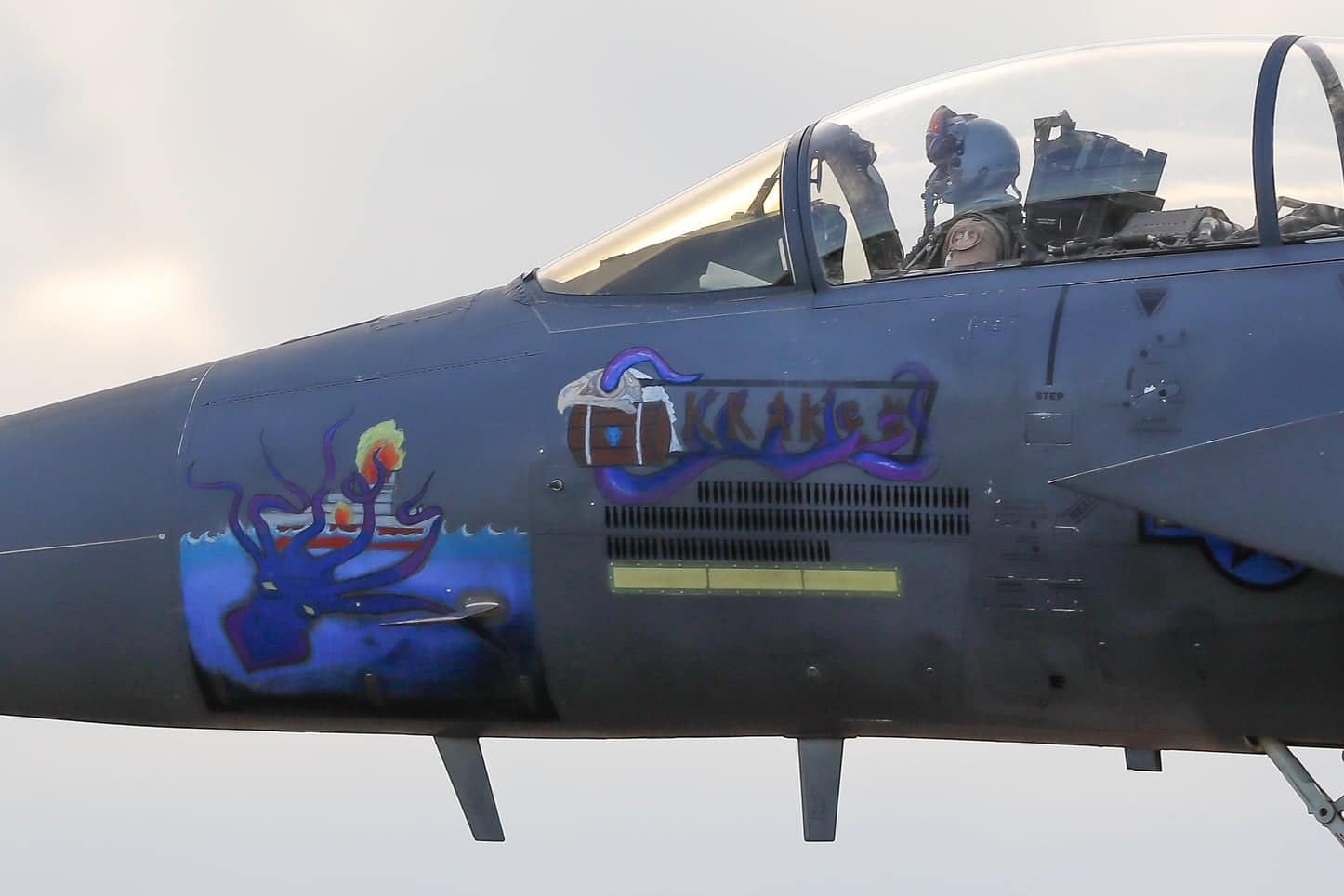
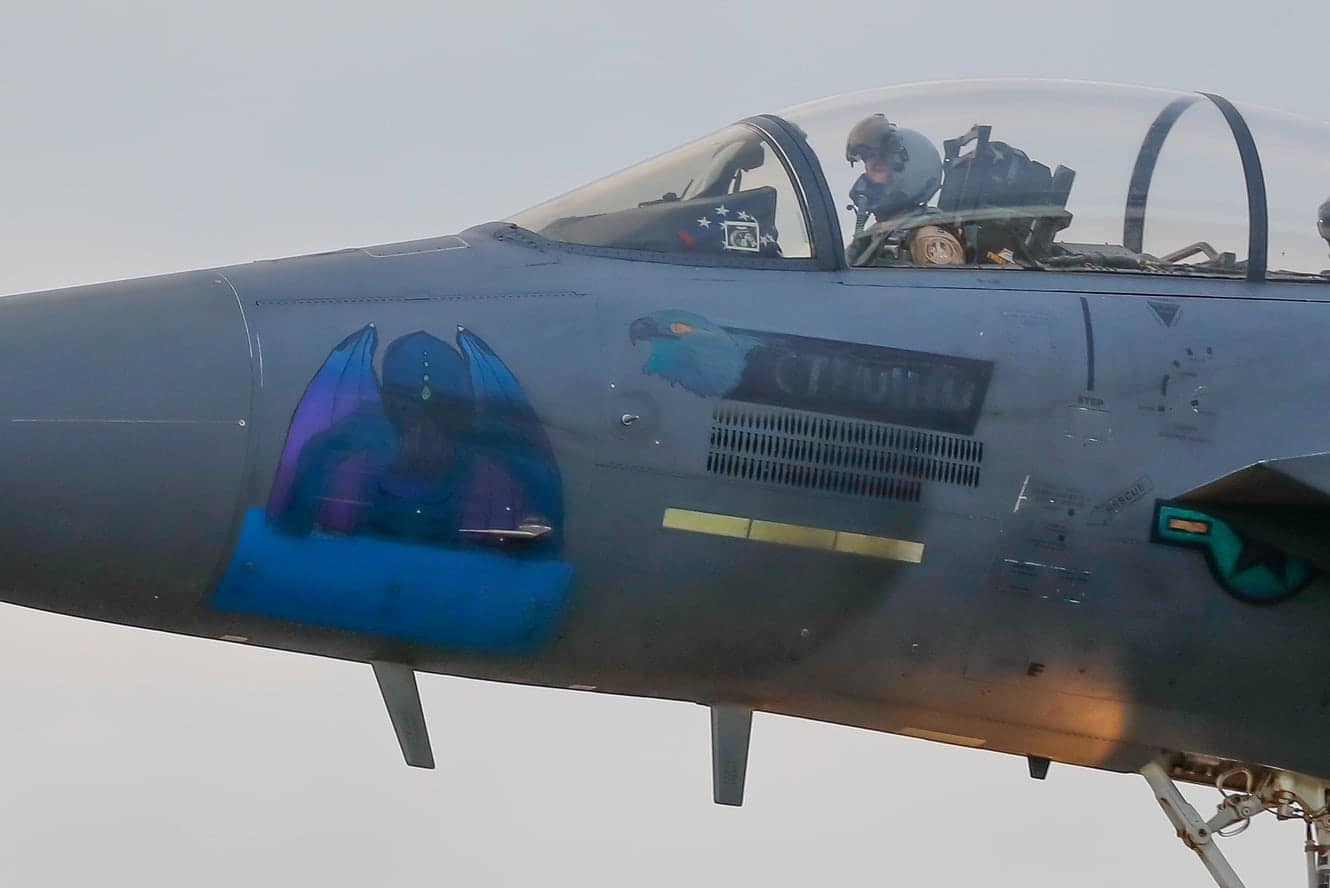
This batch is the richest yet. The cryptid theme runs the full mythological gamut — a Scottish lake monster on 00-3001, a kraken wrapping the radome of 91-0329, Lovecraft’s Cthulhu on 91-0331 — and the mission tallies underneath record row after row of JDAM drops. Two jets, “Cerberus” and “El Jefe,” carry the silhouettes of AGM-158 JASSM stealth cruise missiles: long-range stand-off shots deep into defended airspace.
What Epic Fury Asked of Them
The 48th deployed in late February as the US air campaign against Iran opened with more than 1,700 targets struck in the first 72 hours. By early April, US forces had flown over 13,000 combat sorties. It was not bloodless for the wing: one of its Strike Eagles, callsign DUDE 44, was shot down over Iran on 3 April — both crew members were rescued. Central Command framed the campaign’s purpose bluntly at the time:
The eleven jets that landed this week are the first wave of the wing’s homecoming — more Strike Eagles and a pair of F-35As are still tracking home through the tanker bridges, according to flight-tracking watchers.
Catch Them While You Can
For the spotters who lined Lakenheath’s fence this week, the monsters are a limited engagement. Nose art traditionally disappears at the first depot visit — photographed obsessively, then scrubbed back to regulation grey. The photos in this story, shot by UK aviation photographer Stewart Jack, are exactly why the tradition matters: for a few weeks, each jet is an individual with a name and a war record, before it goes back to being a tail number.
Sources: The Aviationist; ItaMilRadar; The War Zone; Air & Space Forces Magazine; US Central Command
Related Questions
What is fighter jet nose art?
Nose art is painted decoration on the forward fuselage of a military aircraft, often personalising a jet with a name, character or emblem alongside mission markings. Modern US fighter wings use homecoming nose art to close out a deployment: they paint the jet, fly it home, then wash it off. The markings frequently include rows of bomb silhouettes recording strikes flown.
Which F-15s returned to Lakenheath with nose art in 2026?
On 1 July 2026, eleven F-15E Strike Eagles of the 48th Fighter Wing, the Liberty Wing, returned to RAF Lakenheath from the Iran air war wearing a cryptid-themed set of nose art. The names included Nessie, Kraken, Yeti, Chupacabra, Cthulhu, Cerberus, Sirenhead and El Jefe, each surrounded by rows of mission markings.
What was Operation Epic Fury?
Operation Epic Fury was the US air campaign against Iran that opened in late February 2026, striking more than 1,700 targets in the first 72 hours and flying over 13,000 combat sorties by early April. The 48th Fighter Wing deployed at its start. It was not bloodless: one of the wing's Strike Eagles, callsign DUDE 44, was shot down over Iran.
What do the bomb symbols on a fighter jet mean?
The rows of small bomb silhouettes painted beneath a cockpit are mission markings, each recording a weapon dropped or a sortie flown during a deployment. On the returning Lakenheath jets, the tallies recorded row after row of JDAM strikes, and two aircraft, Cerberus and El Jefe, displayed silhouettes of AGM-158 JASSM stealth cruise missiles for long-range stand-off shots.
What aircraft is the F-15E Strike Eagle?
The F-15E Strike Eagle is a two-seat, all-weather strike variant of the F-15, able to carry a heavy bomb load deep into defended airspace while retaining air-to-air capability. It formed the backbone of the 2026 Iran campaign. Its export cousin, the Qatari F-15QA, scored an air-to-air kill in the same conflict, and the newer F-15EX has begun operating from Kadena.
0 Comments