
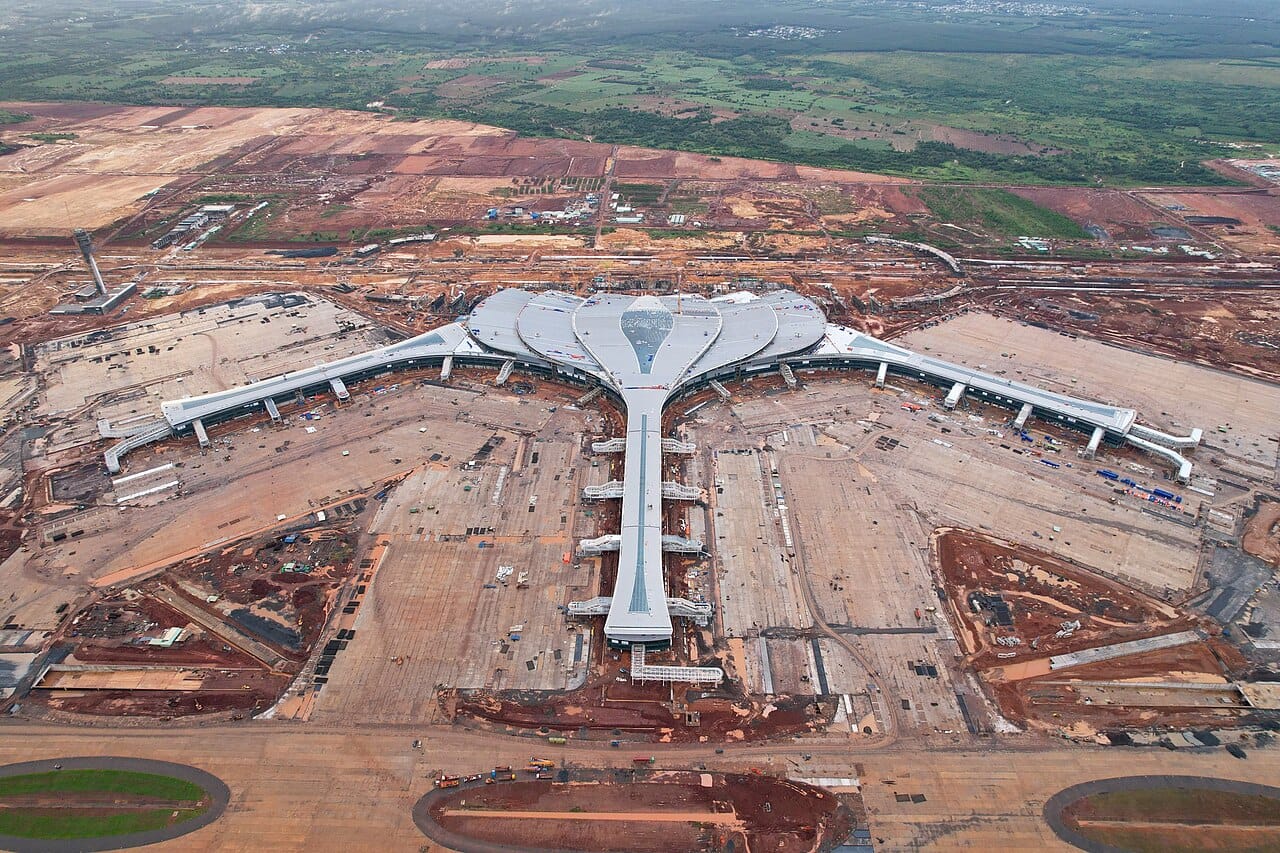
Rise above the red earth east of Ho Chi Minh City and a vast lotus flower seems to bloom out of the construction dust. It is not a sculpture. It is the roof of Long Thanh International Airport — Vietnam’s roughly US$16 billion bet on becoming one of Southeast Asia’s great aviation hubs.
The airport held a ceremonial “technical opening” with its first flights on 19 December 2025, and is due to open to fare-paying passengers in mid-2026. The headline number is the size — a terminal built to handle 25 million passengers a year in its first phase, scaling to 100 million. But the more remarkable number is the calendar.
Vietnam’s government formally approved construction on 4 January 2021. Roughly five years later, the airport is flying. For a greenfield mega-hub, that is astonishingly fast — and it is thrown into sharp relief by what happened the last time a wealthy country tried to build a flagship airport from scratch.
Terminal: Lotus-flower design by Heerim Architects; 376,000 m² footprint
Phase 1 capacity: 25 million passengers + 1.2 million tonnes cargo per year
Ultimate capacity: 100 million passengers across four terminals
Total investment: around US$16 billion
Timeline: Approved 4 Jan 2021 · first flights 19 Dec 2025 · passenger launch mid-2026
A Lotus the Size of a District
The terminal’s shape is no accident: the lotus is Vietnam’s national flower, and Heerim Architects wrapped a 376,000-square-metre building around the motif, its roof peaking at more than 45 metres. Phase one is designed for 25 million passengers and 1.2 million tonnes of cargo a year — and that is only the opening act. The full plan calls for four terminals and a capacity of 100 million passengers, which would put Long Thanh among the largest airports on Earth.
It exists for a simple reason: Tan Son Nhat, the airport that currently serves Ho Chi Minh City, is hemmed in by the city around it and has been bursting at the seams for years. Long Thanh is the relief valve — and the statement of ambition.
Now Compare Berlin
To appreciate how quickly Vietnam moved, set Long Thanh beside the most infamous airport project of the modern era: Berlin Brandenburg, known by its code BER.
Germany — Europe’s richest economy, a byword for engineering — broke ground on BER in 2006 and scheduled the grand opening for October 2011. Then it all came apart. Weeks before the launch, the fire-protection and smoke-extraction system failed inspection. What followed was nearly a decade of dysfunction: kilometres of incorrectly installed cabling, thousands of wrongly wired components, and a management saga so embarrassing it became a national punchline. BER finally opened on 31 October 2020 — roughly nine years late, with costs ballooning from an estimated €2 billion to around €7 billion.
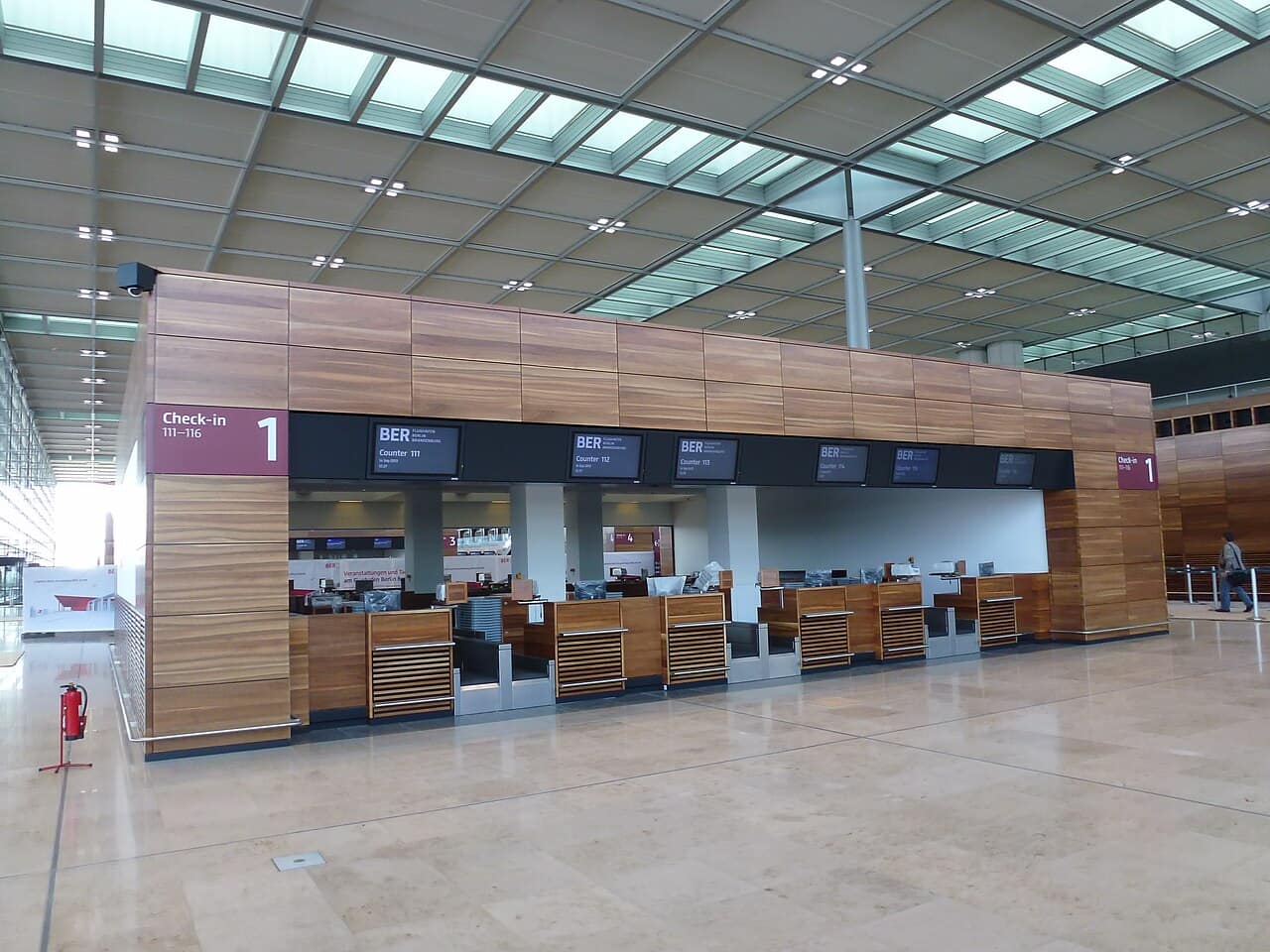
The contrast is stark. In roughly the same span of time that Berlin spent simply being late, Vietnam approved, financed, built and opened a larger airport on a greenfield site — and made it look like a national celebration rather than a national embarrassment.
Why It Matters
Long Thanh is more than a building. It is a marker of how the centre of gravity in global aviation infrastructure has shifted east, where fast-growing economies are throwing up mega-hubs at a pace that older aviation powers can no longer match. When the first scheduled passengers walk beneath that lotus roof in 2026, they will be standing inside a five-year project that quietly outbuilt one of the wealthiest countries in the world.
Sources: Airports Corporation of Vietnam; VnExpress; VietnamNet; Wikipedia (Long Thanh International Airport; Berlin Brandenburg Airport); Vietnamese government press releases.
Related Questions
What is Long Thanh International Airport?
Long Thanh International (LTA) is Vietnam’s new mega-airport, about 40 km east of Ho Chi Minh City. Its lotus-flower terminal, designed by Heerim Architects, spans 376,000 m². Phase 1 handles 25 million passengers a year, with an ultimate capacity of 100 million across four terminals.
When does Long Thanh Airport open?
The project was approved on 4 January 2021. First flights took place on 19 December 2025, with the full passenger launch in mid-2026. It is one of several major new airports opening worldwide, alongside Western Sydney and Montreal’s MET.
Why is the Long Thanh terminal shaped like a lotus?
The lotus is Vietnam’s national flower, so Heerim Architects wrapped the 376,000 m² terminal around the motif, with a roof peaking at more than 45 metres. The design is meant to give the airport a distinctive national identity.
How big will Long Thanh Airport become?
Phase 1 is designed for 25 million passengers and 1.2 million tonnes of cargo a year. The full plan calls for four terminals and a total capacity of 100 million passengers annually, making it one of the largest airports in Southeast Asia.
How much did Long Thanh Airport cost?
Total investment in Long Thanh International is around US$16 billion. The spending reflects its scale and ambition as Vietnam’s flagship aviation project, intended to relieve the crowded Tan Son Nhat airport serving Ho Chi Minh City.
Where is Long Thanh Airport located?
Long Thanh International sits about 40 km east of Ho Chi Minh City in Dong Nai province. Its location and capacity are designed to turn it into a major regional hub, much as Western Sydney aims to do for Australia.


0 Comments