
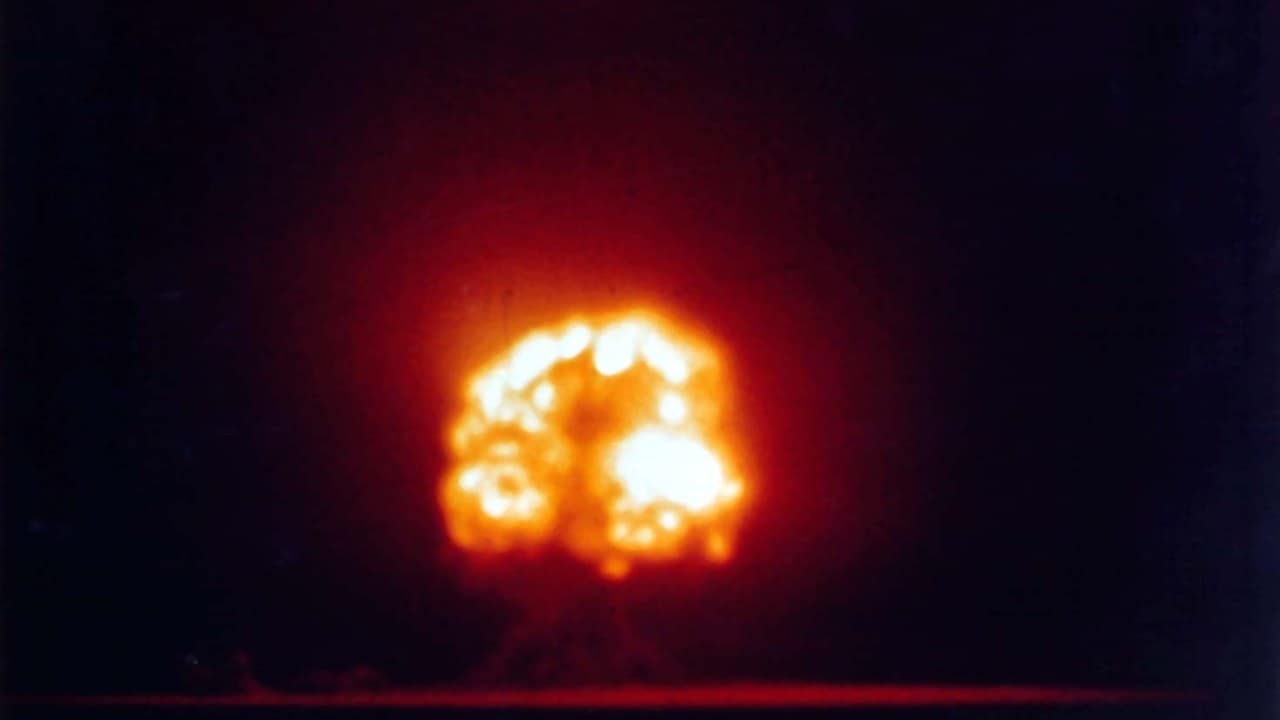
Part 5 of The Race for the Bomb, an Afterburner focus series. While Germany’s program starved (Part 4), America built an industry the size of its automobile sector — in secret. This is the Manhattan Project, from a squash court in Chicago to a light in the New Mexico desert.
Jornada del Muerto, New Mexico — the Dead Man’s Journey — the small hours of 16 July 1945. Rain hammers a steel tower standing alone in the desert, with lightning walking the mountains behind it. In a tin shack at the tower’s top sits a five-ton device its builders call, with studied blandness, the gadget. In control bunkers ten thousand yards away, some of the finest scientific minds alive are passing the time with a betting pool on what their creation will do at dawn.
Edward Teller has taken 45,000 tons of TNT equivalent. Hans Bethe says 8,000. Oppenheimer, exhausted and chain-smoking, has pessimistically bought 300 tons. Enrico Fermi, to the visible alarm of the military police, is offering side odds on whether the atmosphere itself will ignite — and if so, whether it will merely incinerate New Mexico or the entire planet.
Three years earlier, none of this existed: no city at Los Alamos, no plants at Oak Ridge or Hanford, no gadget. The story of how it came to exist — the biggest industrial secret in history, built by 130,000 people who mostly had no idea what they were building — begins with an Army engineer in a foul mood about his new assignment.
Quick Facts: The Manhattan Project
- $1.9 billion — total cost through August 1945, roughly $28 billion today
- ~130,000 — peak workforce, most of whom learned what they built from the news on 6 August 1945
- 0.5 watts — output of the world’s first nuclear reactor, Chicago, 2 December 1942
- 44 acres under one roof — K-25 at Oak Ridge, the largest building on Earth when finished
- 14,700 tons — Treasury silver wound into Y-12’s electromagnets, 99.96 percent returned after the war
- ~21 kilotons — Trinity’s yield; I. I. Rabi won the betting pool with 18
- 13 days — how long Truman had been president before he was fully told what his country was building
The General and the Physicist
In September 1942 Colonel Leslie Groves, the hard-driving Army engineer who had just built the Pentagon, was hoping for a combat command. Instead he was handed a stalled laboratory project with a comic-opera cover name — the Manhattan Engineer District — and a promotion to brigadier general, timed deliberately so the scientists would meet a general rather than a jumped-up colonel. His deputy, Kenneth Nichols, left the most honest testimonial of the war: Groves, he said, was the biggest S.O.B. he had ever worked for — and, given the choice again, the man he would pick to run the project.
Groves’ first great gamble was his choice of scientific director: J. Robert Oppenheimer, a theorist with no Nobel Prize, no administrative record, and a security file full of communist associations. Army counterintelligence balked; Groves issued the clearance personally in July 1943 with an order to stop arguing about it. The physicist I. I. Rabi, no admirer of the military, called the appointment a real stroke of genius on the part of General Groves. The odd couple — the teetotal engineer and the chain-smoking aesthete in the porkpie hat — proceeded to build a secret city together.
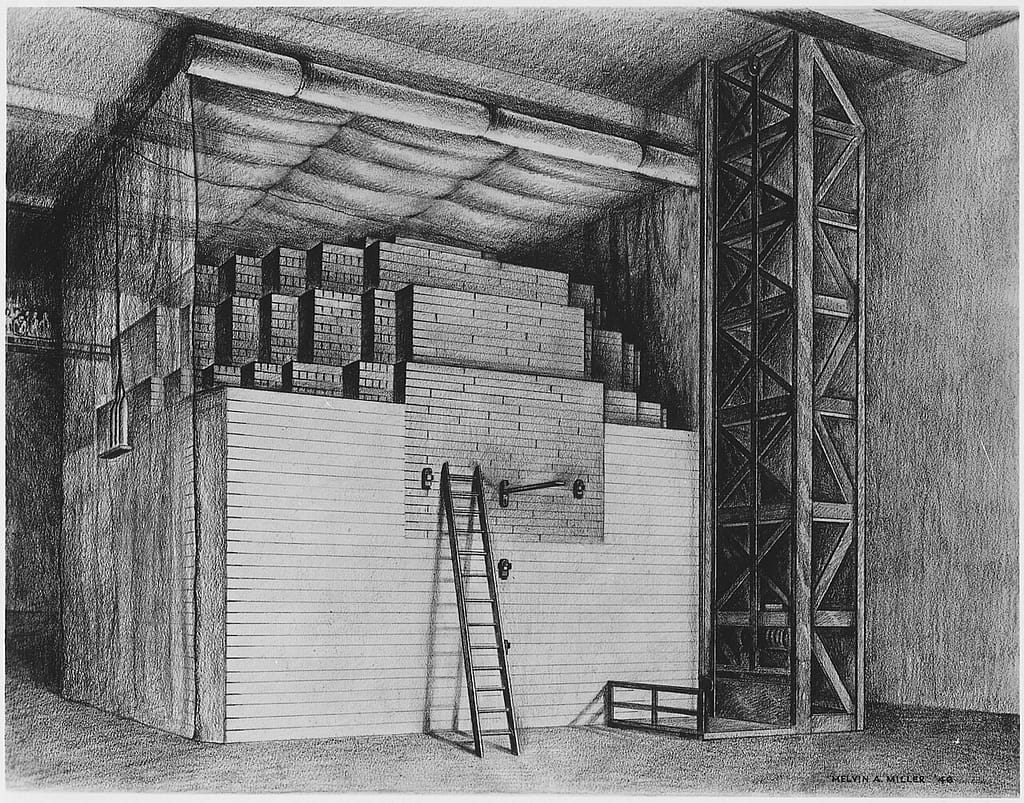
The physics was proven first, in a dead squash court under the University of Chicago’s football stands. There, on 2 December 1942, Fermi’s team stacked 400 tons of graphite and six tons of uranium metal into Chicago Pile-1 and, with the instruments climbing toward criticality, Fermi famously stopped everything — for lunch. At 3:25 that afternoon the pile went critical: the first self-sustaining nuclear chain reaction, running at half a watt, nine years almost to the season after Szilard’s traffic light. Szilard was in the room. So was Wigner, who produced a bottle of Chianti; they drank from paper cups. Arthur Compton phoned a colleague with the pre-arranged code.
Secret Cities
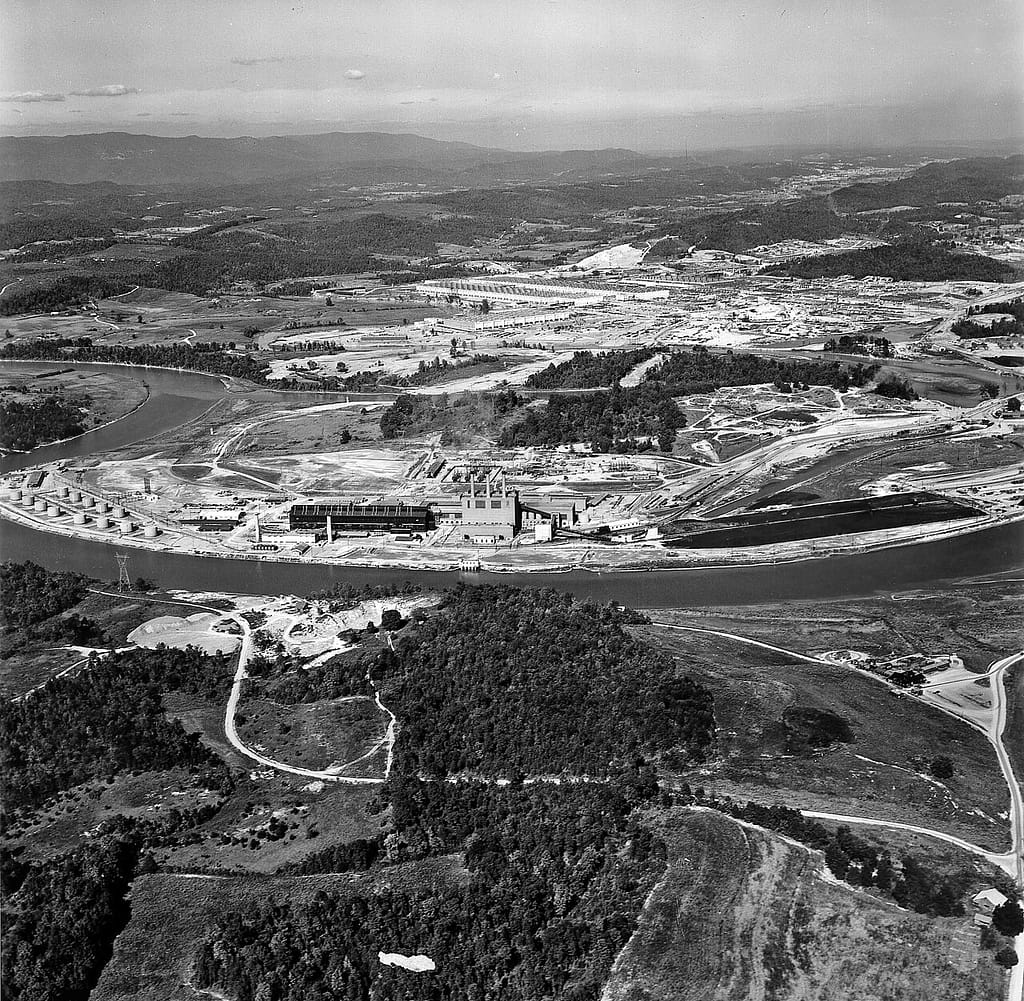
Everything after Chicago was a problem of scale, and the scale still defies belief. In the Tennessee hills, a fenced reservation called Oak Ridge grew from farmland to 75,000 residents — the fifth-largest city in the state, on no map. Its job: separating the fissionable 0.7 percent of uranium, atom by atom. The K-25 gaseous diffusion plant was, on completion, the largest building on Earth — a half-mile U with 44 acres under one roof, out-bulking Groves’ own Pentagon. At the Y-12 electromagnetic plant, wartime copper shortages forced an improvisation without precedent: the Treasury lent the project 14,700 tons of silver bullion to wind into magnet coils. Virtually every ounce went back after the war.
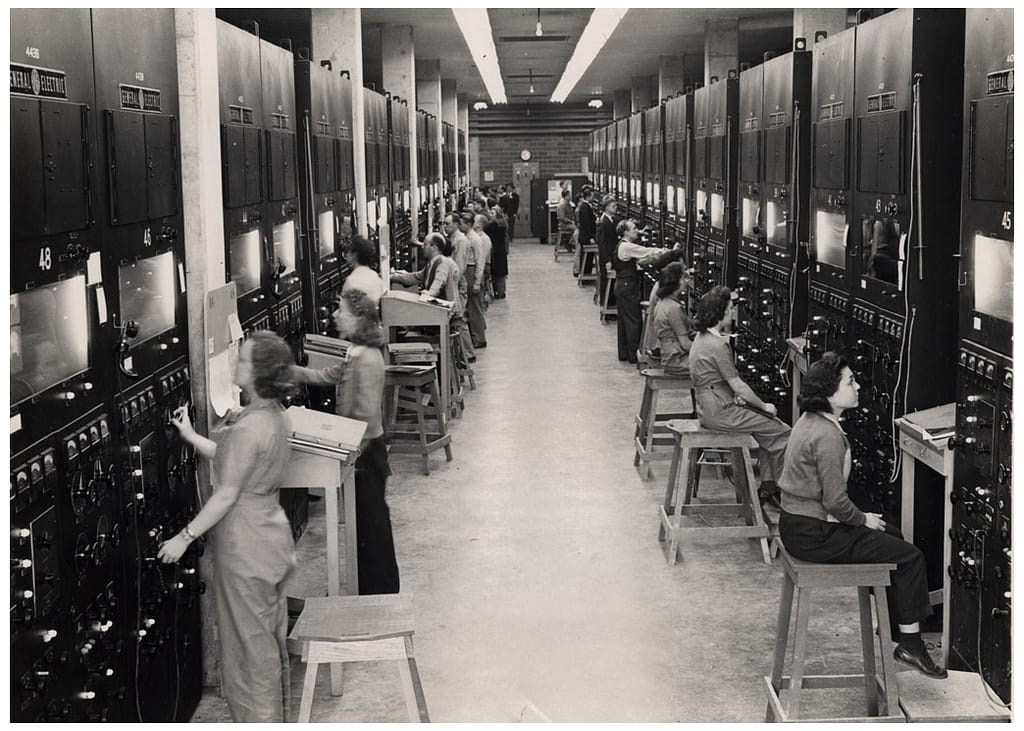
Y-12’s control panels were run not by physicists but by young Tennessee women hired straight out of high school — the Calutron Girls — who were told only to keep certain needles in the sweet spot. When the district engineer bet Ernest Lawrence that these operators would out-produce his Berkeley PhDs, the scientists lost: they kept fiddling with the machines, while the girls simply ran them. The operators learned what the needles had been measuring from the radio, on 6 August 1945.
The secrecy around all of it approached the surreal. Los Alamos, the mesa-top laboratory where the actual bombs were designed, did not officially exist: its entire population shared one mailing address, PO Box 1663, Santa Fe — an address that appears as the place of birth on wartime birth certificates. Fermi travelled as Eugene Farmer, Bohr as Nicholas Baker. And the secrecy ran to the very top: Harry Truman, who as a senator had tried to investigate the project’s suspicious spending and been warned off, became president on 12 April 1945 knowing almost nothing. He was fully briefed thirteen days later, by a Secretary of War whose memo began with the most terrible weapon ever known in human history.
The Poison and the Crisis
The plutonium route nearly died twice. At Hanford, in Washington State, the B Reactor — the first industrial-scale reactor ever built — went critical in September 1944 and then, hours later, inexplicably began to die. The culprit was xenon-135, a fission product that devours neutrons. The cure was already installed: DuPont’s engineers, mocked by the physicists for over-building, had put 504 extra fuel tubes into the core. Loading them overwhelmed the poison. Engineering margin, not physics, kept the plutonium flowing.
Worse arrived in the spring of 1944, when measurements at Los Alamos showed that reactor-bred plutonium was laced with an isotope that fissions spontaneously — meaning the simple gun-type bomb design would pre-detonate into a fizzle. The gun bomb for plutonium was cancelled that July, and the laboratory reorganised overnight around the only alternative: implosion, the crushing of a plutonium sphere by a perfectly synchronised shell of explosive lenses, a scheme so demanding that some doubted it could ever work. The conservative solution — a solid core proposed by Robert Christy — became the device in the tower.
Trinity
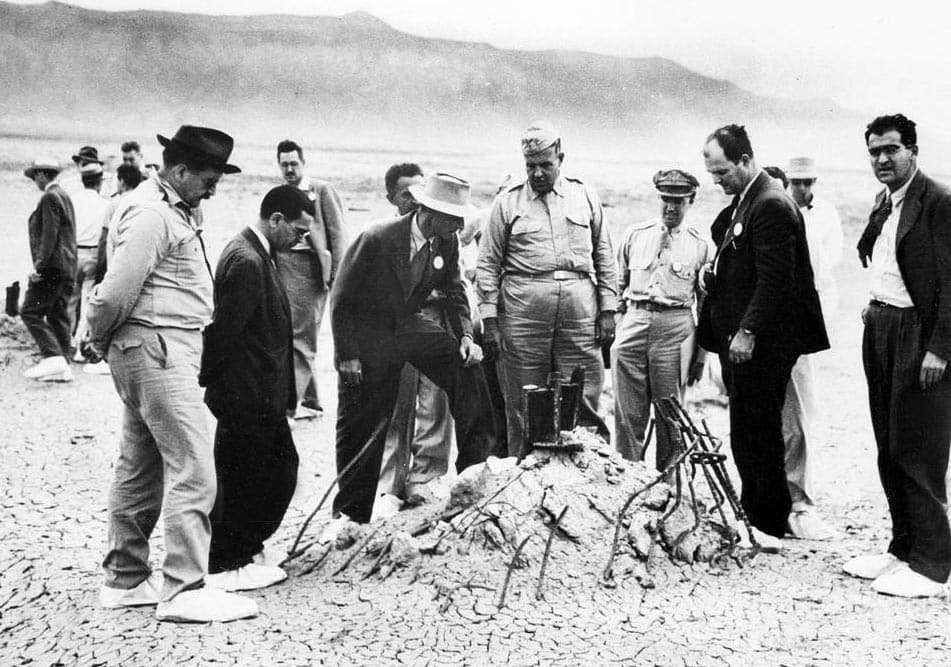
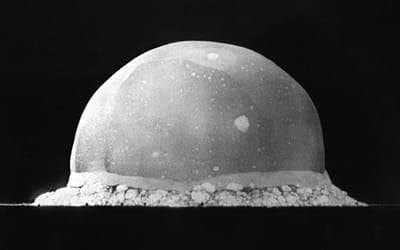
Which returns us to the rain-lashed desert of 16 July 1945. The storm cleared enough by 5:29 a.m.; the firing circuits closed just before half past five, and the gadget delivered roughly 21,000 tons of TNT equivalent — vaporising its tower and turning the desert sand beneath it to green glass. Rabi, who had arrived too late to get a serious number in the pool and been left with 18 kilotons, collected the pot. Fermi, ever the experimentalist, dropped scraps of paper as the blast wave passed and estimated the yield from how far they blew. The official War Department account, written by Groves’ deputy Thomas Farrell, needed no classification stamp to convey what the bunker had seen.
The scientists’ own verdicts were shorter. Test director Kenneth Bainbridge turned to Oppenheimer with the sentence Oppenheimer later called the best thing said that morning: now we are all sons of bitches. Oppenheimer’s famous recollection — that the flash brought to mind the Bhagavad Gita’s line, now I am become death, the destroyer of worlds — dates from a television interview twenty years later; what witnesses remembered at the time was simply that his walk, as he left the bunker, was the walk of a man who had won.
The National WWII Museum on Los Alamos and the Trinity test — the best single film introduction to Project Y.
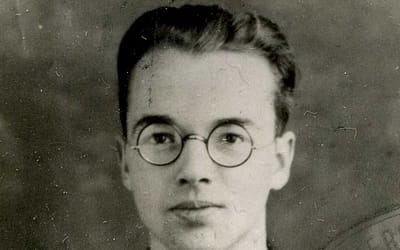
Within hours, a coded cable was racing toward Potsdam, where Truman was meeting Stalin — who, thanks to a quiet man in the Los Alamos Theoretical Division named Klaus Fuchs, already knew (that story closes this series in Part 10). And on Tinian island in the Pacific, crews of a very particular B-29 unit began receiving cargo they were not cleared to understand. But before the bomb could meet its aircraft, the aircraft itself had to be invented — and the B-29 Superfortress, as Part 7 will show, was a gamble that cost more than the bomb it carried. First, though, the series crosses to Europe’s burning cities, where the doctrine that would carry the bomb to Hiroshima was forged: Part 6, Hamburg and Dresden.
Oppenheimer’s 1965 NBC interview — the “Now I am become death” recollection, in his own voice.
Sources: Brookings Institution (Atomic Audit, 1998), Atomic Heritage Foundation / National Museum of Nuclear Science, US National Park Service, University of Chicago, Los Alamos National Laboratory, Truman Library, Wikipedia, Richard Rhodes: The Making of the Atomic Bomb.
The Race for the Bomb — an Afterburner Focus Series
Series overview: all ten parts
Previous — Part 4: Hitler’s Bomb Died on a Frozen Plateau
Next — Part 6: Firestorm: Hamburg, Dresden, and the Whirlwind
0 Comments