
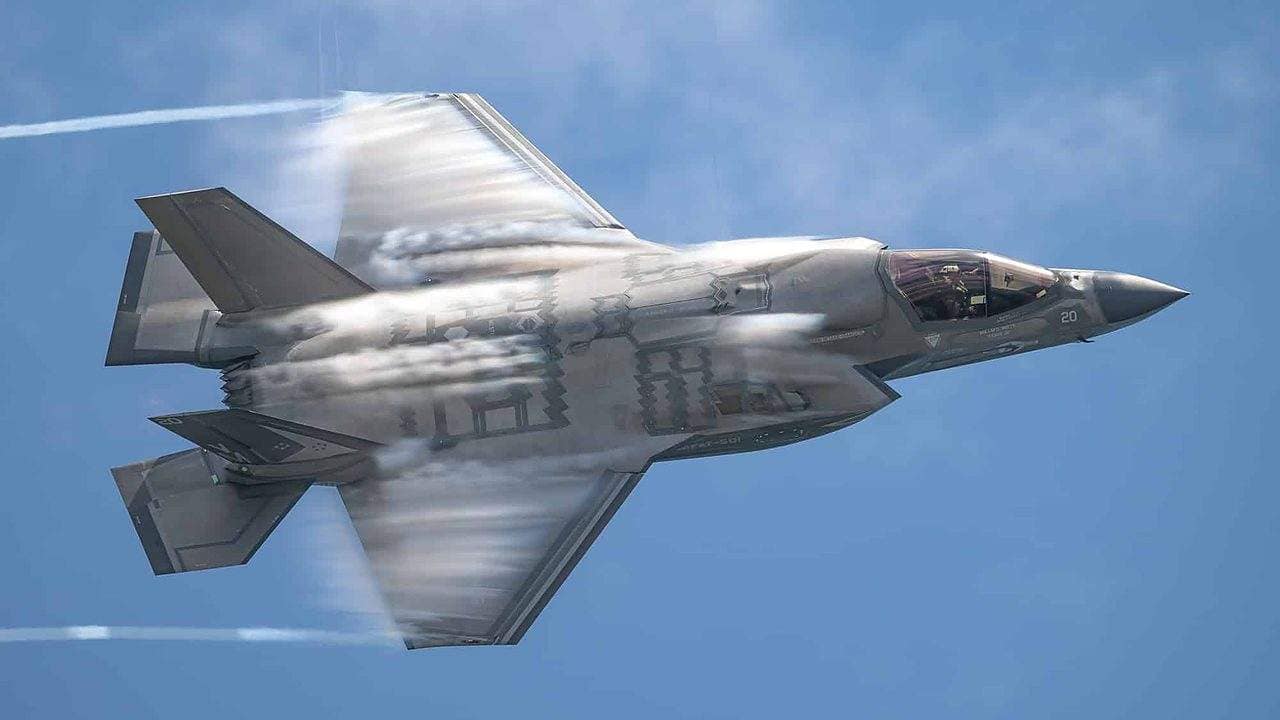
Two days after the last five Marine Corps Harriers shut down their engines forever, the man flying their replacement sat down to explain what comes next. Major William “Braankles” Horn grew up in Rochester, New York, spent a year on a commercial fishing boat in Alaska waiting out a LASIK waiver, and now flies the F-35B Lightning II for VMFAT-501 — including the solo demo and the Marine Air-Ground Task Force display that closed out the 2026 MCAS Cherry Point Air Show.
It was a show heavy with symbolism. For the final time, the AV-8B Harrier and the F-35B shared a MAGTF demonstration — the old jump jet and the new one, flying together days before the Harrier’s June 3 sundown. In an interview with The Aviationist, Horn talked through what the crowd never sees: the timing measured in seconds, the planning measured in days, and why the Marines insist on fighting as one machine.
His answers are a window into how the Corps thinks — and into why jump-jet aviation’s future now belongs entirely to the F-35B.
Quick Facts
- Pilot: Major William “Braankles” Horn, VMFAT-501, MCAS Beaufort — about 900 military flight hours, roughly 650 in the F-35B
- Event: 2026 MCAS Cherry Point Air Show MAGTF demonstration, late May 2026
- Lineup: 2× F-35B, 2× AV-8B Harrier, 2× MV-22 Osprey, 2× CH-53E, AH-1Z, UH-1Y, KC-130J
- Context: the AV-8B Harrier retired from active USMC service on June 3, 2026 after over four decades
- F-35B role: stealth first-strike and battlefield situational awareness for the Aviation Combat Element
The High-Altitude Picture
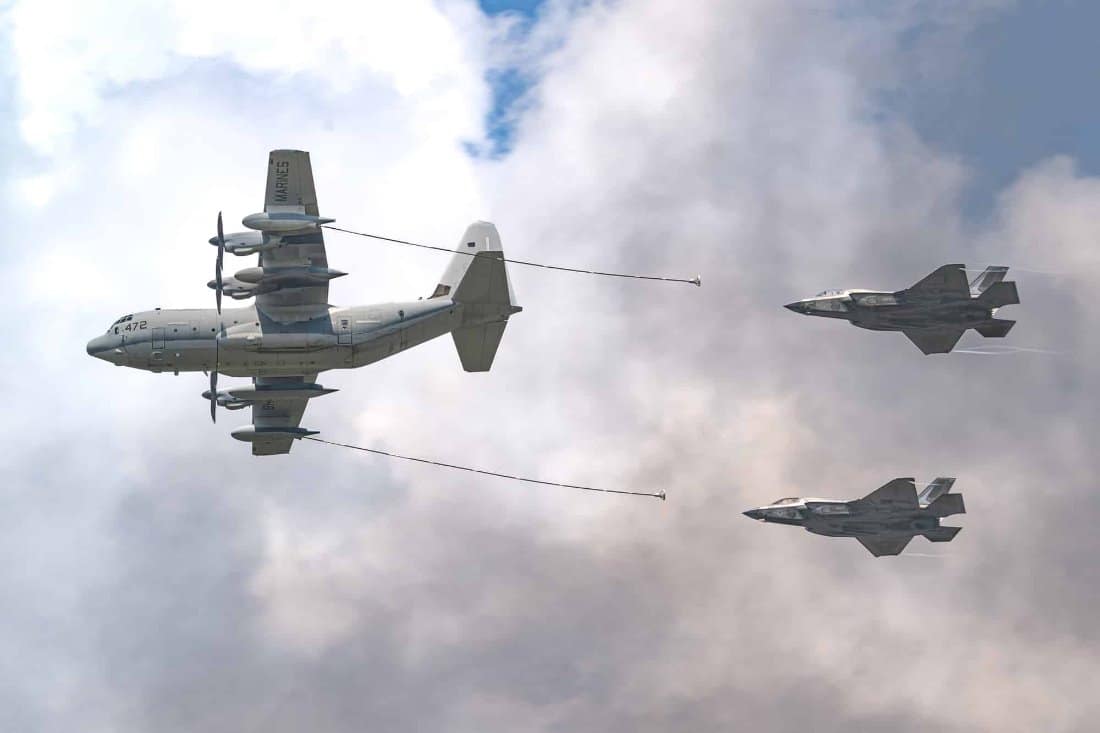
In the MAGTF demonstration, every aircraft has a job. The Ospreys insert troops, the Super Stallions haul heavy loads, the Vipers and Venoms provide close air support, the KC-130J refuels the fighters mid-display. The F-35B’s job, Horn explained, is to see everything — and to hit first.
What looks sequential from the crowd line is, in real operations, simultaneous. Horn put it bluntly: the point is to present adversaries “an unsolvable problem before they even know they have one.” And the margins are unforgiving — a bomb dropped thirty seconds late can put friendly forces inside its blast radius.
Marines First, Pilots Second
The thread running through everything Horn said is that the F-35B is not an Air Force jet with a lift fan. Its pilots live on the same ships as the riflemen they support, plan missions face to face, and adjust their game plan around what the infantry needs. “Since we are also Marines, when things don’t go according to plan, we know what the ground guys need for mission success,” he said.
That is also where the short takeoff and vertical landing capability stops being an airshow trick. The F-35B can operate from amphibious ships, austere strips and stretches of highway that no conventional fighter can use. As Horn put it: “There is nothing quite like being able to move your airport to where you need it.”
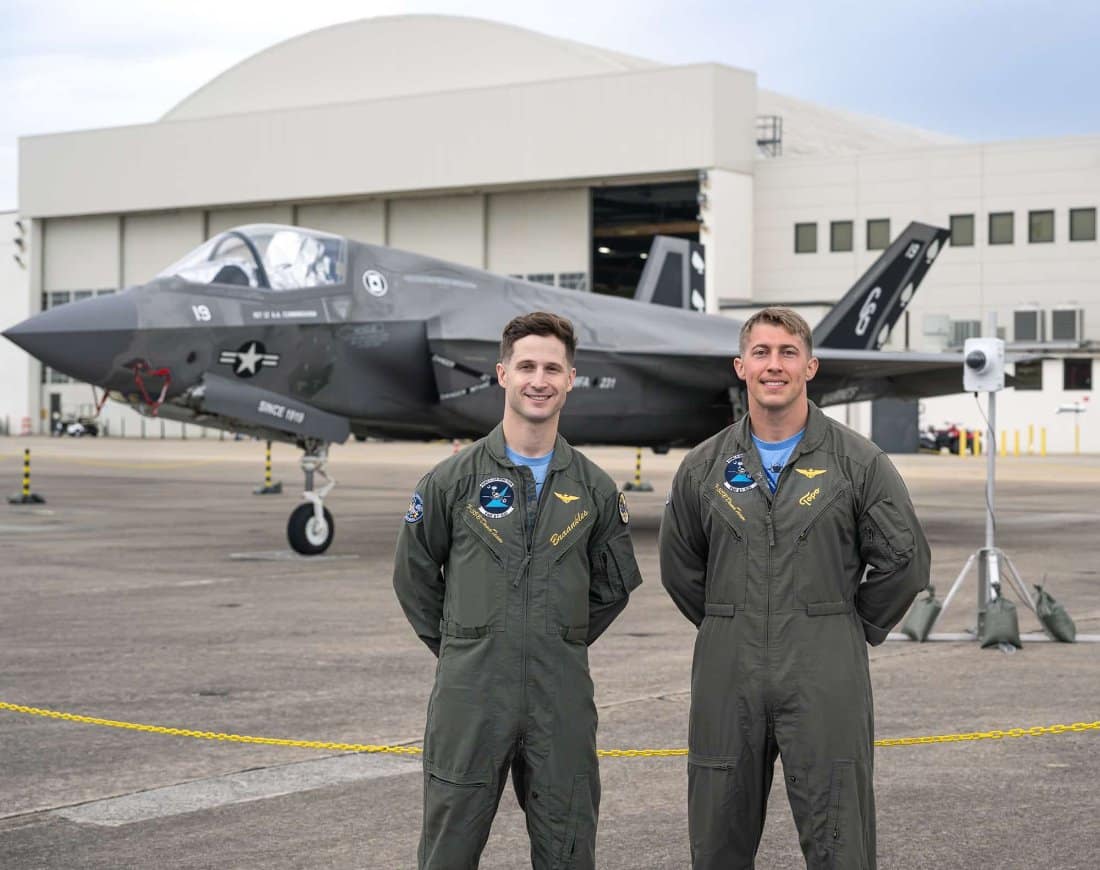
And the people flying the demo are not a dedicated display team. They are active-duty instructors and operational pilots executing a mission like any other — one or two rehearsals, a confirmation brief, and the same planning cycle they would use for combat. “Each of us would be prepared to execute without a rehearsal… if it came down to it,” Horn said.
After the Harrier
The emotional weight of the weekend belonged to the Harrier. Two AV-8Bs from VMA-223 — one wearing a special 250th-anniversary Marine Corps heritage scheme — flew their strafing passes alongside the jet that has replaced them. On June 3, the type retired from active Marine Corps service for good.
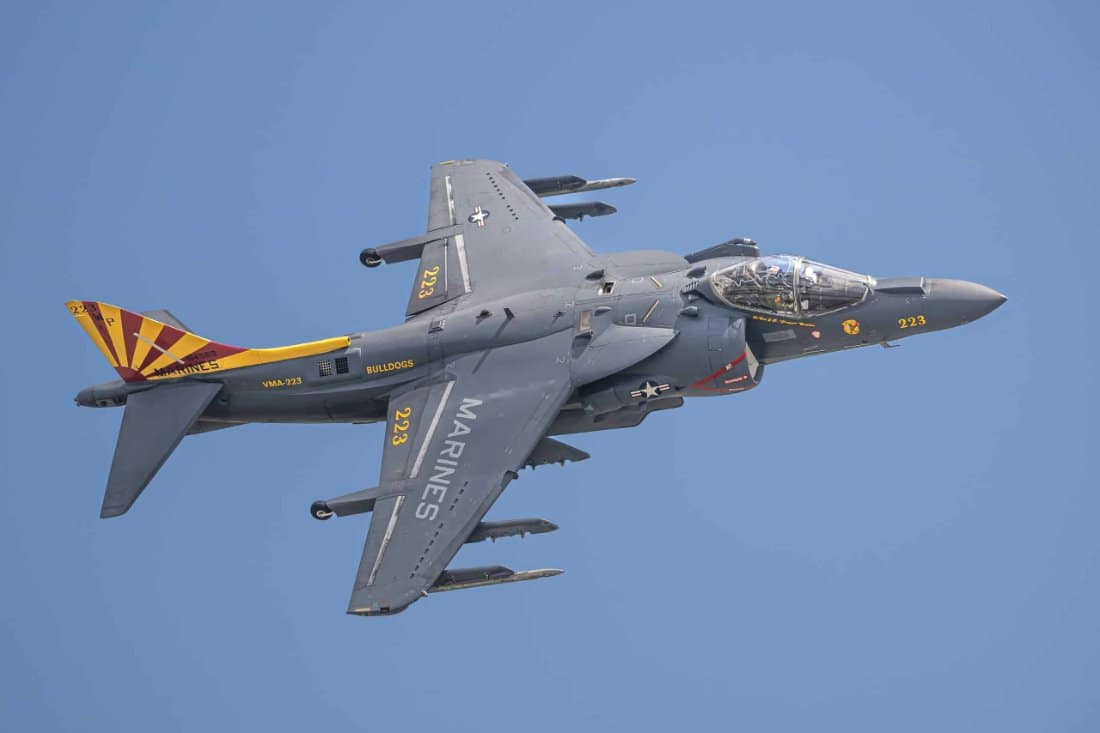
The U.S. Marine Corps marked the moment with a sundown ceremony at Cherry Point attended by thousands of Marines, veterans and families:
The lineage is unbroken: an uncompromising requirement to fly fighters from short decks, dirt strips and remote islands, passed from one airframe to the next. The Harrier carried it for 40-plus years. Now it rides with pilots like Horn — a biochemistry major from Rochester who waited four years for his shot, and who closes every demo by climbing out of the cockpit and waving to the crowd.
See what the F-35B demo looks like from the crowd line — hover, pedal turn and all:
Sources: The Aviationist (interview by Howard German), U.S. Marine Corps, Stars and Stripes



 English
0 Comments