Europe’s largest missile manufacturer is doubling its output of Aster air defence interceptors and lifting overall production by 40 percent this year. MBDA is also committing €5 billion in new investment and hiring 2,800 people. The continent is rearming — and the factory floor is where it shows.
MBDA, the Franco-British-Italian-German missile consortium, announced the production surge in late March, framing it as a response to depleted stockpiles exposed by the Iran conflict and the ongoing war in Ukraine. Production has already doubled since 2023. The 2026 increase takes it to a level not seen since the Cold War.
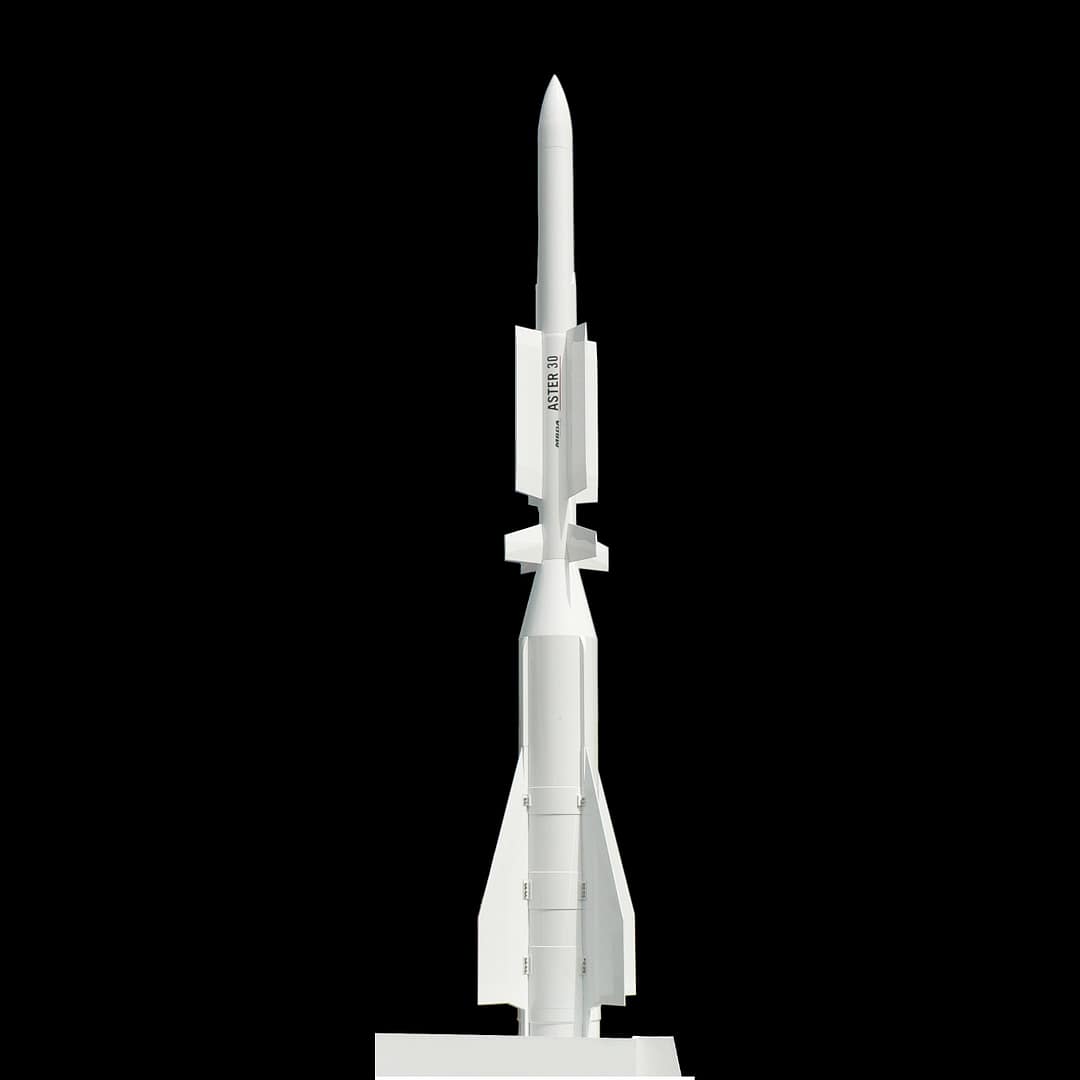
The centrepiece is the Aster family — Europe’s primary air defence interceptor, used in the Franco-Italian SAMP/T system on land and aboard several European navies at sea.
Quick Facts
Overall production increase: 40% in 2026
Aster missile output: Doubling in 2026
Investment: €5 billion (2026–2030), doubled from previous plan
New hires: 2,800 in 2026
Key systems: Aster 15/30, Storm Shadow/SCALP, Meteor, Mistral, Exocet
Production sites expanding: Bourges and Selles-Saint-Denis (France), Fusaro (Italy)
The Aster Surge
The Aster 30 is one of the most capable air defence missiles in the Western inventory. It can engage aircraft, cruise missiles, and tactical ballistic missiles at ranges exceeding 100 kilometres. The Aster 15 handles shorter-range threats. Together, they form the backbone of European air defence — and both have been consumed at unsustainable rates.
France donated SAMP/T batteries to Ukraine. European navies have increased patrols in contested waters. The Iran war consumed Western missile stocks across the coalition. The result is a continent-wide shortage of air defence interceptors that MBDA is now racing to fill.
Doubling Aster output means opening a second assembly line. MBDA is establishing a new Aster production facility in Fusaro, Italy, supplementing the existing lines in Bourges and Selles-Saint-Denis in France. The expansion is designed to sustain higher production rates permanently, not just for a temporary surge.
Beyond Aster: Storm Shadow, Meteor, and More
The 40 percent overall increase covers MBDA’s full product range. Storm Shadow/SCALP cruise missiles — the same weapons Ukraine has used to strike Russian targets deep behind the front lines — are part of the production ramp. So is the Meteor beyond-visual-range air-to-air missile, which arms the Eurofighter Typhoon, Rafale, and Gripen.
Meteor is particularly significant. It is widely considered the most capable air-to-air missile in NATO’s inventory, with a ramjet engine that gives it a no-escape zone far larger than any competitor. European air forces have been asking for more Meteor missiles for years. MBDA is finally scaling up to meet demand.
The Mistral short-range air defence missile and the Exocet anti-ship missile are also included in the production increase. Every category of MBDA weapon is being ramped simultaneously — a reflection of how broadly European stockpiles have been depleted.
€5 Billion and 2,800 Jobs
MBDA’s €5 billion investment plan for 2026–2030 represents a doubling of its previously announced capital expenditure. The money will fund new production lines, facility expansion, and workforce growth. Hiring 2,800 people in a single year is a massive recruitment drive for a defence company — equivalent to adding roughly 15 percent to its workforce.
The scale of the investment reflects both the urgency of the stockpile crisis and MBDA’s confidence that European defence spending will remain elevated for years. NATO allies are under intense pressure to meet the 2 percent GDP defence spending target. Many are now exceeding it. The missiles those budgets buy come largely from MBDA.
Europe’s Industrial Reckoning
The broader picture is one of industrial reckoning. For two decades, European defence manufacturers operated on peacetime assumptions — long production runs at modest rates, predictable orders, and comfortable margins. The wars in Ukraine and Iran shattered those assumptions. Missile stocks that were supposed to last years were consumed in months.
MBDA’s 40 percent surge is the beginning of a response, not the end. Even at doubled Aster production, it will take years to refill European magazines to Cold War levels. The gap between what NATO needs and what European industry can deliver remains enormous.
But the factories are running, the money is flowing, and the hiring has begun. Europe is rebuilding its arsenal. It just needs time — and time is the one thing conflict rarely provides.
Sources: Defense News, The Defense Post, Defence Matters, UK Defence Journal, Militarnyi


 English
0 Comments