
Part of Wings of War — From Zeppelin to Sixth Generation, our series on the great turning points of military aviation.
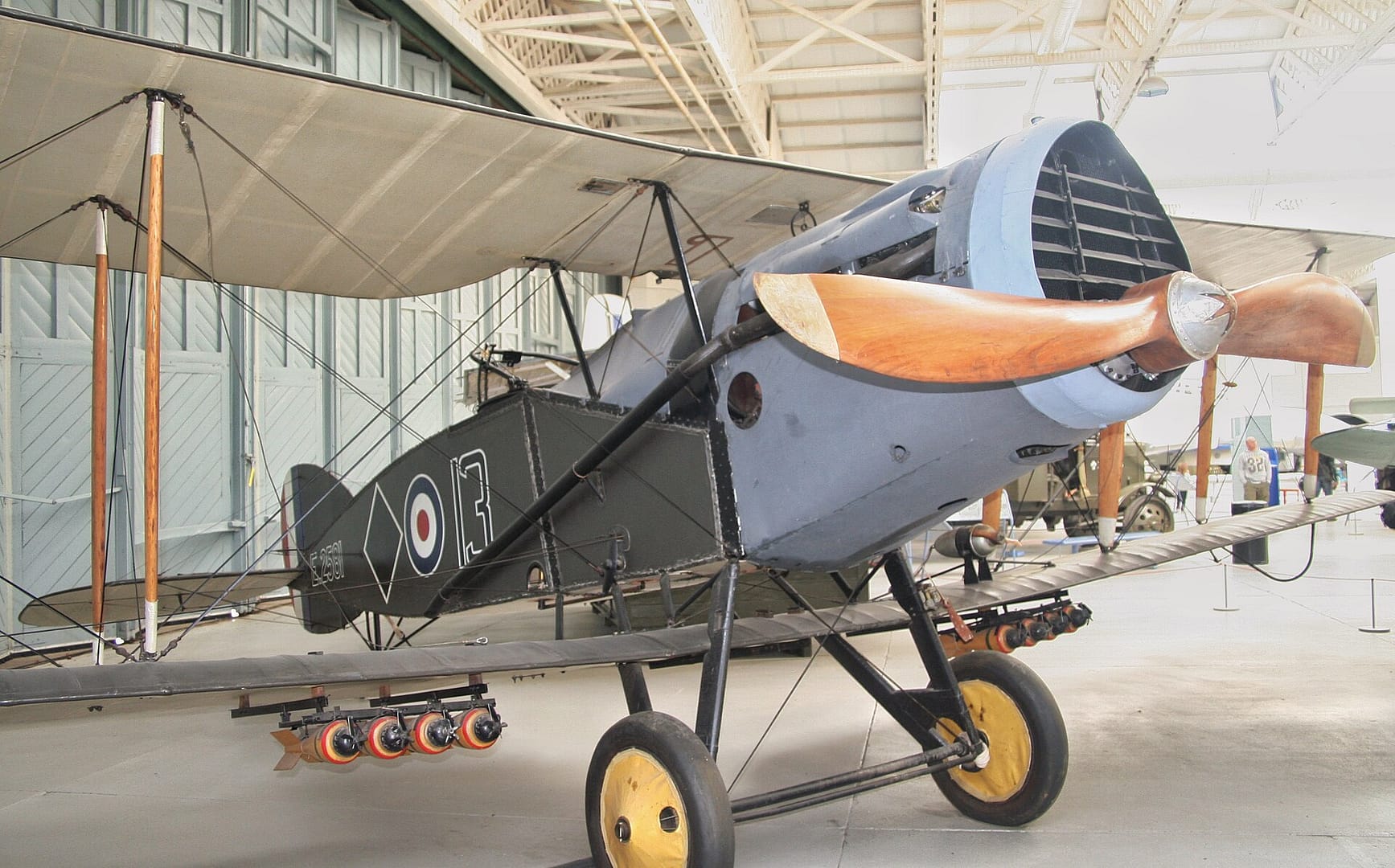
On the morning of 3 September 1914, two British airmen of No. 3 Squadron, Royal Flying Corps, were droning over northern France in a flimsy two-seater, peering down at the roads below. The German armies were sweeping toward Paris, and nobody on the Allied side was quite sure where the spearhead had gone. Then, on the road below them, the airmen saw it: an entire German army corps, marching not the way everyone expected, but turning — wheeling to the south-east, away from Paris.
That observation, and others like it over the next two days, told the French high command something decisive: General von Kluck’s First Army was exposing its flank. General Joffre ordered the counter-attack that became the Battle of the Marne and saved Paris. Afterwards Joffre said plainly that the airmen had played “a vital part” — that thanks to them he had been kept “accurately and constantly informed.” The aeroplane had just won its first great victory, and it had not fired a shot. It had simply seen.
QUICK FACTS
| The first job | Reconnaissance — the aeroplane’s original and most important military role |
| Even older | Tethered observation balloons, used in battle as early as 1794 |
| First triumph | The Battle of the Marne, September 1914 |
| Cold War peak | The U-2 and the SR-71, spying from the edge of space |
| The next leap | Reconnaissance satellites — spying from orbit, from 1960 |
| Why it matters | The side that sees first usually wins |
Eyes over the hill
For as long as there have been armies, commanders have wanted to see over the next hill. The aeroplane finally gave them that — but it was not even the first flying machine to do so. As far back as 1794, French revolutionary forces sent an officer aloft in a tethered hydrogen balloon to watch the enemy at the Battle of Fleurus. The idea was sound; the technology was not yet ready.
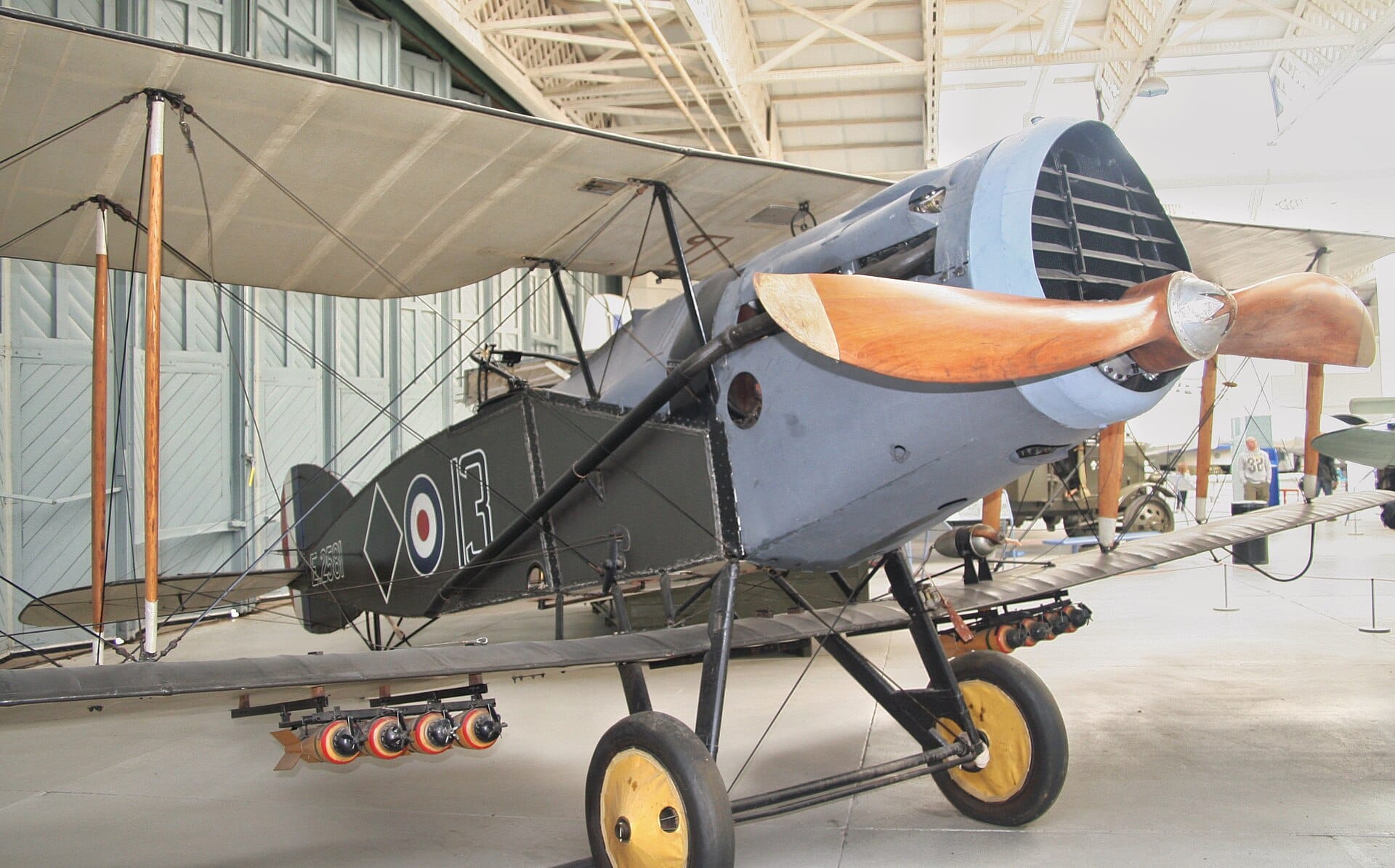
The aeroplane changed that. By 1914 a fragile biplane could fly over the enemy’s lines, and an observer could note — and soon photograph — exactly where his trenches, guns and reserves lay. This was so valuable that it created its own counter: if your aircraft could see, you had to stop the enemy’s from seeing. That, and nothing else, is why the fighter was invented. Reconnaissance came first; everything in the air grew up around the need to protect it or deny it.
The Marne proved how decisive that flimsy advantage could be. The crews who first reported von Kluck’s fatal turn — among them a British pair, Captain Charlton and Lieutenant Wadham of No. 3 Squadron — were doing nothing more glamorous than looking carefully at roads. Afterwards the French commander-in-chief, General Joffre, was unequivocal: the airmen, he said, had kept him “accurately and constantly informed,” giving him the certainty to act in time. Within months both sides were photographing the entire front from the air, building mosaics of the enemy’s trenches so detailed that a trained interpreter could count guns and spot a new dugout from one day to the next.
The camera goes to war
By the Second World War, reconnaissance had become a science. Specialised photo-reconnaissance aircraft — stripped of guns, polished smooth, and often painted a particular shade of pale blue to vanish against the sky — flew high and fast over enemy territory to bring home images. Unarmed Spitfires and Mosquitoes outran the fighters sent to stop them, and the photographs they returned planned the bombing raids, tracked the building of secret weapons, and confirmed the results. An aircraft that never dropped a bomb could decide where a thousand bombs would fall. It was photo-reconnaissance that found the German secret-weapon site at Peenemünde, tracked the building of warships, and let analysts pore over every raid’s results in specialist interpretation centres where stereo viewers turned flat photographs into three-dimensional models of the enemy’s world.
To the edge of space
The Cold War pushed reconnaissance to its physical limits. The United States needed to see inside a closed, hostile Soviet Union, and built extraordinary machines to do it. The Lockheed U-2 flew so high — above 70,000 feet — that its designers believed it was beyond the reach of any defence. They were wrong: in 1960 a U-2 was shot down over the Urals, and its pilot captured, in one of the great crises of the era.
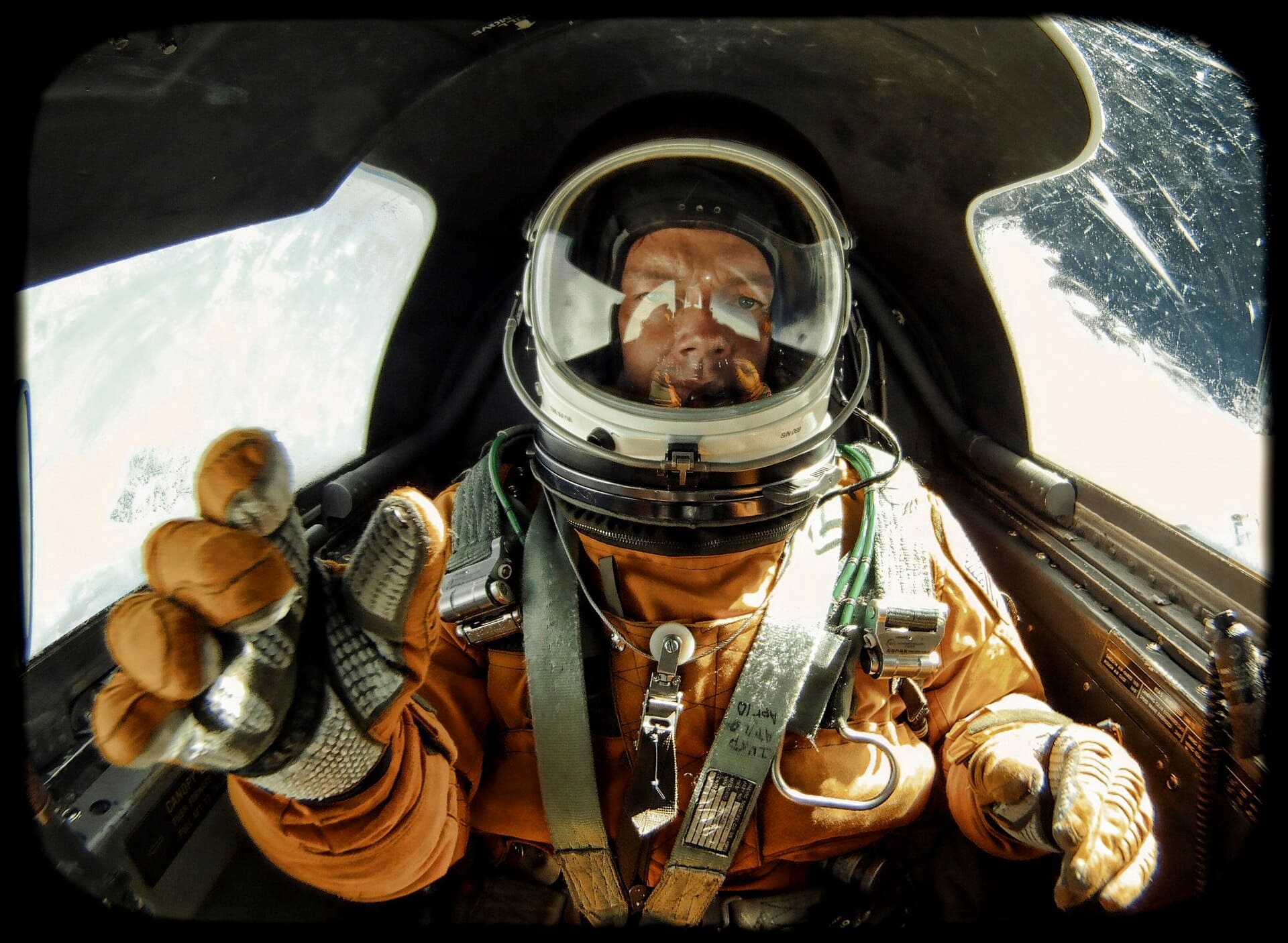
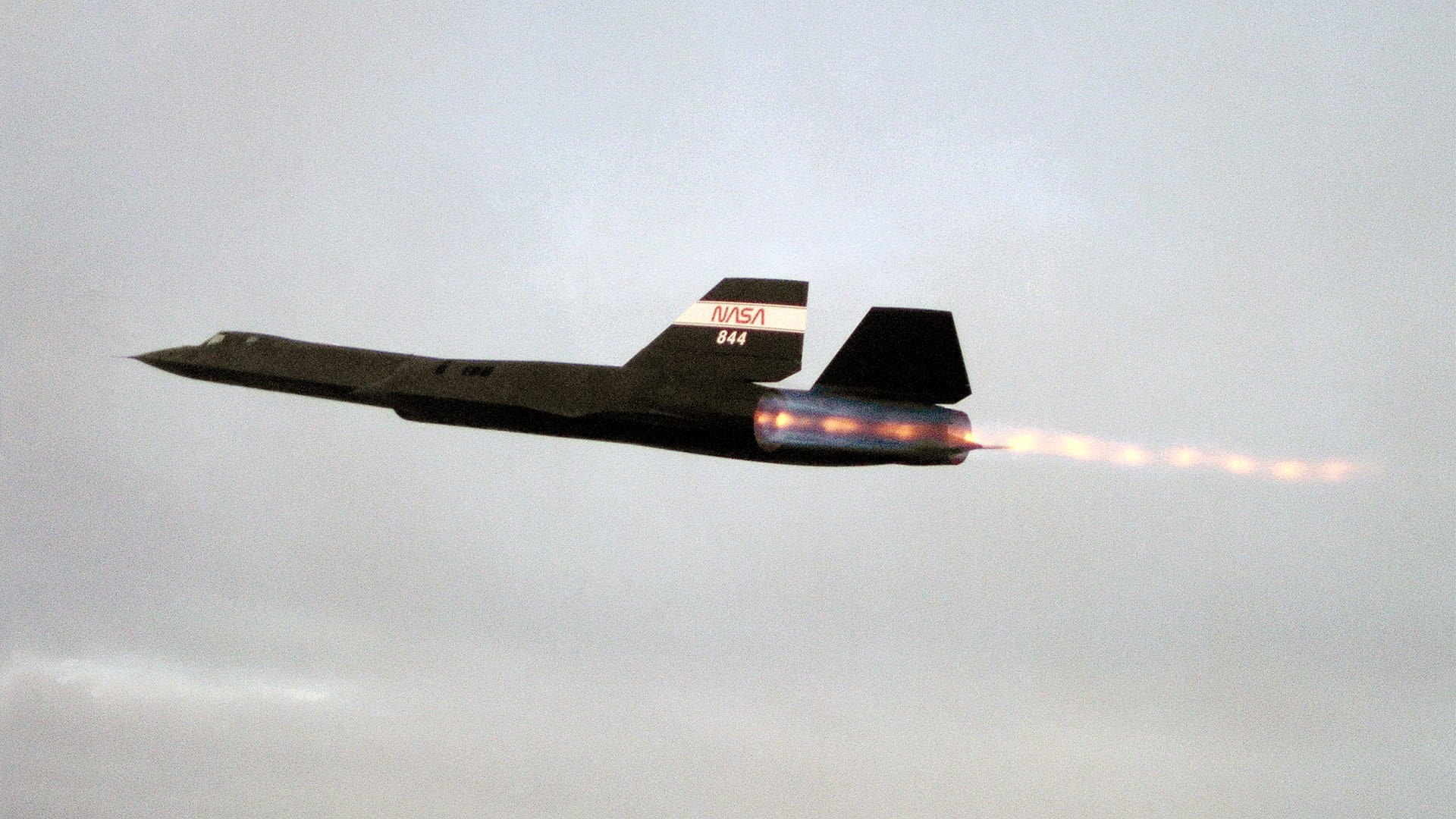
The answer was to fly not just higher but faster than anything could catch. The Lockheed SR-71 Blackbird cruised above 85,000 feet at more than three times the speed of sound; if a missile was fired at it, the standard tactic was simply to accelerate away. In its entire career, not one was ever lost to enemy fire — though, as we have told elsewhere, one was once saved by a quick-thinking ally after an engine failed.
Up into orbit
Even the Blackbird had a limit: it had to fly over its target, and that was always dangerous and provocative. The true escape came in 1960, when the United States recovered the first film from a reconnaissance satellite named Corona — the capsule snatched out of the sky over the Pacific by a passing aeroplane. In a single orbit it photographed more of the Soviet Union than every U-2 flight ever flown combined. The Soviets soon had their own, called Zenit.
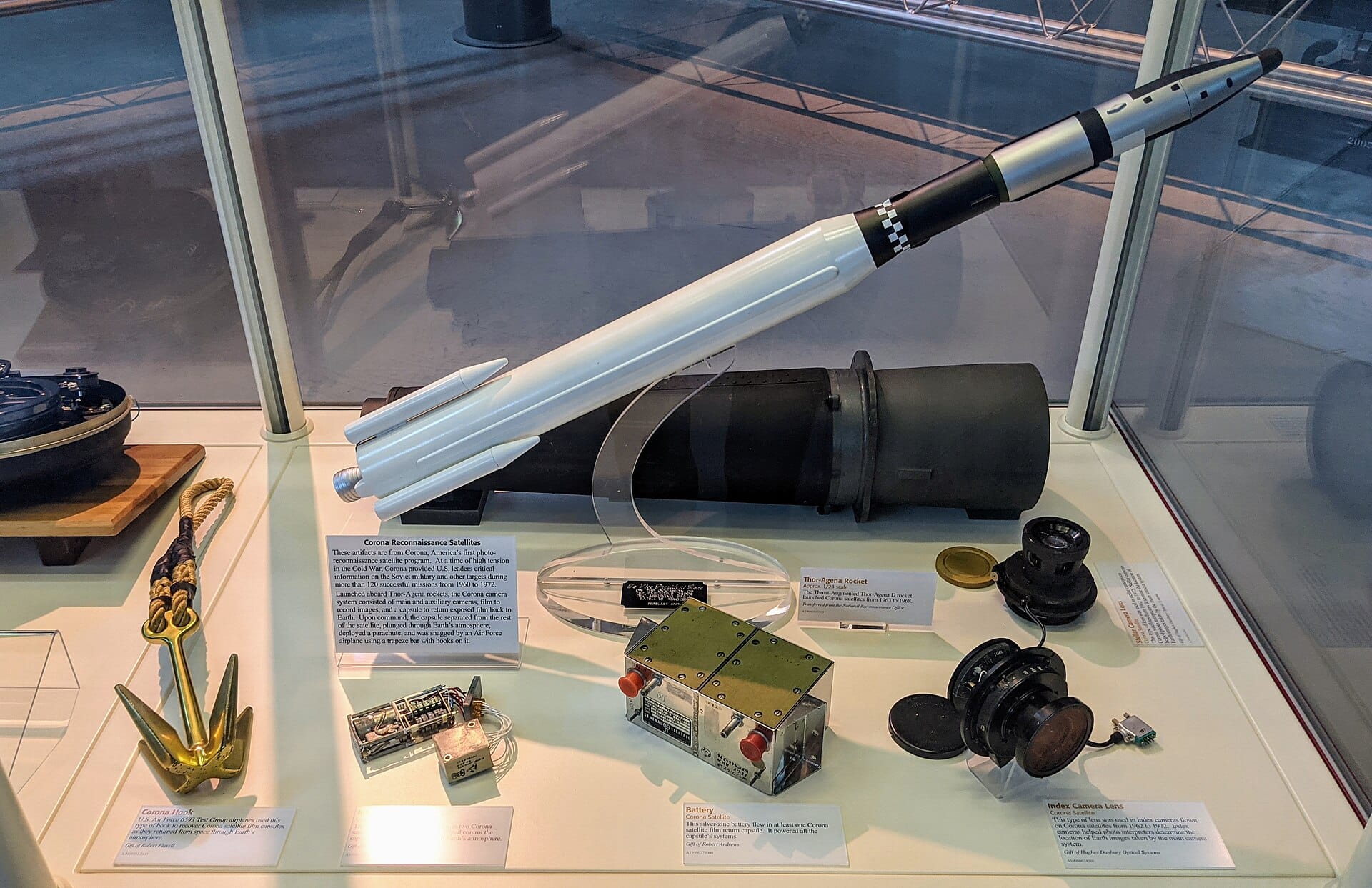
From that moment, the highest reconnaissance no longer flew through the air at all. It circled the Earth in space, untouchable and unceasing — the subject of its own chapter in this series.
The photographs that nearly started a war
Reconnaissance has rarely mattered more than it did in October 1962. A U-2 flying high over Cuba brought back photographs that analysts recognised with alarm: the Soviet Union was secretly building launch sites for nuclear missiles ninety miles from Florida. Those images — grainy strips of grey shapes in the Cuban countryside — were laid in front of President Kennedy and, later, the United Nations, and they framed the most dangerous fortnight of the entire Cold War. It was proof, beyond denial, of what the enemy was doing — the whole point of reconnaissance, distilled into a single roll of film.
It was not bloodless. At the height of the crisis, a U-2 pilot, Major Rudolf Anderson, was shot down and killed over Cuba — a reminder that even the highest-flying eyes are not beyond reach, and that the men who flew these unarmed missions gambled their lives on altitude and nerve.
POWERS COMPARED — RECONNAISSANCE THROUGH THE ERAS
| The contenders | Every great power — because the side that sees first holds the advantage |
| Who led when | The Allies at the Marne; the West with the U-2 and SR-71; both superpowers raced into orbit |
| The decisive duel | America’s Corona vs the Soviet Union’s Zenit — the first satellite spies |
| The verdict | Reconnaissance is the quiet mission that decides the loud ones |
Sources: Royal Air Force Museum; Imperial War Museum; National Reconnaissance Office; standard histories of military aviation and Cold War intelligence.
| 1. | The Airship at War | How the Zeppelin first carried war into the sky |
| 2. | The First Job: Reconnaissance | The eyes that won the Marne and climbed to orbit |
| 3. | The Fighter | The hundred-year quest for control of the air |
| 4. | Folkestone, 1917 | The day strategic bombing was born |
| 5. | The Precision Revolution | When bombs and missiles learned to aim themselves |
| 6. | The Wizard War | How electronic warfare learned to blind the enemy |
| 7. | Eyes in Orbit | How spying moved into space |
| 8. | Stealth | How aircraft learned to vanish from radar |
| 9. | The Rise of the Drone | War without a pilot in the cockpit |
| 10. | The Sixth Generation | When the fighter learned to fly itself |
0 Comments