
When Iranian missiles struck an air base in eastern Jordan last Friday and killed American servicemen, the base was identified in every report by its name: Muwaffaq Salti.
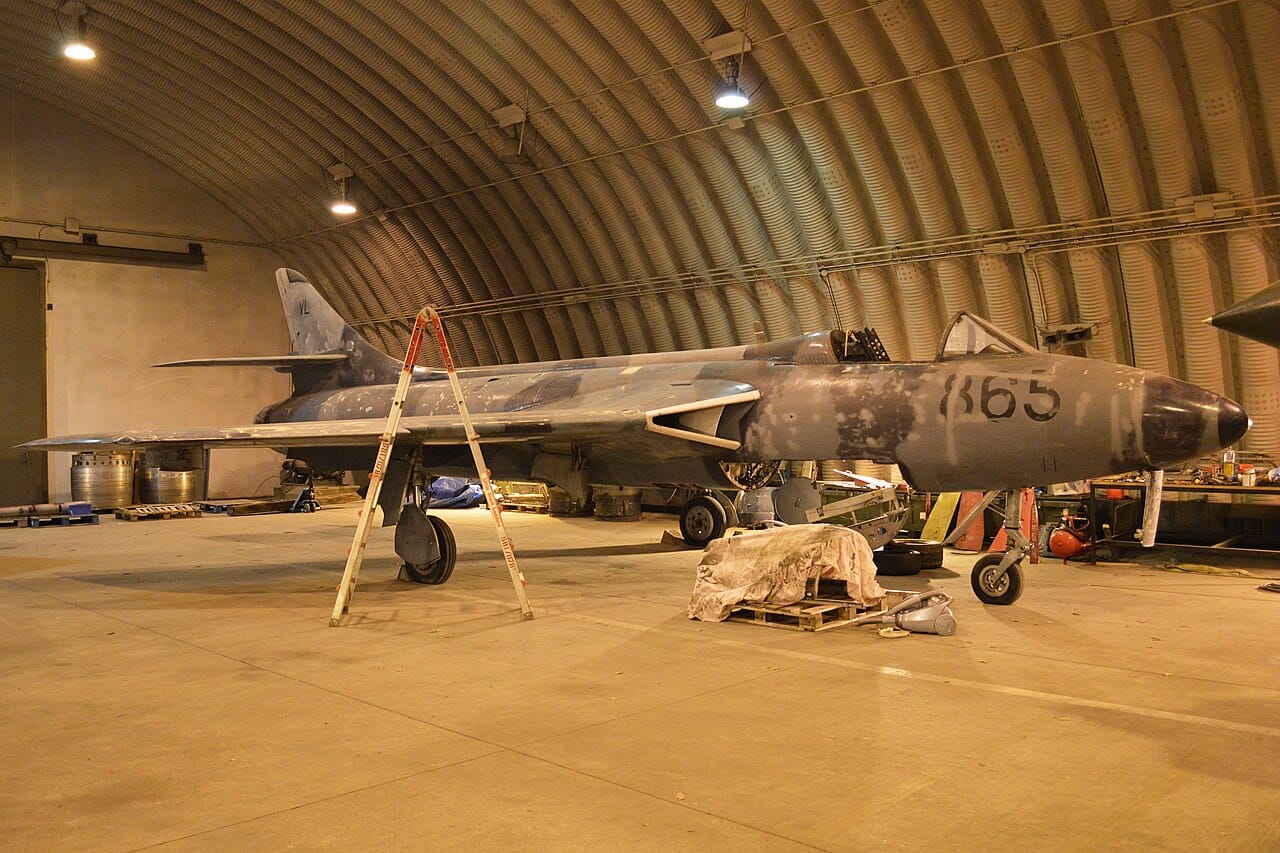
Almost nobody outside Jordan knows who that was. He was a first lieutenant in the Royal Jordanian Air Force, and on 13 November 1966 he took off in a Hawker Hunter to defend his country against an air force that outclassed his own, and did not come back.
Sixty years later, Americans died on ground that carries his name. This is who he was.
Quick Facts
Name: First Lieutenant Muwaffaq Salti, Royal Jordanian Air Force
Killed: 13 November 1966, in aerial combat over the Hebron area
Aircraft: Hawker Hunter
The action: the Israeli raid on the West Bank village of Samu, Israeli codename Operation Shredder
Jordanian response: eight Hunters scrambled from Mafraq Air Base
Opposition: four Israeli Dassault Mirage III
Result: one Hunter shot down and its pilot killed, one Israeli aircraft damaged and forced to land
Significance: the largest Israeli operation since Suez in 1956, and widely regarded as a step on the road to the Six-Day War
The raid
On 13 November 1966, Israeli forces crossed into the Jordanian-controlled West Bank and attacked the village of Samu, south of Hebron. It was a reprisal operation, and it was large. Nothing on that scale had been attempted by Israel since the Suez campaign a decade earlier.
Israel's stated rationale was reprisal for three Israeli deaths in a landmine incident the previous day, which Israel attributed to an attack originating from Jordan.
What made it politically catastrophic for Amman was what King Hussein believed he had been promised. He had been maintaining quiet contacts with Israeli representatives for years, and his account of those conversations is one of the more painful things in the record of the period.
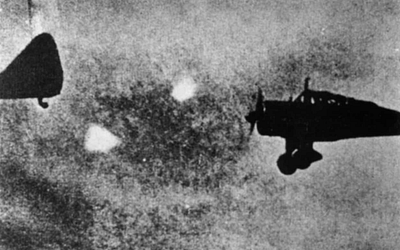
Jordan's army was outmatched on the ground and losing. So the Royal Jordanian Air Force did the only thing available to it: eight Hawker Hunters were scrambled from Mafraq to take the pressure off the troops below.
A fight the Hunters could not win
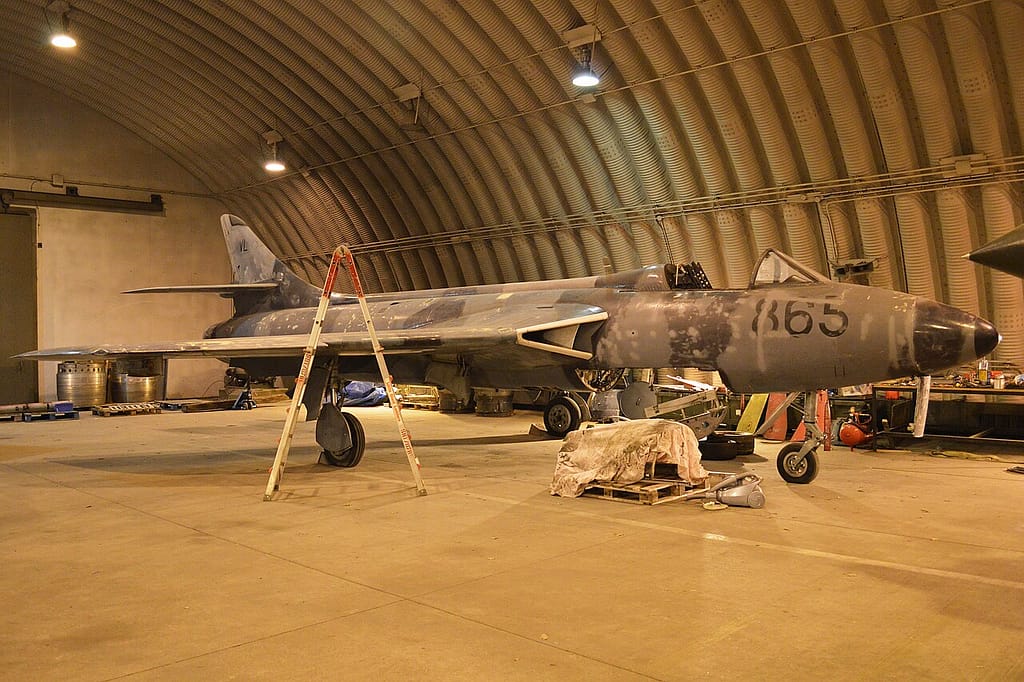
The Hunter is one of the best-loved aircraft ever built in Britain. Pilots describe it in terms usually reserved for sports cars. It is beautiful, it handles superbly, and at low level with cannon and rockets it was a formidable ground-attack machine well into the 1970s.
It was also, by November 1966, the wrong aeroplane for this particular fight. The Hunter is subsonic. The Mirage III waiting for the Jordanians was a Mach 2 delta-winged interceptor a full generation newer, with better acceleration, better climb and a radar. Eight Hunters met four Mirages, and the numbers did not help, because in air combat the aircraft that can dictate the terms of the engagement does not need parity of numbers.
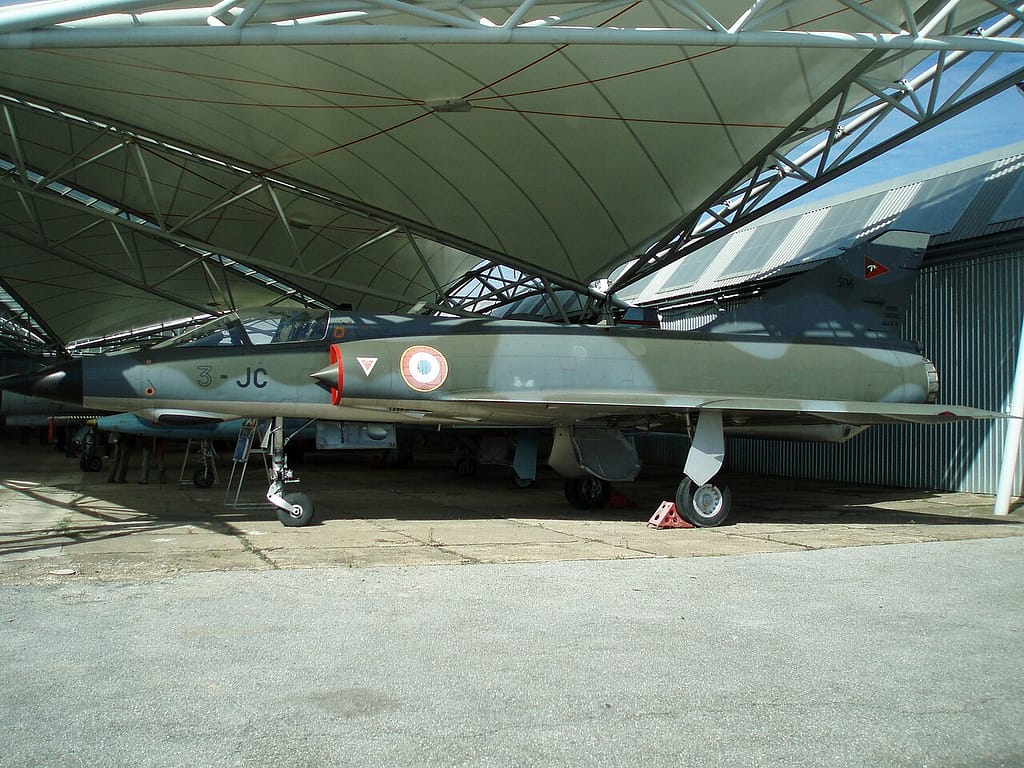
In the engagement that followed, Salti's Hunter was shot down and he was killed. One Israeli aircraft was damaged badly enough to be forced to land. That is the whole of the air battle, recorded in a line or two in most accounts of the raid.
The video above is a Hunter pilot describing what flying the aircraft is actually like. It is worth watching with 1966 in mind: the man in that cockpit is enjoying an aeroplane that Salti was asked to take into combat against something considerably faster.
Why one pilot got an air base
Air forces name bases after people for reasons that are rarely only about the individual. Jordan named this one for Salti because of what the fight represented.
Jordan was a small kingdom with a small air force, in a position it had not chosen, facing a neighbour with better aircraft and more of them. There was no version of 13 November in which the Hunters won. They went anyway, because the alternative was leaving Jordanian soldiers on the ground without air cover, and one of them did not come home. That is the story a country puts on a gate.
The base itself grew into something far larger than the man. Since 1997 it has hosted Royal Jordanian Air Force F-16 squadrons. It became a hub for the coalition campaign against ISIS. In the current war it has held substantial American air power, and it has been struck twice by Iranian missiles this month, the second time with fatal results.
The verdict at the UN
Twelve days after the raid, the Security Council heard both Jordan and Israel and issued a unanimous censure.
Unanimous censure did not return anybody's aircraft or anybody's son, and Hussein's bitterness in the aftermath was aimed as much at his allies as his enemies. He publicly accused Nasser of failing to come to Jordan's aid and of hiding behind the skirts of the UN peacekeeping force.
What Samu led to
The raid did not stay a local incident. It is widely assessed as one of the events that pushed the region toward the Six-Day War seven months later.
The logic was political rather than military. King Hussein had been quietly maintaining contacts with Israel while under constant pressure from Arab nationalists who accused him of being insufficiently committed to the Palestinian cause. Samu made that position untenable. A large Israeli operation against a Jordanian-held village, with Jordanian soldiers and a Jordanian pilot killed and no effective response available, was precisely the humiliation his critics had predicted. The pressure that followed helped push Jordan into the Egyptian-led alliance that went to war in June 1967, in which Jordan lost the entire West Bank including East Jerusalem.
The name on the gate
There is something worth sitting with in the fact that a Jordanian pilot killed by Israeli fighters in 1966 has ended up as the name of the base where Americans were killed by Iranian missiles in 2026.
Salti had nothing to do with Iran. He had never heard of the conflicts that now play out over that runway. He was a young officer in a small air force who took off in an aircraft that was not good enough, to defend a village he had probably never visited, against an enemy he could not beat.
Air bases outlast the wars they are built for, and they outlast almost everyone who flies from them. What survives is a name on a sign that most people who pass it never think to ask about.
Sources: Royal Jordanian Air Force histories, Imperial War Museums, Tom Cooper and Patricia Salti, Hawker Hunters at War: Iraq and Jordan 1958 to 1967, TIME archive, contemporary accounts of the 1966 Samu raid.

0 Comments