
For 44 years, the radar discs that watched the skies above Europe wore American badges. Fourteen NATO Boeing E-3A Sentries, based at Geilenkirchen in Germany, flew under the NATO flag with mixed crews drawn from 17 participating nations — and as many as 19 different NATO nationalities on a single aircraft. They were one of the most visible symbols of trans-Atlantic burden-sharing — the alliance’s collective airborne early-warning capability, paid for jointly, flown jointly, and unmistakably built at Boeing’s Renton plant near Seattle.
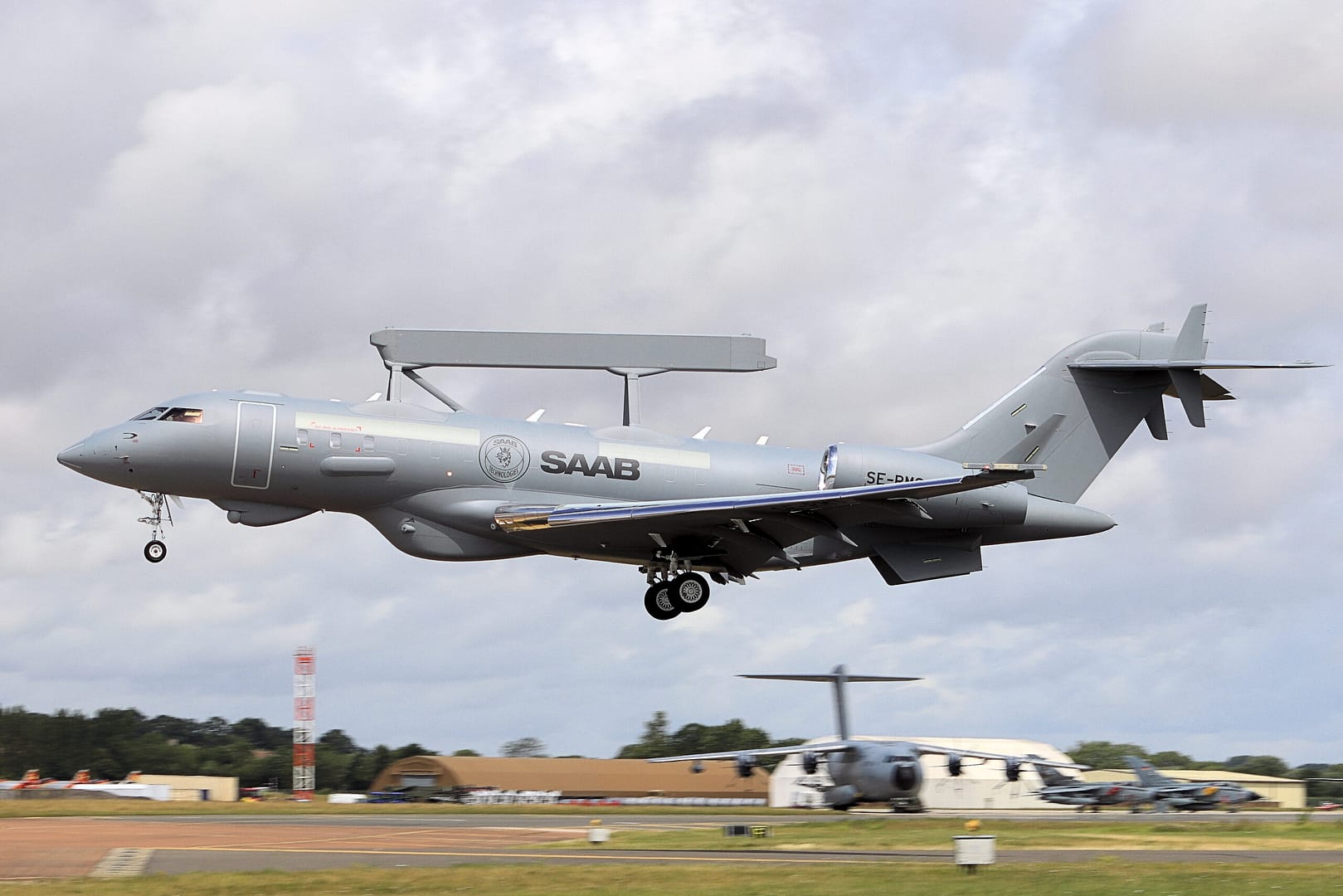
That era is now ending. On 23 April 2026, according to a report by the French defence publication La Lettre, NATO’s Support and Procurement Agency awarded the contract to replace the entire E-3A fleet to a Swedish-Canadian team: Saab and Bombardier, building the GlobalEye airborne early warning and control aircraft. Saab subsequently denied that a contract has been formally signed — but every analyst tracking the procurement now considers Boeing’s E-7 Wedgetail eliminated, and the GlobalEye the clear winner.
How a Boeing Loses to a Bombardier
The story of how the Wedgetail lost begins in Washington, not Brussels. In June 2025, the U.S. Air Force cancelled its own E-7 procurement — twenty-six aircraft that were supposed to replace the American E-3 fleet — choosing instead to invest in space-based early warning under the Golden Dome architecture. The decision was politically violent (Congress reversed parts of it later, and the U.S. is now hedging back into E-7) but the strategic damage was done. With the U.S. signalling it might not actually field the platform itself, NATO planners had to ask a hard question: do we want our common AWACS to be an aircraft the Americans aren’t sure they want?

The GlobalEye answered the question with a list of advantages. It is built on a Bombardier Global 6000 — a 2010s-era development of the Bombardier Global Express family that first flew in 1996 rather than a derivative of the late-1950s Boeing 707. It has substantially better fuel efficiency, longer endurance, lower operating cost, and a more advanced radar. The Saab Erieye ER active electronically scanned array detects fighter-sized targets at ranges that Boeing’s E-7 — equipped with Northrop Grumman’s MESA radar — struggles to match, while simultaneously running maritime surveillance and ground-moving-target indication that the Wedgetail simply lacks.
European Autonomy, Practically Speaking
The political subtext is just as important as the technical one. Since 2022, NATO members have been quietly nervous about the security of supply on American defence kit. The Trump administration’s repeated questioning of Article 5 commitments — and the parallel trade frictions over tariffs and the F-35’s “kill switch” rumours — left European procurement officials open to alternatives in a way they were not a decade ago.
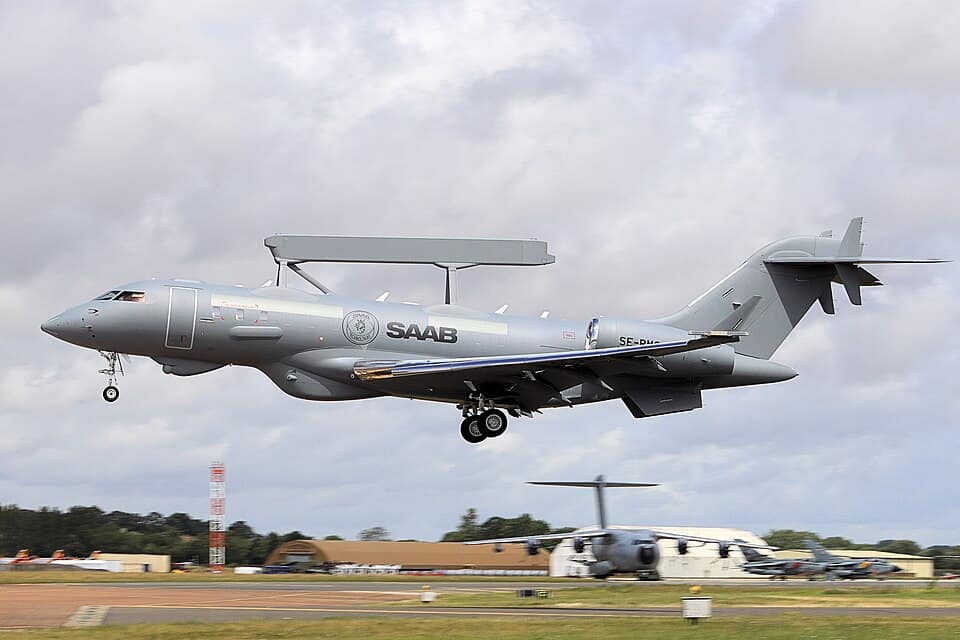
The GlobalEye, despite being Swedish-Canadian-built, is not subject to U.S. International Traffic in Arms Regulations the way the Wedgetail is. NATO can buy, operate, modify and sell the aircraft without going through Washington for every export decision. For European treasuries that have grown weary of asking the State Department for permission to upgrade their own assets, that is a much bigger deal than the procurement number on the cover.
The Erieye Radar at the Heart of It
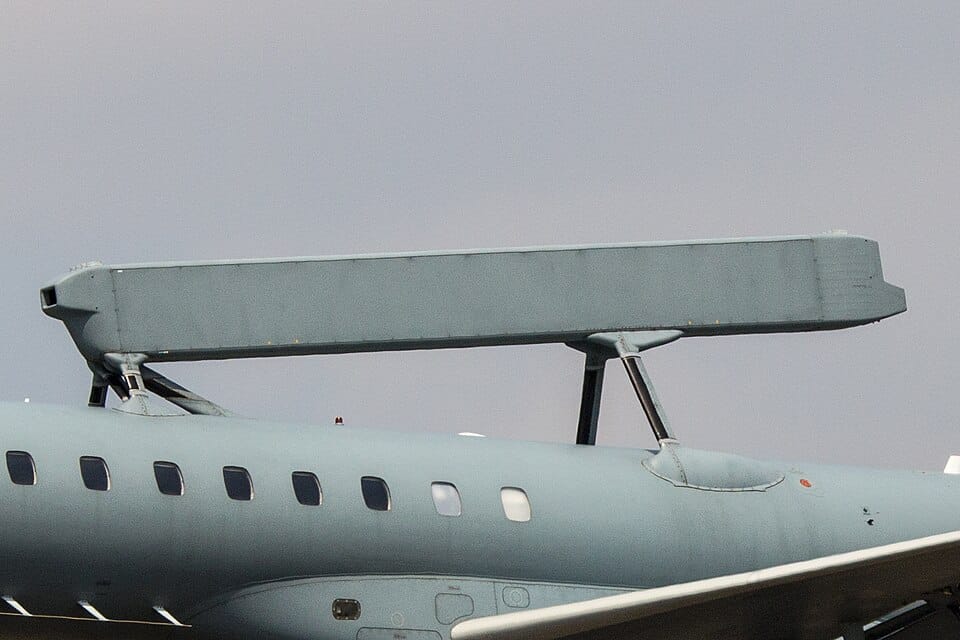
The GlobalEye’s defining feature is the long blade on its spine — Saab’s Erieye ER AESA radar. Unlike the rotating saucer on an E-3 or the top-hat antenna on an E-7, the Erieye is a fixed dorsal array that scans electronically. The advantages are subtle but real. No moving parts to maintain. Lower drag in the airstream. Much faster scan rates, which translates into the ability to track more targets simultaneously. And the radar runs in three modes — air-air, air-ground, air-surface — without requiring different antennas.
The “ER” in Erieye ER stands for Extended Range. Saab has not publicly disclosed its exact detection figures, but operational reports from the UAE Air Force — the GlobalEye launch customer — indicate detection ranges of fighter-sized targets in excess of 550 km, with track maintenance against low-RCS targets that Boeing’s MESA cannot match.

A 1980s Airframe Retires at Last
The NATO E-3As have been remarkable workhorses. Bought in the early 1980s, modernised three times, flown in every major NATO crisis from the Balkans to Afghanistan to the response to Russia’s invasion of Ukraine, they have outlived every fighter generation they originally controlled. But the airframes are old. Spare-parts availability for the Pratt & Whitney TF33-PW-100A engines — the military designation of the civilian JT3D — has become a budget line of its own. Mission-system upgrades, designed in the 1990s, can no longer keep pace with what modern fighter radar suites expect to receive.
Geilenkirchen, the German air base from which the fleet has flown since 1982, will host the GlobalEyes as well. The transition is expected to span 2027 through 2031. The first aircraft are likely to deliver in late 2027 if Saab can hold its build rate, with full operational capability targeted around 2030.
What This Means for Boeing
The loss is more than a single contract. Boeing’s defence business has been quietly bleeding marquee programmes — the U.S. Air Force E-7 cancellation, the Chinese 737 MAX delivery freeze, the KC-46 readiness problems, the persistent VC-25B Air Force One overruns. NATO’s decision to walk away from the Wedgetail signals that European customers are no longer reflexively choosing Seattle. South Korea, Germany and Turkey — all considering AEW upgrades — are watching the GlobalEye order closely.
For Saab, the deal is transformative. The Swedish company has long been a niche player in major contracts, dominant only inside its national market and in selected niches like the Gripen export business. Winning the NATO AWACS contract puts Saab on the same tier as Boeing, Airbus and Lockheed for at least one major capability area. Bombardier, the Canadian airframe provider, also gets a long-term defence-revenue stream at a moment when its civilian Global 7500 sales are softer than projected.
Whatever the final contract paperwork looks like — and Saab has been careful to note that signatures are not yet on every page — the era of the NATO Sentry is over. The next time an air defence emergency develops over the Baltic or the Arctic, the controller talking to the fighters will be flying in a Swedish-Canadian aircraft.
Sources: La Lettre via AeroTime (Riley Stark, April 2026); FlightGlobal (Craig Hoyle); Aerospace Global News; Aviation A2Z; Army Recognition; TFI Global News; Saab corporate statements.

 English
0 Comments