Two Russian supersonic bombers, ten escort fighters, and the combined air forces of six NATO nations. For four hours over the Baltic Sea on April 20, one of the largest airspace confrontations since the Cold War played out in real time.
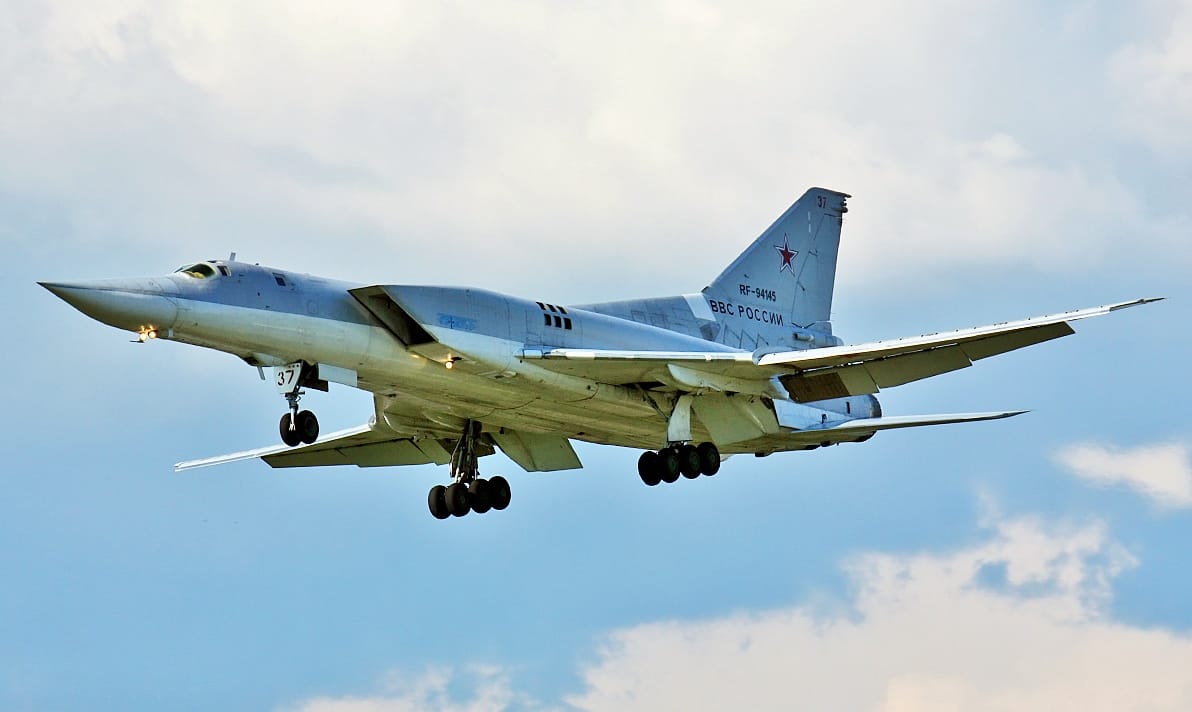
NATO tracked two Tupolev Tu-22M3 Backfire bombers — swing-wing, supersonic, nuclear-capable — as they transited the Baltic accompanied by a rotating escort of approximately ten Sukhoi Su-30 and Su-35 fighters. The Russian formation flew for over four hours across international waters, with transponders off and no flight plan filed.
The response was immediate and multinational. French Rafales launched from their Lithuanian air base. Swedish Gripen fighters scrambled. Finnish, Polish, Danish, and Romanian jets all joined the intercept. Six nations, airborne within minutes, converging on two bombers.
Quick Facts
Russian aircraft: 2× Tu-22M3 Backfire bombers, ~10× Su-30/Su-35 escorts
NATO scramble: France (Rafale), Sweden (Gripen), Finland, Poland, Denmark, Romania
Duration: 4+ hours
Location: International airspace over the Baltic Sea
Russian violations: Transponders off, no flight plan filed
Context: 4 NATO scrambles from April 13–19 alone for Russian flights violating rules
The Backfire Returns
The Tu-22M3 is not a routine patrol aircraft. It is a supersonic, variable-sweep bomber designed during the Cold War specifically to threaten NATO carrier groups and European targets with nuclear or conventional cruise missiles. Seeing two Backfires over the Baltic — escorted by a fighter screen larger than some countries’ entire air forces — is a deliberate demonstration of capability.
Russia’s Defence Ministry confirmed the flight was scheduled and took place over neutral waters. But the details tell a different story. Flying without transponders violates international aviation norms. Operating without a flight plan in one of the most congested air corridors in Europe creates genuine collision risks for civilian traffic. Lithuania’s defence ministry reported that NATO jets had been scrambled four times in the week prior — April 13 to 19 — to intercept Russian aircraft committing the same violations.
Six Nations in the Air
The multinational response demonstrated how NATO’s Baltic air policing mission has evolved from a token presence into a genuine combat-ready force. French Rafales stationed in Lithuania — armed with air-to-air missiles — were the first to intercept. They were joined by Swedish Gripens (Sweden joined NATO in 2024), Finnish F/A-18 Hornets (Finland joined in 2023), and fighters from Poland, Denmark, and Romania.
The sheer breadth of the response is the point. Six nations scrambled within minutes, coordinating across national boundaries and command structures. For Russia, the message is clear: probing the Baltic now draws a response from every direction.
This is a profound change from even five years ago. Before Finland and Sweden joined NATO, the Baltic air policing mission relied primarily on rotating detachments from larger alliance members. Now, the Nordic states contribute their own aircraft from bases adjacent to Russian airspace. The coverage is seamless.
A Pattern, Not an Incident
The April 20 intercept is part of an accelerating pattern. Russian long-range aviation has increased its Baltic presence significantly since the Iran conflict began, testing NATO response times and probing for gaps. Many of the flights route to and from Kaliningrad, Russia’s Baltic exclave, which hosts Iskander missiles, S-400 air defence systems, and naval strike aircraft.
The combination of nuclear-capable bombers, large fighter escorts, and systematic violations of flight rules suggests Moscow is sending a message of its own: we can project power into the heart of NATO’s northern flank whenever we choose.
NATO’s answer, delivered six nations at a time, is equally clear: and we will be waiting.
Sources: Euronews, ABC News, Washington Times, CBS News, Newsweek, Military.com

 English
0 Comments