

It took the internet roughly ten minutes. On 19 May 2026, the National Transportation Safety Board opened its public docket on the crash of UPS Flight 2976 and, among thousands of pages, included a single PDF: a spectrogram, a visual graph of the sound captured by the cockpit voice recorder in the doomed cargo jet's final seconds. A picture of sound. Harmless, surely. The NTSB famously never releases cockpit audio.
It was not harmless. Within minutes, technically minded strangers had fed the image into software that ran the process in reverse, turning the colourful smear of frequencies back into sound. By the next morning, the last words of three dead pilots were playing on X and Reddit. A confidentiality that aviation law has guarded for nearly four decades had been undone not by a leak or a hack, but by a graph the government published on purpose.
The episode, now the subject of furious debate among investigators, pilots and engineers, may be the moment the cockpit voice recorder stopped being private. And the technology that did it is not new. It is older than most of the people who used it.
Quick Facts
- UPS Flight 2976, an MD-11F freighter, crashed seconds after takeoff from Louisville on 4 November 2025; the left engine separated during rotation.
- All 3 crew and 12 people on the ground were killed; more than 20 others were injured.
- The NTSB held a two-day investigative hearing on 19–20 May 2026 in Washington, D.C.
- A spectrogram PDF in the released docket was reverse-engineered into approximate CVR audio within minutes.
- The NTSB then took its entire public docket system offline while it assessed the problem.
- The underlying signal-processing technique dates to a 1984 research paper — AI just made it trivial.
A Picture of Sound, Turned Back Into Sound
A spectrogram is a deceptively simple thing: time runs along one axis, frequency along the other, and brightness shows how loud each frequency is at each instant. Investigators use them constantly, because the eye can spot a mechanical whine or a stall-warning tone in a picture far faster than the ear can find it in a recording. Publishing one looks like publishing a chart, not a tape.
But a spectrogram is built from the audio, and crucially it preserves an enormous amount of the original data. Reverse the maths and you get sound back — not perfectly, but well enough to make out words. The algorithm that does it, the Griffin–Lim method, was described in a research paper in 1984. The Fast Fourier Transform it leans on is older still. None of this is cutting-edge. What changed is that machine-learning tools have made running the process as easy as dragging a file onto a webpage.
One of the first people to grasp the danger was Scott Manley, a Scottish-born scientist and popular science-and-gaming YouTuber. The day the docket dropped, he posted a warning on X — and, by his own admission, lit the fuse.
Some of Manley's followers treated his speculation as a challenge. They reconstructed roughly the last 30 seconds of the flight — the pilots fighting a crippled aircraft — along with audio of NTSB tests on another jet, and posted it. Manley later expressed regret, telling reporters the error was his: idly thinking aloud, in public, about something with serious legal and human consequences.
Why the Cockpit Was Supposed to Stay Private
The wall around cockpit voice recordings is not bureaucratic squeamishness. It was built deliberately, and it has a specific origin. After the 1988 crash of Delta Air Lines Flight 1141, recordings revealed crew chatting casually before takeoff — one even joked that they should keep talking "in case we crash." The public reaction helped cement a principle: pilots must be able to speak with total candour in the cockpit, because that candour saves lives.
Federal law, codified at 49 U.S.C. § 1114, now forbids the NTSB from publicly releasing cockpit voice or video recordings. Transcripts can be released; the raw human voice cannot. The reasoning is threefold: protect the privacy and dignity of crews and their families, preserve the integrity of investigations, and keep crews speaking freely knowing their every word will not be broadcast to the world.
That last point matters most to working pilots. A cockpit is one of the few places where a professional can admit confusion, fear or a mistake in real time. Strip away the confidence that those words stay sealed, and the fear is that crews will start self-censoring — degrading the very recordings that make flying safer for everyone else.
The Crash Behind the Controversy
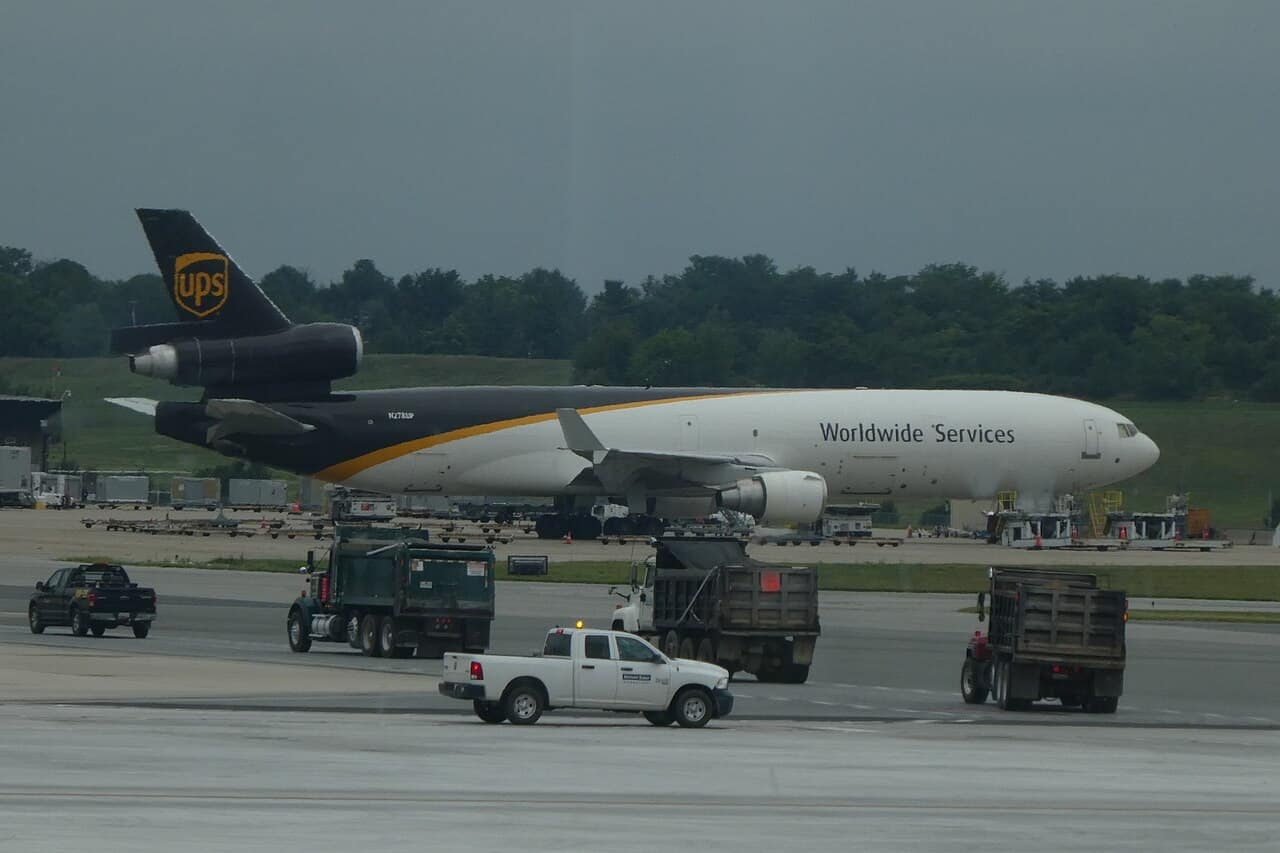
None of this would matter without the tragedy that produced the docket. On the evening of 4 November 2025, UPS Flight 2976 — a three-engined McDonnell Douglas MD-11F freighter — began its takeoff roll from Louisville Muhammad Ali International Airport. Just after rotation, the left engine, with much of its pylon still attached, tore free, flipped back over the wing and ignited. The jet clawed to about 175 feet, then came down in an industrial area off the runway.
All three crew members died. So did twelve people on the ground, with more than twenty others injured. It was one of the deadliest US aviation accidents in years, and it ended the MD-11's career at UPS: the company retired its remaining fleet in January 2026.
At the May hearing, investigators zeroed in on a chillingly mundane culprit: fatigue cracking in the bearings and lugs of the aft engine pylon. Documents showed Boeing had warned operators about similar bearing failures as far back as 2011, after earlier incidents on other aircraft. The aircraft, in other words, may have been telling its keepers about the danger for years.
An Agency Caught Flat-Footed
The NTSB's response was swift and striking. Within days it pulled not just the UPS spectrogram but its entire public docket system offline — the searchable archive of evidence from every investigation — while it worked out the scope of the problem. An agency built on transparency had, in effect, gone dark to protect a principle that transparency had just compromised.
Its public statement was blunt. The board does not release cockpit audio, it said, federal law forbids it, and it takes those privacy restrictions seriously. It also conceded the uncomfortable truth: it was now aware that advances in image recognition and computation let people reconstruct approximations of CVR audio from the sound-spectrum images it had long published without a second thought.
Chair Jennifer Homendy went further on X, urging platforms to take down what she called "disgusting, manipulated posts," and stressing that the reconstructions are approximations, not authentic recordings. The NTSB has been careful to frame the clips as fabrications — AI-shaped guesses at what was said — rather than the real thing. That distinction is legally and ethically important, even if, to a grieving family, it may feel like a thin one.
What It Means for Every Future Investigation
The genie does not go back in the bottle. Every spectrogram the NTSB — and its counterparts worldwide — has ever published remains online somewhere, and the tools to reverse them are now common knowledge. Investigators face a genuine dilemma: spectrograms are valuable public evidence that help explain what went wrong, but each one is now also a partial key to audio the law says must stay sealed.
The likely outcome is a quieter, more guarded era of disclosure: fewer raw spectrograms, more heavily processed or redacted imagery, and a harder line on what counts as "audio." That is a real loss for openness in a system whose credibility rests on showing its work. The same signal-processing maths that helps engineers find a cracked bearing in a graph can now strip the privacy from a dying crew's final exchange.
For a deeper walk through the hearing and the engineering behind the crash, the analysis below from veteran pilot Juan Browne is among the clearest available.
Pilot and aviation analyst Juan Browne (blancolirio) breaks down the NTSB hearing into the UPS MD-11 crash and the engine-pylon failure at its centre.
The lesson is older than the technology. Information you publish on purpose can be transformed into information you never meant to reveal. The cockpit voice recorder was protected by law and by decades of careful practice. It was undone by a chart — and a forty-year-old equation that finally found the right moment to matter.
Sources: CNN, The Register, NPR, FLYING Magazine, WDRB, NTSB statements (via X). Some reconstructed-audio details remain approximate and are described by the NTSB as fabricated, not authentic recordings.
Related Questions
What is a spectrogram?
A spectrogram is a visual graph of sound: time runs along one axis, frequency along the other, and brightness shows how loud each frequency is at each moment. Air-safety investigators use them constantly because the eye can quickly spot features such as a mechanical whine or a stall-warning tone in a recording.
How was cockpit voice recorder audio reconstructed from a spectrogram?
After the NTSB published a spectrogram PDF from a cockpit voice recorder in its public docket, technically minded people fed the image into software that ran the process in reverse, turning the graph of frequencies back into approximate sound within minutes. The underlying signal-processing technique dates to a 1984 research paper; modern AI tools made it trivial.
What was UPS Flight 2976?
UPS Flight 2976 was an MD-11F freighter that crashed seconds after takeoff from Louisville on 4 November 2025, when its left engine separated during rotation. All three crew members and 12 people on the ground were killed, and more than 20 others were injured. The NTSB held a two-day investigative hearing in May 2026.
Why does the NTSB not release cockpit voice recorder audio?
By long-standing US law the NTSB does not release cockpit voice recorder audio, to protect crew privacy and the integrity of investigations — a confidentiality guarded for nearly four decades. The spectrogram episode unintentionally undid that, prompting the NTSB to take its public docket system offline while it assessed the problem. Formal inquiries follow a careful NTSB process.
How do black boxes record a flight?
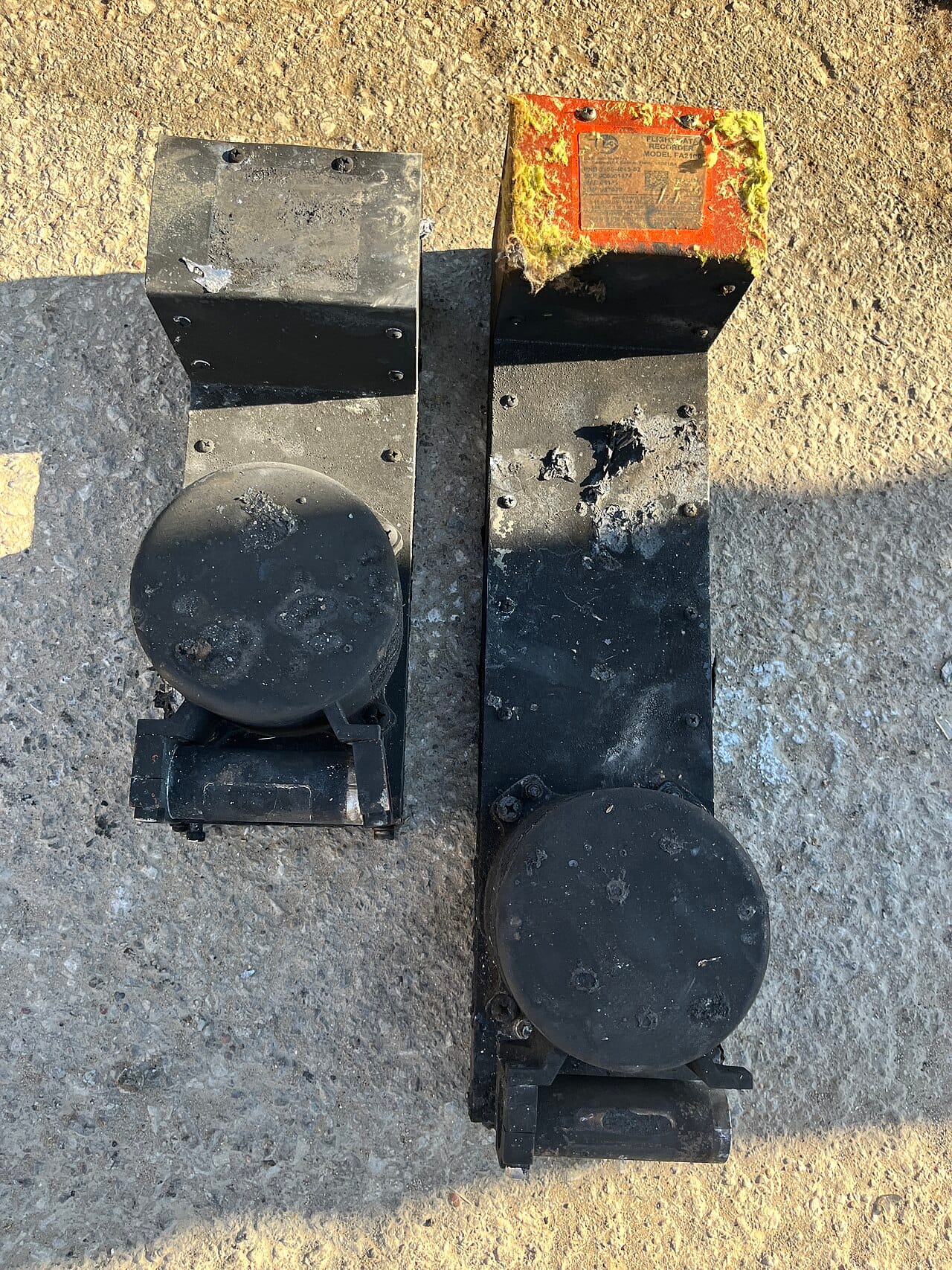
Aircraft carry two protected recorders — a cockpit voice recorder and a flight data recorder, together known as the black boxes — built to survive impact, fire and deep-sea pressure. They capture cockpit audio and hundreds of flight parameters so investigators can reconstruct events. Learn more about how black boxes survive everything.
Related Posts
How the Black Box Actually Works — And Why It Is Orange
New Lawsuits Pile In Over UPS’s Louisville MD-11 Crash
0 Comments