
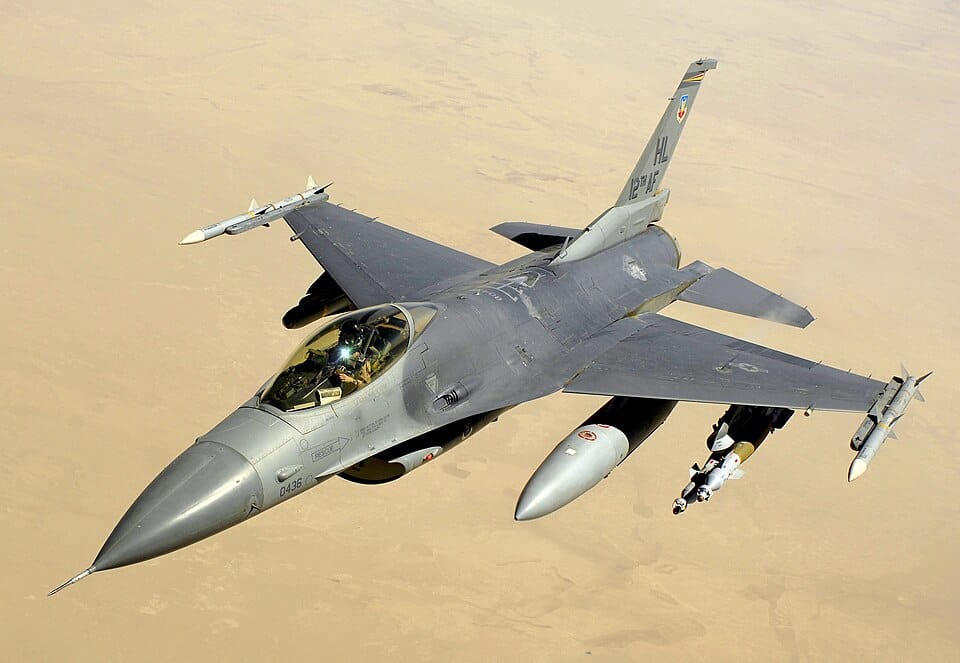
At 3:55 in the afternoon on 7 June 1981, eight Israeli F-16 Fighting Falcons and six F-15 Eagles screamed across the Iraqi border at treetop level. They had been airborne for 90 minutes, flying a route designed to avoid the radar systems of three countries. Their pilots were among the best in the Israeli Air Force — hand-picked for a mission that would change the rules of warfare forever. Their target was a French-built nuclear reactor called Osirak, sitting 17 kilometres southeast of Baghdad. In less than two minutes, it would cease to exist.
Operation Opera remains one of the most audacious, controversial, and consequential military strikes of the twentieth century. Condemned by the United Nations, denounced by allies and enemies alike, and initially criticized even by the United States, the raid established a doctrine of preventive strikes against nuclear facilities that has shaped geopolitics for more than four decades. Every air force in the world has studied it. Every nation pursuing nuclear weapons has feared it.
Quick Facts
- Date: 7 June 1981
- Strike aircraft: 8 F-16A Fighting Falcons
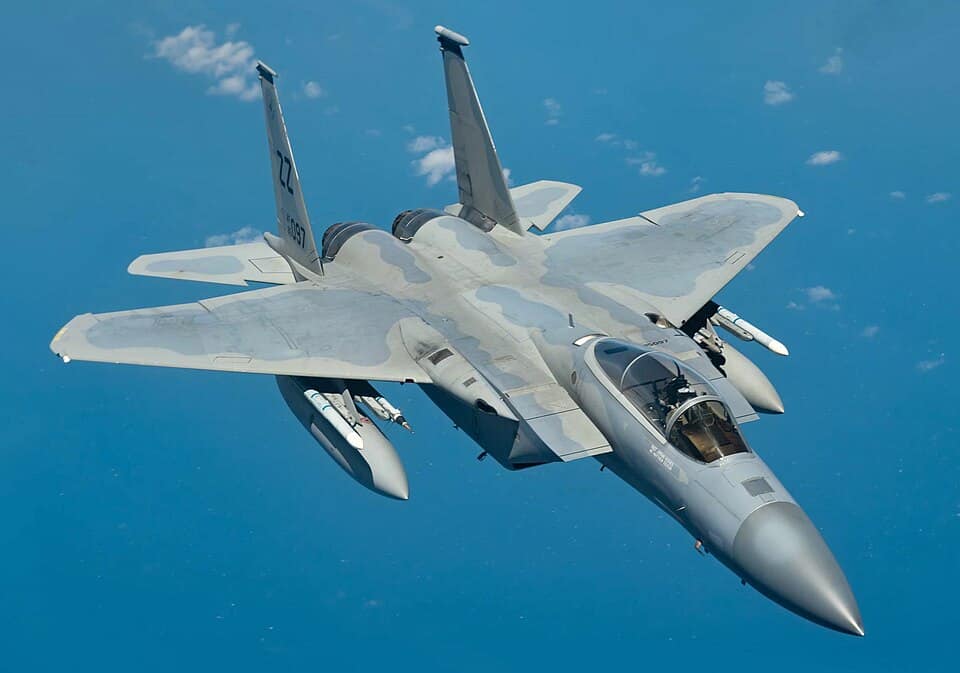
- Escort aircraft: 6 F-15A Eagles
- Target: Osirak (Tammuz-1) nuclear reactor, 17 km SE of Baghdad
- Time over target: Less than 2 minutes
- Ordnance: 16 Mk-84 2,000 lb unguided bombs
- Casualties: 10 Iraqi soldiers, 1 French technician killed
- Israeli losses: None — all 14 aircraft returned safely
- Distance flown: ~1,000 km one way
- Youngest pilot: Ilan Ramon, age 27 — later Israel’s first astronaut
Saddam’s Nuclear Ambition
The story of Operation Opera begins not in Israel, but in France. In 1976, French Prime Minister Jacques Chirac — who personally cultivated a relationship with Saddam Hussein — agreed to sell Iraq a 40-megawatt research reactor and a smaller companion facility. The reactor, christened “Osirak” (a blend of Osiris, the French reactor model, and Iraq), was designated “Tammuz-1” by the Iraqis. Officially, it was for peaceful research. Nobody in Jerusalem believed that.
Israeli intelligence tracked the project obsessively. Mossad conducted a campaign of sabotage and intimidation — reactor components were mysteriously destroyed in a warehouse in the French port of La Seyne-sur-Mer in April 1979, and an Egyptian nuclear scientist working on the project was assassinated in a Paris hotel. But the construction continued. By early 1981, Israeli intelligence estimated the reactor would go critical by July. After that, an airstrike would risk scattering radioactive material across Baghdad — an unacceptable outcome. The window was closing.
The Mission Profile
Planning began in 1979 under the direction of Major General David Ivry, commander of the Israeli Air Force. The operation was one of the most tightly held secrets in Israeli military history — fewer than a dozen people knew the full plan. The pilots selected for the mission trained for months, flying low-level routes over the Negev desert at altitudes below 30 metres.
The attack profile was breathtakingly bold. The F-16s would fly low to avoid radar, threading a corridor between Jordanian, Saudi, and Iraqi air defenses. They would enter Iraqi airspace from the west, climb to altitude over the target, deliver their bombs in a diving attack, then reverse course and race for home. Total time over hostile territory: roughly 80 minutes. Total time over the target: under 120 seconds.
Each of the eight F-16s carried two unguided Mk-84 bombs, each weighing 2,000 pounds. The F-15 escorts carried air-to-air missiles but no bombs — their job was to protect the strike force from Iraqi fighters that never appeared. The entire formation flew in radio silence.
Two Minutes That Changed History
The strike itself was textbook. The F-16s popped up to altitude, rolled into their attack dives, and released their bombs with devastating precision. Of the 16 bombs dropped, at least 14 struck the reactor dome. The 70-million-dollar facility was reduced to rubble. Ten Iraqi soldiers and one French technician, Damien Chaussepied, were killed. No Israeli aircraft was lost. No Israeli pilot was injured. The entire formation was back in Israeli airspace before Iraqi air defenses could mount a coherent response.
The youngest pilot on the mission was 27-year-old Ilan Ramon. Twenty-two years later, he would die aboard the Space Shuttle Columbia, becoming both Israel’s first astronaut and its first astronaut casualty. But on that Sunday afternoon over Baghdad, he was simply a young fighter pilot doing something no one had ever done before — destroying a nuclear reactor from the air.

The World Reacts
The international response was immediate and almost uniformly hostile. The United Nations Security Council unanimously adopted Resolution 487, condemning the attack as a violation of international law. France was furious — its technicians had been working at the site. The Reagan administration, which had only been in office five months, publicly condemned the strike while privately acknowledging its strategic logic.
But Prime Minister Begin was unrepentant. In a press conference that same evening, he announced what became known as the “Begin Doctrine”: Israel would not allow any hostile nation in the region to develop weapons of mass destruction. It was a promise, not a threat — and it would be invoked again and again in the decades that followed.
Legacy: The Raid That Keeps Echoing
The debate over Operation Opera has never really ended. Critics argue that the strike actually accelerated Iraq’s clandestine nuclear program — that Saddam Hussein, humiliated, simply moved his weapons research underground and pursued it with renewed determination. The Iraq Survey Group’s 2004 Duelfer Report lent credence to this view, noting that the Osirak bombing “spurred” Iraqi efforts to develop nuclear weapons through covert means.
Supporters counter that the raid delayed Iraq’s nuclear program by years — possibly decades — and that without Osirak, Saddam would never have been able to develop a weapon before the 1991 Gulf War. If he had possessed even a crude nuclear device during Operation Desert Storm, the entire calculus of that conflict would have been different.
What is beyond dispute is that Operation Opera created a template. When Israel struck Syria’s suspected Al-Kibar nuclear facility in Operation Outside the Box in 2007, the playbook was Opera’s. And the raid’s long shadow continues to influence the calculations of every nation in the region pursuing — or opposing — nuclear capability.
Forty-four years after eight F-16s dove on a reactor dome southeast of Baghdad, Operation Opera remains the definitive case study in preventive military strikes. Whether it was wisdom or recklessness — heroism or hubris — depends entirely on where you stand. What it was, indisputably, was one of the most precisely executed aerial operations in military history.
Sources: “Raid on the Sun” by Rodger W. Claire (2004); Israel Defense Forces archives; UNSC Resolution 487 (1981); Iraq Survey Group, Duelfer Report (2004); Times of Israel, pilot interviews (2019).


 English
0 Comments