
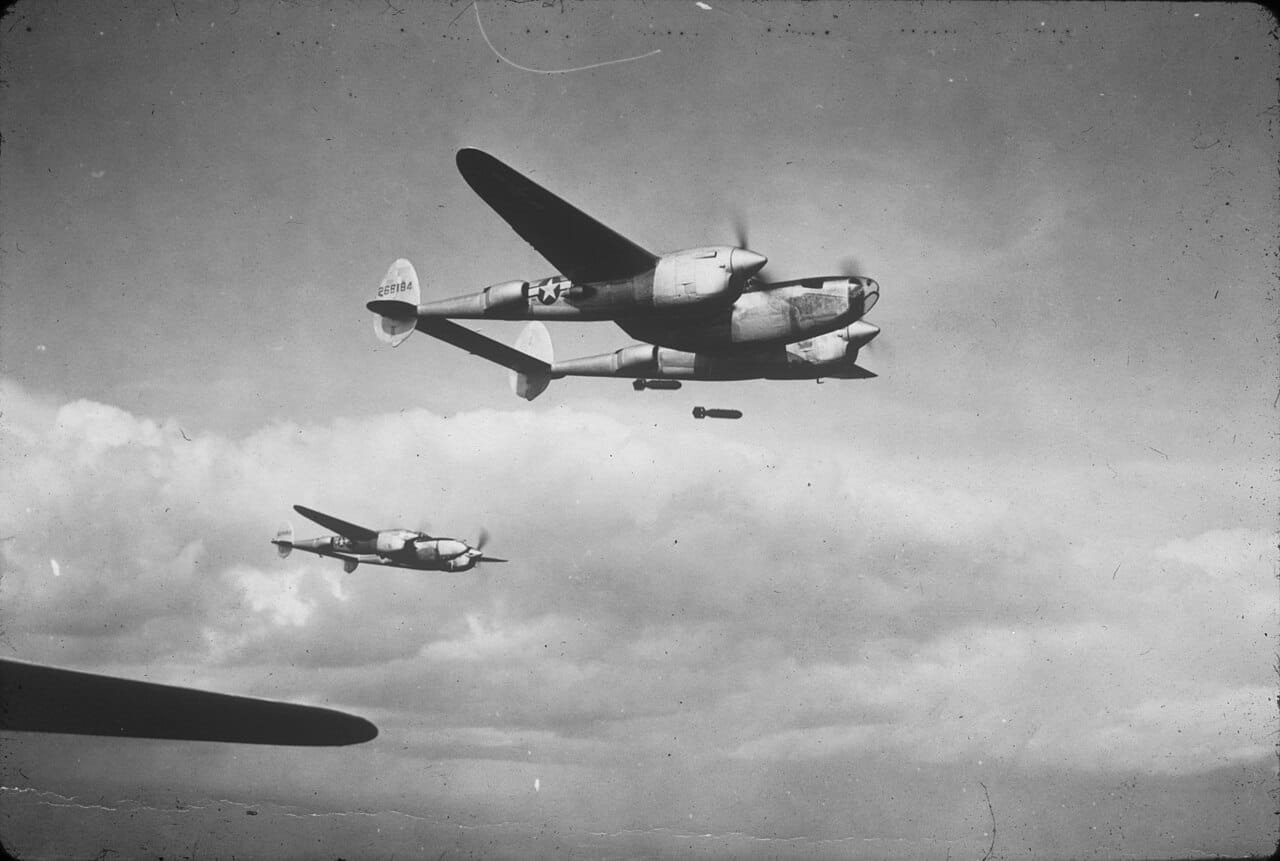
On the morning of April 18, 1943, sixteen P-38 Lightning fighters took off from Fighter Two airstrip on Guadalcanal and turned west over the Solomon Sea. Their mission was not to engage enemy formations or escort bombers. It was to kill one man: Admiral Isoroku Yamamoto, commander-in-chief of the Imperial Japanese Navy and the architect of the attack on Pearl Harbor.
What followed was the longest-range fighter intercept of the Second World War — a 600-mile outbound flight at wave-top altitude, timed to the minute, against a target whose schedule had been plucked from encrypted Japanese radio traffic. It remains one of the most precisely planned aerial assassinations in military history.
The Intercept That Should Not Have Been Possible
Four days earlier, on April 14, American listening stations had intercepted a coded Japanese naval message from Rabaul. Marine Major Alva B. "Red" Lasswell, one of the Navy's best cryptanalyst-linguists at the Fleet Radio Unit Pacific, worked through the night to crack the JN-25D cipher. By morning he had a complete translation: Admiral Yamamoto would fly from Rabaul to Ballale, near Bougainville, on April 18, arriving at 0945 Guadalcanal time. The message specified his aircraft type (a Mitsubishi G4M "Betty" bomber), escort strength (six Zeros), and exact departure and arrival times.
The intelligence went up the chain fast. Who gave the final go-ahead in Washington — Secretary of the Navy Frank Knox, or President Roosevelt himself — has never been documented, but the decision from Admiral Nimitz’s chain of command came back: get him. But the execution was staggeringly difficult. Bougainville was roughly 400 miles from Guadalcanal in a straight line — but a straight-line approach would take the fighters over Japanese-held islands with coast-watchers and radar. To avoid detection, Major John Mitchell of the 339th Fighter Squadron plotted a dogleg route south and west over open ocean, adding nearly 200 miles to the outbound leg.
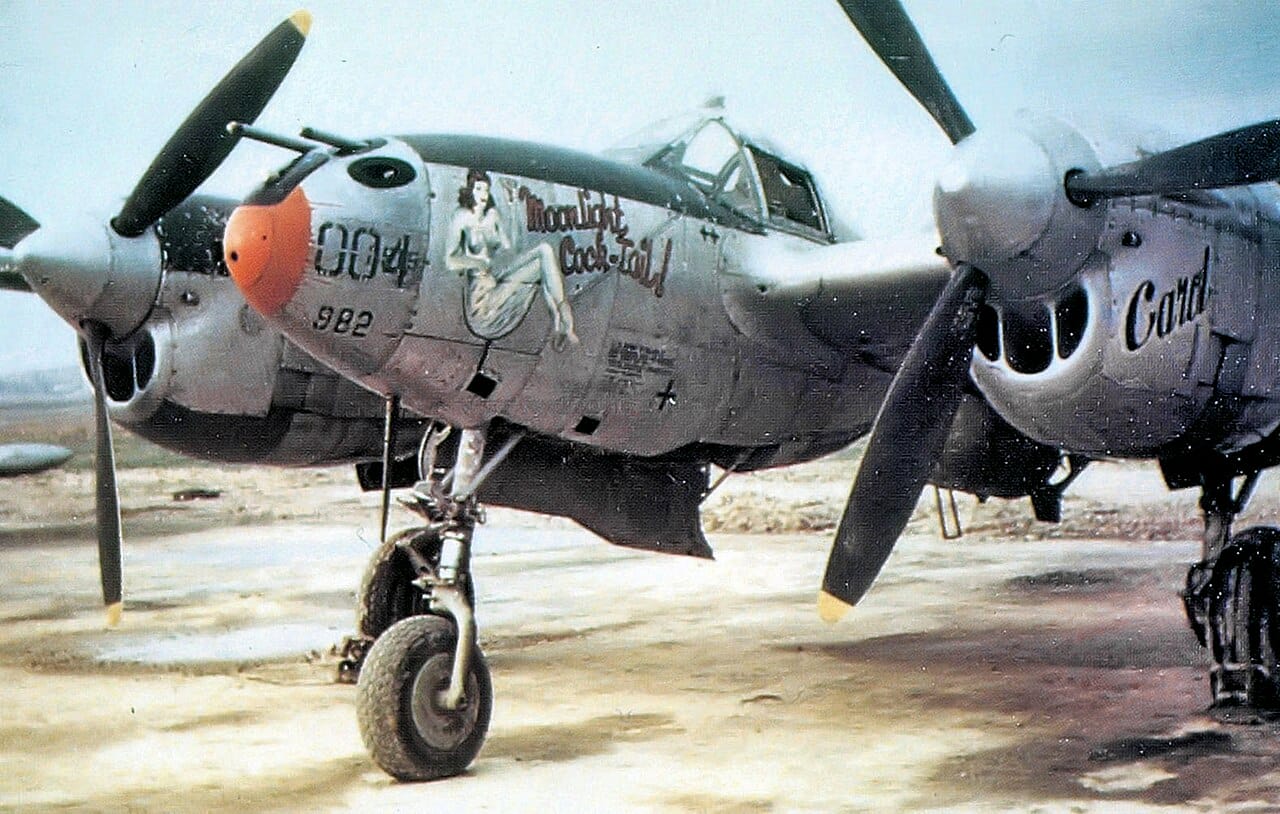
The Only Fighter That Could Reach
No Navy or Marine Corps fighter in the Pacific had the range. The mission fell to the P-38G Lightning — the only American fighter that, fitted with an oversized 330-gallon drop tank under one wing and a standard 165-gallon tank under the other, could fly 600 miles out, fight, and fly 400 miles back. Even then, the fuel margins were razor-thin. Mitchell calculated that his pilots would have roughly ten minutes of combat fuel over the target before they had to break off or ditch in the sea. Every leg of the flight was computed down to compass heading, airspeed, and time-on-heading. One pilot's engines sputtered to a stop from fuel exhaustion as he taxied off the runway after landing back at Guadalcanal.
Eighteen P-38s — including two spares — took off. One blew a tyre on the runway and another aborted when its drop tanks refused to feed fuel; the spares took their places, leaving sixteen to fly the mission. Mitchell divided them into a four-ship "killer" flight led by Captain Thomas Lanphier Jr. and Lieutenant Rex Barber, with the remaining twelve flying top cover at 18,000 feet.
Two Minutes Over Bougainville
After more than two hours of radio-silent flight at 50 feet above the waves — low enough to avoid radar, low enough to taste salt spray — the formation reached the western coast of Bougainville almost exactly on schedule. At 0934, roughly ten minutes before Yamamoto's planned landing, a pilot in the top cover spotted the Japanese formation descending toward Ballale: two Betty bombers in a shallow dive, escorted by six Zeros.
Lanphier and Barber jettisoned their drop tanks and climbed to intercept. The engagement lasted barely two minutes. Barber closed on the lead Betty from behind and below, pouring .50-calibre and 20mm cannon fire into the right engine and fuselage. The bomber began trailing black smoke, then dove into the jungle canopy northwest of the Buin coastline. Yamamoto was found the next day by a Japanese search party, still strapped in his seat, thrown clear of the wreckage. The post-mortem recorded two .50-calibre wounds — one to the back of his left shoulder, and a fatal round that entered his lower left jaw and exited above his right eye.
The Controversy That Lasted Decades
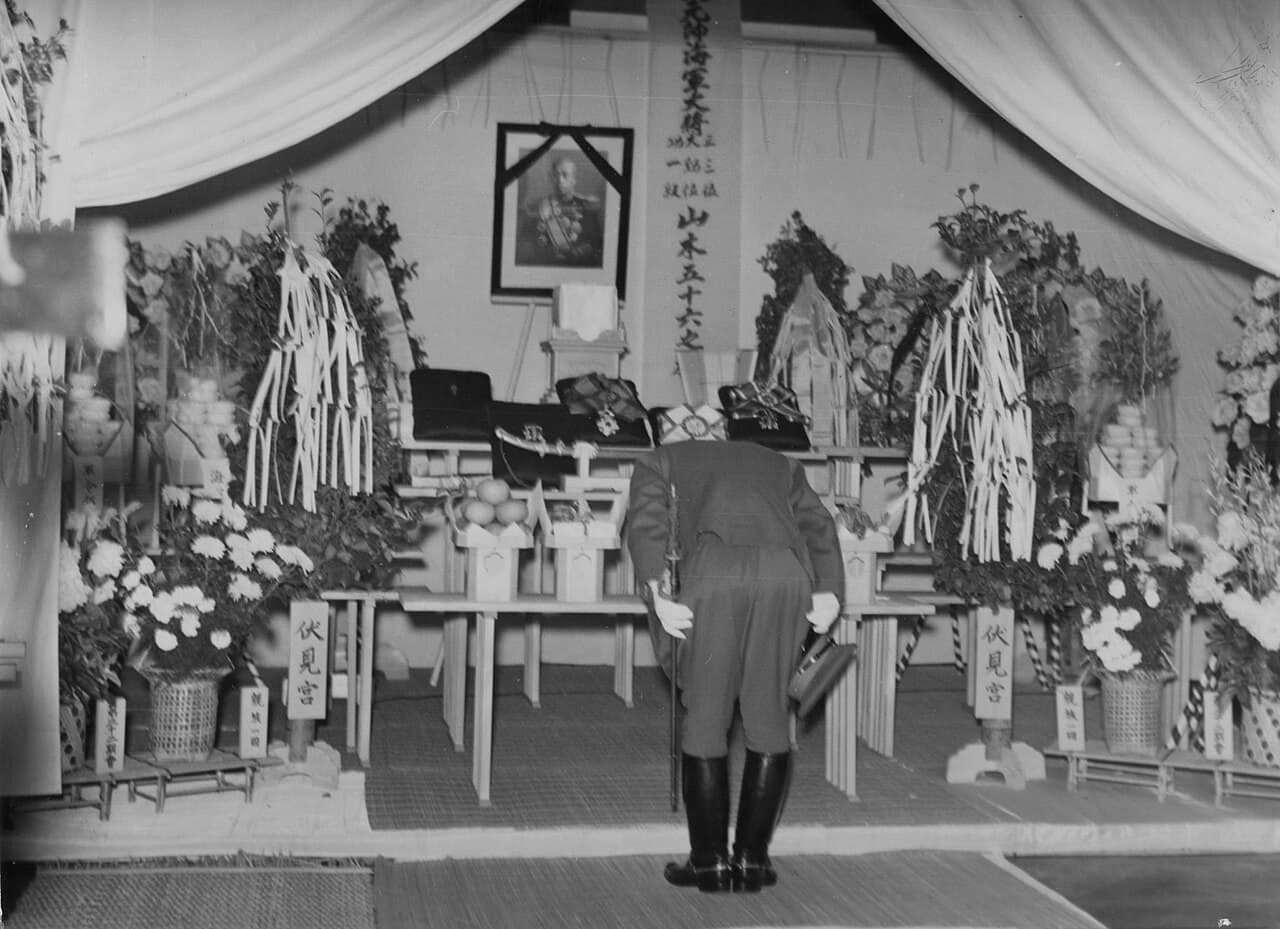
Who actually shot down Yamamoto's plane — Lanphier or Barber — became one of the war's most bitter pilot disputes. Lanphier publicly claimed the kill; Barber disputed it. The Air Force eventually credited both with half a kill each, satisfying nobody. Modern analysis of the wreckage site, bullet trajectories, and Japanese eyewitness accounts generally favours Barber's account, but the argument has never been definitively settled.
Why It Mattered
Yamamoto was irreplaceable. He was Japan's most capable strategic thinker, the only senior admiral who truly understood American industrial capacity, and the one man in the Imperial Navy who might have advocated for a negotiated settlement before Japan's position became hopeless. His successor, Admiral Mineichi Koga, lacked Yamamoto's vision and strategic imagination. Whether killing Yamamoto shortened the war is debatable. That it deprived Japan of its best mind at the worst possible moment is not.
Operation Vengeance also demonstrated something new: that signals intelligence, long-range aviation, and surgical planning could combine to eliminate a single high-value target thousands of miles from friendly territory. It was, in many ways, the first modern targeted killing — a concept that would define warfare for the next eighty years.
Related Questions
What was Operation Vengeance?
Operation Vengeance was the US mission on 18 April 1943 to kill Admiral Isoroku Yamamoto, commander-in-chief of the Imperial Japanese Navy and architect of the Pearl Harbor attack. Sixteen P-38 Lightning fighters flew about 600 miles at wave-top height from Guadalcanal to ambush his aircraft over Bougainville. It remains one of history's most precisely planned aerial interceptions.
How was Admiral Yamamoto's flight discovered?
American codebreakers made it possible. On 14 April 1943, listening stations intercepted an encrypted Japanese message, and cryptanalyst Alva 'Red' Lasswell cracked the JN-25D cipher overnight. The decoded message gave Yamamoto's aircraft type, escort strength, and exact departure and arrival times for 18 April, allowing US fighters to plan an interception to the minute.
Why was the P-38 Lightning chosen for the Yamamoto mission?
The P-38 Lightning was the only American fighter with the range for the mission. Fitted with an oversized 330-gallon drop tank under one wing, it could fly 600 miles out, fight, and return 400 miles, far beyond any Navy or Marine fighter in the Pacific. The twin-engine P-38 also produced the war's top US ace, Richard Bong.
Who was Isoroku Yamamoto?
Isoroku Yamamoto was commander-in-chief of the Imperial Japanese Navy and the strategist behind the 1941 attack on Pearl Harbor. By 1943 he was the most important military figure in Japan, which is why US commanders authorised a mission to kill him after his travel schedule was decoded from intercepted radio traffic.
How far did the P-38s fly to intercept Yamamoto?
The P-38s flew roughly 600 miles from Guadalcanal to the intercept point near Bougainville, taking a long dog-leg route over open sea to avoid Japanese coast-watchers and radar. Fuel margins were razor-thin, giving pilots only about ten minutes of combat fuel over the target. One aircraft's engines quit from fuel exhaustion just as it taxied in after landing.
When did Operation Vengeance take place?
Operation Vengeance took place on the morning of 18 April 1943. Sixteen P-38 Lightnings intercepted and shot down Yamamoto's Mitsubishi G4M 'Betty' bomber over Bougainville in the Solomon Islands. The same Pacific air war made legends of aircraft like the P-40 Warhawk and the Flying Tigers.
0 Comments