
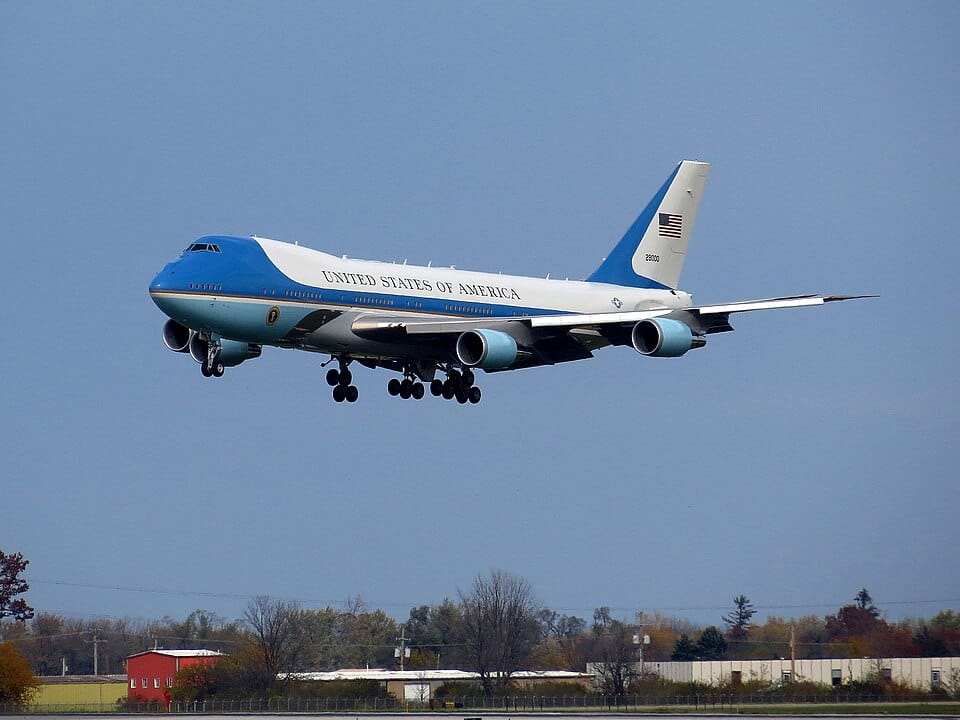
Quick Facts
- Aircraft: VC-25B Bridge — Boeing 747-8i platform
- Origin: Former Qatari VIP aircraft, gifted to the U.S.
- Modified by: L3Harris Technologies, Waco, Texas
- Status: Modifications and flight testing complete; now in paint
- Delivery: Summer 2026
- Current fleet: VC-25A (747-200 based) — in service since 1990
- Permanent replacements: Two Boeing VC-25Bs — delayed to 2028
The Bridge Solution
The permanent Air Force One replacements — two purpose-built Boeing 747-8s — have been stuck in a procurement nightmare for years. Cost overruns, schedule slips, and contractor difficulties pushed their delivery from the original mid-2020s target to at least 2028. Meanwhile, the current VC-25As are 1990-vintage 747-200s that grow more expensive to maintain with each passing year. The bridge jet solves the gap. When Qatar offered its VIP 747-8i to the United States (the circumstances of that diplomatic transaction remain somewhat opaque), the Air Force saw an opportunity to field a modern presidential aircraft years ahead of the permanent replacements. L3Harris was contracted to install the necessary modifications — hardened communications, defensive countermeasures, in-flight refuelling capability, and the executive interior.New Livery, New Era
The aircraft is now being painted in a livery that differs from the iconic Kennedy-era baby blue of the current Air Force One. Reports indicate a red, white, gold, and blue scheme — a design that was controversial when first proposed by the Trump administration during his first term but now appears to be moving forward. The paint scheme is more than cosmetic. The specific coatings used on presidential aircraft are engineered for radar absorption, thermal signature management, and durability at extreme altitudes and speeds. Getting the paint right is itself a months-long process.What Makes It Air Force One
Any Air Force aircraft carrying the President receives the call sign “Air Force One.” But the VC-25 series carries capabilities that make it a flying command post capable of surviving and operating through global crises — including nuclear war. The modifications that transform a commercial 747 into a presidential aircraft include: secure communications that can reach any point on Earth, an aerial refuelling receptacle for unlimited range, electronic countermeasures against missiles, shielding against electromagnetic pulse, and a medical suite capable of emergency surgery. The exact specifications are classified, but the bridge jet is believed to carry a subset of these capabilities sufficient for routine presidential travel.The Permanent Replacement Problem
The two permanent VC-25B aircraft remain on track for 2028 delivery — though that timeline has slipped repeatedly and could shift again. Boeing’s programme has been plagued by supply chain issues, labour disputes, and the inherent complexity of integrating classified military systems into a commercial airframe. When the bridge jet arrives this summer, it will allow the Air Force to retire at least one of the aging VC-25As while maintaining presidential airlift capability. The 36-year wait for new presidential transport will finally be over — even if the final solution takes two more years to arrive.Sources: The War Zone, The Aviationist, Air Force Times, Military Times, Defense News
Related Posts
 English
0 Comments