
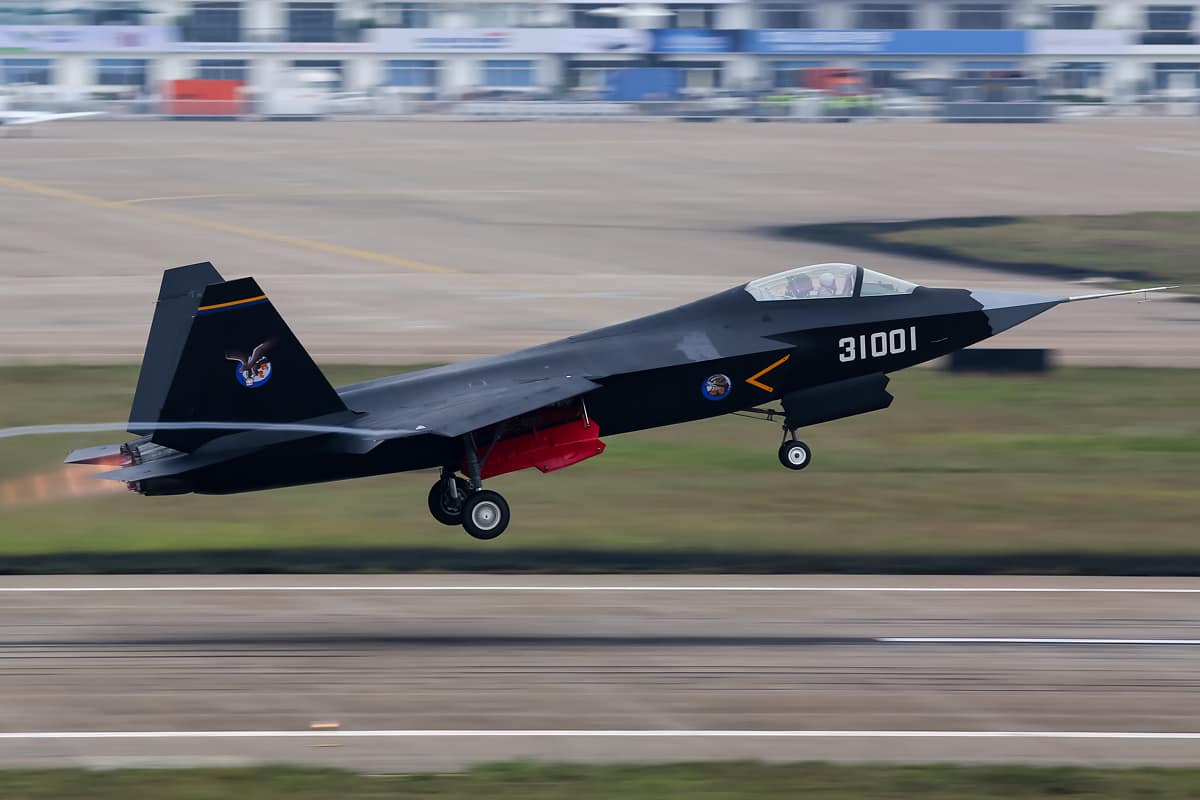
Pakistan is on course to fly something no air force outside China has ever operated: a Chinese stealth fighter. The Pakistan Air Force has moved to acquire the Shenyang J-35 — reportedly up to 40 jets — in what would be the first export sale of a Chinese fifth-generation stealth aircraft in history.
If it happens as reported, it does two things at once. It hands Pakistan a stealth capability its neighbour India does not yet have, and it hands China its debut as an exporter of stealth fighters — a milestone Beijing has been chasing for years.
| Buyer | Pakistan Air Force |
| Aircraft | Shenyang J-35 (export J-35A / “J-35E”) |
| Reported quantity | Up to 40 jets |
| Wider package | Reportedly with KJ-500 radar planes & HQ-19 air defence |
| Significance | First-ever export of a Chinese stealth fighter |
What is on the table
Islamabad has signalled an initial agreement to buy the J-35, the export sibling of the naval stealth fighter China has been putting to sea. Reports describe a broader Chinese package built around roughly 40 fighters, bundled with KJ-500 airborne early-warning aircraft and HQ-19 surface-to-air missile systems — in effect, an off-the-shelf, networked air-defence bubble rather than just a jet.
A word of caution is warranted: much of the detail remains “reportedly.” Neither Beijing nor Islamabad has laid out a signed, itemised contract in public, and delivery dates have moved around in the reporting, from late 2026 to as early as the middle of this year. What is consistent across the coverage is the direction of travel — and it points firmly toward China.
From the F-16 to the J-35
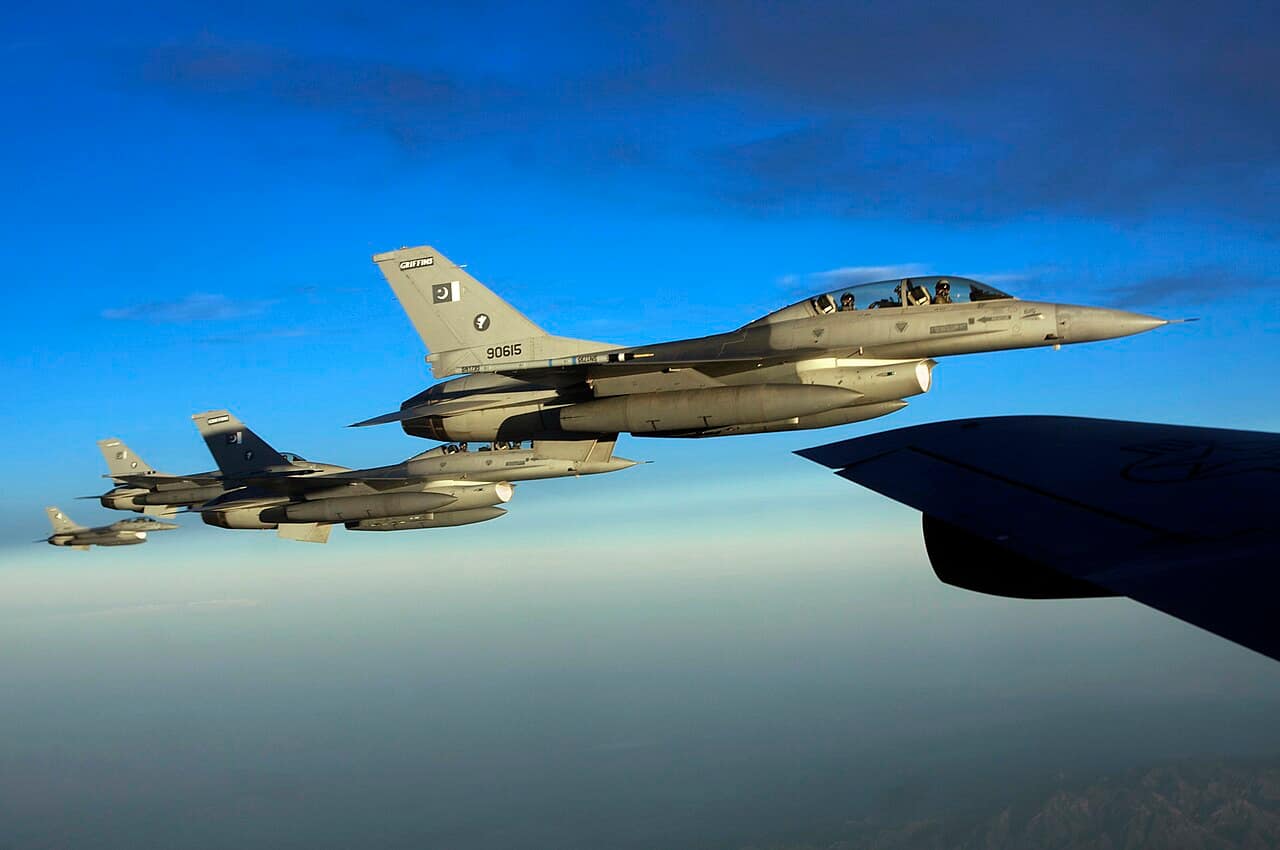
To understand why this matters, look at what Pakistan flies today. For decades the backbone of the PAF was the American F-16 — a capable jet, but one that came with strings attached. Repeated US arms restrictions left Pakistan wary of depending on Washington, and it turned to Beijing, co-developing the JF-17 Thunder and steadily filling its ranks with Chinese hardware.
The J-35 would complete that pivot. It would give Pakistan a genuine stealth fighter without a single Western component or export licence to worry about — and it would make the PAF the clearest showcase yet of a fully Chinese-armed modern air force.
The view from New Delhi
The strategic ripple lands hardest in India. Analysts note that India fields a large fleet of highly capable 4.5-generation fighters — French Rafales, Russian Su-30s — but has no stealth fighter in service and its home-grown fifth-generation programme is still years from the flight line. A Pakistani squadron of J-35s, however small at first, would hand Islamabad a stealth edge its far larger rival cannot immediately match.
For China, meanwhile, Pakistan is the perfect first customer: a close partner, an experienced operator, and a live demonstration of whether Chinese stealth can perform in someone else’s hands. Whenever that first J-35 touches down on a Pakistani runway, it will mark two firsts at once — and plenty of nervous attention from New Delhi to Washington.
Sources: South China Morning Post; The Defense Post; Defence Security Asia; Newsweek.
Related Questions
Is Pakistan buying Chinese stealth fighters?
Reportedly yes. The Pakistan Air Force has moved to acquire the Shenyang J-35, with reports citing up to 40 jets. If completed as described, it would be the first-ever export sale of a Chinese fifth-generation stealth fighter, handing Pakistan a stealth capability its neighbour India does not yet field.
What is the Shenyang J-35?
The Shenyang J-35 is a Chinese fifth-generation stealth fighter, developed from a naval design China has been putting to sea. Its export variants are referred to as the J-35A or J-35E. A sale to Pakistan would mark China's debut as an exporter of stealth aircraft, a milestone Beijing has pursued for years.
Why is the Pakistan J-35 deal significant?
The reported deal matters on two fronts. It would give Pakistan a genuine stealth fighter without any Western components or export licences, completing its pivot toward Chinese hardware. And it would make China a stealth-fighter exporter for the first time, an expansion of China's growing fighter-export business.
How many J-35s is Pakistan buying?
Reports describe Pakistan acquiring up to 40 J-35 jets, reportedly as part of a broader Chinese package that also includes KJ-500 airborne early-warning radar planes and HQ-19 air-defence systems. The exact numbers and timing remain unconfirmed, but the scale suggests a substantial reshaping of the Pakistan Air Force's front line.
Why did Pakistan turn away from American fighters?
For decades the Pakistan Air Force relied on the American F-16, but repeated U.S. arms restrictions left Islamabad wary of depending on Washington. Pakistan steadily turned to Beijing, co-developing the JF-17 Thunder and filling its ranks with Chinese equipment. The J-35 would complete that shift to a fully Chinese-armed modern air force.
Does India have a stealth fighter?
As of 2026, India fields a large fleet of highly capable 4.5-generation fighters, including French Rafales and Russian Su-30s, but has no stealth fighter in service, and its home-grown fifth-generation programme is still in development. A Pakistani J-35 buy would hand Islamabad a stealth capability its larger rival does not yet possess.
What is the JF-17 Thunder?
The JF-17 Thunder is a lightweight multirole fighter jointly developed by Pakistan and China. It became a backbone of the Pakistan Air Force as Islamabad moved away from Western hardware, and represents an earlier stage of the deepening defence relationship that the reported J-35 stealth-fighter deal would take much further.
0 Comments