
Related: Mystery in the Sky: RQ-180 Stealth Drone Photographed Over Greece
Nickname "Lady of Larissa" (informal, from spotting community)
Sighting Date April 6, 2026 — second confirmed sighting at Larissa
Location Larissa Air Base, Greece (Hellenic Air Force)
Believed Role High-altitude ISR (intelligence, surveillance, reconnaissance) over Iran
Classification Programme remains officially unacknowledged by the USAF
Previous Sighting March 2026 — first clear photographs of the aircraft in flight
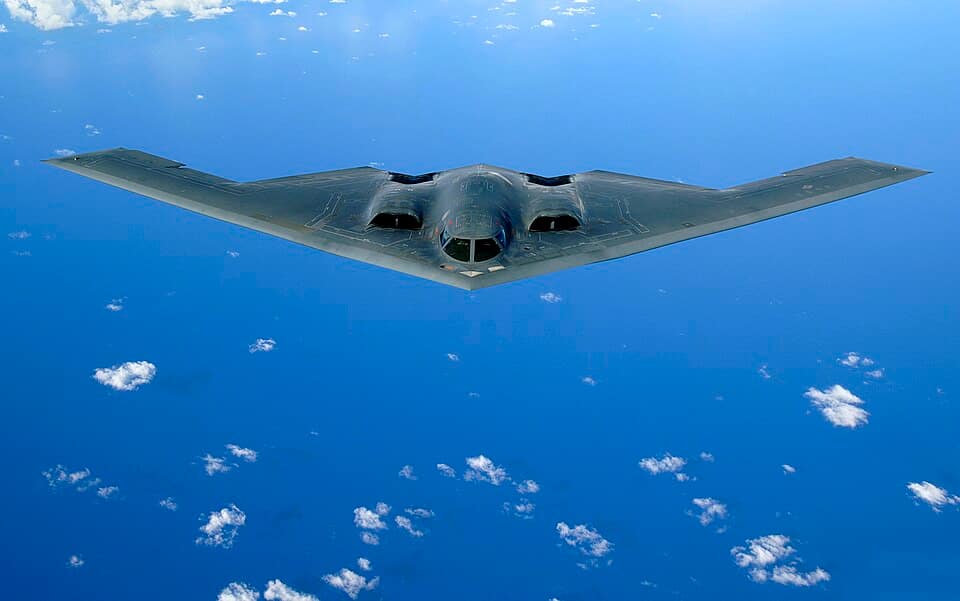
She appeared over Larissa again on April 6 — the same Greek air base, the same flying-wing silhouette, but this time captured on video with sharper detail than ever before. The footage, shot by aviation photographer Efthymios Siakaras, shows a large, swept-wing drone gliding over the base in broad daylight. Within hours, the spotting community had a consensus: it was the RQ-180, America's most secret operational aircraft, making its second confirmed appearance in three weeks.
The U.S. Air Force has never officially acknowledged the RQ-180 exists. But the aircraft — nicknamed the "Lady of Larissa" after its first sighting at the Greek base in March — is now the worst-kept secret in American military aviation. And the fact that it keeps appearing in daylight over a foreign ally's airfield suggests something unexpected is happening.
Analysts believe the daylight appearances are not deliberate. The first sighting in March was attributed to a possible in-flight emergency that forced the drone to divert to Larissa. This second appearance follows the same pattern — a classified asset that was never supposed to be seen, caught out by circumstances beyond the mission profile.
What We Know About the RQ-180
Almost everything about the RQ-180 is classified. What is known comes from budget documents, patent filings, and the kind of informed speculation that fills the gap when the Pentagon stays silent. The aircraft is believed to be built by Northrop Grumman — the company behind the B-2 Spirit and B-21 Raider — and designed for high-altitude intelligence, surveillance, and reconnaissance in contested airspace.
Its flying-wing shape is optimised for low radar observability, and it is widely assumed to carry advanced signals intelligence and synthetic aperture radar payloads. Unlike the smaller RQ-170 Sentinel that was famously captured by Iran in 2011, the RQ-180 is believed to be large enough to operate at extreme altitudes and ranges — potentially loitering over denied territory for extended periods.
The choice of Larissa as a forward operating location makes geographic sense. The Greek base puts the RQ-180 within range of Iran while keeping it on NATO soil. C-17 transport flights from Edwards Air Force Base to Larissa — tracked by flight watchers — have long hinted at a classified programme operating from the base.

Operational in a War Zone
The timing of these sightings is not coincidental. Operation Epic Fury — the U.S. air campaign against Iran — has been running since late February, and the demand for intelligence over Iranian territory is immense. Iran's air defences have already proven they can shoot down manned aircraft. A stealth drone that can fly above those defences, undetected, collecting signals and imagery, is exactly the asset a campaign like this demands.
The RQ-180 was reportedly developed specifically for this scenario — deep penetration of sophisticated air defence networks that would be too dangerous for manned platforms or older drones. If it is indeed operating over Iran, it represents the first known wartime use of the aircraft.
For the spotting community, these sightings have been electrifying — the aviation equivalent of photographing Bigfoot, except Bigfoot turned out to be real and keeps coming back. For the Pentagon, each daylight appearance is a headache: more footage, more analysis, more public confirmation of a programme that officially does not exist.
The Lady of Larissa, it seems, is not camera-shy. And as long as operations over Iran continue, she will likely keep appearing over her Greek home — whether the Air Force likes it or not.
Sources: The Aviationist, The War Zone, Defence Express, Army Recognition
Related Questions
What is the RQ-180?
The RQ-180 is a large, classified stealth reconnaissance drone built by Northrop Grumman, believed to perform high-altitude intelligence, surveillance and reconnaissance for the US. Its existence has never been officially acknowledged by the Air Force, and most of what is known comes from rare sightings, as in the case of the flying-wing drone photographed over Greece.
Who makes the RQ-180?
The RQ-180 is widely attributed to Northrop Grumman, the same company behind the B-2 and B-21 stealth bombers. Its flying-wing shape is consistent with Northrop's long expertise in low-observable, tailless designs, although the programme remains officially secret.
What is the RQ-180 used for?
The RQ-180 is believed to conduct high-altitude intelligence, surveillance and reconnaissance, gathering imagery and electronic intelligence deep inside or near contested airspace. Its stealth shaping suggests it is meant to operate where non-stealthy spy planes and drones would be too vulnerable.
Has the US Air Force confirmed the RQ-180 exists?
No. The RQ-180 programme remains officially unacknowledged by the US Air Force. Its presumed designation, role and even its appearance are pieced together from occasional photographs and the analysis of aviation spotters, rather than from any official confirmation.
What other high-altitude reconnaissance aircraft does the US operate?
Alongside secret drones like the RQ-180, the US has long relied on crewed high-altitude spy planes, most famously the U-2 Dragon Lady, which keeps earning new reprieves despite its age. Satellites and other unmanned systems round out a layered reconnaissance network.
0 Comments