
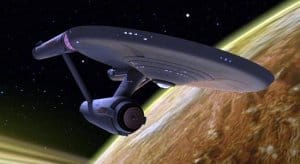
For nearly fifty years it sat in someone's storage closet — a small, wooden, surprisingly fragile model of an interstellar starship. This week, the Roddenberry Archive gave the public its first detailed look at the original 33-inch prototype of the USS Enterprise NCC-1701 from the original 1965 Star Trek pilot — the model that resurfaced in 2024 after decades missing and has since been authenticated by experts working with the Roddenberry family. The first physical sketch of a ship that would change television, aerospace recruiting, and the popular imagination of flight is back in the public record.
Quick Facts
Object: The first Enterprise NCC-1701 study model
Built: 1964 at Desilu Productions for the Star Trek pilot
Material: Wood, with hand-painted plastic detail parts
Length: 33 inches (about 84 cm) — the smaller of the two original Enterprise models
Missing since: late 1970s; resurfaced 2024 and returned to the Roddenberry family
Why a Wooden Model From 1964 Belongs in an Aviation Story
Gene Roddenberry's Enterprise was many things, but its lineage was unmistakably aeronautical. The original concept art shows a series of progressively more aerodynamic shapes drawn by series designer Matt Jefferies — an aviation enthusiast and former WWII Army Air Corps mechanic. Jefferies' brief from Roddenberry was clear: no fins, no wings, no rocket exhaust. Make it look like nothing the audience had ever seen, but make it believable.
Jefferies drew literally hundreds of variations. The final Enterprise silhouette was carved out of wood for Desilu Productions by professional model maker Richard Datin, then refined into the famous eleven-foot studio miniature that survives in the Smithsonian.
The 33-inch study model was the first physical sketch of the design. It sat on Roddenberry's desk during pitches to NBC and disappeared in the late 1970s, after being loaned out around the production of Star Trek: The Motion Picture.
The Recovery
The story of how the model resurfaced is unusual. The model was found in a storage unit and appeared in an eBay listing in late 2023. Fans flagged its significance, the seller withdrew the listing and brought the model to Heritage Auctions, and experts — including Gary Kerr, who worked on the Smithsonian restoration of the eleven-foot Enterprise — authenticated it. In April 2024 it was returned to Gene Roddenberry’s son, Rod.
The model is now being restored and digitally scanned, and Rod Roddenberry says he is working to determine which museum will eventually receive it for permanent public display.
The first Space Shuttle orbiter, OV-101, was named Enterprise after a write-in campaign by Star Trek fans — the fictional ship had already become so real in the public imagination that the name ended up on an actual spacecraft.
The Aviation Legacy
Star Trek's influence on real aerospace has been documented for decades. NASA's first orbiter was named Enterprise. Generations of engineers — from Apollo systems designers to current SpaceX and Blue Origin staff — have cited the show as a formative influence.
That a 33-inch piece of wood started all of it is the kind of detail that turns aviation history into something stranger and more wonderful than fiction.
Sources: FLYING Magazine, Roddenberry Estate statement.
Related Questions
What was the original Star Trek Enterprise filming model made of?
The first USS Enterprise NCC-1701 study model was carved from wood with hand-painted plastic detail parts. Built in 1964 at Desilu Productions for the original Star Trek pilot, the 33-inch (about 84 cm) model was the smaller of the two original Enterprise miniatures and served as the first physical sketch of the now-iconic starship design.
Who designed the USS Enterprise for Star Trek?
Series art director Matt Jefferies designed the USS Enterprise. Jefferies was an aviation enthusiast and former WWII Army Air Corps mechanic, and Gene Roddenberry told him to avoid fins, wings and rocket exhaust. He drew hundreds of variations before settling on the saucer-and-nacelle silhouette, which professional model maker Richard Datin then carved from wood.
What happened to the original 33-inch Star Trek Enterprise model?
The 33-inch study model sat on Gene Roddenberry's desk during network pitches, then disappeared in the late 1970s. It resurfaced in a storage unit and appeared in a late-2023 eBay listing. Fans flagged its significance, and in April 2024 it was authenticated and returned to Roddenberry's son, Rod.
Where is the famous large Star Trek Enterprise model now?
The eleven-foot studio miniature used to film the original series survives at the Smithsonian. The newly recovered 33-inch prototype is being restored and digitally scanned, and Rod Roddenberry says he is working to determine which museum will eventually receive it for permanent public display.
Was the Space Shuttle Enterprise named after Star Trek?
Yes. NASA's first Space Shuttle orbiter, OV-101, was named Enterprise after a write-in campaign by Star Trek fans. The fictional starship had become so embedded in the public imagination of flight that its name ended up on a real spacecraft. The Soviet space programme built its own answer, the Buran orbiter carried atop a converted bomber.
How was the recovered Enterprise model authenticated?
Experts including Gary Kerr, who worked on the Smithsonian's restoration of the eleven-foot Enterprise, authenticated the recovered 33-inch model. After fans flagged its 2023 eBay listing, the seller withdrew it and brought it to Heritage Auctions, where specialists confirmed it as the genuine 1964 Desilu study model before its return to the Roddenberry family in April 2024.

While it was certainly one of the original models used to film ToS, there’s no way it could be the original model used to film The Cage. The warp nacelles on the original model did not have the domes on the back.