
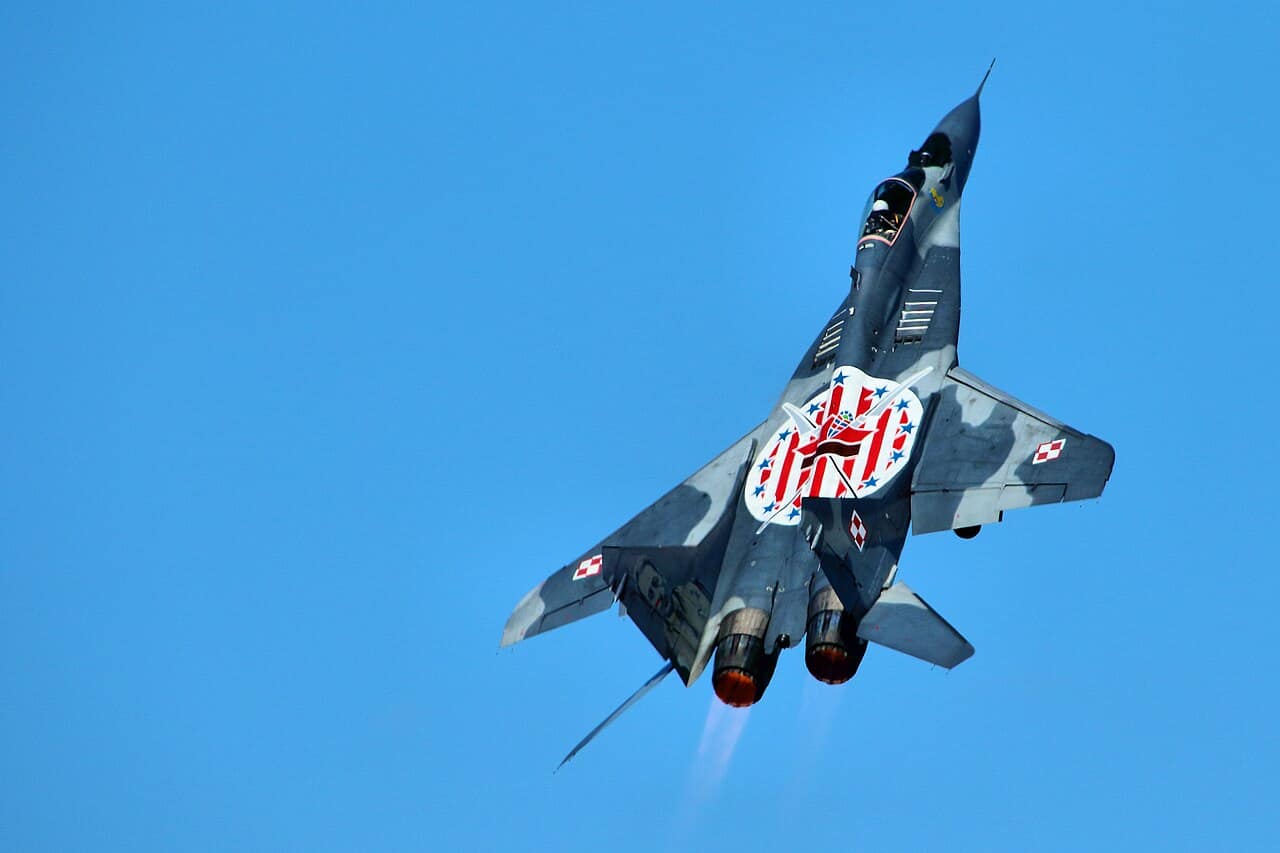
Ask which is better, the MiG-29 or the Su-30, and you have already misunderstood the question. They were never meant to compete. They are the two halves of a single idea — the Soviet Union's deliberate decision to build one small fighter and one big one, each doing a job the other could not. It is one of the neatest examples in aviation of how a country's whole air-power strategy can be read from two aircraft.
One requirement, split in two
In 1969 the Soviet General Staff issued a requirement for a PFI (Perspektivnyy Frontovoy Istrebitel, roughly “advanced frontline fighter”) — a next-generation machine with long range, great agility, Mach 2+ speed and heavy armament, built partly in response to the American F-15. The specification proved too demanding and too expensive to satisfy in a single airframe bought in the numbers the Soviets needed.
So, around 1971, they split it. The heavy half — the TPFI — went to the Sukhoi design bureau and became the Su-27 Flanker family. The light half — the LPFI — went to Mikoyan and became the MiG-29 Fulcrum. The planned force was roughly one third heavy fighters, two thirds light. If that sounds familiar, it should: it is almost exactly the logic behind the US Air Force's own “hi-lo” mix of the expensive F-15 and the cheaper F-16 — the fly-off that also gave us the YF-17 Cobra.
The MiG-29: the light knife-fighter
The MiG-29, which first flew in 1977 and entered service in 1983, was designed as a nimble frontline fighter to work close to the battlefield. Powered by two Klimov RD-33 engines, it is small, agile and famously good in a close-in dogfight, with a helmet-mounted sight and off-boresight missiles that gave early Western pilots a nasty surprise once they got to fly against captured examples. Its weaknesses were the flip side of its virtues: short range and a modest fuel load meant it was built to defend a patch of sky, not to roam.
The Su-30: the long-range heavyweight
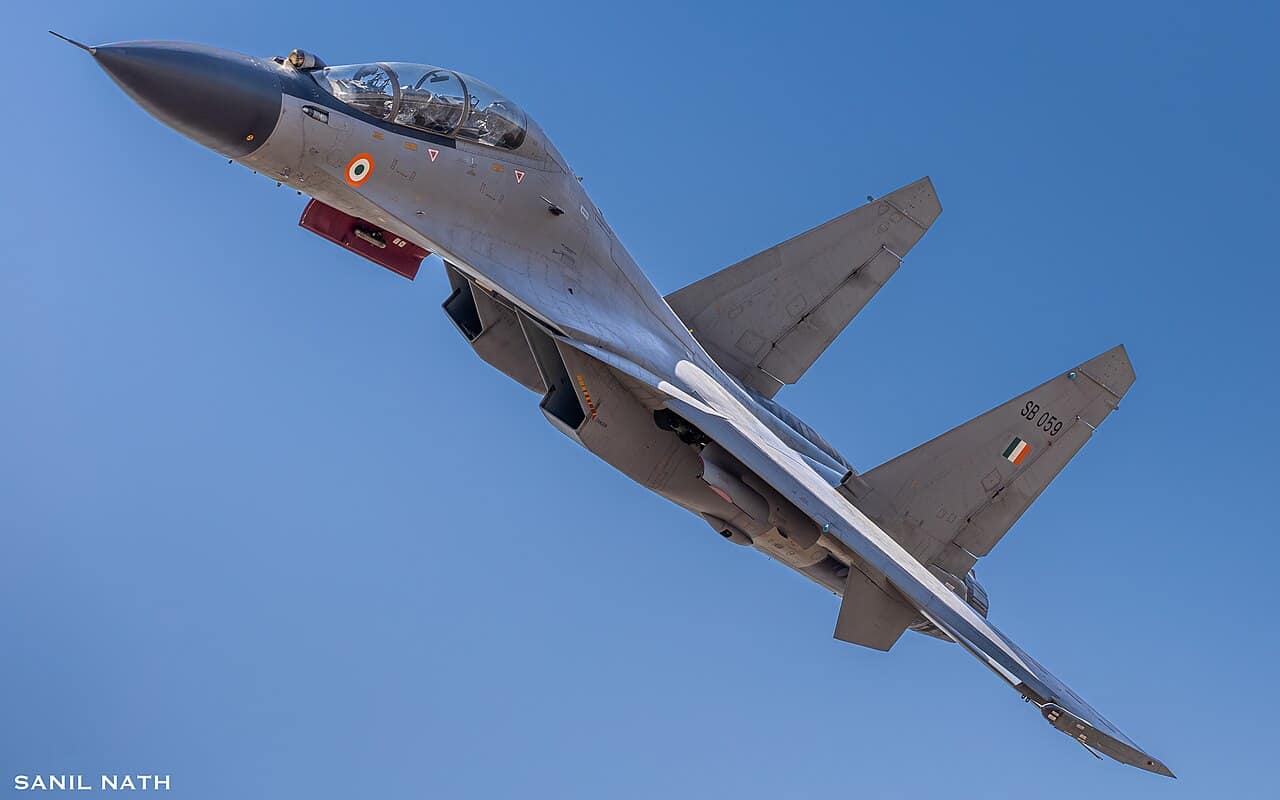
The Sukhoi took the opposite path. The Su-27 that emerged was a big, long-legged air-superiority fighter with the fuel and radar to control huge volumes of airspace. The Su-30 is its two-seat, multirole development: twin Saturn AL-31F engines, enormous range, a heavy and varied weapons load, and — on versions such as the Su-30MKI — thrust-vectoring nozzles for the eye-watering airshow manoeuvres the Flanker family is famous for. Where the MiG-29 is a knife, the Su-30 is a broadsword that can also carry the whole armoury.
Two answers, not one winner
That is why comparing them by a single scorecard misses the point. The MiG-29 was cheaper, lighter and made to be bought in bulk for frontline defence; the Su-30 is heavier, costlier and made to reach out and dominate. Together they were meant to cover the whole spectrum — exactly as the F-16 and F-15 do for the West.
Of the two, it is the little Fulcrum that has become the one enthusiasts most dream of strapping into — and that dream is a real one. Flying the MiG-29 to the edge of space remains one of the most extraordinary experiences in civil aviation.
Related Questions
What is the difference between the MiG-29 and the Su-30?
The MiG-29 and Su-30 represent two halves of a single Soviet plan: build one small fighter and one big one. The MiG-29 is a light, short-range dogfighter meant to defend a patch of sky, while the Su-30 is a large, long-range, twin-seat multirole heavyweight of the Flanker family. They were designed to complement each other, not compete.
Why did the Soviet Union build both a light and a heavy fighter?
In 1969 the Soviet General Staff issued a PFI requirement for a next-generation fighter with long range, agility, Mach 2+ speed and heavy armament, partly in response to the American F-15. The specification proved too demanding and costly for one affordable airframe, so around 1971 they split it into a heavy fighter (which became the Su-27) and a light one (the MiG-29).
What is the MiG-29 Fulcrum?
The MiG-29 Fulcrum is a light Soviet fighter powered by two Klimov RD-33 engines. It is small, agile and famously good in a close-in dogfight, and its early helmet-mounted sight and off-boresight missiles surprised Western pilots. Its weaknesses mirror its strengths: short range and modest fuel meant it was built to defend a patch of sky rather than roam.
What is the Su-30?
The Su-30 is a two-seat, multirole development of the Sukhoi Su-27 Flanker. It features twin Saturn AL-31F engines, enormous range, a heavy and varied weapons load, and, on versions like the Su-30MKI, thrust-vectoring nozzles for dramatic manoeuvres. Where the MiG-29 is a short-range knife, the Su-30 is built to control huge volumes of airspace.
What engines does the MiG-29 use?
The MiG-29 is powered by two Klimov RD-33 turbofan engines, which give the light fighter its strong thrust-to-weight ratio and agility in close-in combat. That agility, combined with a helmet-mounted sight and off-boresight missiles, made the early Fulcrum a dangerous dogfighter at high G-forces.
Is the Su-30 based on the Su-27?
Yes. The Su-30 is a two-seat, multirole derivative of the Su-27 air-superiority fighter. The original Su-27 emerged from the heavy half of the Soviet 1969 PFI requirement as a big, long-legged fighter with the fuel and radar to control large volumes of airspace. The Su-30 added a second crew member and multirole capability to that airframe.
Which is better, the MiG-29 or the Su-30?
Neither is simply better; they were designed for different jobs. The MiG-29 excels as a small, agile short-range dogfighter, while the Su-30 dominates through range, radar and weapons load. Asking which is better misunderstands the Soviet design logic, which deliberately split one requirement into a light fighter and a heavy one so each could do what the other could not.
0 Comments