
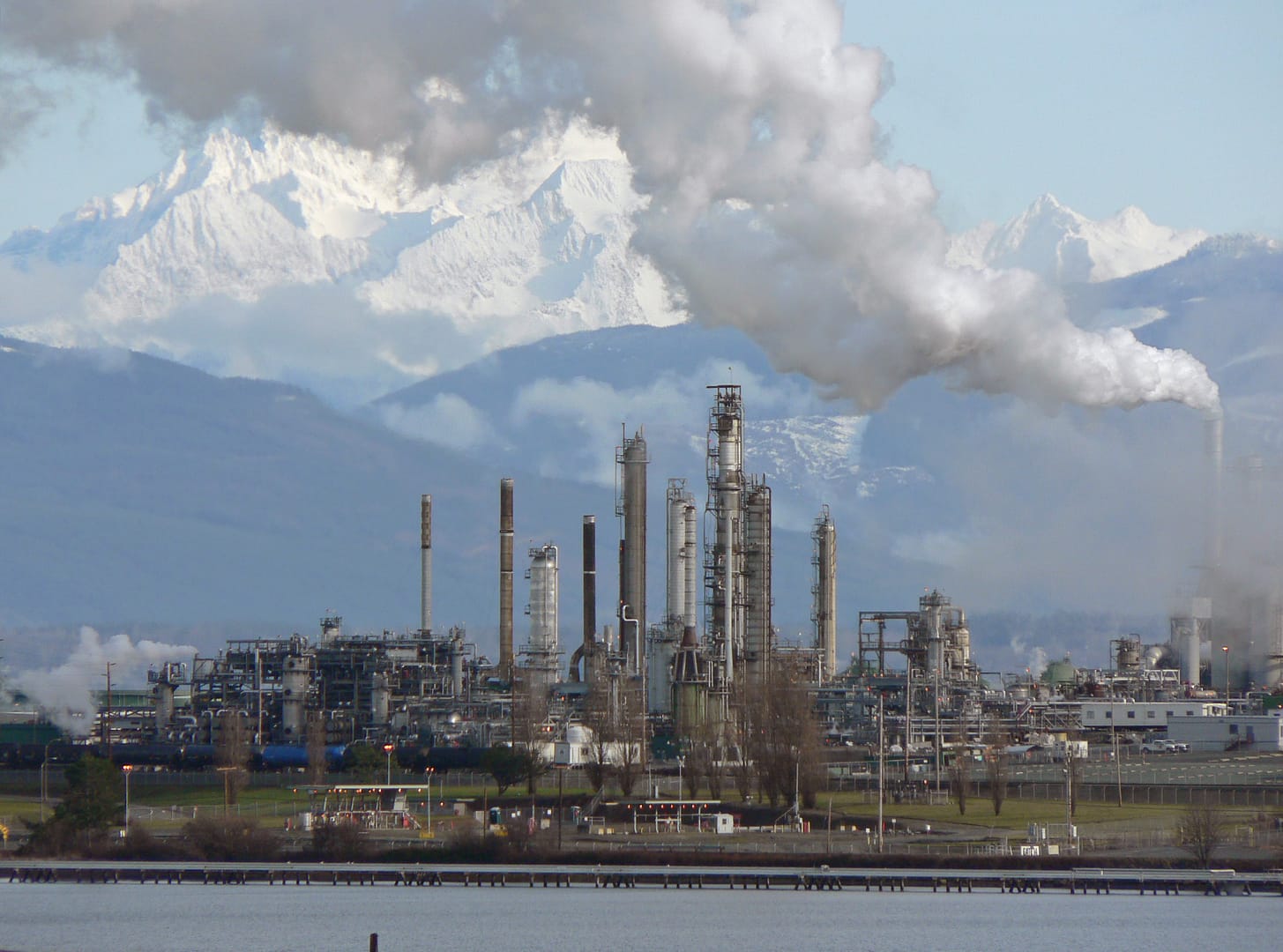
RAND analysis argues that oil shortages alone can grind Russia’s war machine to a halt — just as strikes on fuel infrastructure crippled Nazi Germany in the Second World War. An army that runs out of fuel cannot keep fighting.
Michael Bohnert — Analyst, RAND Corporation (paraphrased)
Quick Facts
WW2 parallel: Allied Oil Campaign (1944–45) destroyed German synthetic fuel production, grounding the Luftwaffe
Ukrainian strike tempo: From every 2–3 days (2025) to near-daily (2026)
Repair times: Doubled from ~2 weeks (2025) to ~4 weeks per strike (2026)
Capacity offline: Reuters estimates ~1/6 of Russian refining capacity offline; RAND’s Bohnert puts it at 25–38% and rising
Key weapons: An-196 Liutyi and other long-range drones (1,000+ km range)
Russian response: Putin publicly blamed the Defence Ministry; fuel rationing in dozens of regions
From Every Two Days to Every Day
In 2025, Ukrainian drones struck Russian oil refineries roughly once every two to three days. In 2026, the attacks have intensified to an almost daily cadence. The explosions are bigger, the damage is deeper, and the repair times have doubled — from an estimated two weeks per strike in 2025 to approximately four weeks in 2026, according to Bohnert’s analysis. Ukrainian deep-strike drones such as the An-196 Liutyi now fly hundreds and, in some cases, well over a thousand kilometres into Russian territory, striking refineries, depots, airfields and arms plants. Ukraine’s defence ministry reported well over a thousand long-range strikes launched in May alone. The results are visible from space — and from the queues at Russian petrol stations. Reuters estimates the strikes have knocked out roughly a sixth of Russian refining capacity. Fuel rationing has spread across dozens of regions. Videos circulating on Russian social media show drivers fighting over fuel in multi-hour queues.The WW2 Lesson
In 1944, the U.S. Army Air Forces launched the Oil Campaign — a systematic effort to destroy Germany’s synthetic fuel production. The results were catastrophic for the Wehrmacht. German aviation fuel output fell from 175,000 tonnes per month to 17,000 tonnes — a 90 per cent collapse. The Luftwaffe, which at that point still had thousands of airframes, was grounded because it had nothing to put in them. Panzer divisions that were supposed to block a Soviet advance were immobilised and overrun because they had no fuel to move.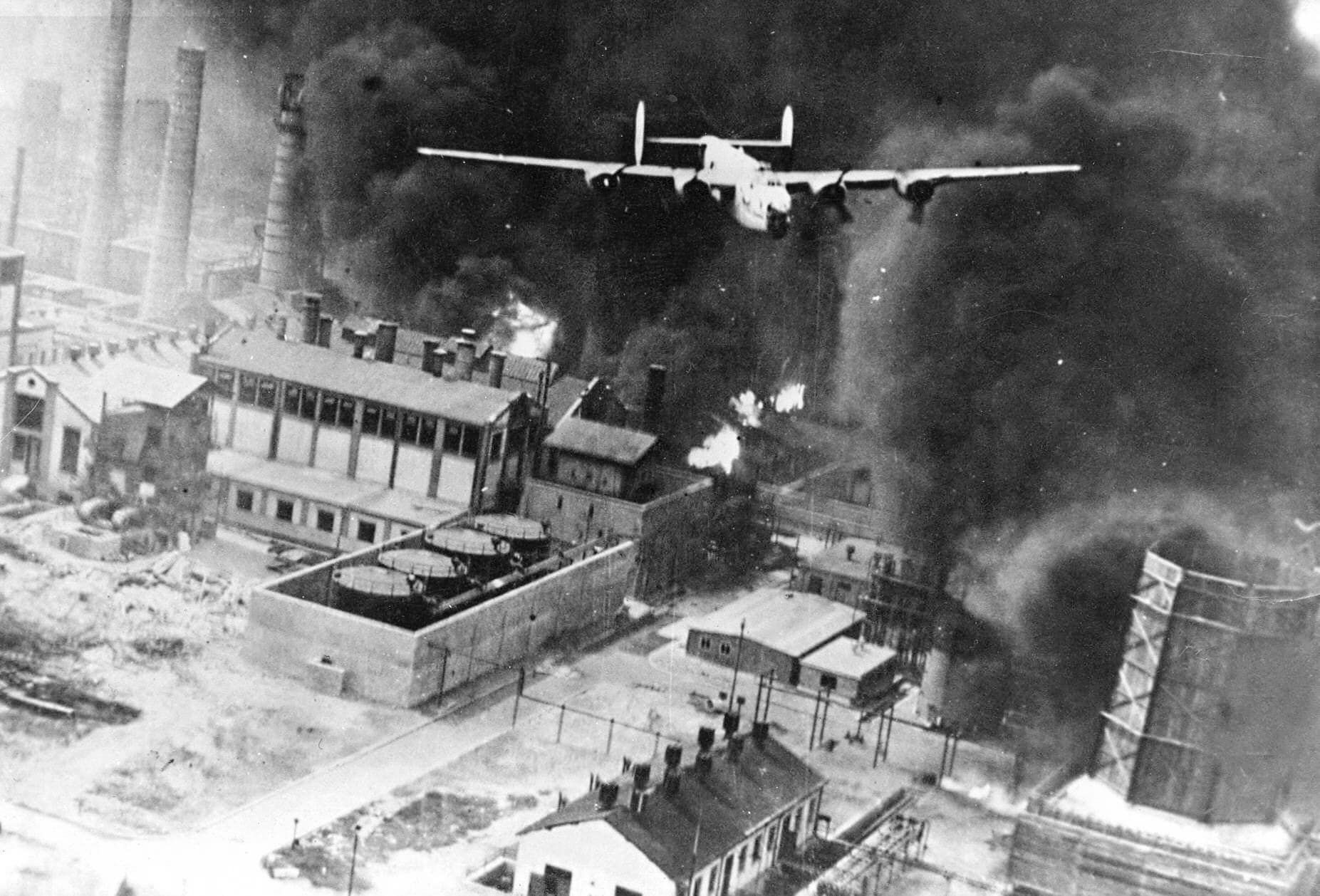
Putin’s Air Superiority Problem
The parallel to Russia’s current situation is increasingly exact. Like Nazi Germany after 1944, Putin no longer fully controls the airspace over his own territory. Ukrainian long-range drones — cheap, numerous, and increasingly sophisticated — can reach targets deep inside Russia, including Moscow itself. Russia’s air defence network, designed to counter cruise missiles and manned aircraft, has struggled against the low-flying, radar-elusive drone swarms that Ukraine deploys in waves. And like the German workers patching up synthetic fuel plants, Russian repair crews are caught in a cycle of repair and re-strike. Bohnert’s analysis suggests that as repair times lengthen and strike frequency increases, the cumulative effect is not linear but exponential — each new strike hits a system that has had less time to recover from the last one."At some point, machines break down, there are no replacements, and the system collapses. I won’t predict when that will happen. But the longer the attacks continue, the closer that moment gets."
Michael Bohnert — Military Analyst, RAND Corporation
The Numbers
Bohnert estimates that between 25 and 38 per cent of Russia’s refining capacity is already offline and rising — and warns that Russia has no comparable buffer to absorb a reduction of that scale. Russia produces far more crude oil than it refines domestically, but crude cannot power tanks, jets, or trucks. It must be refined first, and that is where the bottleneck is tightening. The Institute for the Study of War (ISW) — the Washington-based think tank that tracks the conflict daily — has noted that Russia has actually lost more territory than it has gained in recent weeks, despite Putin’s claims to the contrary.Putin’s Response: Blame the Ministry
When pressed on what is being done about the strikes, Putin deflected: the “main responsibility,” he said, “lies of course with the Defence Ministry.” Bohnert finds this revealing. “When a head of state starts publicly assigning blame for a strategic problem he has not solved, that tells you the problem is bigger than anyone wants to admit.”Will History Repeat?
The Allied Oil Campaign did not end the war by itself. But it made the end inevitable. Tanks without fuel are scrap metal. Aircraft without jet fuel are museum pieces. In 1944–45, German fighter production actually increased even as the Luftwaffe shrank — because there was nothing to fly them on. Whether history will repeat itself over Russia’s refining heartland remains to be seen. But the trajectory, the expert analysis, and the parallel are all pointing in the same direction. And the drivers fighting over fuel in Russian internet videos are the first to feel what may be coming.Related Questions
Why is the comparison to WW2’s oil campaign relevant?
In 1944–45, the Allied bombing of German synthetic fuel plants caused a 90 per cent collapse in aviation fuel output and grounded the Luftwaffe despite Germany still producing thousands of airframes. Ukraine’s drone campaign against Russian refineries follows the same strategic logic: destroy fuel processing capacity to immobilise a military that depends on it.
How much Russian refining capacity has Ukraine actually knocked out?
Reuters estimates roughly one-sixth (about 16 per cent) of Russian refining capacity is currently offline due to drone strikes. RAND Corporation analyst Michael Bohnert estimates that between 25 and 38 per cent of Russian refining capacity is currently offline and ticking upward.
What drones is Ukraine using for these strikes?
Ukraine uses several types of domestically developed long-range strike drones, including the An-196 Liutyi, capable of flying well over 1,000 km into Russian territory. Ukraine launched over a thousand long-range strikes in May 2026 alone.
Why can’t Russia’s air defences stop the drones?
Russia’s integrated air defence network was designed primarily to counter cruise missiles and manned aircraft at medium to high altitude. Ukrainian drones fly low, in swarms, and use unpredictable flight paths that make them difficult to detect and engage with traditional systems like the S-300 or S-400.
Sources: RAND Corporation (Michael Bohnert), Reuters, Meduza, Institute for the Study of War (ISW), U.S. Strategic Bombing Survey, PBS, Fortune
Related Posts
0 Comments