
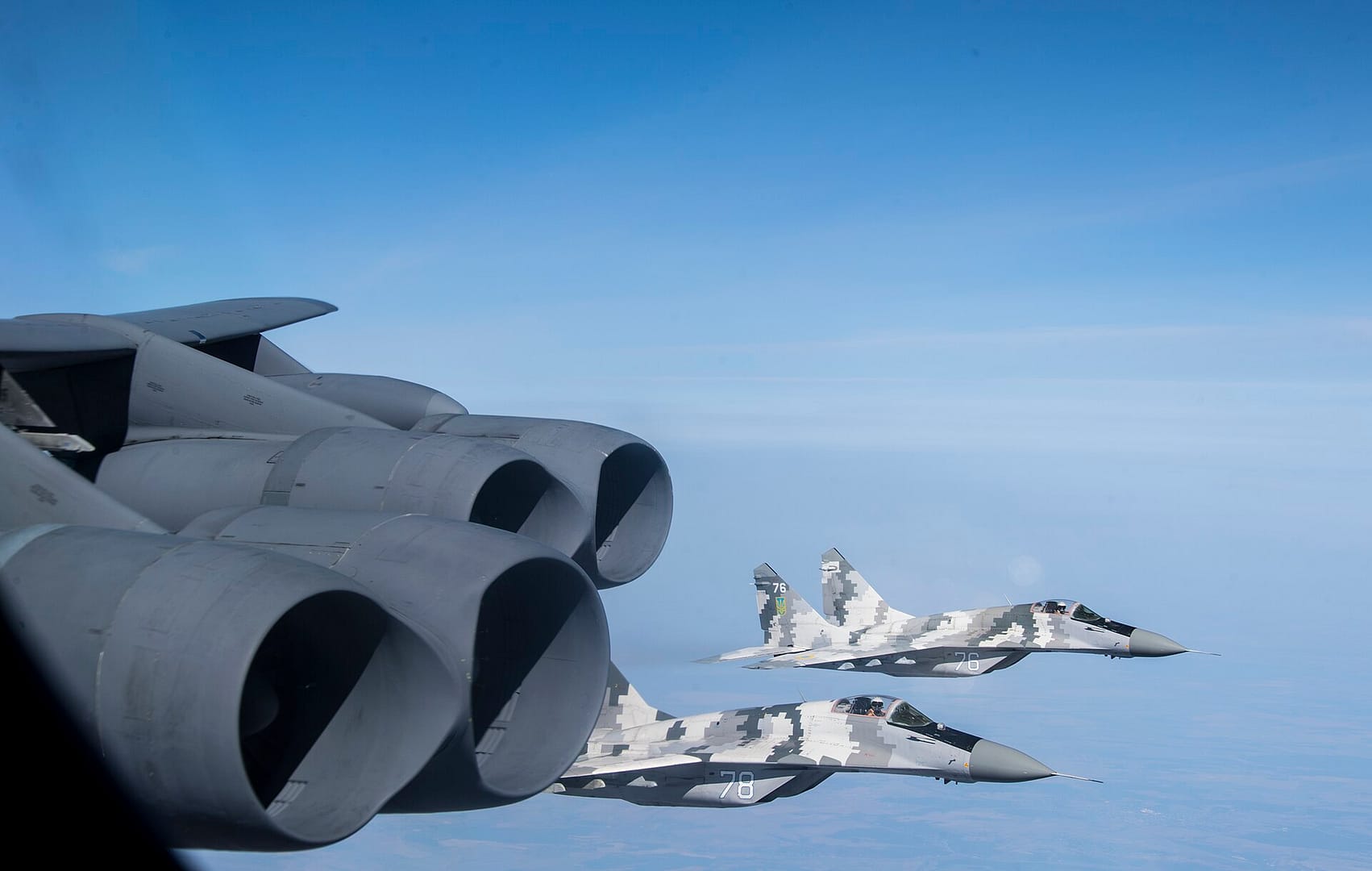
Somewhere over Poltava Oblast, in the dark hours before dawn on 27 June, a Ukrainian MiG-29 simply went quiet. One moment the fighter was flying a combat mission; the next, contact was gone. The jet did not come home.
This is the part of the war that does not trend. There was no triumphant gun-camera clip, no kill marking, no viral cockpit footage. Just a controller staring at a screen where a friendly contact used to be, and a search-and-rescue team scrambling into the night to find out what had happened to the man flying it.
And then, the part that actually matters: the pilot ejected, survived, and walked away to a hospital bed. After three and a half years of grinding air war, that is the headline Ukraine will take.
Quick Facts
- What: A Ukrainian Air Force MiG-29 was lost during a combat mission
- When: Overnight into 27 June 2026
- Where: Poltava Oblast, central-eastern Ukraine
- How it began: Contact with the aircraft was lost in flight
- The pilot: Ejected, established contact with rescuers, and was taken to a medical facility — reported alive
- Cause: Not yet determined; an investigation is under way
- Source: Ukraine’s Air Force Command (Communications Directorate)
What Ukraine’s Air Force Actually Said
The account comes from the Communications Directorate of Ukraine’s Air Force Command, relayed in the early hours and picked up across Ukrainian outlets including Ukrainska Pravda, Militarnyi and Ukrinform. The wording is deliberately spare.
According to the Air Force, contact was lost with the MiG-29 overnight while it was carrying out a combat mission over the Poltava region. The pilot ejected, then independently established contact with the search-and-rescue team. He was recovered and taken to a medical facility for examination and any care he needed.
Crucially, the Air Force did not blame the loss on Russian fire, and it did not offer a cause. Teams were still working to locate the wreckage, and an investigation was opened to establish what happened. In an information war where every side rushes to claim or deny, that restraint is worth noting: when Kyiv does not know, it is, for once, saying so.
Bronk’s point, made about the F-16s now entering Ukrainian service, cuts to the heart of why the MiG-29 is still flying at all. Ukraine cannot yet afford to retire its Soviet-era jets — there simply are not enough Western fighters in country to take over the night shift.
A Small, Old Fleet Worked to the Bone
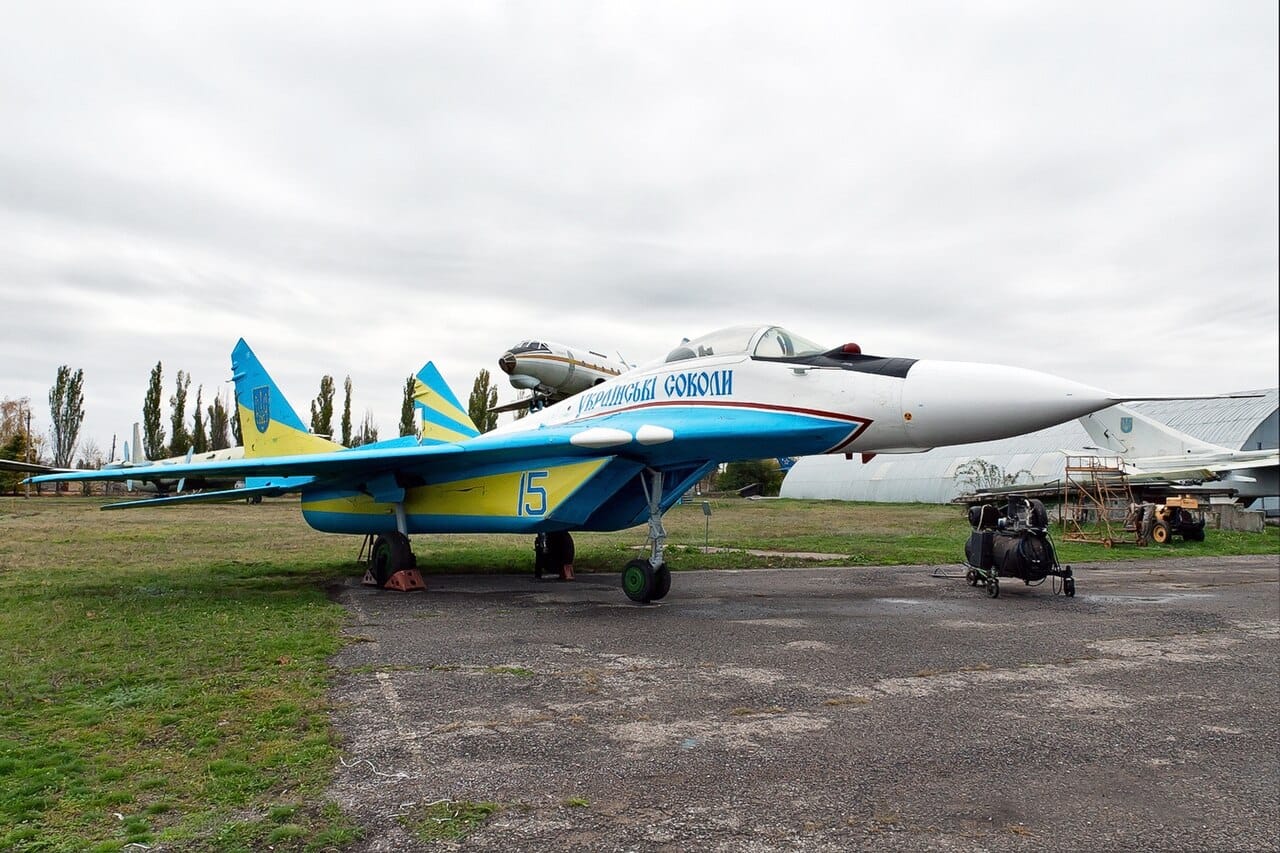
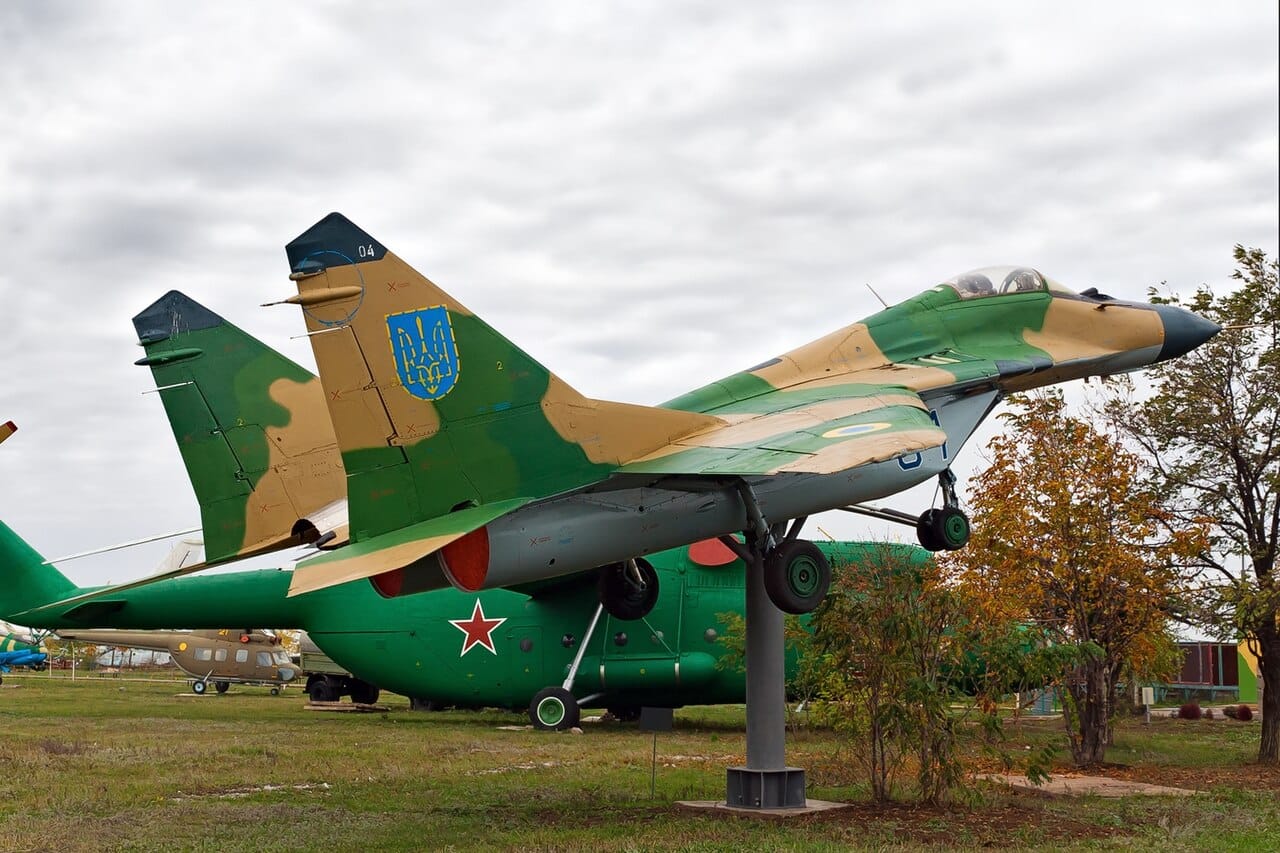
Ukraine went to war in February 2022 with a fighter force built almost entirely around two Soviet types: the MiG-29 Fulcrum and the Su-27 Flanker. Both first flew in the 1970s. Both were designed for a Cold War that ended before most of today’s Ukrainian pilots were born.
Those jets have since done jobs their designers never imagined. Ukrainian MiG-29s have been wired to fire American AGM-88 HARM anti-radiation missiles, French AASM Hammer glide bombs, and to hunt low-flying Shahed drones in the dark. Every one of those upgrades was bolted onto an airframe that has already flown far past a peacetime service life, maintained by ground crews cannibalising parts from a shrinking pool of spares.
There is no production line for new MiG-29s in Ukraine. Every Fulcrum lost — whether to a missile, a malfunction, or the brutal arithmetic of flying worn-out jets hard, every night — is a jet that cannot be replaced like-for-like. That is what makes the survival of the pilot, rather than the loss of the airframe, the only good news to be had here.
The Most Dangerous Shift in Aviation
Flying a fast jet at night is hard in peacetime. Flying a fast jet at night, low, in a war, with your radar mostly off to avoid being seen, while enemy air defences and your own hunt the same sky — that is about as unforgiving as military aviation gets.
Ukrainian pilots increasingly fly these missions in the dark precisely because daylight over the front is lethal. Russian long-range surface-to-air systems can reach deep into Ukrainian-controlled airspace, so the Fulcrums tend to dash in low and fast, lob a weapon, and run. Add a moonless night, an ageing jet, and the physiological traps of disorientation that have killed experienced aviators the world over, and the margin for error narrows to almost nothing.
We do not yet know which of those factors — if any — ended this flight. The honest answer, the one the Air Force itself is giving, is that the cause is still unknown. But the context explains why a controlled, survivable loss with a recovered pilot counts as a relatively good outcome.
A Ukrainian MiG-29 pilot describes flying combat missions in an ageing Soviet-era jet — the daily reality behind a loss like this one.
Help Is Coming — But Not Fast Enough
The cavalry is, slowly, arriving. Ukraine has been receiving F-16s from a Dutch- and Danish-led coalition, with more pledged by Belgium and Norway. France has delivered Mirage 2000s, with additional airframes expected. And in May 2026, Sweden and Ukraine announced a landmark deal: up to 20 new Gripen E fighters for Ukraine, plus as many as 16 donated older Gripen C/D jets, with the donated aircraft due to start arriving from 2027.
On paper, Ukraine’s fighter fleet could look radically different by the early 2030s — a Western, NATO-standard force of F-16s, Mirages and Gripens numbering well over a hundred jets. But “by the early 2030s” is the operative phrase. The Gripens are years out. The F-16 fleet is still small. Until those numbers grow, the MiG-29 keeps flying the missions nobody else can yet cover.
So the Fulcrums fly on, night after night, until they break or until something replaces them. On 27 June, one of them broke. The remarkable thing — the thing worth holding onto — is that the pilot lived to fly another sortie. In this war, that is the version of the story you hope for.
Sources: Ukraine’s Air Force Command (Communications Directorate); Ukrainska Pravda; Militarnyi; Ukrinform; Kyiv Post; Interfax-Ukraine; UNITED24 Media; Royal United Services Institute (RUSI).
Related Questions
What happened to the Ukrainian MiG-29 in Poltava?
A Ukrainian Air Force MiG-29 was lost during a combat mission over Poltava Oblast overnight into 27 June 2026. Contact with the aircraft was lost in flight. The pilot ejected, established contact with search-and-rescue teams, and was taken to a medical facility. The cause is under investigation.
Did the Ukrainian MiG-29 pilot survive?
Yes. According to Ukraine’s Air Force, the pilot ejected successfully, made contact with the search-and-rescue team on his own, and was recovered alive and taken to a medical facility for examination and care.
What caused the MiG-29 crash?
The cause has not been determined. Ukraine’s Air Force said only that contact was lost during the mission and that an investigation has been opened. It did not attribute the loss to Russian fire.
Why does Ukraine still fly the MiG-29?
Ukraine entered the war with a fighter force built around Soviet-era MiG-29s and Su-27s. Western jets such as the F-16, Mirage 2000 and Gripen are arriving only gradually, so the ageing MiG-29 still flies front-line combat missions that newer aircraft cannot yet fully cover.
How old is the MiG-29 design?
The Mikoyan MiG-29 first flew in 1977 and entered Soviet service in the early 1980s. The jets Ukraine flies today are decades old and have been upgraded to carry Western weapons, but no new airframes are being built to replace combat losses.
What new fighter jets is Ukraine getting?
Ukraine is receiving F-16s from a Dutch- and Danish-led coalition, Mirage 2000s from France, and — under a May 2026 agreement — up to 20 new Saab Gripen E fighters plus as many as 16 donated older Gripen C/D jets, with donated airframes due from 2027.
0 Comments