
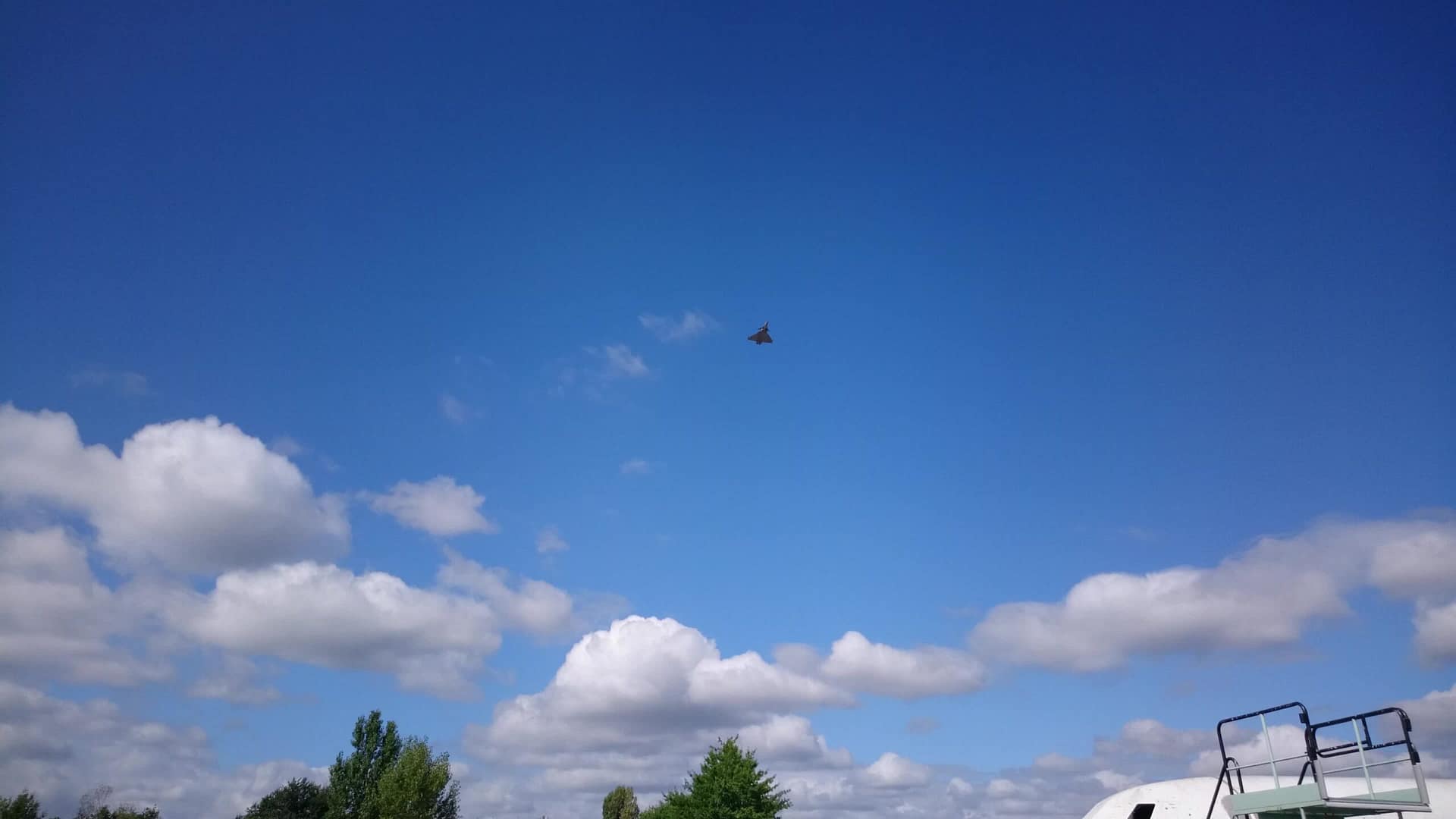
For sixty years, the answer to the question “what does Vietnam fly?” has been simple: whatever Moscow sold it. MiGs, then Sukhois — a proud, entirely Russian air force. In 2026, for the first time, that answer is genuinely in doubt, and the alternative wears a French accent.
Hanoi is hunting for a new fighter, and the contest has narrowed to two very different machines: the Dassault Rafale and the Sukhoi Su-57. On paper it looks like a procurement decision. In practice it is one of the most revealing strategic choices in Southeast Asia — because in choosing a jet, Vietnam is also choosing a side.
The pressure is not abstract. Across the South China Sea, China now flies J-16 strike fighters and J-20 stealth jets over waters Vietnam considers its own. Against that, Hanoi’s ageing Su-22s and Su-27s look every one of their years.
- Who: The Vietnam People’s Air Force
- The choice: France’s Dassault Rafale vs Russia’s Su-57 — or a mix of both
- Why now: Vietnam’s Soviet-era Su-22 and Su-27 fleets are ageing as China pushes J-16 and J-20 jets across the South China Sea
- Rafale: reportedly ~24–40 jets, US$4–6bn, possible deliveries 2028–2030; a Vietnamese pilot has reportedly already test-flown one
- Su-57: reportedly ~12–24 jets, plugs into Vietnam’s existing Russian infrastructure; the upgraded Su-57M1 is expected to mature in the early 2030s
- Status: no official confirmation from Hanoi; analysts see a mixed fleet as the likeliest path
The Rafale: the fast, Western answer
The clearest sign that France is serious is a small but telling detail: a Vietnamese pilot has reportedly been allowed to fly the Rafale. That kind of access is normally reserved for customers deep in negotiation, not polite first dates. French reporting in early 2026 put the talks at an unusually advanced stage.
What Paris is offering is a genuine omni-role fighter — an AESA radar, the formidable SPECTRA self-defence suite, long legs for maritime patrol, and a weapons load north of nine tonnes. Open-source estimates put a deal at roughly two squadrons, perhaps 24 to 40 aircraft, for US$4–6 billion, with first jets conceivably arriving between 2028 and 2030.
There is precedent for the politics. Indonesia’s 42-Rafale order showed that a Southeast Asian state can buy French without burning its bridges to Moscow. For Vietnam, the Rafale is as much a diplomatic instrument as a fighter — a way to widen its circle of friends in an era when relying on a single, sanctioned supplier looks dangerous.
The Su-57: the comfortable, Russian answer
And yet Russia is not out of the running. Hanoi has eyed the Su-57 since at least 2017, and interest persisted into April 2026, with attention focused on the upgraded Su-57M1 expected to mature early in the next decade. Its appeal is continuity: the jet would plug straight into the ecosystem Vietnam already runs — the Su-30 fleet, the S-300 air defences, the doctrine, the muscle memory.
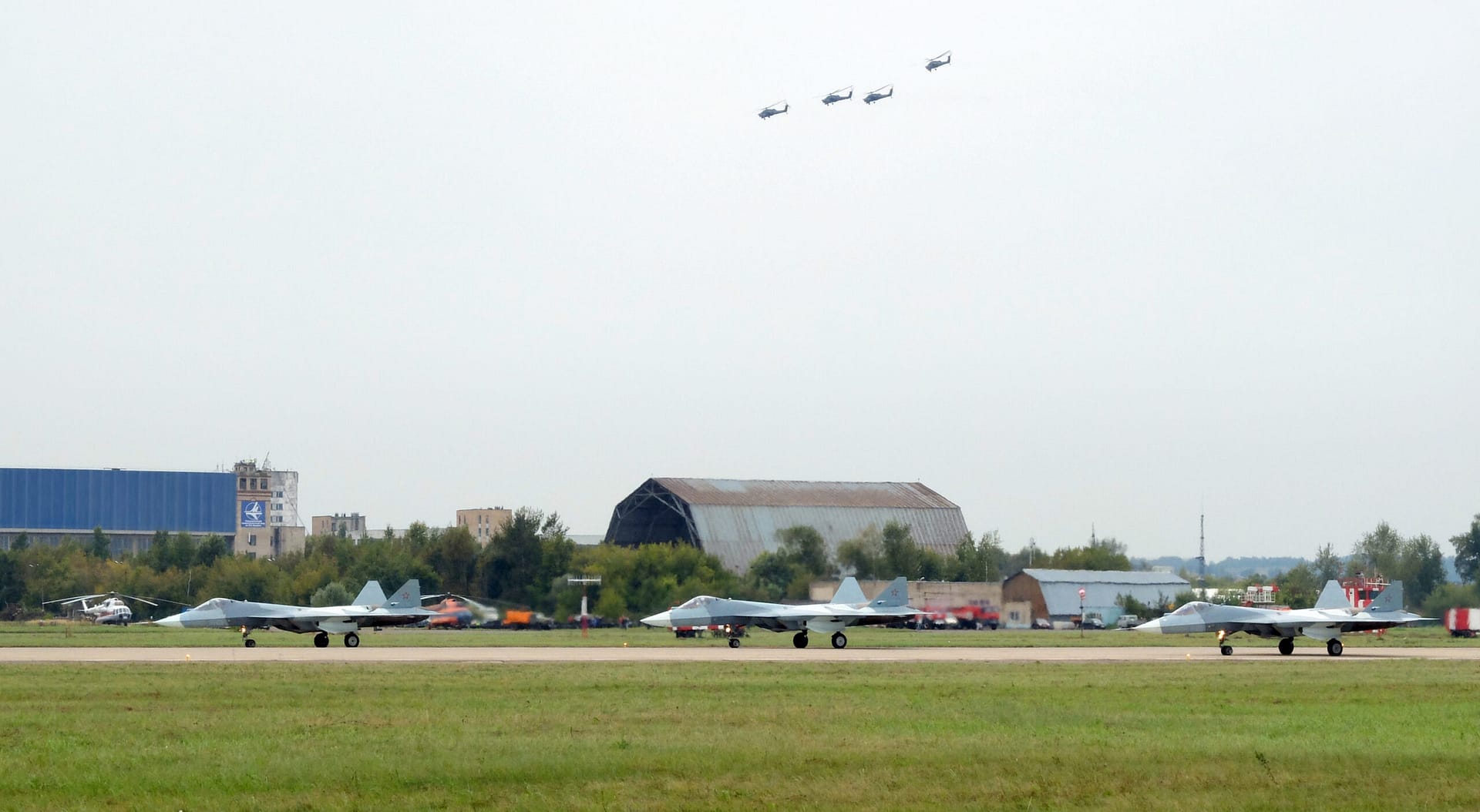
The catch is everything that now hangs over Russian arms exports: questions about production rates, delivery timelines, sanctions exposure and whether the Su-57 line can actually meet Vietnam’s deadlines. A stealth fighter that arrives late is no deterrent at all.
Why the answer may be “both”
The most likely outcome is the least dramatic one. Rather than crown a single winner, Hanoi may do what New Delhi did — build a mixed fleet. Rafales would replace the oldest Su-22s in the near term; the upgraded Su-30MK2s would stay as the numerical backbone; and a small batch of Su-57s could arrive later as a high-end stealth insurance policy.
It is a very Vietnamese solution: hedge, diversify, commit to no one entirely. The danger is that the South China Sea will not wait politely while Hanoi deliberates. In a contest measured in sensor range and stealth, indecision has its own price — and the clock over those contested waters is already running.
Sources: Defence Security Asia; open-source defence reporting. No procurement has been officially confirmed by Hanoi.
Related Questions
What fighter jets does Vietnam fly now?
The Vietnam People's Air Force operates an almost entirely Russian-origin fleet: the multirole Su-30MK2 is the backbone (roughly 35–45 aircraft), backed by ageing Su-27 air-superiority fighters and Su-22 strike jets that are nearing the end of their service lives.
Why is Vietnam buying new fighters?
Its Soviet-era jets are wearing out and are increasingly outmatched, while China is expanding operations of advanced J-16 and J-20 fighters across the contested South China Sea. Vietnam needs survivable, long-range, precision-capable aircraft to keep credible control of its airspace and maritime approaches.
What would the Rafale give Vietnam?
The Dassault Rafale is a French 4.5-generation multirole fighter with an AESA radar, the SPECTRA electronic-warfare suite, long range and a heavy weapons load. It would let Vietnam retire its oldest jets quickly and diversify away from Russia — at the cost of building an entirely new Western training, weapons and maintenance ecosystem.
Why would Vietnam consider the Su-57 instead?
The Su-57 is Russia's fifth-generation stealth fighter and would slot into Vietnam's existing Russian infrastructure — its Su-30 fleet, S-300 air defences and decades of institutional know-how — reducing transition friction. The trade-offs are questions over the programme's maturity, delivery timelines and exposure to sanctions.
Has Vietnam decided?
No. Hanoi has made no official announcement, and all figures and timelines come from defence reporting rather than signed contracts. Analysts increasingly expect a mixed fleet: Rafale for near-term multirole needs, the Su-30 as the backbone, and possibly the Su-57 later as a high-end asset.


 English
0 Comments