
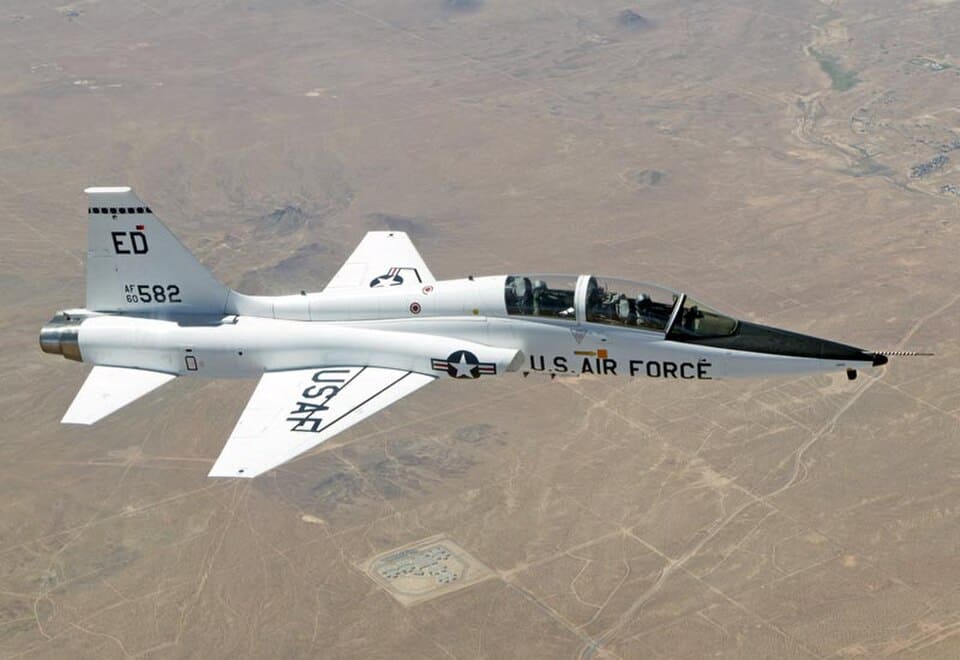
On May 19, 2026, the United States Air Force ordered an operational pause for its entire fleet of T-38 Talon jet trainers. Every T-38 across every command—Air Education and Training Command, Air Combat Command, Air Force Materiel Command, and Air Force Global Strike Command—was grounded simultaneously, pending investigation of a May 12 crash in Alabama involving a T-38 assigned to Columbus Air Force Base, Mississippi.
For anyone outside the military, the announcement raises an obvious question: what actually happens when the Air Force tells an entire fleet of aircraft to stop flying? The answer involves a carefully choreographed process of investigation, inspection, and incremental return to flight that is far more nuanced than simply flipping a switch to "off."
✈ The T-38 Talon has been in service since 1961 — 65 years
🚫 “Operational pause” affects all units across all commands simultaneously
🔍 Each individual aircraft must be inspected and cleared before returning to flight
🎮 Pilots maintain proficiency through simulator training during the pause
🕑 Duration depends on engineering analysis — could be days or months
📋 The T-38 fleet grounding follows the Alabama crash of a Columbus AFB T-38 in which both pilots ejected safely
The Terminology Matters
The military uses several terms for halting flight operations, and they are not interchangeable. Understanding the differences matters because each carries different implications for severity, duration, and command authority.
A safety stand-down is typically the broadest and most serious measure. It halts all flight operations across a service or command and usually involves a comprehensive review of safety procedures, culture, and practices. The Marine Corps ordered one in 2023 after an F-35 disappeared over South Carolina. Every Marine aircraft stopped flying while units conducted safety reviews.
An operational pause is what the T-38 fleet is currently under. It is narrower in scope—targeted at a specific aircraft type rather than an entire service—and focused on a specific technical concern. The pause allows investigators to examine the problem while engineers develop an inspection protocol to clear individual aircraft.
A grounding is the most formal and typically the longest-lasting action. When the entire F-35 fleet was grounded worldwide in 2018 after a crash in South Carolina, it took weeks of fleet-wide inspections before aircraft returned to service. The F-22 Raptor's grounding for oxygen system issues in 2011 lasted approximately five months.
How the Inspection Process Works
Once an operational pause is declared, the engineering investigation begins immediately. In the T-38 case, a safety board was already investigating the May 12 mishap when the fleet-wide pause was ordered a week later—suggesting the investigation uncovered a potential systemic issue rather than an isolated incident.
The process typically follows a consistent pattern. First, engineers identify the suspected component or system. Second, they develop a specific inspection protocol—exactly what to look for, what tools to use, what tolerances are acceptable. Third, maintenance crews at each base inspect every individual aircraft against that protocol. Fourth, aircraft that pass inspection are cleared to return to flying. Aircraft that don't pass receive repairs and are reinspected.
This means aircraft don't all come back at once. The return is incremental: some jets might be cleared within days, while others might need weeks of maintenance before they can fly again. For the T-38, the Air Force indicated inspections could begin as early as the week of the announcement.
What Happens to Pilots During a Grounding
When aircraft stop flying, pilots don't stop training. The Air Force explicitly stated that during the T-38 operational pause, aircrews would maximize simulator training to maintain proficiency and currency requirements.
This is critical because pilot skills are perishable. A fighter pilot who doesn't fly for a month loses edge—reaction times slow, muscle memory fades, and the instinctive feel for the aircraft diminishes. Modern simulators can replicate most aspects of flight with remarkable fidelity, but they can't fully replace actual stick time. The longer a grounding lasts, the more challenging the transition back to real aircraft becomes.
For student pilots in the training pipeline—which is the T-38's primary mission—a prolonged pause has cascading effects. Training schedules slip, graduations are delayed, and the pipeline of new pilots flowing to operational squadrons gets backed up. The Air Force was already struggling with a pilot shortage before the T-38 pause, making the timing particularly unwelcome.
Historical Precedents: When Fleets Stood Down
Fleet groundings are more common than most people realize. Here are some of the most significant:
F-35 Lightning II (2018): The entire global fleet was grounded after a crash at Marine Corps Air Station Beaufort, South Carolina. The cause was traced to a faulty fuel tube in the engine. Every F-35 worldwide—across all three variants, all services, and all partner nations—was inspected before returning to flight.
F-35 Lightning II (2022): Grounded again, this time over defective explosive cartridges in ejection seats manufactured by Martin-Baker. The cartridges contained a propellant that could have degraded over time, potentially preventing the seat from firing properly in an emergency. This grounding affected not just F-35s but multiple aircraft types using the same seat.
F-22 Raptor (2011): The entire Raptor fleet was grounded for approximately five months due to unexplained hypoxia-like symptoms in pilots. The investigation was complex and prolonged, eventually identifying issues with the oxygen delivery system and pressure vest valves. Some pilots publicly refused to fly the aircraft even after the grounding was lifted.
Marine Corps-wide stand-down (2023): After an F-35B went missing over South Carolina—the pilot had ejected but the aircraft, in autopilot mode, continued flying unmanned for some time—the Marine Commandant ordered every Marine aircraft grounded for a comprehensive safety review.
The T-38's Unique Challenge
The T-38 Talon presents a special case. First flying in 1959 and entering service in 1961, it is one of the oldest aircraft in the U.S. military inventory. Over six decades of service means the fleet faces age-related issues that newer aircraft don't: metal fatigue, aging wiring, deteriorating structural components, and the ever-present challenge of maintaining an aircraft whose manufacturer (Northrop) stopped producing replacement parts decades ago.
The T-38 has already been through multiple life-extension programs. But there comes a point where age compounds every safety concern. A structural issue in a 10-year-old aircraft is a repair problem. The same issue in a 60-year-old aircraft is a potential fleet-wide concern because the same fatigue patterns may exist across every airframe.
The good news from the May 12 incident: both pilots ejected safely. The training and the ejection systems worked exactly as designed. But the investigation into what caused the mishap will determine not just when the T-38 fleet flies again, but how much longer it can continue flying at all.
Fleet groundings are rarely dramatic. They are bureaucratic, methodical, and driven by engineering data rather than emotion. But they represent something important: the moment when an air force decides that understanding a problem matters more than maintaining a flying schedule. Every aircraft sitting on the ground during a pause is an aircraft that isn't going to crash while engineers figure out what went wrong.
And in aviation, that patience saves lives.
Sources: Stars and Stripes, Breaking Defense, The Aviationist, Air Force official statements (af.mil), Military Times, Air & Space Forces Magazine.
Related Questions
What happens when the Air Force grounds an entire fleet of aircraft?
When the Air Force grounds a fleet, it issues an operational pause that halts flying across all units at once while investigators find the cause of a problem. Each aircraft must then be individually inspected and cleared before returning to flight. Pilots stay current in simulators, and the pause can last days or months depending on the engineering analysis.
What is the difference between a safety stand-down and an operational pause?
A safety stand-down is typically the broadest measure, halting all flight operations across a service or command for a comprehensive review of safety procedures and culture. An operational pause is more targeted, stopping flights of a specific type pending investigation. A grounding holds individual aircraft until they are inspected and cleared to fly again.
What is the T-38 Talon?
The Northrop T-38 Talon is a twin-engine supersonic jet trainer that has been in US Air Force service since 1961, making it more than six decades old. It trains pilots bound for fast jets and remains central to advanced US pilot training, which is why grounding the fleet ripples across many commands. Such ageing trainers are increasingly due for replacement.
Why was the T-38 fleet grounded in 2026?
The US Air Force ordered an operational pause for its entire T-38 Talon fleet on 19 May 2026, after a 12 May crash in Alabama involving a T-38 assigned to Columbus Air Force Base, Mississippi, in which both pilots ejected safely. The pause let engineers investigate the cause before clearing each aircraft to resume flying.
How do pilots stay current when their aircraft are grounded?
When their aircraft are grounded, pilots maintain proficiency through simulator training, academic study, and procedural rehearsal until flights resume, keeping skills sharp without risking the fleet under investigation. Because trainers like the T-38 are vital to producing new aviators, prolonged pauses can delay pilot pipelines, one reason air forces seek modern replacement trainers.
Related Posts
How the Ejection Seat Was Invented: The James Martin Story
The Scariest Moments in Aviation History
0 Comments