
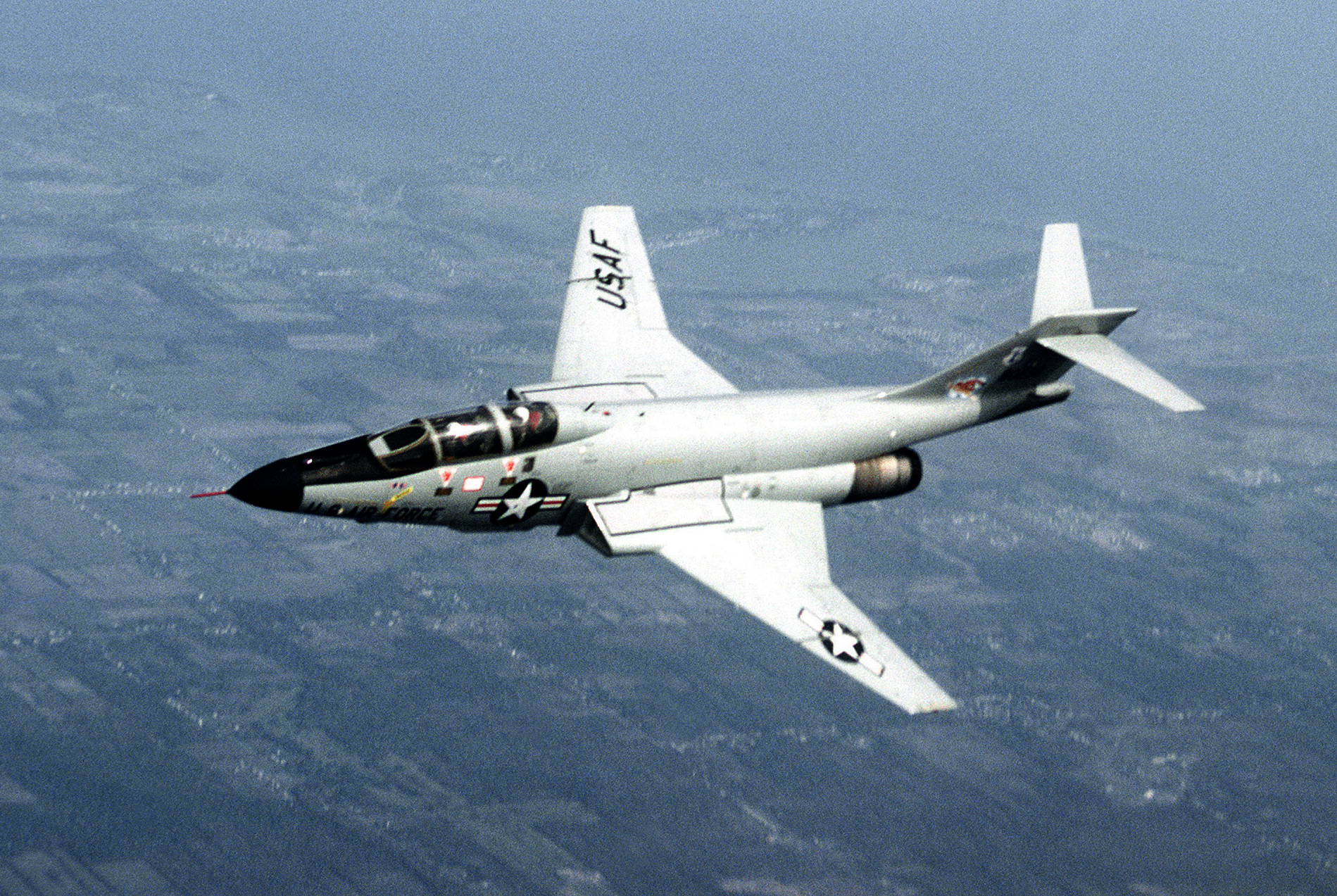
McDonnell F-101 Voodoo
“The One-Oh-Wun”
A big, brutally fast twin-engine Century-series jet that never settled on one job — long-range escort, nuclear strike fighter, superb photo-reconnaissance platform and, finally, a two-seat interceptor guarding North America with nuclear-tipped rockets.
The jet that never stopped changing jobs
The F-101 Voodoo began as an answer to a very specific 1940s problem: how to escort America’s new jet bombers deep into hostile airspace. McDonnell had already built the XF-88, a twin-engine penetration fighter that first flew in 1948 but was cancelled when priorities shifted. When the Korean War exposed how vulnerable bombers were, the Air Force revived the idea, and McDonnell’s enlarged, far more powerful redesign was chosen in 1951. It flew as the F-101A on 29 September 1954 and entered service in 1957.
By then the escort mission had evaporated — the bombers it was meant to protect could now outrun it — so the Voodoo was handed a new role, and then another. The single-seat F-101A and F-101C became low-level nuclear strike fighters for Tactical Air Command, built to dash in and drop a single atomic bomb on an airfield. The RF-101 stripped out the guns for cameras and became one of the finest photo-reconnaissance aircraft of its generation. And the two-seat F-101B was rebuilt as a long-range interceptor for Air Defense Command, armed with radar-guided missiles and nuclear rockets.
What tied these very different aircraft together was raw performance: two enormous Pratt & Whitney J57 turbojets that gave the heavy Voodoo genuine supersonic speed and long legs. It also shared a dangerous flaw — a vicious tendency to pitch up and depart controlled flight at high angles of attack, a trait that killed pilots and was never entirely cured. The Voodoo was fast, complex and a little unforgiving, and it ended up doing almost everything except the job it was designed for.
01The F-101 Voodoo and the XF-88: from bomber escort to Century-series fighter
The Voodoo traces directly to the XF-88, McDonnell’s entry in the late-1940s Penetration Fighter competition for a long-range escort to protect Strategic Air Command’s bombers. The XF-88 flew in 1948 and performed well, but the programme was shelved in 1950 as budgets tightened and jet development raced ahead. The Korean War changed the calculus: unescorted bombers were proving desperately vulnerable, and in 1951 the Air Force asked McDonnell to develop a production aircraft from the XF-88. The result was so enlarged and re-engined — with two powerful J57s in place of the XF-88’s smaller engines — that it was effectively a new aircraft, designated F-101. By the time it entered service in 1957 the strategic picture had shifted again, and the escort mission it had been born to fill no longer existed. That the Voodoo went on to a long, varied career anyway is a testament to how much capability McDonnell had built into the airframe.
What makes it special
Two J57 turbojets — speed and range in a heavy airframe
The Voodoo was built around two Pratt & Whitney J57 afterburning turbojets, each around 75 kN (about 16,900 lbf) in reheat. That gave a large, heavy aircraft real supersonic performance — roughly Mach 1.7 — and the fuel capacity for genuinely long range. The same powerful, thirsty formula served every version, from the low-level nuclear striker to the high-flying interceptor, and underpinned the type’s 1957 world speed record.
The RF-101 — the Voodoo that went to war with cameras
The reconnaissance RF-101 traded the fighter’s guns and radar for a nose packed with cameras, becoming the world’s first supersonic photo-reconnaissance aircraft in front-line service. Fast and low, it was the only Voodoo variant to see combat — flying the critical low-level runs over Cuba in 1962 and thousands of dangerous sorties over Vietnam, where its speed was often its only defence.
The F-101B interceptor — Genie, Falcon and SAGE
The two-seat F-101B was rebuilt for Air Defense Command as a bomber-killer. It carried the Hughes MG-13 radar, a datalink to the SAGE ground network, and an armament of guided AIM-4 Falcon missiles alongside the unguided, nuclear-tipped AIR-2 Genie rocket — a roughly 1.7-kiloton warhead meant to destroy a bomber formation in a single burst.
02The F-101 Voodoo’s pitch-up problem: the flaw that was never fully fixed
The Voodoo’s high-set tailplane sat in the wake of the wing, and at high angles of attack the wing’s downwash could rob the tail of control authority. The result was a sudden, violent pitch-up — the nose rearing up uncommanded, often flicking the aircraft into a spin or departure from controlled flight. It was a well-known and feared trait, and it cost aircraft and lives across the fleet. McDonnell and the Air Force fitted an automatic pitch-up inhibitor — a system that shook and then pushed the stick forward to warn the pilot and limit the angle of attack — which reduced the danger without ever entirely curing it. Treat any claim that the problem was “solved” with caution: the accepted history is that it was managed, not eliminated.
03The F-101B Voodoo’s armament: the nuclear Genie rocket and the Falcon missile
As an interceptor the F-101B was meant to stop waves of Soviet bombers over the Arctic, and its weapons reflected the brutal logic of the age. Its internal rotating weapons pallet could carry guided AIM-4 Falcon air-to-air missiles — some infrared, some radar-guided — for conventional engagements. For the worst case it carried up to two AIR-2 Genie rockets, each an unguided weapon tipped with a roughly 1.7-kiloton nuclear warhead. The idea was that precision did not matter if a nuclear burst filled the sky in the middle of a bomber stream. Canadian CF-101s carried the same nuclear-armed Genie under a special dual-key arrangement with the United States — a rare case of nuclear weapons on Canadian-operated aircraft.
Full specifications
Airframe & Performance (F-101B)
- Экипаж
- 2 (pilot + radar operator)
- Длина
- ~20.55 m (67 ft 5 in)
- Размах крыльев
- ~12.09 m (39 ft 8 in)
- Высота
- ~5.5 m (18 ft)
- Max takeoff weight
- ~23,770 kg (~52,400 lb)
- Max speed
- ~Mach 1.7 · ~1,825 km/h at altitude
- Служебный потолок
- ~16,700–17,800 m (~55,000 ft)
- Combat range
- ~2,450 km (~1,520 mi)
Propulsion & Systems
- Engines
- 2 × Pratt & Whitney J57 turbojets
- Thrust (each)
- ~75 kN (~16,900 lbf) with afterburner
- Radar / fire control
- Hughes MG-13 + SAGE datalink (F-101B)
- Вооружение
- AIM-4 Falcon + AIR-2 Genie nuclear rocket (F-101B); nuclear bomb (F-101A/C); cameras (RF-101)
- First flight
- 29 September 1954 (F-101A)
- In service
- 1957 (USAF); to 1984 (Canada)
- Built
- 807 (all variants, 1954–1961)
- Unit cost
- ~$1.75 million (late-1950s estimate)
- Cost per flight hour
- No reliable public figure
04The F-101 Voodoo’s operating costs: what the numbers really tell us
As with most 1950s military aircraft, firm cost figures for the Voodoo are scarce and inconsistent. Contemporary sources place the flyaway unit cost of an F-101B very roughly around $1.75 million in late-1950s dollars, but this should be read as an order-of-magnitude estimate rather than an audited price, and it varied by variant and production block. No reliable public cost-per-flight-hour figure exists for the type. What is better documented is that the Voodoo was an expensive aircraft to operate for its era — two thirsty J57 engines gave it speed and range but consumed fuel heavily. Treat any precise dollar figure attached to the F-101 with healthy scepticism.
From bomber escort to NORAD sentinel
The XF-88 flies
McDonnell’s XF-88 penetration-fighter prototype first flies — the direct ancestor of the Voodoo — before the programme is shelved in 1950.
First flight
The enlarged, twin-J57 F-101A makes its maiden flight on 29 September 1954 at Edwards AFB, reaching high subsonic speed on its first sortie.
Service & a speed record
The F-101A enters USAF service; on 12 December, Major Adrian Drew sets a world speed record of 1,207.6 mph in Operation Firewall.
The interceptor arrives
The two-seat F-101B enters Air Defense Command service as a long-range interceptor, armed with Falcon missiles and the nuclear AIR-2 Genie rocket.
Canada and Vietnam
The RCAF begins receiving CF-101 Voodoos for NORAD; RF-101C reconnaissance jets deploy to Southeast Asia, opening the type’s only combat career.
The Cuban Missile Crisis
RF-101 Voodoos fly perilous low-level photo-reconnaissance runs over Cuba, helping to document the Soviet missile build-up.
USAF withdrawal
The last RF-101s leave Vietnam and the Voodoo begins retiring from front-line USAF service, passing to the Air National Guard.
The last Voodoos
Canada retires the CF-101 as the CF-18 Hornet takes over NORAD air defence — the Voodoo’s final operational chapter.
Twelve stories of the Voodoo
From escort to everything else
The Voodoo was built to escort bombers — a job that vanished before it entered service.
Read the full story
The prototype that came back from the dead
A cancelled 1940s fighter became the basis of a front-line jet a decade later.
Read the full story
Operation Firewall
Major Adrian Drew set a world speed record of 1,207.6 mph in a Voodoo.
Read the full story
The RF-101 Long Bird
The camera-nosed Voodoo was the only version to see combat.
Read the full story
Low over the missile sites
RF-101 Voodoos flew crucial low-level runs during the Cuban Missile Crisis.
Read the full story
Thirty-five thousand sorties
RF-101s flew the dangerous recon missions over Southeast Asia — and paid for it.
Read the full story
A bomber-killer with a nuclear rocket
The F-101B stood alert to stop Soviet bombers with the AIR-2 Genie.
Read the full story
The pitch-up that killed
The Voodoo’s vicious high-angle pitch-up was feared throughout its career.
Read the full story
The One-oh-Wonder
Canada flew the Voodoo as its NORAD interceptor for over twenty years.
Read the full story
Overflying the mainland
Taiwanese RF-101s flew high-risk reconnaissance over Communist China.
Read the full story
A single bomb, very low
The F-101A and C were built to deliver a tactical nuclear weapon at high speed.
Read the full story
The stepping stone to the Phantom
The Voodoo helped McDonnell build the experience that produced the F-4.
Read the full story
The Voodoo in pictures
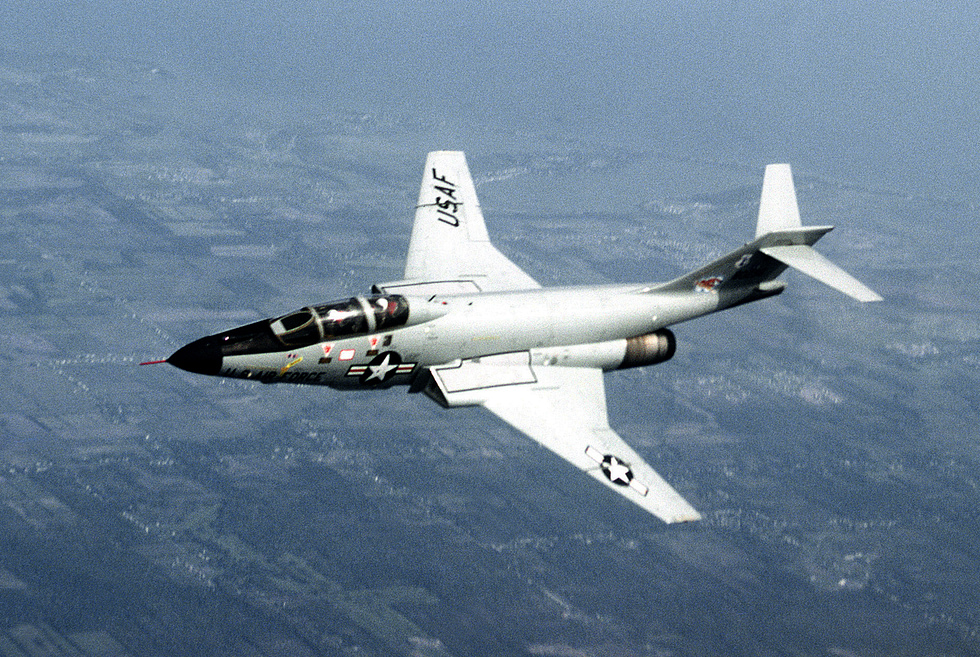
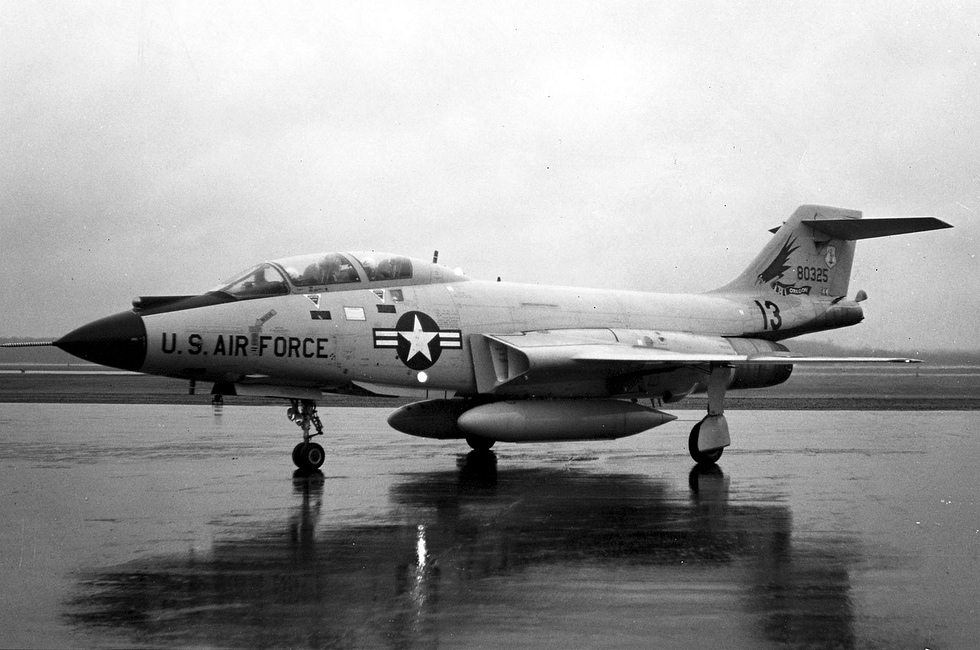
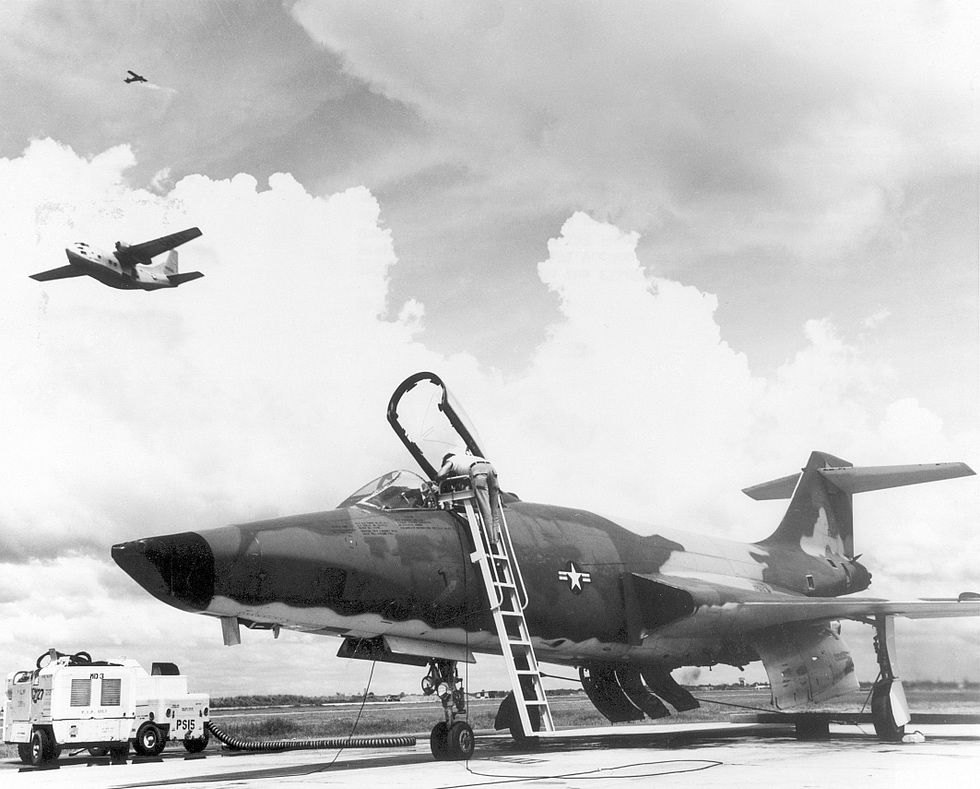
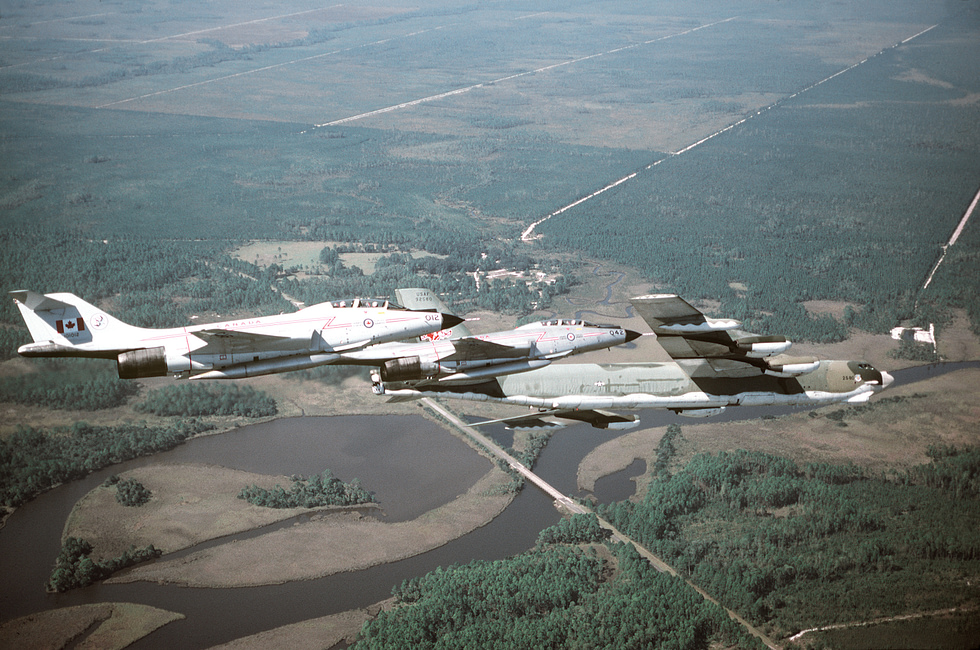
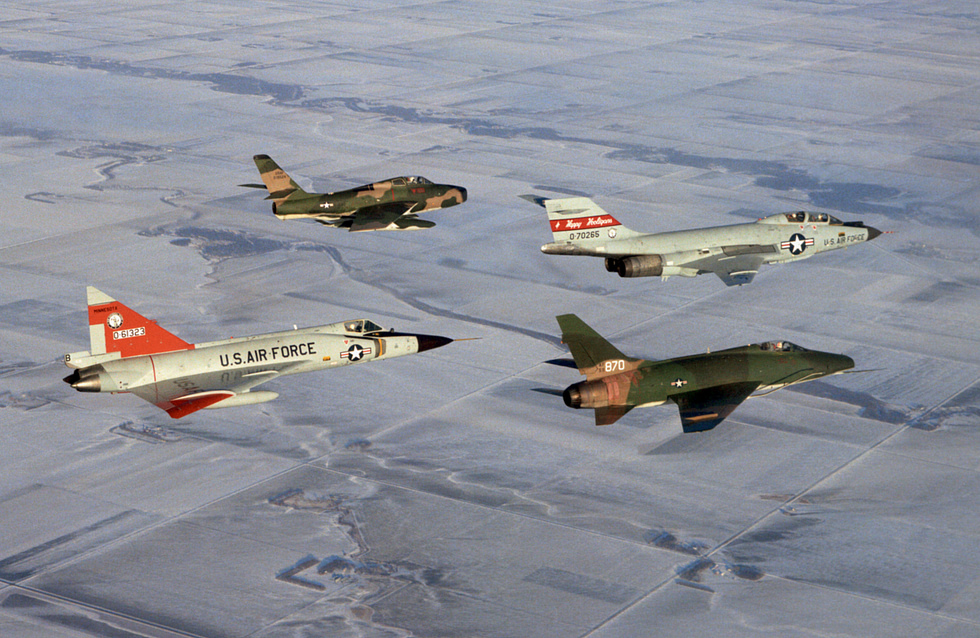
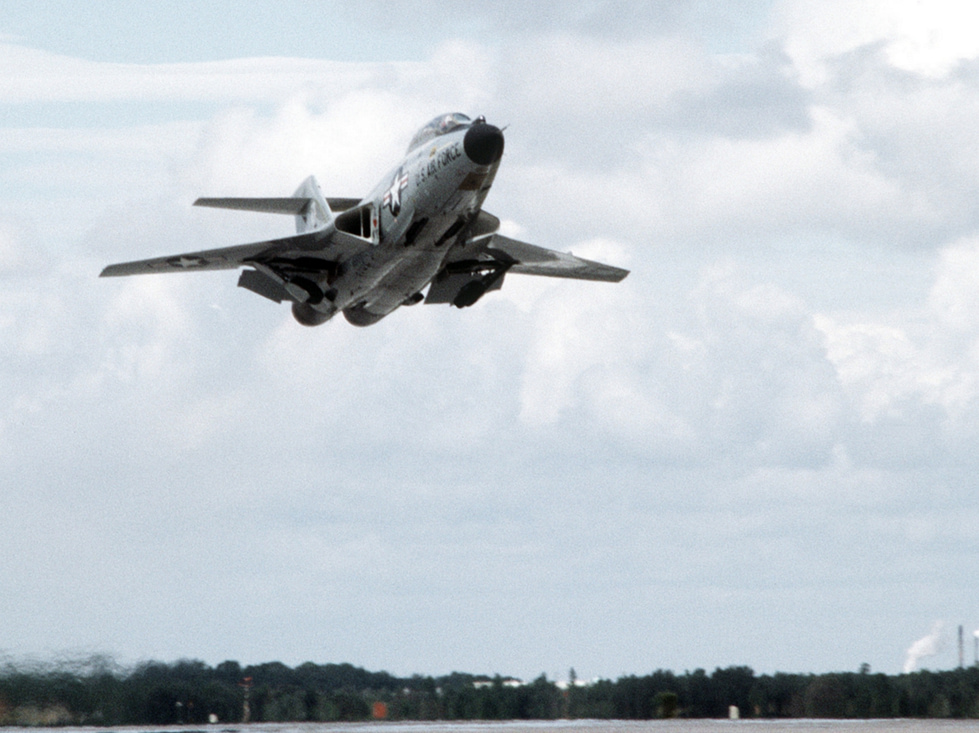
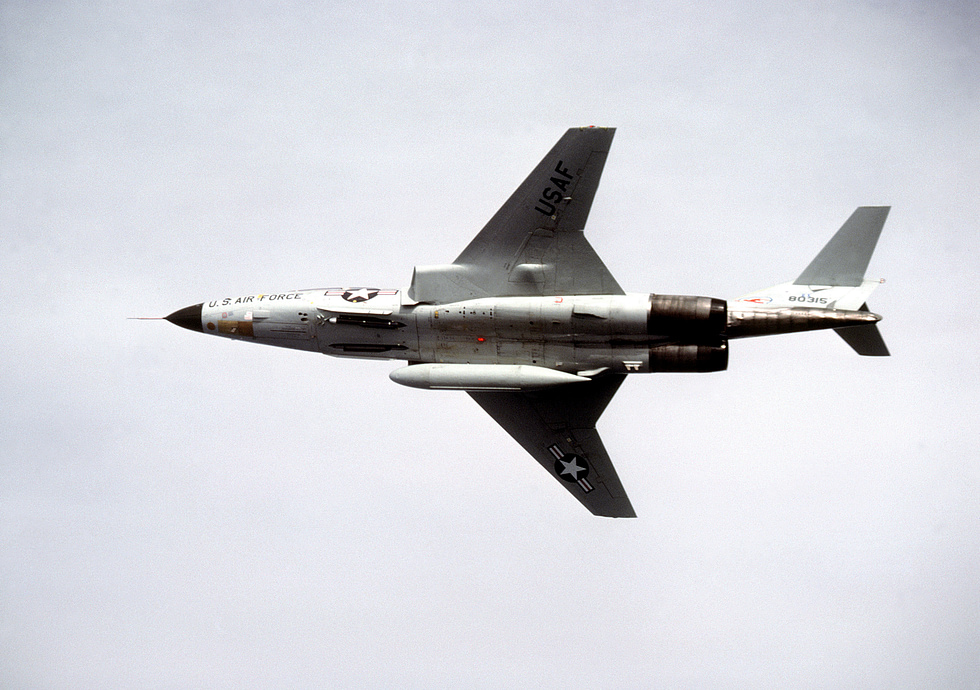
The Voodoo in motion
A verified, high-authority video feature for the F-101 is still being selected — video coming soon. In the meantime, the photo gallery above and the stories carousel cover the aircraft in depth.
Where the Voodoo flew
The record that defines it
Only one Voodoo variant ever fought: the unarmed RF-101 reconnaissance jet. It flew the crucial low-level runs over Cuba in 1962 and thousands of dangerous sorties over Vietnam, where roughly 39 were lost. The interceptor and strike versions never fired a shot in anger, standing nuclear-armed alert for an attack that never came. The Voodoo’s proudest single moment was a speed record.
Compare the combat record of every military aircraft. Figures as of July 2026.
Everything people ask about the F-101 Voodoo
Can I fly in an F-101?
How fast was the F-101 Voodoo?
What were the different versions of the F-101?
Did the F-101 Voodoo see combat?
What was the F-101’s pitch-up problem?
Was the F-101 nuclear-armed?
Why did Canada fly the F-101?
When did the F-101 retire?
You can’t fly the F-101.
These, you can.
Some legends only live in museums — others are fuelled and waiting. MiGFlug has put civilians in real military jet cockpits since 2004.
 Fly the L-39 AlbatrosThe world’s most-flown jet trainer — aerobatics included
 Fly the F-104 Starfighter“The missile with a man in it”
 Fly the MiG-21The Cold War’s most-produced jet
 Управляйте самолетом T-33 Shooting Star.America’s first jet trainer
 Fly the DH VampireA piece of early jet history
 Fly the S.211Agile Italian jet trainer
 Fly the MB-326The classic Aermacchi jet
 Fly the MiG-15The Soviet legend of the Korean War
Continue the tour
Every fact, checked
- National Museum of the U.S. Air Force — F-101B VoodooOfficial specifications, development history and service record.
- This Day in Aviation — Operation FirewallDetailed account of Major Adrian Drew’s 1,207.6 mph world speed record on 12 December 1957.
- Smithsonian National Air and Space Museum — RF-101 VoodooThe reconnaissance Voodoo and its Cuban Missile Crisis and Vietnam service.
- Royal Canadian Air Force — CF-101 VoodooCanada’s NORAD interceptor service from 1961 to 1984.
- HistoryNet — McDonnell F-101 VoodooDevelopment from the XF-88, the pitch-up problem and the type’s many roles.
- Air Force Armament Museum — F-101B VoodooCross-checked dimensions, armament and interceptor role.
- This Day in Aviation — F-101A milestonesFirst flight, service entry and early Voodoo history.
- FAI records databaseReference for the 1957 world absolute speed record.